Learning & Creative · 11 min read
Early path finalization repair: keep the negative edge
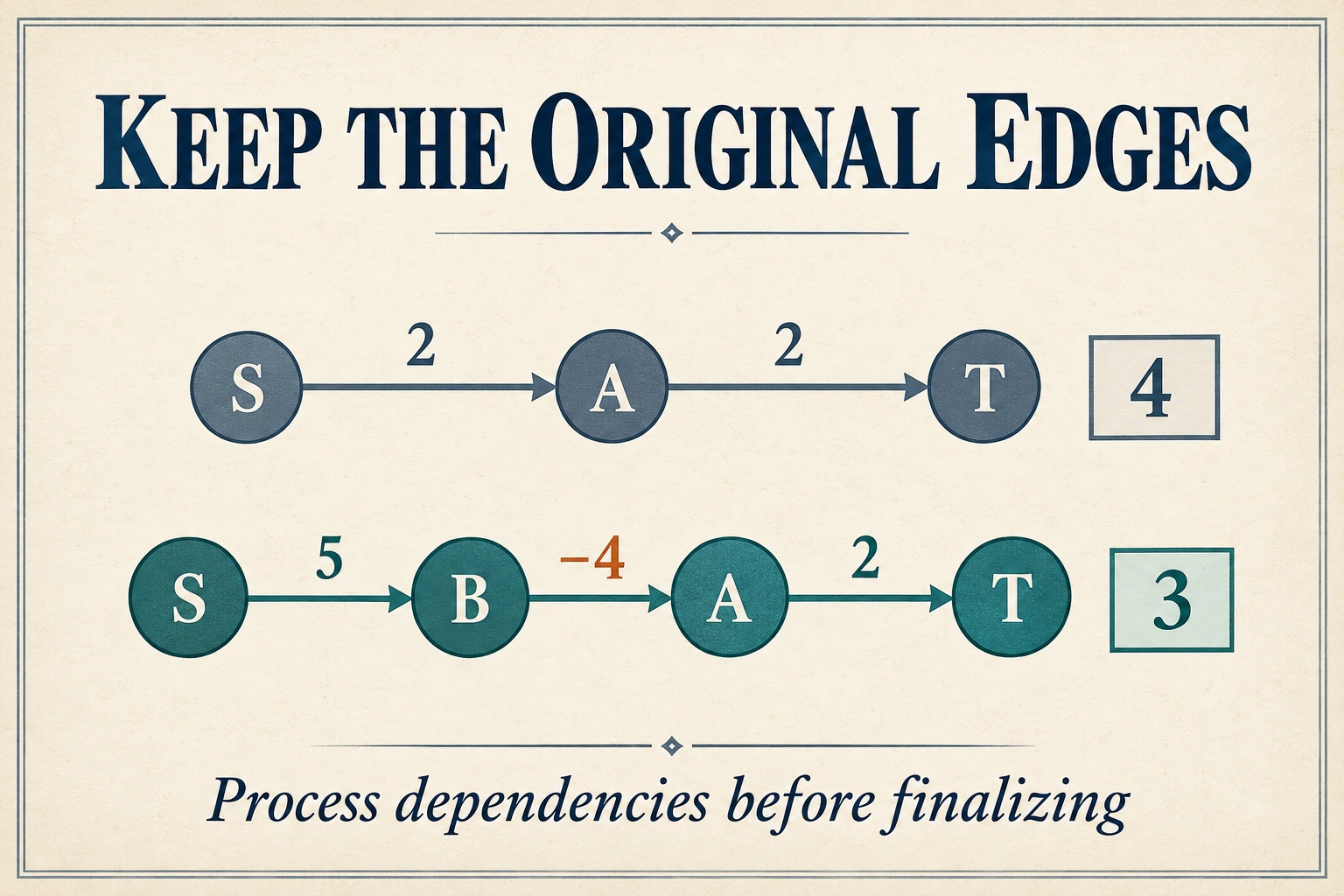
Trace an early-finalization failure on a four-vertex directed graph, then certify the repaired minimum against all three complete routes.
Read guide →From choosing everyday essentials to understanding how crypto checkout works, our guides explain the details in plain language. Compare options, plan purchases, and find practical answers before you check out.
Explore the latest guidesUnderstand supported payments and what happens at checkout.
Learn what to compare when choosing between similar products.
Get direct answers without unnecessary jargon or hype.
Fresh perspectives
New articles about products, payments, and thoughtful online shopping.
Showing 697–720 of 3086 guides
Trace an early-finalization failure on a four-vertex directed graph, then certify the repaired minimum against all three complete routes.
Read guide →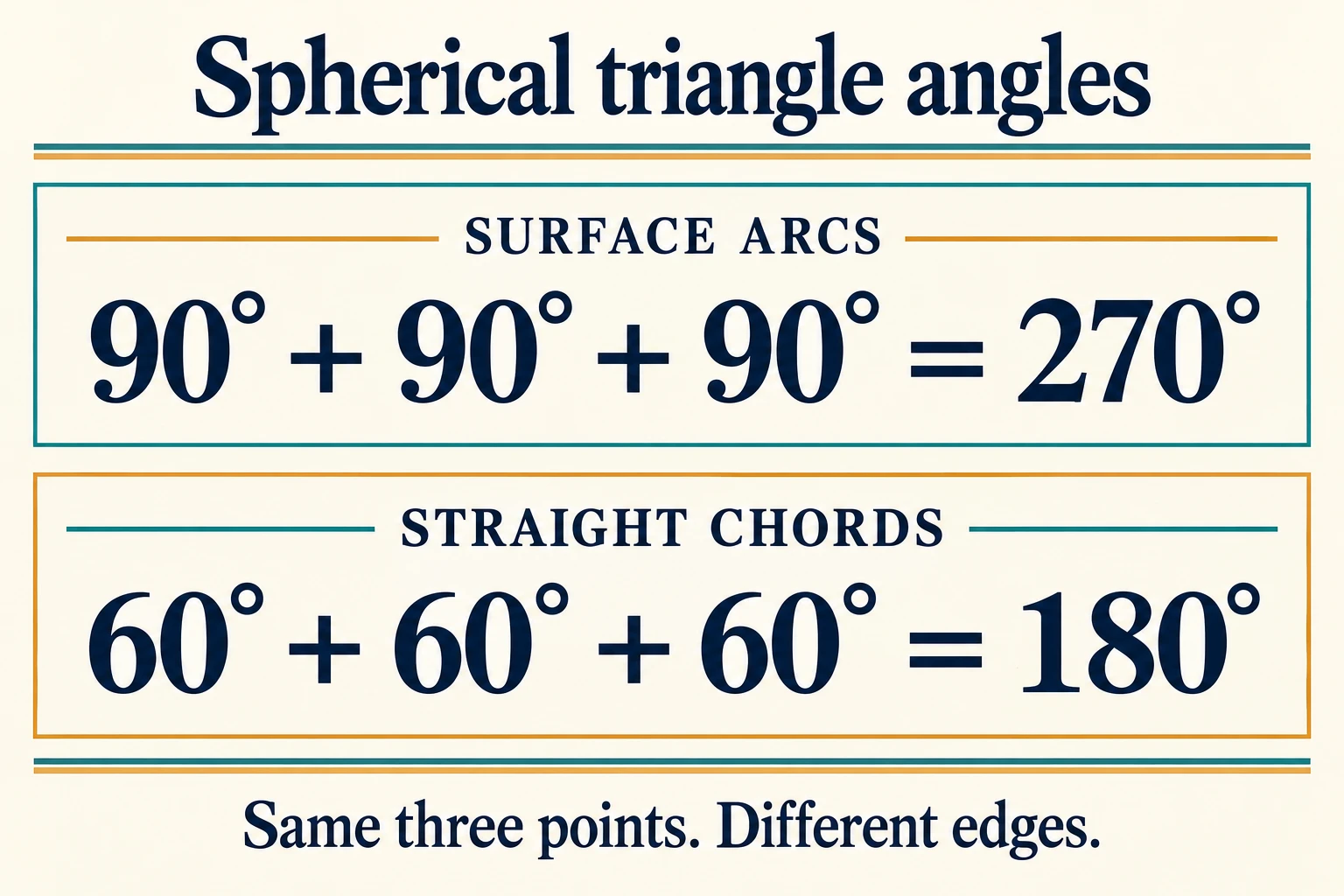
One exact unit-sphere octant has three right corner angles, totaling 270 degrees. Straight chords through the same vertices form a 180-degree planar triangle.
Read guide →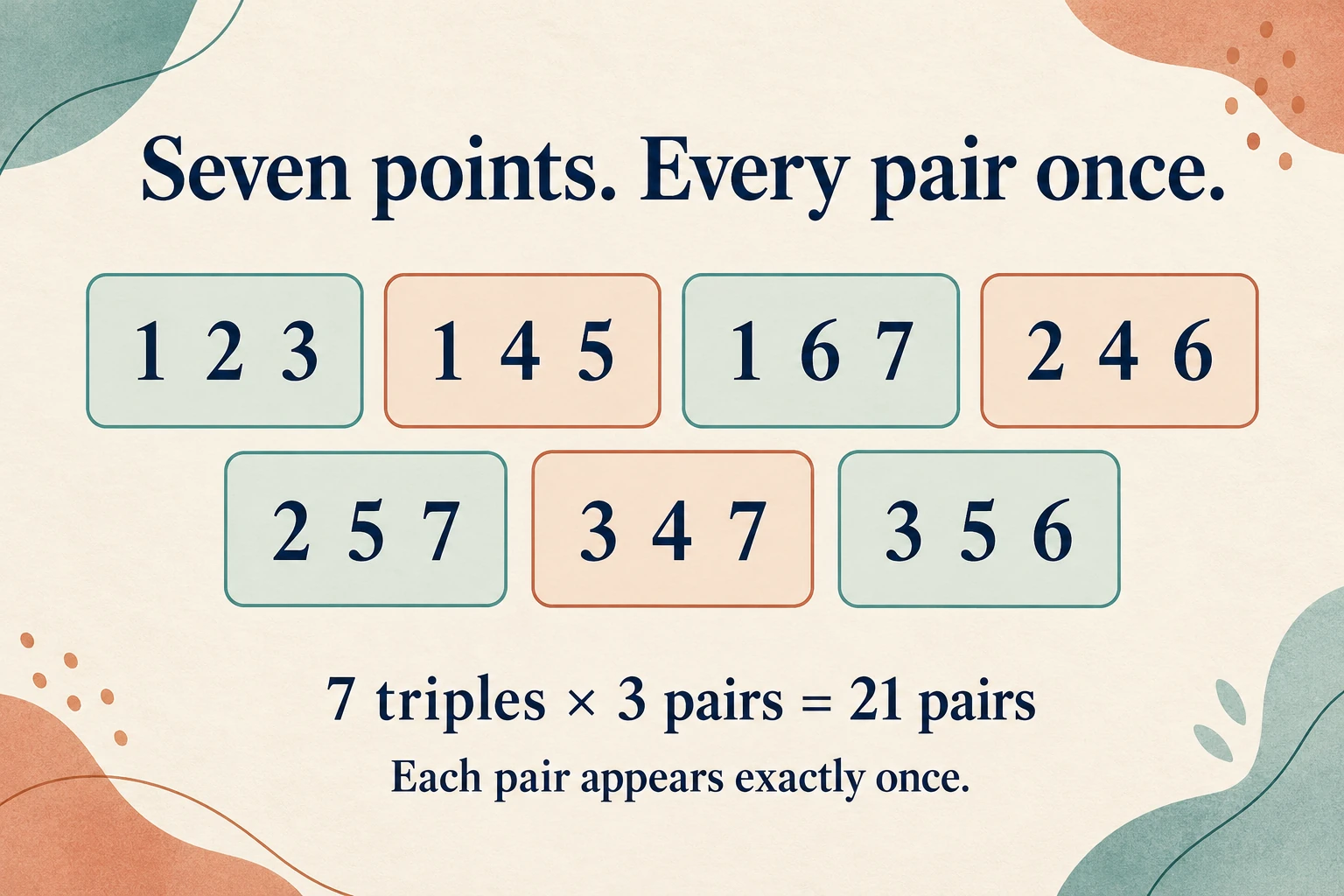
An original seven-label paper design uses binary addition to build a minimal pair-covering triple system and prove its incidence structure.
Read guide →
Check a three-item relative-rank selection rule across all six hidden orders and prove its success probability under the stated no-recall model.
Read guide →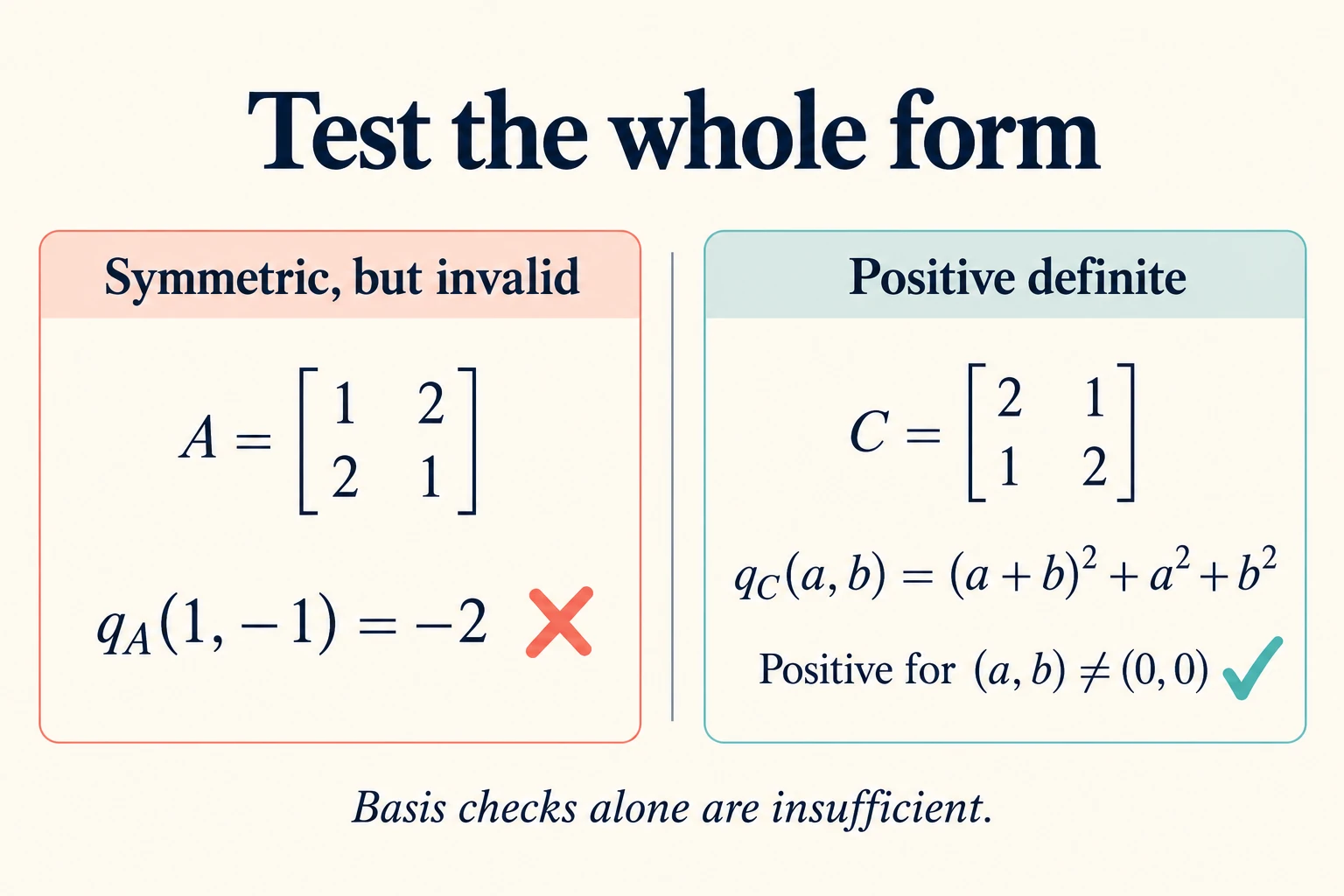
A real two-by-two matrix rule needs strict positivity beyond symmetry; explicit counterexamples and a determinant proof separate valid and invalid inner products.
Read guide →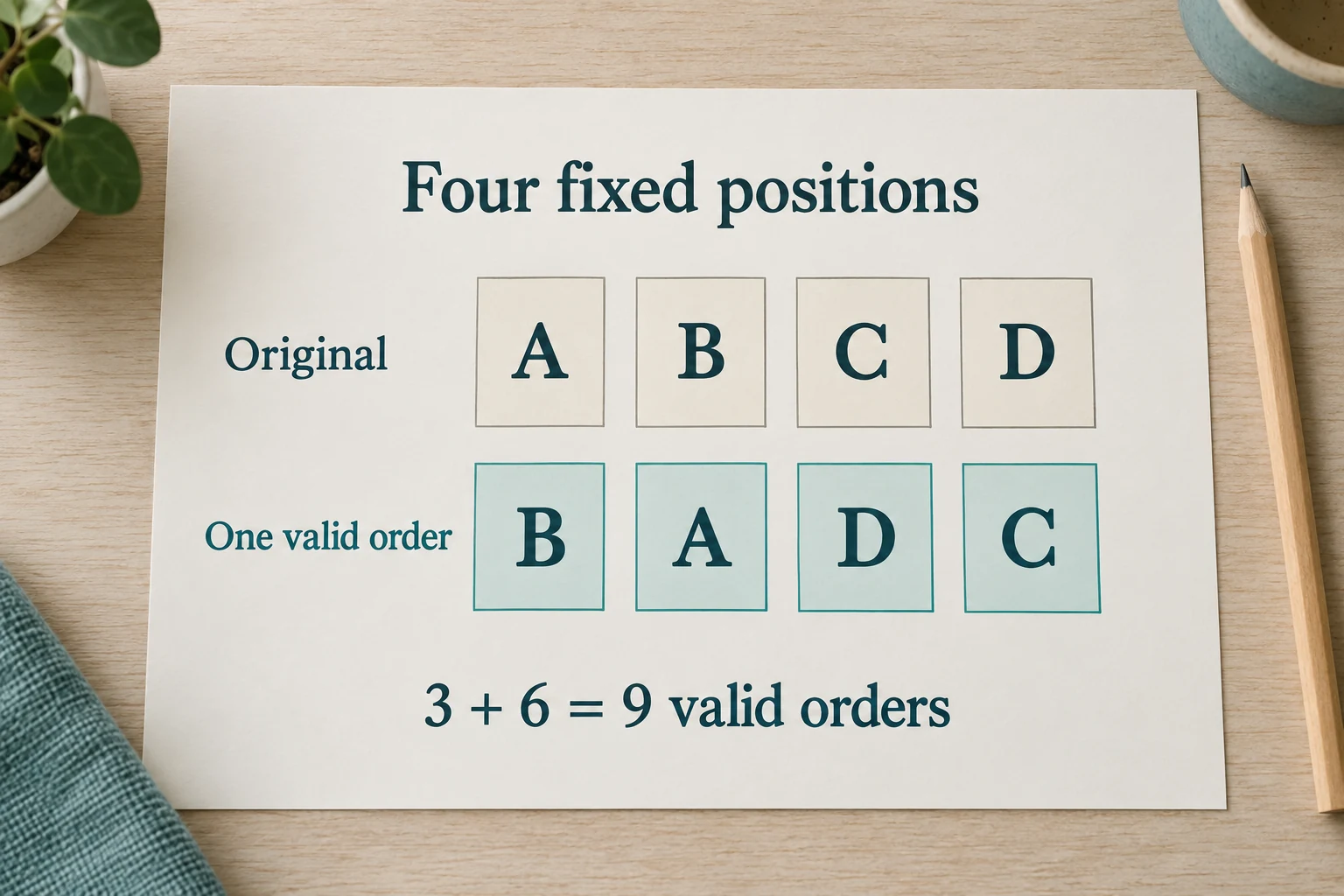
Four distinct labels occupy four fixed named positions. Classify orders with no matching position into three pair-swap orders and six four-cycles, giving nine.
Read guide →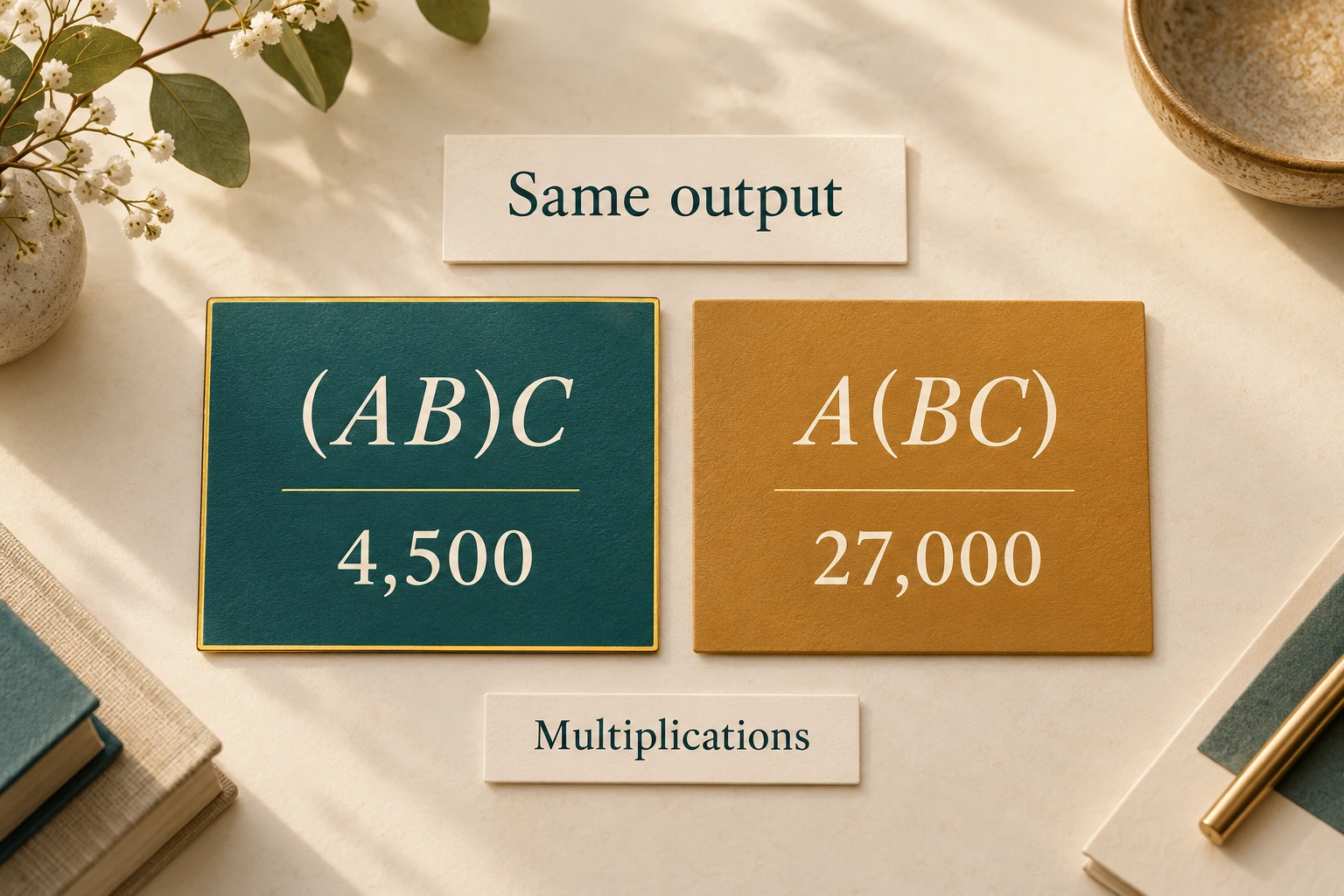
Compare two parenthesizations of three conformable real matrices under a declared dense multiplication count, with an exact savings calculation and clear limits.
Read guide →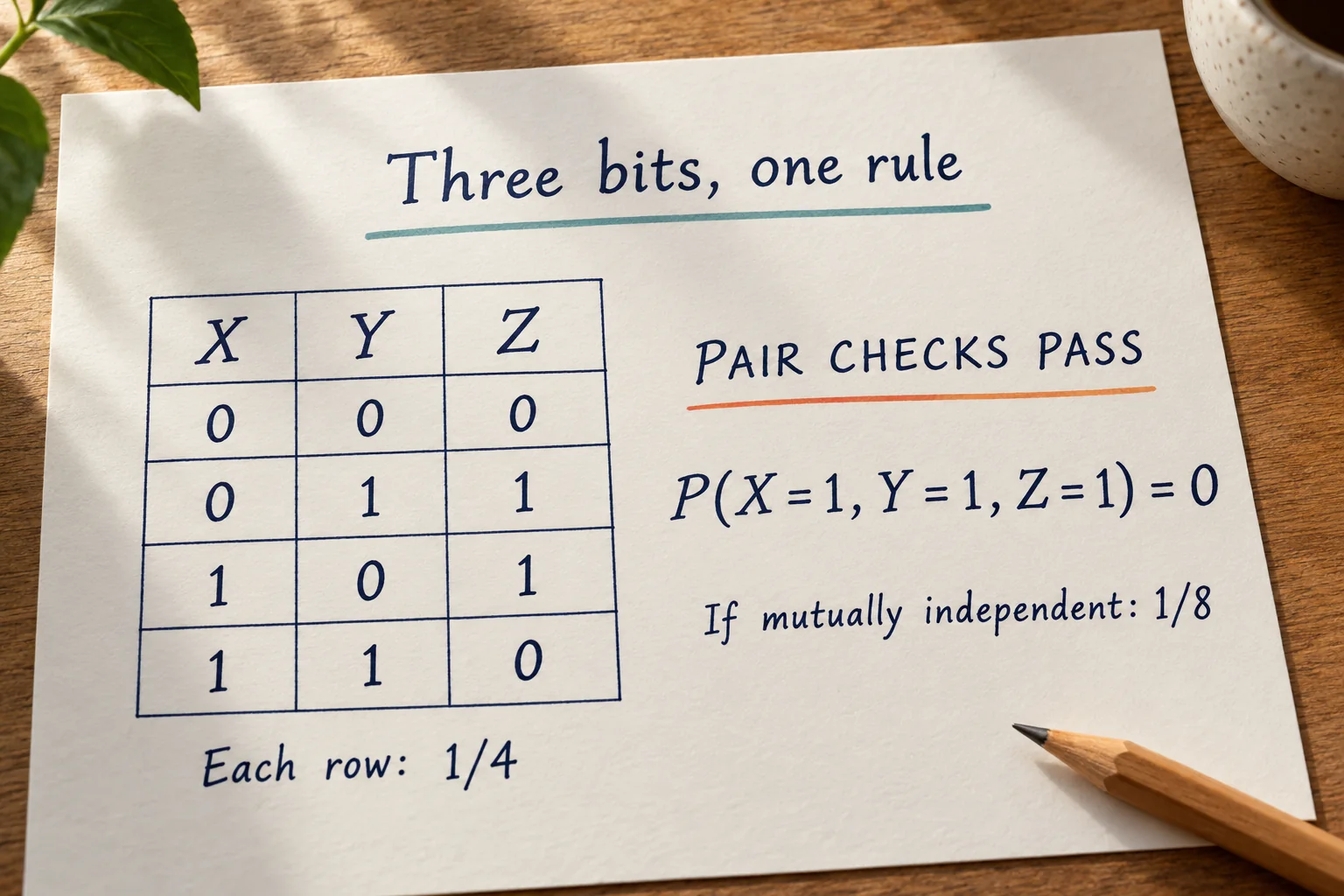
Four equally likely bit records pass every pairwise independence check while a missing all-one triple exposes their joint dependence.
Read guide →
Check a two-person holiday paper-share procedure with declared subjective values, an equal-value cut and a chooser preference, with clear limits.
Read guide →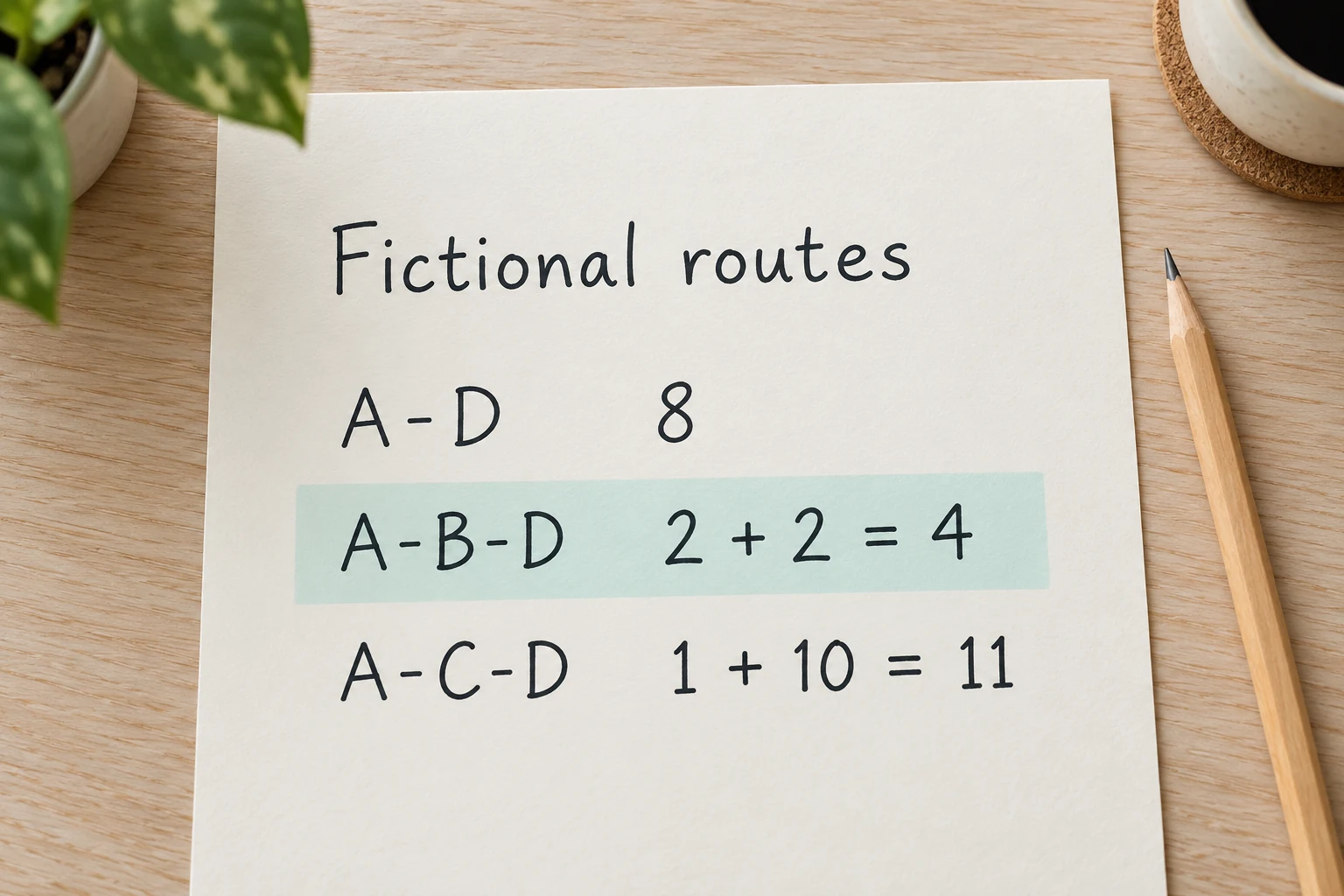
Three invented directed paths cost 8, 4 and 11. Compare complete sums, distinguish edge count and test the cheapest-first-edge proposal against all routes.
Read guide →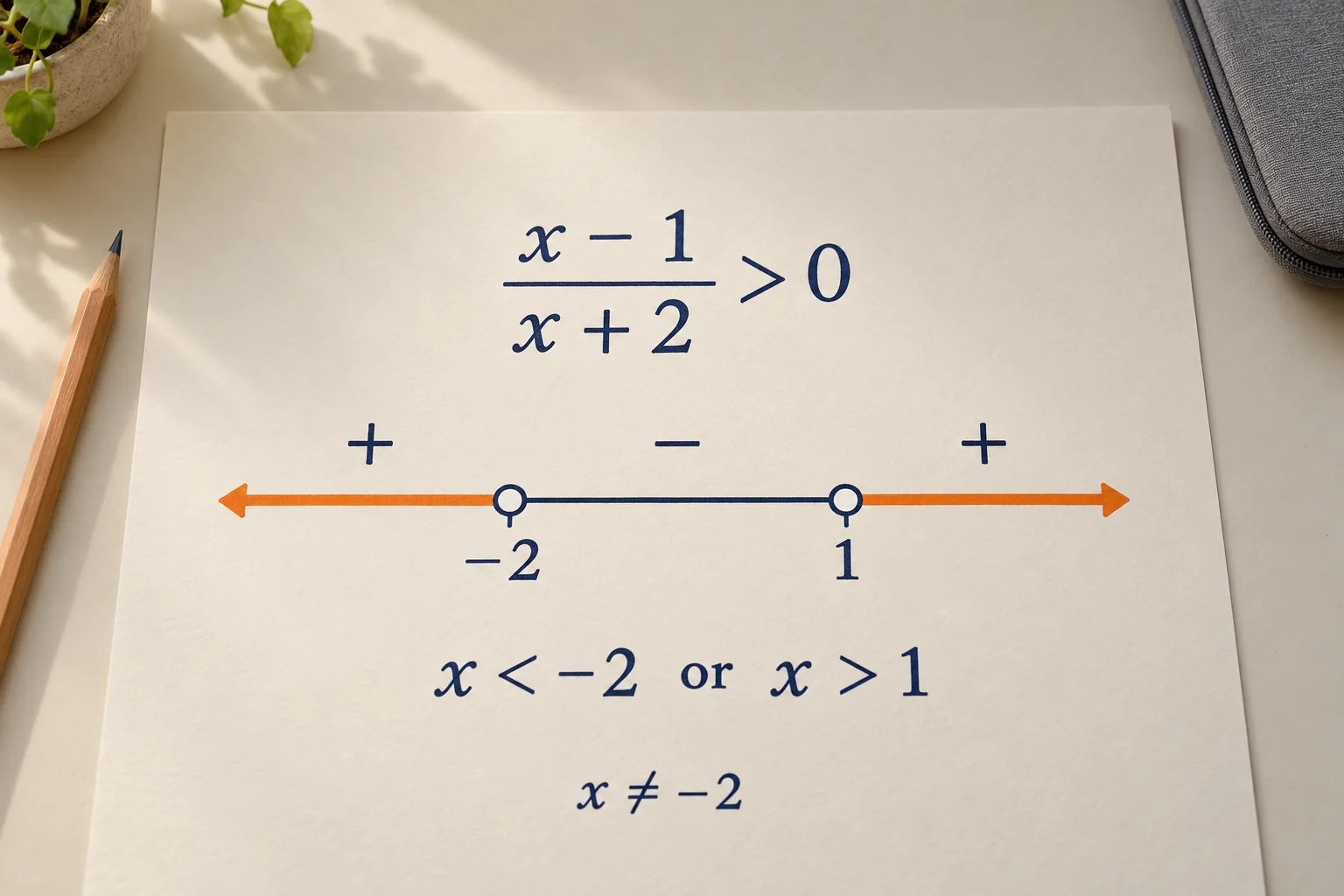
A real-variable fraction exposes a lost solution interval, then sign cases and a positive squared multiplier repair the calculation without changing its domain.
Read guide →
An original convex trapezoid gives an inner midpoint parallelogram of area 14 within outer area 28. Check parallel sides and a same-area wrong-midpoint control.
Read guide →
Repair a zero-first-pivot worksheet by interchanging complete equations, preserve the solution set and check the answer against the original system.
Read guide →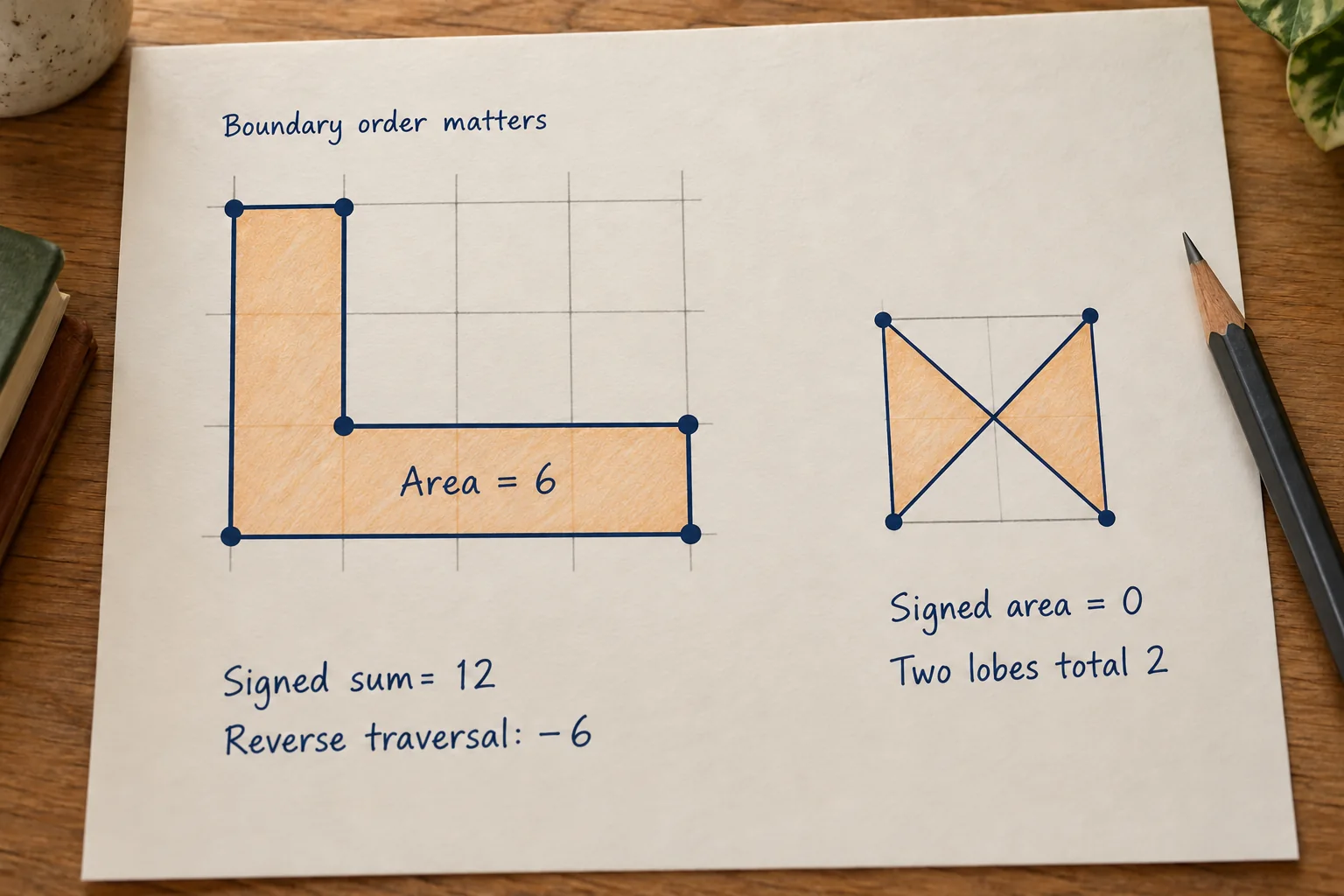
A boundary-ordered coordinate ledger gives one L polygon area six, with independent area checks, sign reversal, translation cancellation and a self-crossing control.
Read guide →
Prove equal mixing gives the best worst expected points in a fictional two-choice zero-sum model, and see why observing the sampled choice changes the result.
Read guide →
In an exact fictional model, payments of 9 grow the initial balance, 10 holds it steady and 15 reduces it. Cap the final smaller payment and reconcile the total.
Read guide →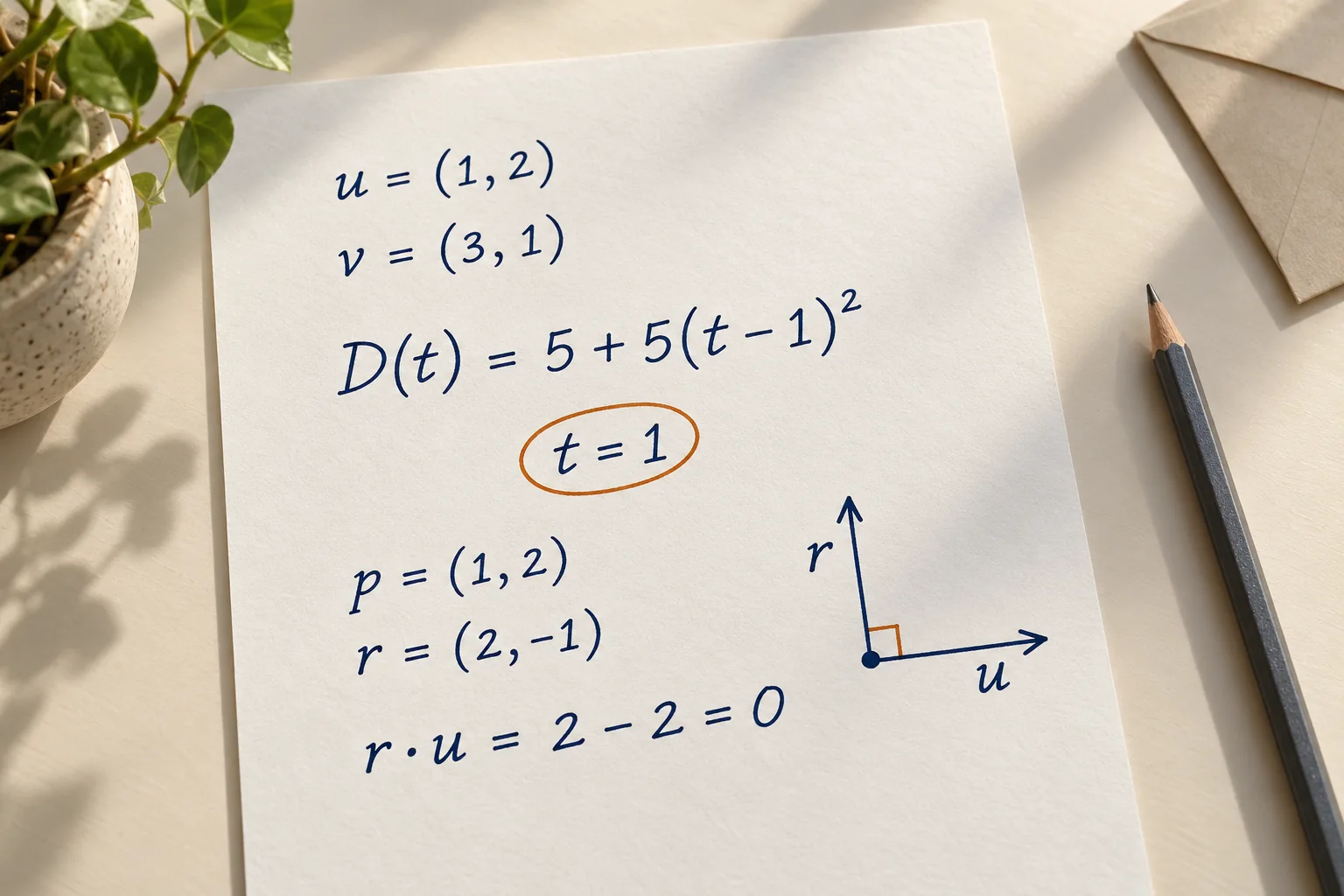
A fixed two-coordinate model separates exact scalar compatibility from a unique closest approximation, with a residual proof and direction-rescaling controls.
Read guide →
Cover fictional points on a line with fixed-length closed intervals and prove the minimum count and declared unit cost.
Read guide →
Five original winter-welcome lines contain 1, 2, 3, 4 and 1 words. Check the local counts, repair an extra their and compare a valid wording change.
Read guide →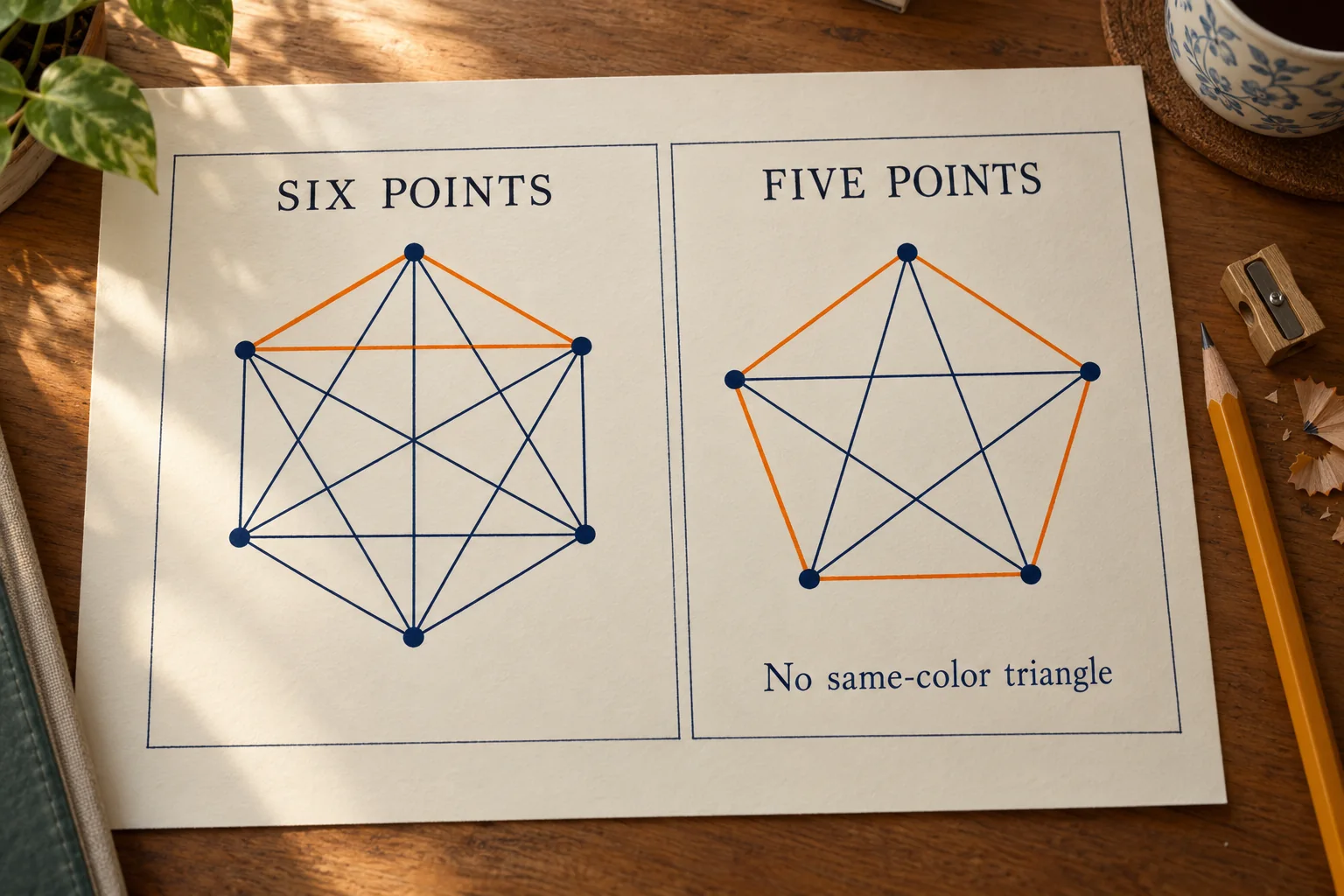
A paper gathering puzzle uses complete pair labels, a short two-case proof and a five-point counterexample to separate a guaranteed result from a smaller exception.
Read guide →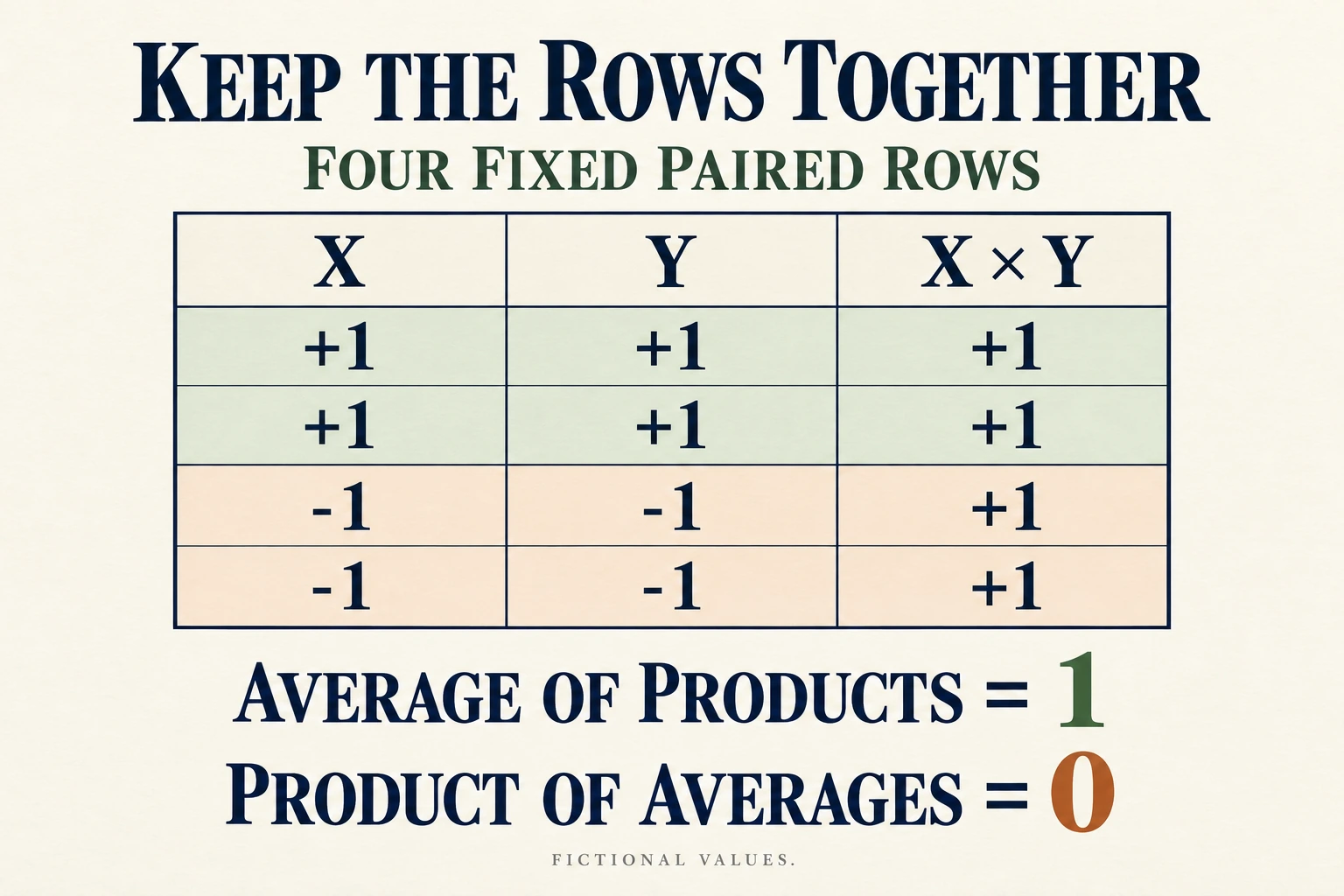
Three four-row tables keep both column means at zero, while their paired-product averages are 1, 0 and -1. An exact centered cross-term explains the difference.
Read guide →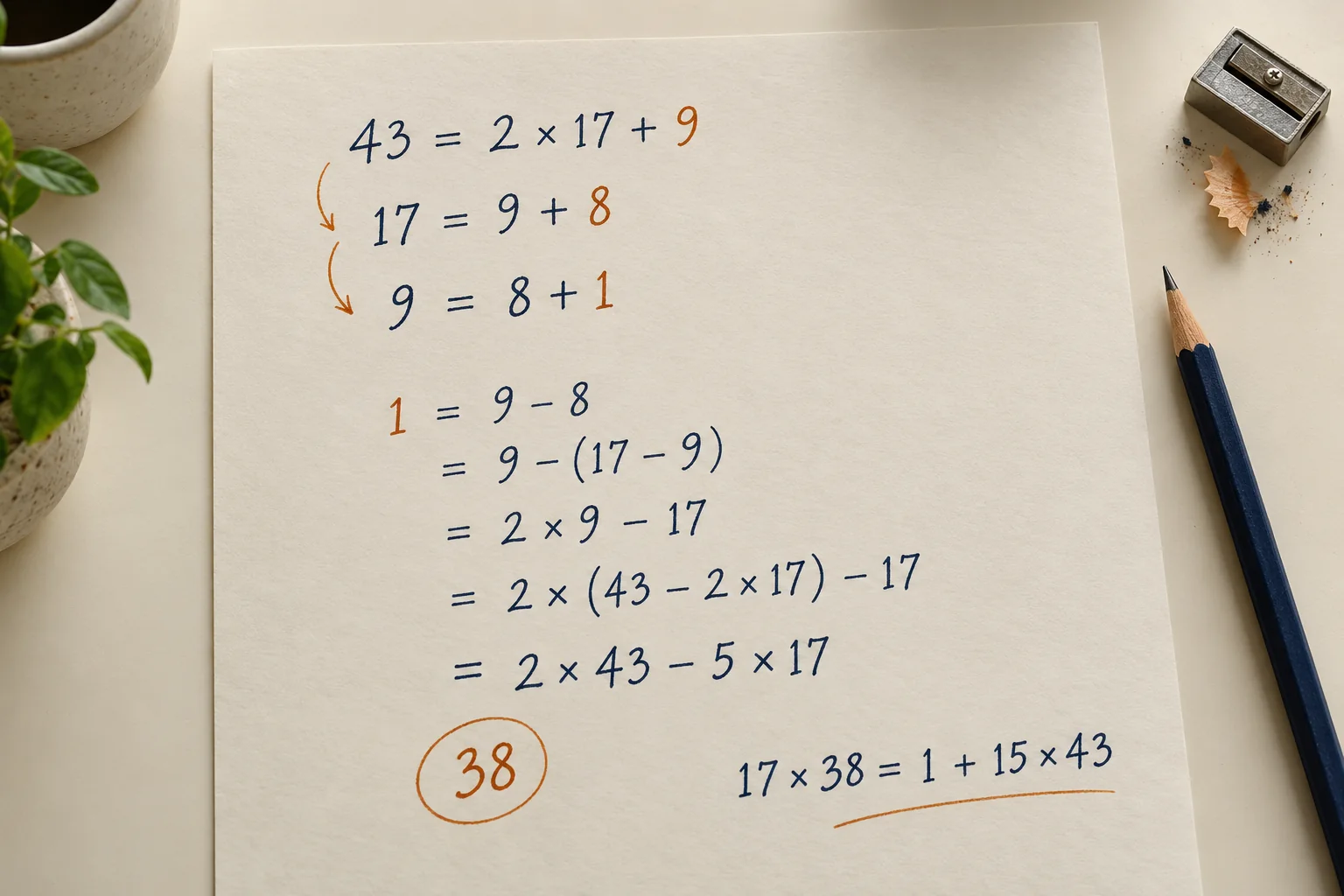
An integer identity turns a Euclidean remainder calculation into a checked modular inverse, with a uniqueness argument and a common-divisor failure case.
Read guide →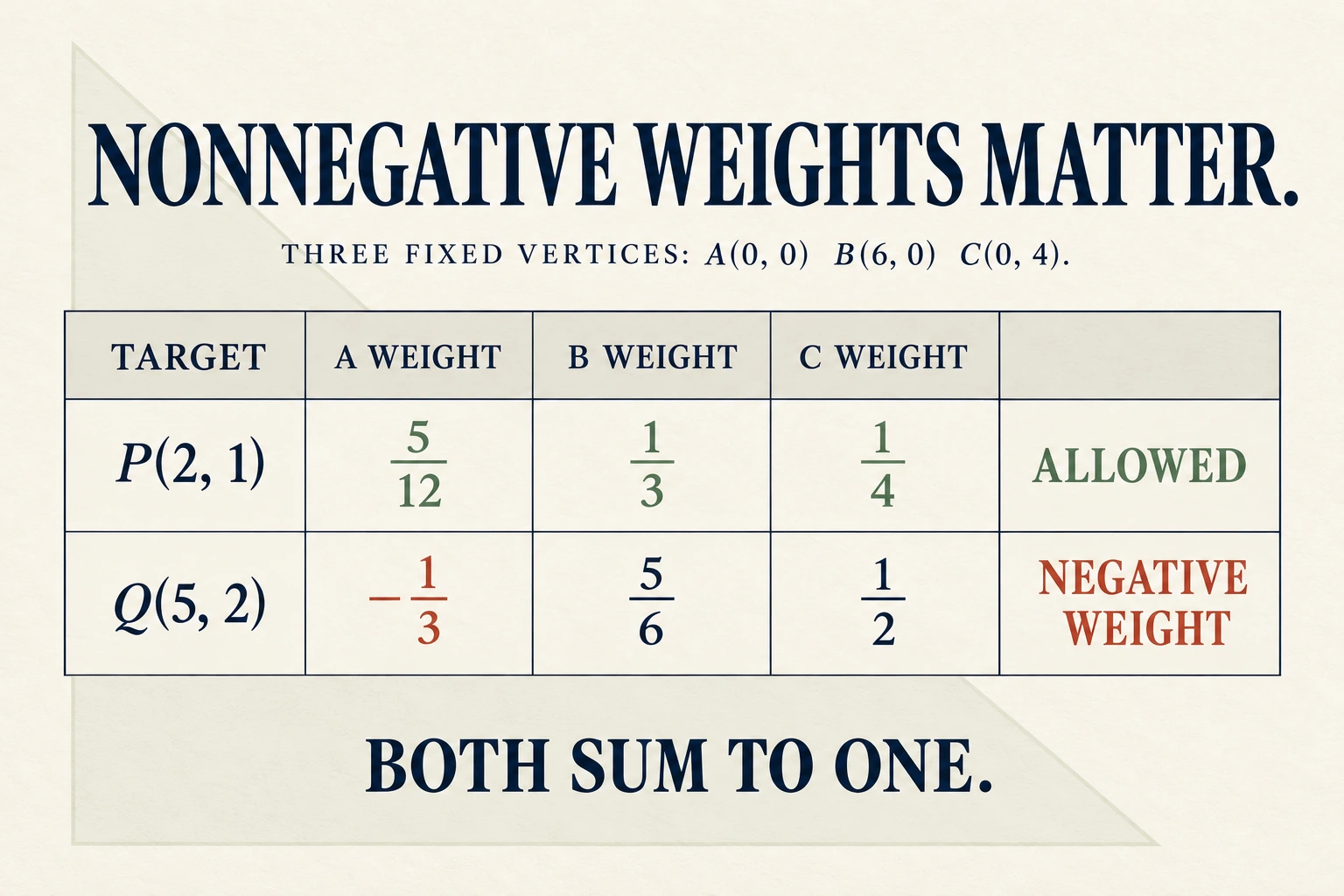
For vertices (0,0), (6,0), (0,4), target (2,1) has permitted weights 5/12, 1/3, 1/4. Target (5,2) reconstructs only with a negative first weight.
Read guide →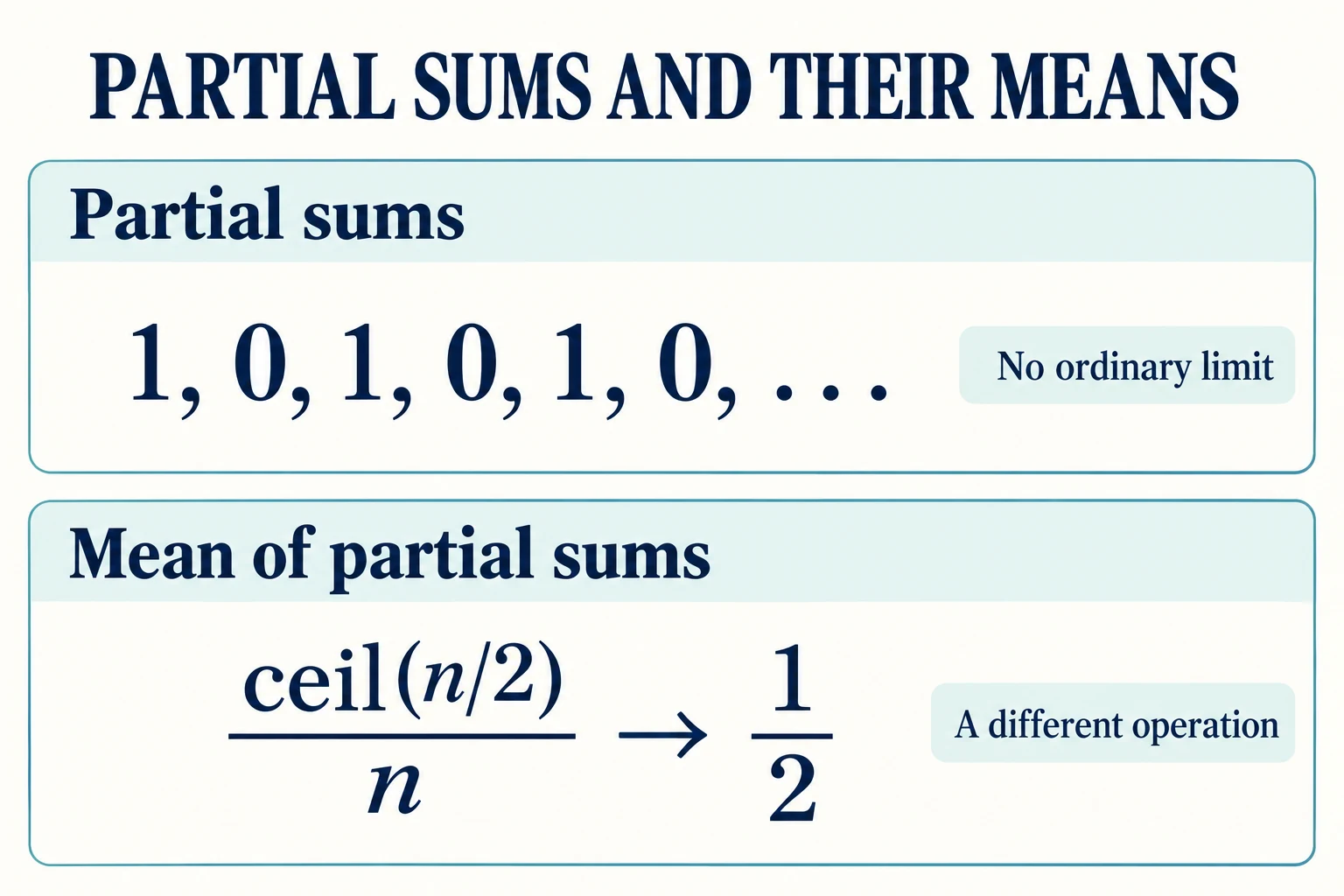
A fully specified alternating sequence separates ordinary partial sums, means of those partial sums and means of the terms, preserving each exact limit claim.
Read guide →