Workplace Planning

Workplace setup, coordination, and practical planning.

Showing 1–12 of 19 guides

CD interview transcription: identifying unclear words against playable interview audio.
8 min read

Plan CD interview transcription without guessing unclear words

An interview can be worth preserving even when the recording leaves a few words unsettled. If you have permission to work from an existing interview on a CD that you have already confirmed will play, your immediate task is to make a transcript readers can trust. For CD interview transcription , write down what you can hear, show where hearing stops, and keep your own explanations apart from the speaker's words. A plausible sentence is not proof of an indistinct word.

interview audio check: testing speech levels and room sound before an interview.
8 min read

Plan an interview audio check before recording

A interview audio check answers a modest question before you sit down to record an adult relative: can a listener understand the people you intend to hear in a short sample of the arrangement you plan to use? Ask your relative whether they are comfortable making a brief trial recording, let them know you will listen back, and treat their willingness to continue as separate from the technical result. A camera description can tell you that it records video. It cannot tell you whether a particular reply in your room will be intelligible.

Tiburn HQ Board group task planning, with clear touch turn-taking and note-taking roles during an interactive board session.
8 min read

Plan Tiburn HQ Board touch turn-taking for group tasks

When several people can reach the same interactive board, who gets to move the next item? Decide that before the first hand goes up. For an in-room exercise, invite one participant to propose a visible change, pause while the group checks it, then explicitly hand the surface to the next person. A touch shows what someone tried; it does not tell everyone whether the group accepted the result. That small distinction makes the exercise easier to follow when two people reach for the board at once.

Meeting agenda planning that defines the questions a group needs to answer before notes and decisions can be recorded.
8 min read

Use meeting agenda planning to clarify decisions in advance

Suppose a workplace group has agreed to meet about how to distribute a handout. The invitation says only “distribution,” and each person arrives with a different idea of the work ahead. One expects a status update. Another expects to compare ways of reaching readers. A third assumes a choice has already been made. Use meeting agenda planning to make the unresolved question visible before anyone meets: what must participants understand, which alternatives remain open, and what outcome is the meeting intended to seek?

Presentation fallback notes for continuing a spoken recommendation when audience slides disappear, including cue sequence and rehearsal.
9 min read

Prepare presentation fallback notes for a display interruption

Suppose the audience loses sight of your slides halfway through an existing workplace presentation, while you can still speak and read your own notes. Which parts of the explanation can stand on their own? Prepare presentation fallback notes by finding sentences that depend on the audience seeing something, writing a spoken alternative where the underlying information is clear, and marking evidence that needs to be viewed later. The goal is an annotated version of the talk you already have. You are deciding what you can explain responsibly without the display, not trying to recreate every slide aloud. For presentation fallback notes , verify each step.

Workplace handover notes that distinguish completed work, the next step a covering colleague can take, and decisions still open.
9 min read

Write workplace handover notes for unfinished tasks

A colleague covering your work needs to know where you stopped, what they can do next and which decision still belongs to someone else. Write those answers while the task is still fresh. For an unfinished internal handout, that might mean recording the last section you revised, pointing to the working copy and stating that a factual question remains unanswered. A note saying “almost done” leaves the covering colleague to reconstruct all three. The aim is to give them a reliable starting point for the period you are away, without treating an unfinished draft as approved work.

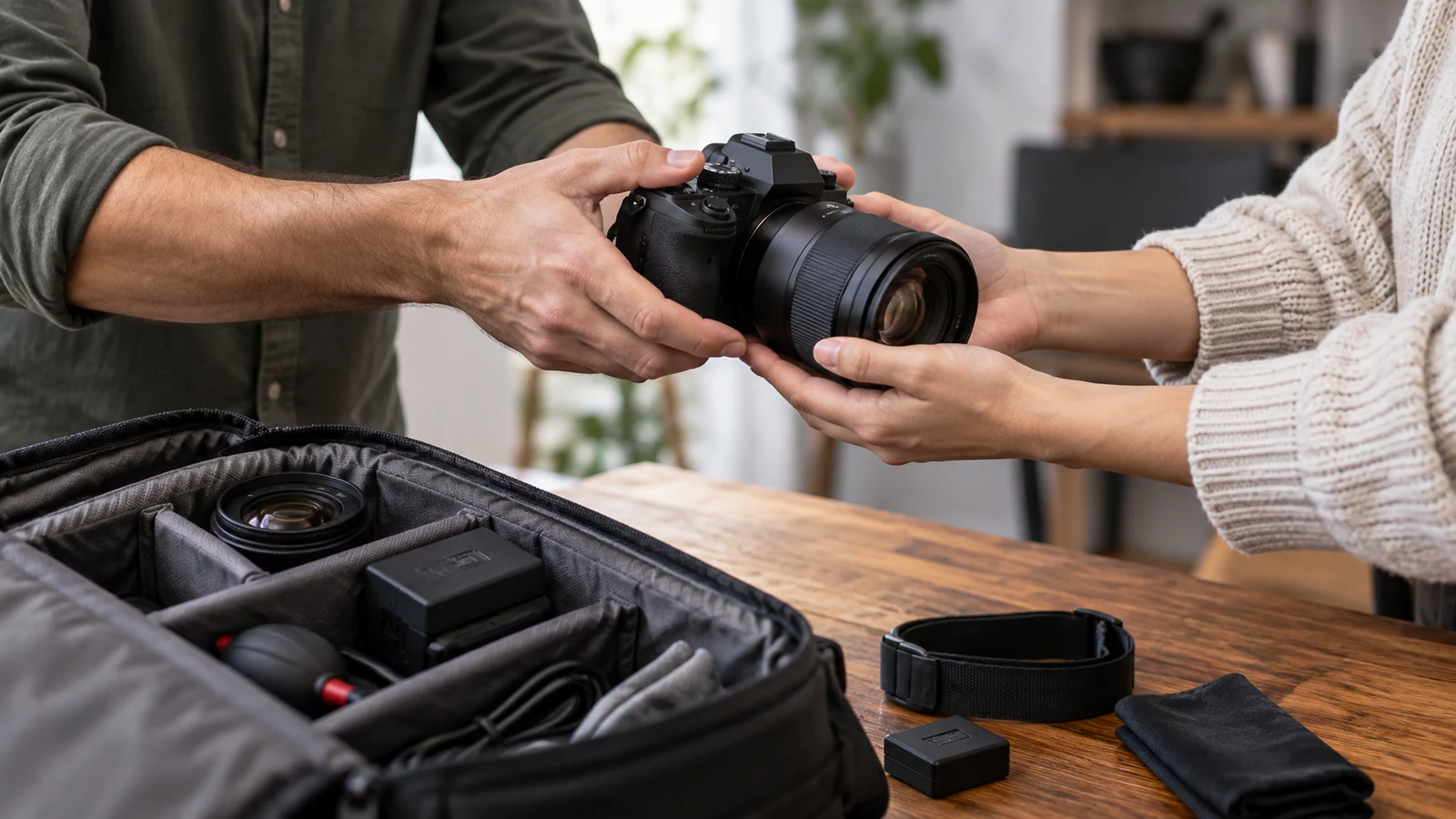
Camera kit handover guide to recording borrowed equipment, power accessories, and a clear return count.
9 min read

Plan a camera kit handover for a temporary loan

Before a camera leaves your hands for a temporary loan, write down what the other person is actually taking. A bundle name cannot settle that question, and a bag full of accessories is easy to remember differently later. A useful camera kit handover identifies the lender and borrower, lists the observed outgoing items, and leaves a place to compare them with what comes back. The record can be a shared note or a sheet of paper. Its job is to make a conversation about the return specific, even if the kit changes hands quickly.

Shared screen privacy for a workplace photography review, covering approved photo selection, audience-facing displays, and rehearsal before the presentation.
9 min read

Plan shared screen privacy before a workplace presentation

A workplace photography review puts the audience boundary in practical terms. Imagine a presenter showing a selection of photographs for an office lobby display. The room is meant to see the proposed images and discuss which ones suit the space. The photographer's full contact sheets, staff correspondence, and unfinished captions belong outside that presentation. This fictional review provides a way to plan what people will see before anyone connects a computer to the room screen.

Presentation Q&A planning that turns supporting notes into bounded answers after a workplace recommendation.
9 min read

Use presentation Q&A planning to prepare bounded answers

You have finished explaining a workplace recommendation. Someone asks who will handle an exception, another wants to know whether the change will save time, and the supporting notes answer only part of either question. Prepare for that moment by keeping a small answer sheet beside the completed presentation. Give each likely question a source in your notes, a limited answer, and a visible gap if the source stops short. This approach helps you respond without turning an assumption into a result.

Workplace Planning Guides | Republeq