Problem-Solving Articles
Drink condensation on a desk: keep papers apart
Give cold drinks and desk papers separate places. Compare actual bamboo and travel-stone coaster packages, care directions and furniture-backing limits.
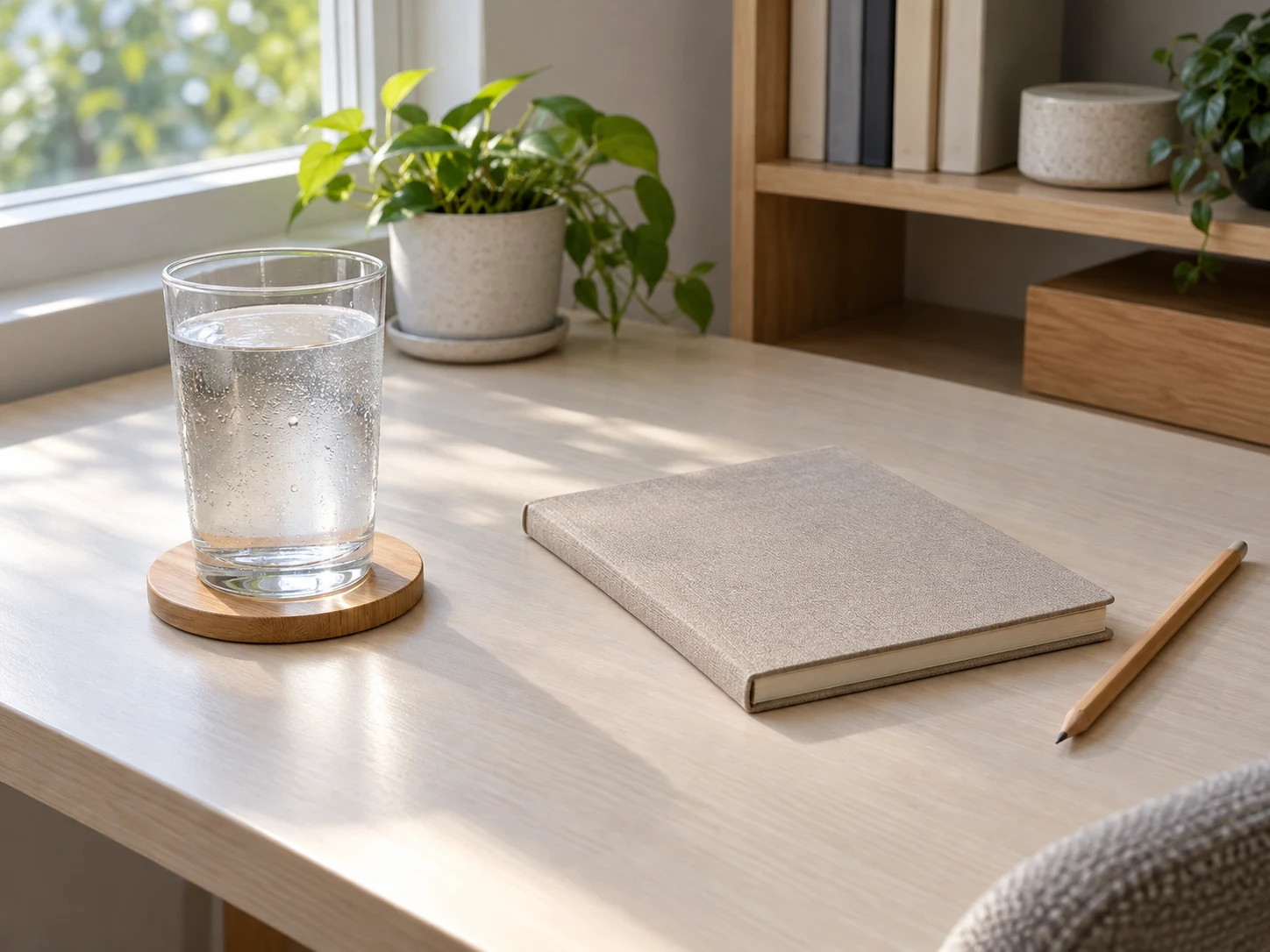
Drink condensation on a desk becomes a practical problem when a cold glass shares space with papers you keep moving. Give the drink its own place before spreading out the work. A suitable coaster can provide a defined landing spot under the glass; keeping that spot separate from documents stops the paper layout from depending on a narrow gap beside a wet vessel.
This plan covers an ordinary desk arrangement and the coasters proposed for it. It does not remove existing water marks or restore damaged furniture. Follow the actual furniture's care instructions, including restrictions on materials that touch its finish. The two retail examples are a BambooMN round bamboo coaster/glass-topper package and UUGHWW travel-themed stone coasters. Their supplied descriptions support different contents and care information.
Understand the moisture before rearranging the desk
The National Weather Service explains that water vapor can condense on a cold bottle when its surface is below the surrounding air's dew point. Moisture outside a cold drinking glass therefore need not be evidence that the vessel leaks. This guide provides no leak diagnosis or environmental measurement. Its starting observation is the ordinary wet exterior you can actually see.
A coaster placed beneath the glass addresses the contact area at the base. It does not cover the side of a notebook that is leaning against the glass, nor does it turn a crowded desktop into a spill-proof space. Look at how the drink and papers meet during the actual task. A sheet that is repeatedly slid under the glass needs a different place even when there is already a coaster underneath.
Begin with one small arrangement you can maintain: a place for the drink and a separate place for the current papers. Keep the glass out of a paper stack's intended path. This is a proposed layout to check at your own desk, not a claim that a particular distance will prevent every spill. Allow for the way you open a notebook and turn pages.
A separate drink spot should remain available
Choose a separate drink spot while looking at the desk as it is actually used. The free corner in a photograph may be where your mouse moves or where someone sets down a folder. Give the proposed position a real job in the layout, and check that the other necessary items still have theirs. Avoid assigning the same patch of desk to both the drink and the next incoming document.
For example, suppose a person is checking a handful of household letters. They can place the current letter in front of them and keep the proposed drink position to one side of the papers. When the next letter arrives, it joins the paper group rather than covering the coaster. This invented example explains the arrangement; it reports no tested spill reduction or product performance.
If a shared desk changes users during the day, agree on the drink position with the next person. Someone who does not know its purpose may reasonably fill the empty area with a workbook. A simple conversation about the arrangement is more useful than treating a decorative object as an instruction everyone will understand. Leave space for the tasks both people actually do.
The desk-organizer paper plan starts with what needs to happen to each paper group. Use that distinction when clearing space for a drink. A document awaiting an answer should retain a recognizable destination after it moves. Making room for the glass should not erase the next action or move someone else's papers without their agreement.
Give an arriving drink the same consideration as the one already there. If another person brings a glass while you are working together, decide where it will go before clearing a spot by pushing papers aside. The existing coaster is occupied by its own vessel. A second drink needs its own suitable position, and the paper group still needs a destination everyone understands. You can pause the task to make that small decision without abandoning the work or buying a larger set solely for an occasional visit.
A change of vessel is also a reason to look again at the arrangement. The glass you selected first and a mug brought from the kitchen can have different bases. Check the actual replacement against the coaster and the available space rather than assuming every household cup presents the same shape. If several people share the setup, explain which items were considered when choosing the position. That keeps the plan attached to the equipment in use and gives the next person a clear reason to reconsider it when they bring something different.
Read the BambooMN package as the offered product
The BambooMN round bamboo coaster and glass-topper offer identifies thirty pieces. Its stated dimensions are four inches in diameter, a 2.75-inch bottom ring and a height of 0.875 inch. Those are different measurements of the supplied object. They are not a statement that every four-inch drinking vessel will sit appropriately on it.
The maker's current page distinguishes several shapes and cut styles, with different dimensions. It also describes the items' dual coaster and glass-topper roles. Here, the proposed job is the coaster beneath a drink. The separate topper role does not answer how your vessel sits on the coaster or whether its underside suits your furniture.
Use the actual offered package when planning quantity. Thirty pieces may suit several separate places, but a single desk arrangement does not require assigning every piece an immediate role. Confirm how you intend to store any remainder. The package count supplies no instruction for stacking the pieces under a vessel or making a larger platform.
Keep the package reference when asking about a particular style. The maker's page includes round vertical-cut and horizontal-cut variants as well as square forms. Do not silently rename this retail offer from an assumed photograph or borrow a different variant's measurements. Retain the round thirty-piece description and the dimensions actually supplied with it.
Keep the travel-stone offer's identity intact
The UUGHWW travel-themed stone coaster set describes four square pieces, each four inches across and 0.4 inch thick. The native description calls them hand-carved travertine with natural pores and patterns. It lists cork, marble, stone and travertine as materials, names SALICI as manufacturer and supplies a separate item-model description for the travel set.
Record the UUGHWW offer identity alongside those fields. The imagery and travel theme concern appearance; they supply no measured water capacity or protection guarantee. This guide does not rank the stone set against bamboo for absorption, scratch prevention or working life. Consider its stated size and actual care requirements alongside the furniture information before choosing it for the proposed place.
The package contains four coasters, not four versions of the desk arrangement shown here. If you intend to put one at each of several desks, identify each proposed surface separately. Agreement about one desk's finish does not establish that the same backing is suitable everywhere else. An unused coaster can remain an identified spare until there is a suitable place for it.
Check the surface that the coaster will touch
Coaster material matters on both sides of the arrangement. Stickley's furniture-care guide warns that cork, rubber, vinyl and plastic can damage fine lacquer finishes. It also cautions about some synthetic felt-backed items. That is a specific furniture-care warning, not approval to place either selected coaster on an unidentified finish.
Find the care information for the actual desk or table before choosing the contact material. If it restricts a proposed backing, choose an arrangement that meets those instructions. Do not improvise an adhesive pad or add an unidentified liner to make the purchase appear suitable. A backing's familiar name and a claim about protecting tables should remain subject to the furniture's own requirements.
For a borrowed desk, ask the person responsible for it before changing what rests on the surface. A home-office plan can be useful without treating every table as yours to experiment on. If the finish is unknown, keep that question attached to the proposed coaster decision. Use an already suitable, permitted drink location while seeking the relevant information.
When the care requirements are established, check the real space with the actual vessel and proposed coaster. Look at where the vessel's base rests and whether the arrangement leaves room for the work. This guide supplies no numerical stability threshold or load test. A product's overall diameter alone cannot describe every drinking vessel's base.
Coaster care belongs in the everyday routine
Keep coaster care attached to the selected item. The UUGHWW stone offer specifies hand washing and says the pieces are not dishwasher safe. BambooMN's current maker page directs rinsing its toppers with soap and warm water, then drying them for reuse. Use the instructions supplied with the actual delivered product, and resolve any conflicting care direction with its supplier.
Return a prepared coaster to the agreed drink location when the desk is ready for use. An arrangement that depends on retrieving it from another room each time may be inconvenient for the people involved. Decide where it belongs between uses, alongside the ordinary items needed for the next desk session. Store cleaning supplies outside the document group so preparing the coaster leaves the papers in place.
Check the area beneath and around the drink during ordinary clearing of the desk, following the furniture's applicable care instructions. A coaster is not a reason to leave visible moisture unattended. Keep coaster care and furniture care as separate instructions: one tells you how to prepare the small item for reuse, while the other governs the surface beneath it.
Keep the arrangement understandable when work changes
Desk work often ends before every paper is finished. The short desk-session reminder guide distinguishes an agreed stopping point from completion of the task. At that point, return the current papers to their identified destination and leave the drink arrangement understandable for the next use. The timer's controls provide no moisture protection or coaster-care method.
If the task expands, reconsider the arrangement before laying papers over the drink spot. A large map, a school project or a shared document review may need the available surface in a different way. Move the drink to another suitable, permitted location instead of treating the original coaster position as permanent. Keep the new location recognizable to the people using the room.
Drink condensation on a desk is easier to manage when the drink has an appropriate place and the papers retain theirs. Choose a coaster whose actual contents, dimensions and care you understand, check its contact material against the furniture requirements and keep the agreed spot available. Review that arrangement when the work or the user changes.