Workplace Planning
Holiday craft fair scarf display and the scarf already promised
An original seasonal story follows a maker keeping a completed scarf promised to her sister apart from the pieces she offers for sale.
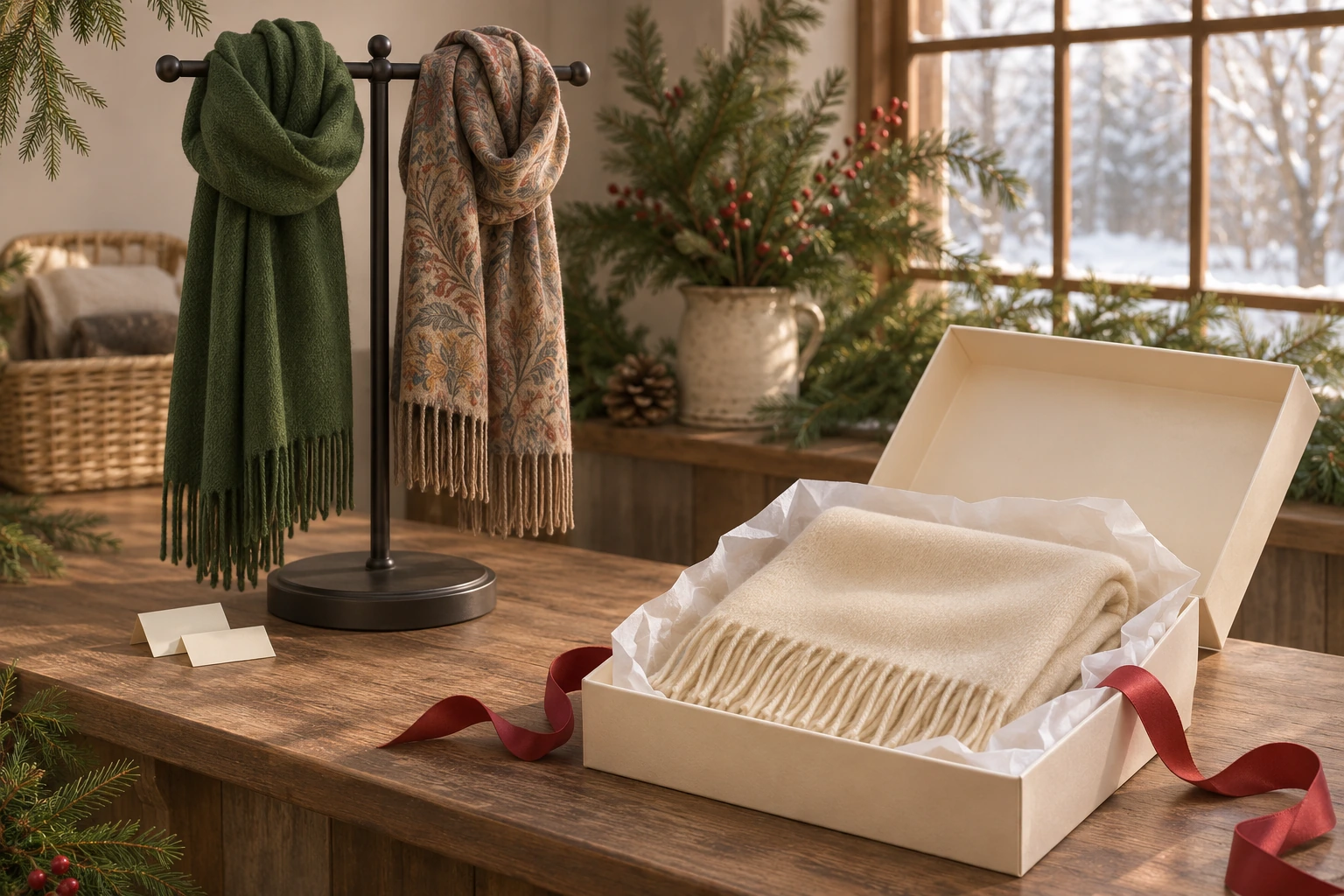
The cream scarf was hanging with the others when Tom asked Leah whether he should put a card beside it. She had brought the scarf to the holiday market in the same bag as her sale pieces, and he had lifted it out while she was finding the table covering. Now it hung at the end of the little display, with its long fringe beside the dark green scarf. Leah reached for it before answering. She had already promised this finished scarf to her sister Jo.
This original fictional Holiday craft fair scarf display story follows Leah, Tom and the scarf through one winter afternoon. All the people and events are invented. The stand in their scene is a generic prop, separate from the actual retail references below. Leah's promise is an explicit condition of the story. Jo has accepted the offer of this particular completed scarf, and Leah has brought it so they can meet after the market.
The promise came before the stall
Two evenings earlier, Jo had visited Leah's flat. She noticed the cream scarf lying over a chair and picked up one end to look at the fringe. Leah told her she had finished it that morning. Jo said it reminded her of the pale scarf their aunt used to leave on the hall table. They talked about the aunt's habit of returning for something she had forgotten, with her scarf trailing over one arm. Leah had forgotten that detail until Jo mentioned it.
"I'd like you to have this one," Leah said. She took the scarf from the chair and held it out. Jo asked whether she meant the cream one in her hands. Leah said yes. Jo accepted, then remembered she had left her bag at work and asked whether Leah could bring it when they met after Saturday's market. Leah agreed. The scarf went back over the chair for the evening, with that particular handover still ahead of them.
On Saturday morning, Leah folded the gift into the bag she was taking to the hall. She intended to keep it with her until Jo arrived. While packing, she also put in the scarves she planned to offer at the stall. By the time Tom helped her carry the bag inside, the cream scarf was between two of those pieces. He had heard that Jo would visit later. Leah had not told him what she had promised her.
Two separate retail stand references
The Gonipol scarf display stand account names 30 rods, with the full pictured count unverified. Its own brand differs from the goxfaca image filename, and its sparse description conflicts with the calculated price. No printed identity label resolves those differences. Staged scarves establish no supplied bundle.
The FANRUINA freestanding coat rack account names eight hooks and three sizes. Its photograph shows a brown branching stand with a three-legged base. The own keyword description includes wall-mounted and shoe-rack terms absent from that pictured form. Staged garments establish no extra supplied inventory, and no printed model label is readable.
These are actual catalog references outside Leah's story. Neither offer supplied her imagined stand or any scarf in the scene. The story gives no assembly, loading or retail-use result for either item.
Tom asks about the cream scarf
Leah took the cream scarf from the generic stand and folded it over her arm. "This one is for Jo," she said. Tom looked at the cards on the counter. He had written the temporary names Leah had given him for the pieces she wanted to offer. None of those names was cream. He had assumed she had missed one when telling him what was in the bag. His pencil remained beside the unused card.
"I thought she was choosing when she came," he said. Leah shook her head. "I offered her this one on Thursday. She said she'd like it." Tom moved the blank card back into the little stack. He had not written a description or spoken to anyone about buying the cream scarf. Leah put it on the chair behind her while she turned back to the stall. A corner of the fringe rested over the chair's wooden arm.
Tom asked whether Jo might prefer the green scarf after seeing it. Leah glanced at the green piece still hanging at the front. She liked it herself and had considered keeping it before deciding what to bring. "She might," she said, "but we haven't had that conversation. This is the one I've said I'd bring her." She picked up the cream scarf again. The possibility of another preference had not changed the gift Jo had accepted.
On a scrap of paper, Tom had written scarf already promised beside the name Jo. He showed Leah the note because he wanted to be sure he had understood. She said that was right, then asked him to leave the paper with her bag. The scrap belonged to their conversation behind the counter. Leah did not put it among the cards in the display. Tom returned to the two names he had already been given for the sale pieces.
A visitor likes the scarf on Leah's arm
Shortly afterwards, an adult visitor named Mira stopped at the stall. She looked at the green scarf, then at the cream one Leah still held. "Is that one available too?" she asked. Leah answered that it was a gift she had brought for her sister. Mira said she liked the pale color. Leah thanked her and laid the scarf over the chair again. Mira's question had reached the precise item Leah had yet to put away.
Leah almost said she could make another just like it. She could picture a second cream scarf, with the fringe Jo had examined, and the sentence came readily to mind. She had made no plan for another one. She stopped before offering it to Mira and said, "The scarves I'm offering today are these ones here." Mira returned to the display. Leah left the possible future project unspoken, without asking Mira to wait for something she had not chosen to make.
Mira lifted her hand towards the green scarf, then drew it back while looking at her coat. "I was thinking of someone else," she said. She looked once more at the pattern beside it and told Leah she would keep walking round the hall. Leah said goodbye. The scene ends Mira's visit there, with no purchase or later order added. Tom had watched the brief conversation from the other side of the counter and now looked towards the cream scarf.
"I could have put it straight back in the bag," he said. Leah told him she had meant to do that herself. She had kept it on her arm while answering his first question, then put it on the chair so she could reach the counter. Neither of them needed to invent another reason for how it remained in view. Leah took it from the chair and laid it on the empty part of the counter behind the display.
The gift goes into its own box
She had brought a plain box for Jo's scarf. It was under her coat, which explained why she had not found it when she first looked inside the bag. Tom held the bag open while she lifted the box out. Leah placed the finished scarf inside and tucked the long fringe beside the fold. This is an invented action with generic props, without a packaging instruction or a claim about protecting a particular textile.
Before closing the lid, Leah looked at the scarf lying there. It reminded her of Thursday's conversation more clearly than it had while hanging beside the other pieces. She could hear Jo asking, "You mean this one?" and her own answer. She wanted to give Jo the scarf they had actually discussed. She shut the box and put it with her bag, where she could collect it when her sister arrived. The display held the sale pieces again.
Tom asked whether he should keep the empty card for another scarf. Leah said to leave it blank with the others. They had not discovered a missing sale item. They had taken a gift out of a display where Tom had placed it while unpacking. He put the pencil down beside the stack and went to get himself a drink. Leah stayed at the counter, with the boxed scarf behind her and no new scarf-making promise in her notebook.
Jo arrives after the market
Jo came through the hall while Leah was gathering her things. She asked how the afternoon had been, then noticed the box by the bag. Leah handed it to her. Jo opened the lid and smiled at the cream scarf. "You remembered," she said. Leah told her it had spent a little of the afternoon in the display before she put it away. Jo lifted the scarf out and held the fringe across the backs of her fingers.
Tom came back as Jo was putting the lid under the box. He said he had nearly given her scarf its own sale card. Jo laughed and asked whether he had found a name for it. He told her he had stopped at a blank card. Leah said the other pieces had already had their names. For a moment the three of them stood beside the almost-empty counter, talking about the scarf without deciding anything further about it.
Jo put the box in the bag she had brought this time. Leah had kept the completed gift available for the handover she had agreed. The gift kept aside was now with its intended recipient, and Tom's unused card remained on the counter. They left together after Leah collected her own bag. The story closes with that ordinary departure. Jo's later use of the scarf, another visitor's purchase and a replacement project remain outside the afternoon being told.
The handmade gift display story follows a recipient who accepts a completed collage while leaving its future display undecided. Leah's scene concerns a maker keeping an already accepted gift separate from sale pieces.
The promised portrait story addresses an unfinished work and a missed completion commitment. Leah's scarf is finished, and the agreed gift is handed over in this separate afternoon.
Consider a separate purchase from its actual details
If a separate shopping visit to republeq.com offers a cryptocurrency payment option, read the actual checkout information before deciding whether to proceed with USDT or another displayed asset. Keep a shopping transaction separate from any seasonal plan made before the order. Place the exact selected item and its unresolved product questions alongside the checkout details. A token name alone does not establish the network, destination or instructions for that particular order. Check the asset and network displayed, any stated amount, the destination details and the instructions attached to the actual payment choice. If those details are missing or unclear, leave the transfer unsubmitted while obtaining clarification through the available support route. Do not substitute an address remembered from another purchase or assume that a previous transaction used the same network. A payment screen also does not establish that the merchant has accepted an order or dispatched an item. Preserve any actual order reference and confirmation so a submitted transfer can be reconciled with the merchant's recorded order result. These checks concern the possible transaction and do not authenticate a pictured stand, establish delivered contents or supply permission for a proposed use. Keep delivery, return and item-identity questions with the actual offer before deciding whether to buy. If the checkout being used offers no crypto option, the fictional example creates none. Continue only from the available checkout information and a payment method you understand. The holiday display story can remain separate while any purchase or payment question is resolved, without treating a seasonal scene as a reason to submit an uncertain transfer.
A conceptual market stall keeps its scarf display beside a separate boxed gift.