Home Decor & Table Settings · 11 min read
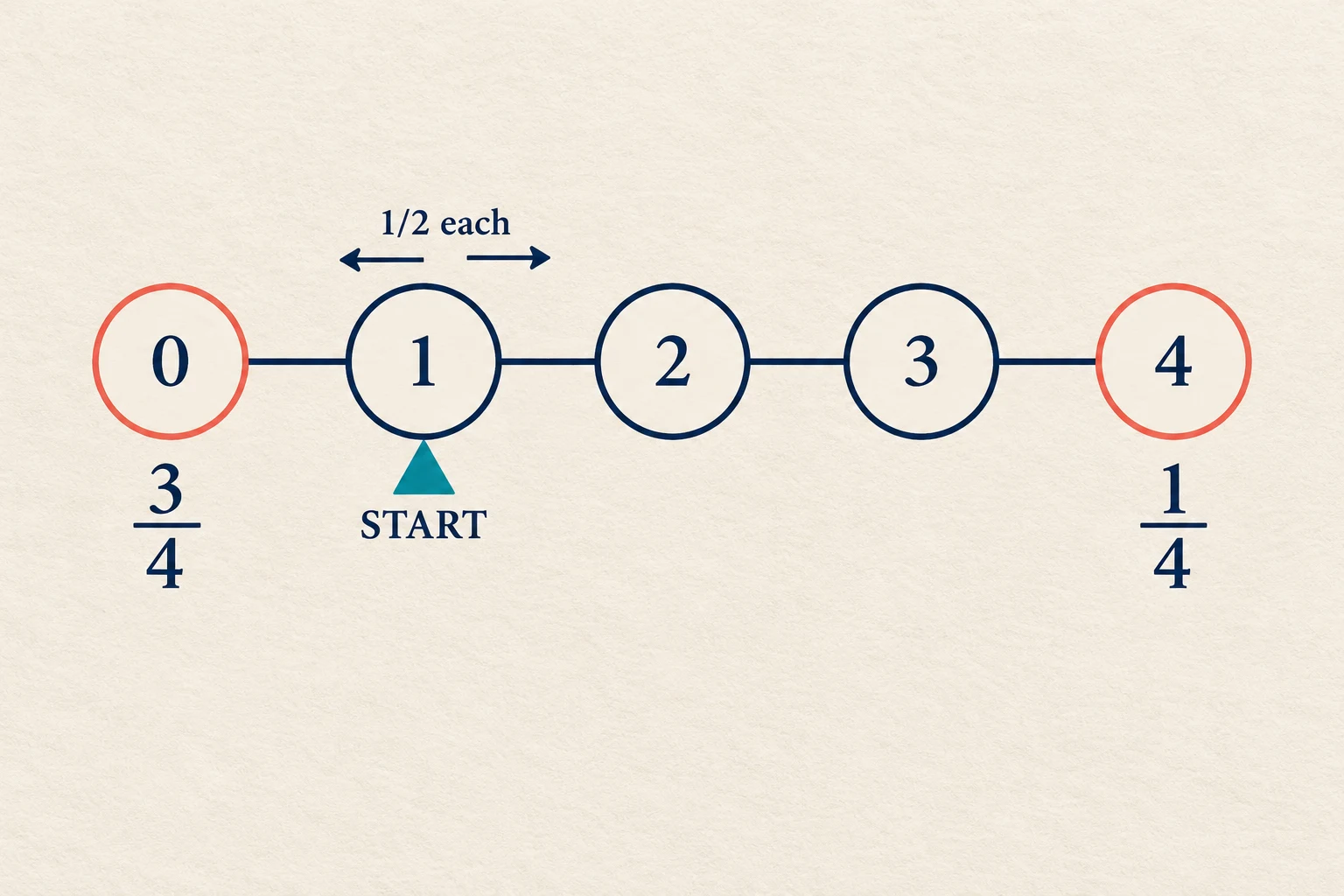
Five mark stop game: why the starting point matters
A quiet paper game separates fair directions, endpoint chances and the average time to stop under explicitly invented rules.
Read guide →From choosing everyday essentials to understanding how crypto checkout works, our guides explain the details in plain language. Compare options, plan purchases, and find practical answers before you check out.
Explore the latest guidesUnderstand supported payments and what happens at checkout.
Learn what to compare when choosing between similar products.
Get direct answers without unnecessary jargon or hype.
Fresh perspectives
New articles about products, payments, and thoughtful online shopping.
Showing 745–768 of 3086 guides
A quiet paper game separates fair directions, endpoint chances and the average time to stop under explicitly invented rules.
Read guide →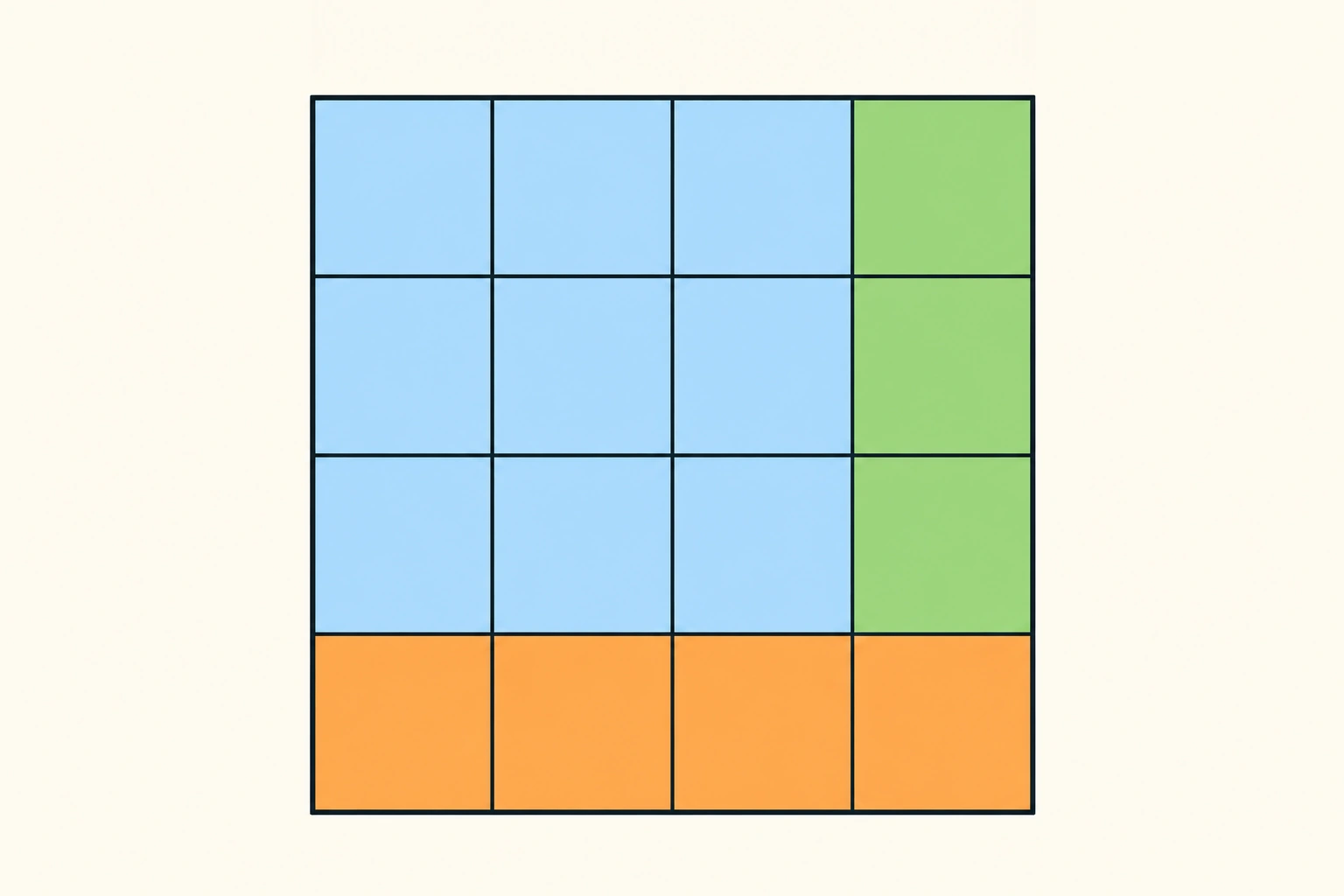
An original unit-cell square model separates each added L-shaped layer from the entire outer border and proves why the first n odd numbers total n squared.
Read guide →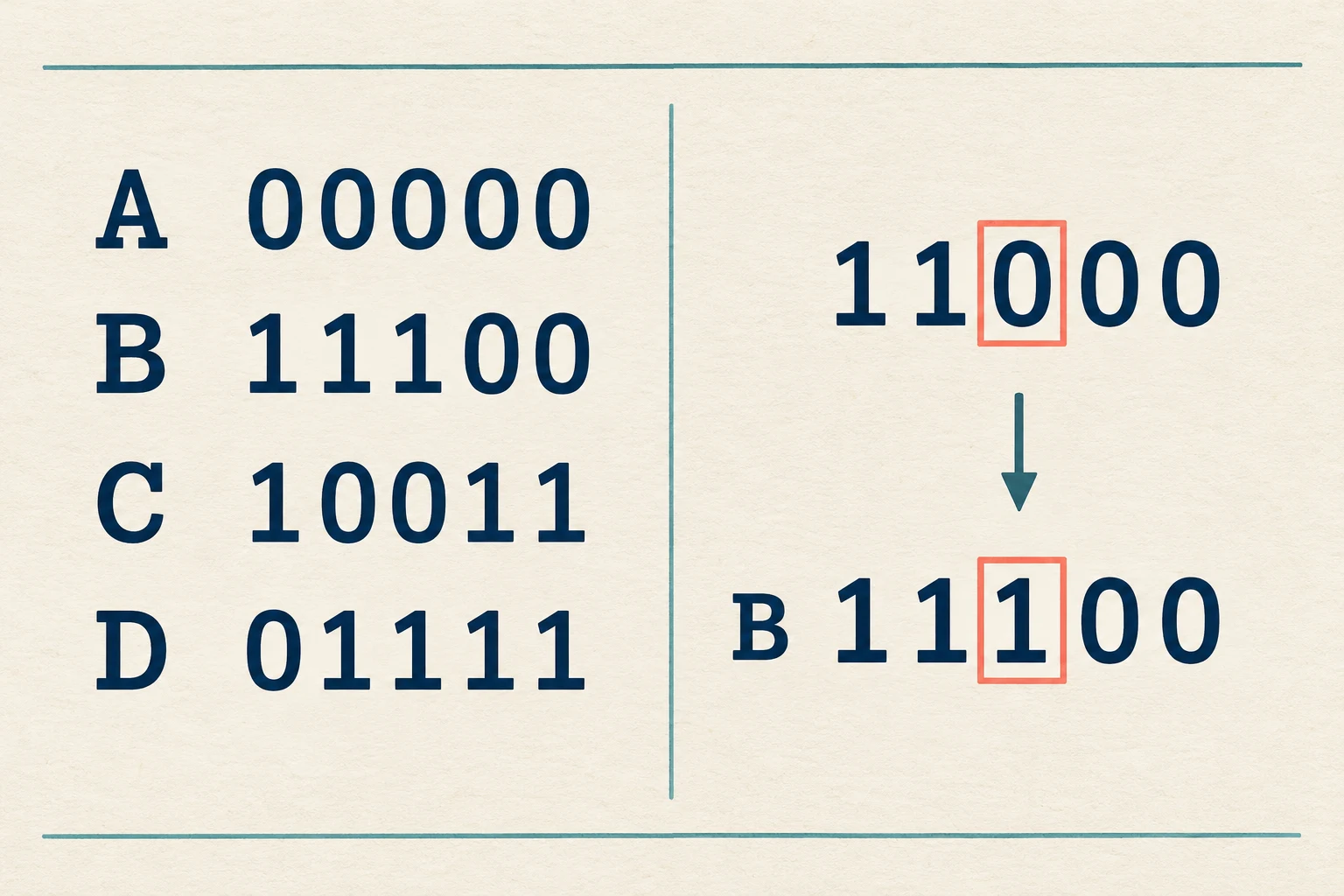
A fictional binary worksheet constructs disjoint correction neighborhoods and checks the exact limit of its one-flip guarantee.
Read guide →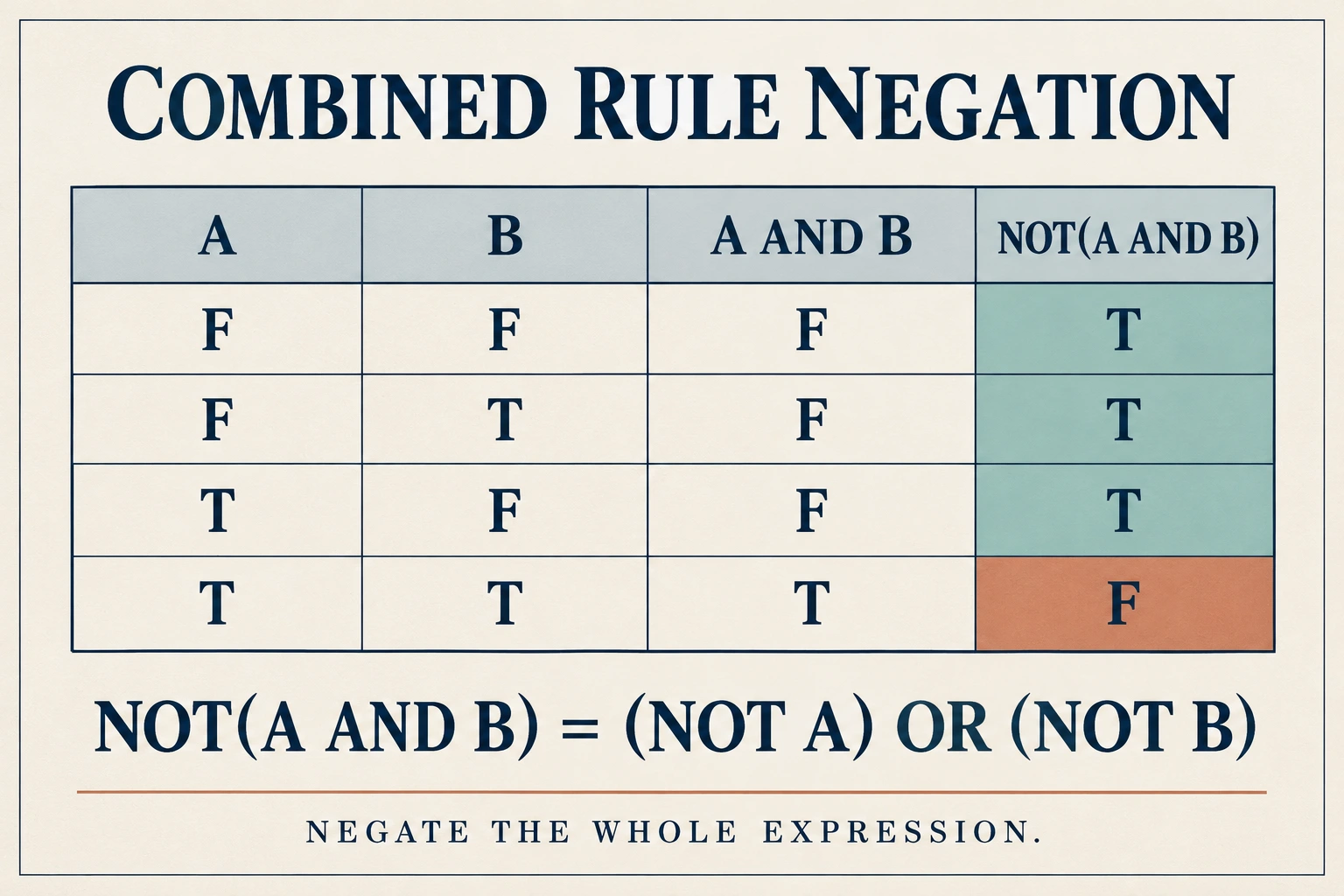
An original two-flag worksheet negates a complete AND or OR formula. Four defined input cases show why the connective changes and why false is not an inverse action.
Read guide →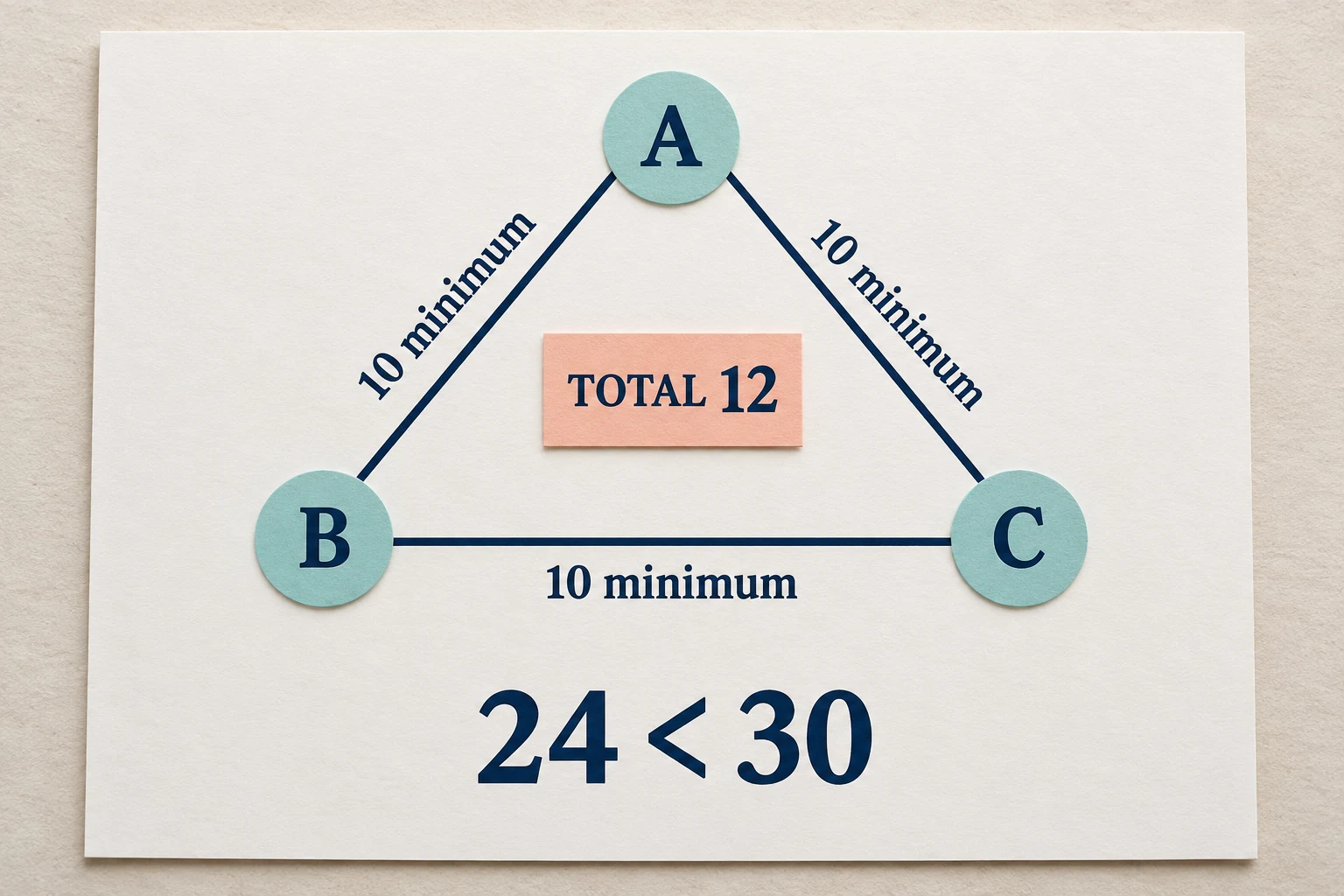
A fictional savings worksheet tests all three overlapping pair promises before choosing individual shares.
Read guide →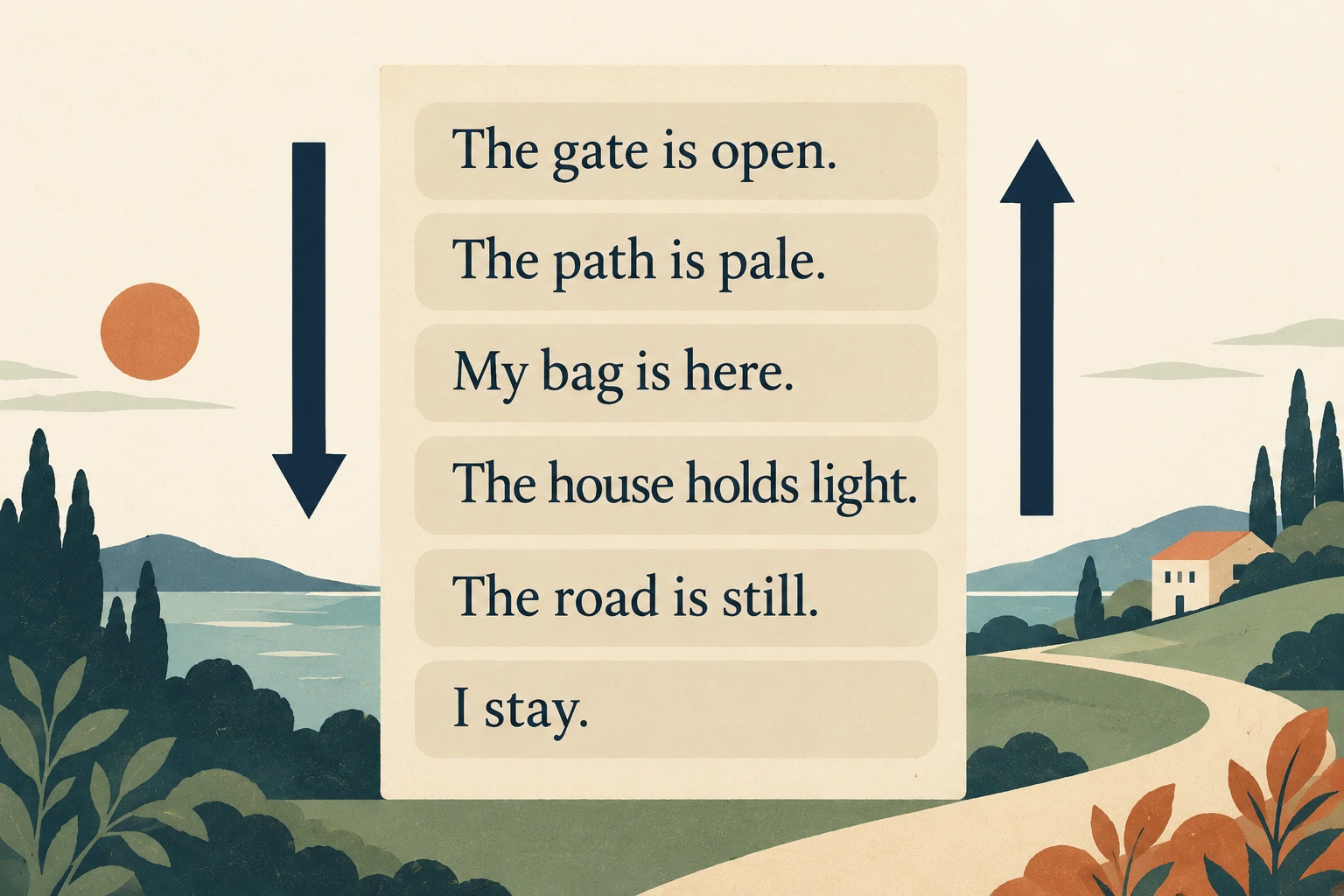
An original six-line poem keeps each complete sentence intact while reversing the order of its lines. A dependent-clause trial shows what needs repair before the wording is fixed.
Read guide →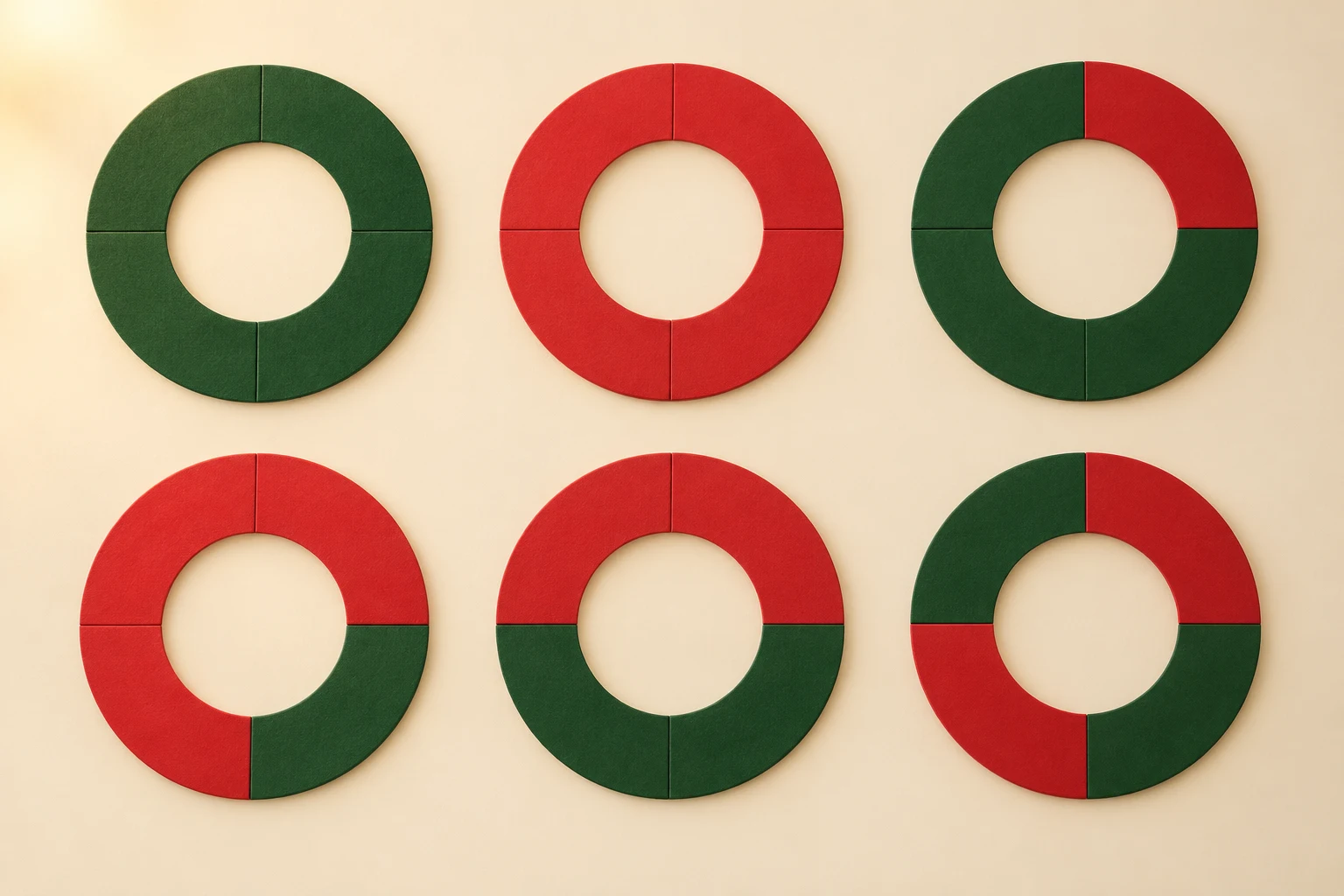
A fictional four-position holiday paper-ring puzzle shows why rotated patterns have unequal numbers of anchored descriptions.
Read guide →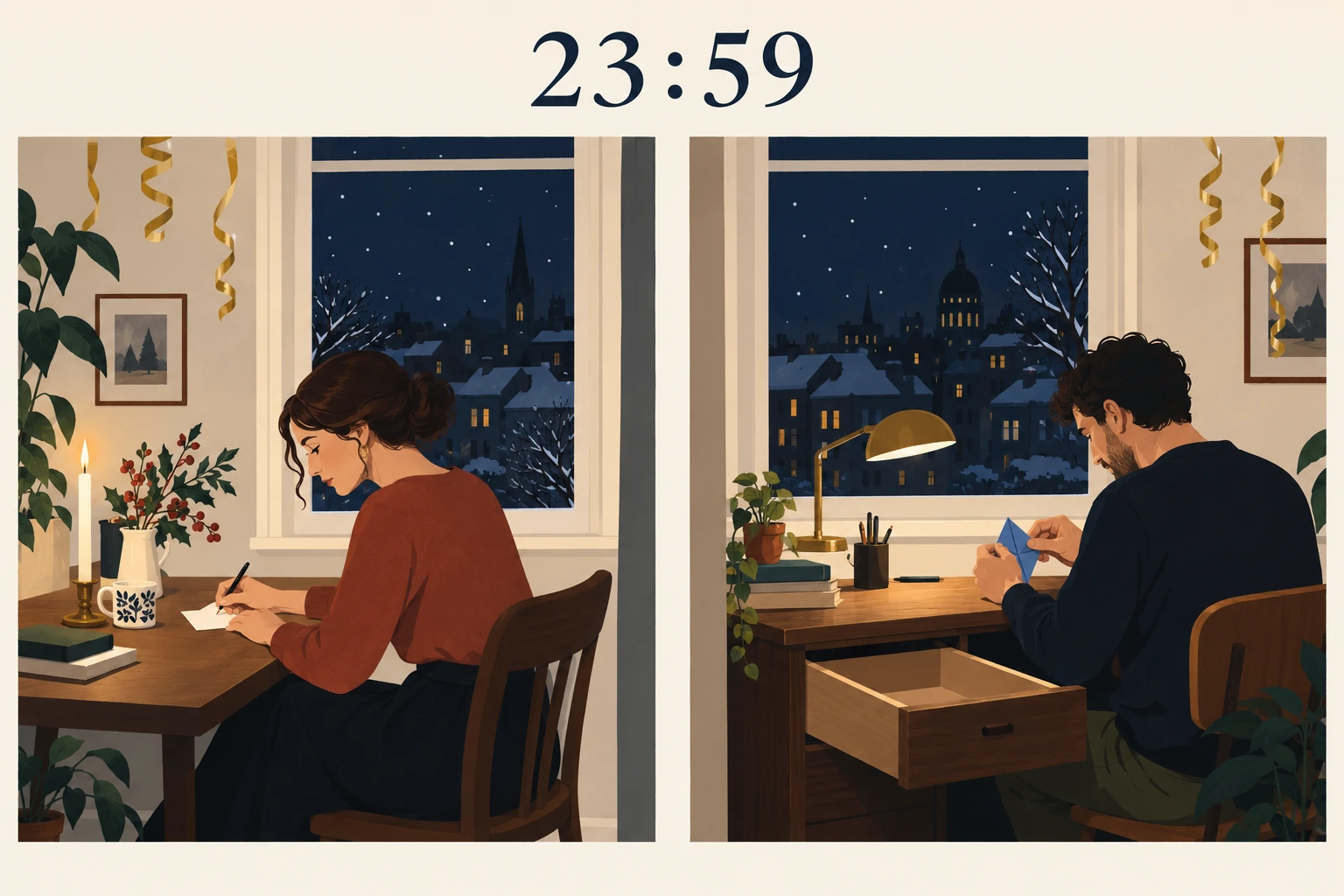
Two original fictional room scenes occupy the same declared New Year minute. Compare explicit time anchors, swapped page order and a revision that changes chronology.
Read guide →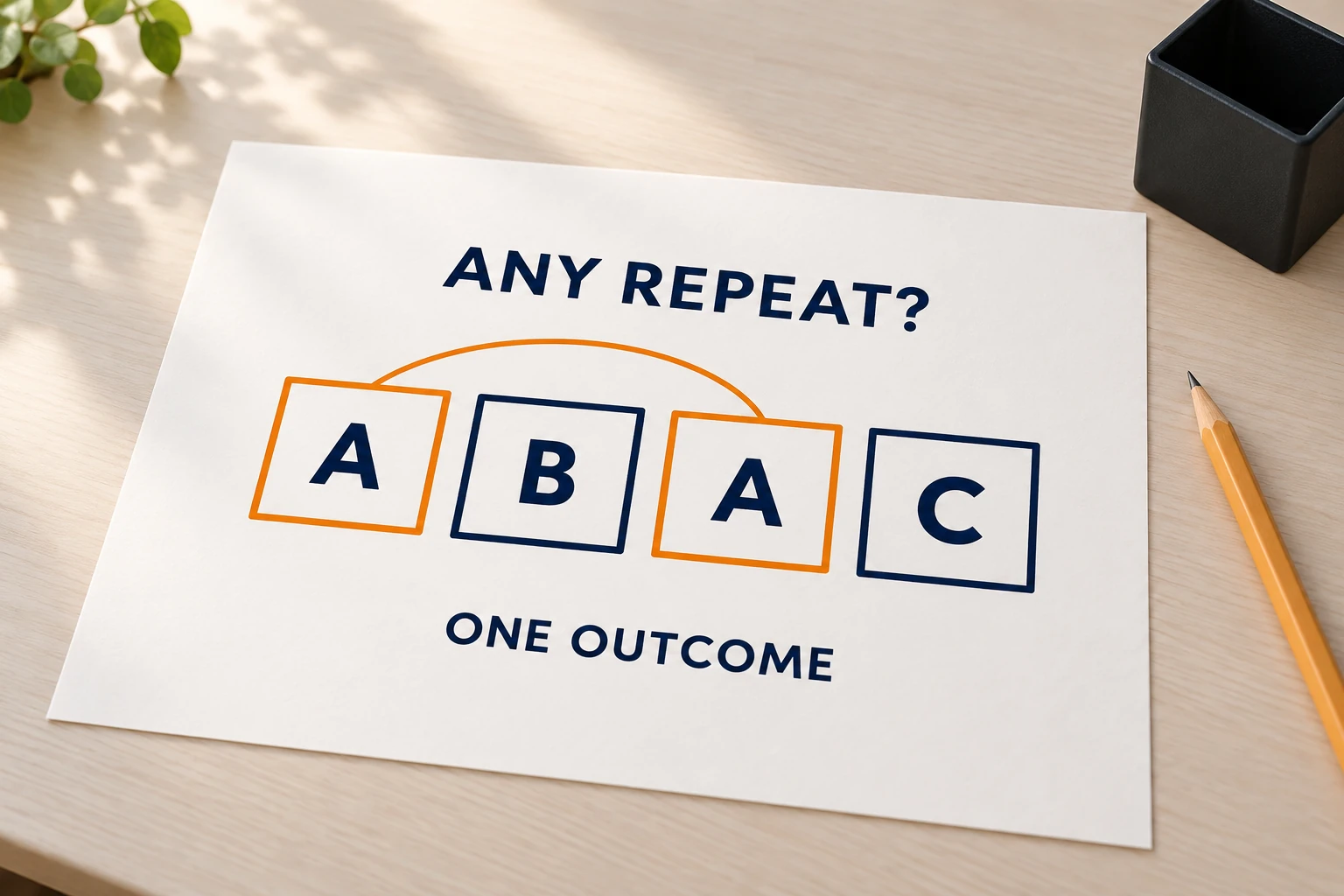
A fictional evening puzzle separates the chance of any repeated symbol from the number of matching pairs within an outcome.
Read guide →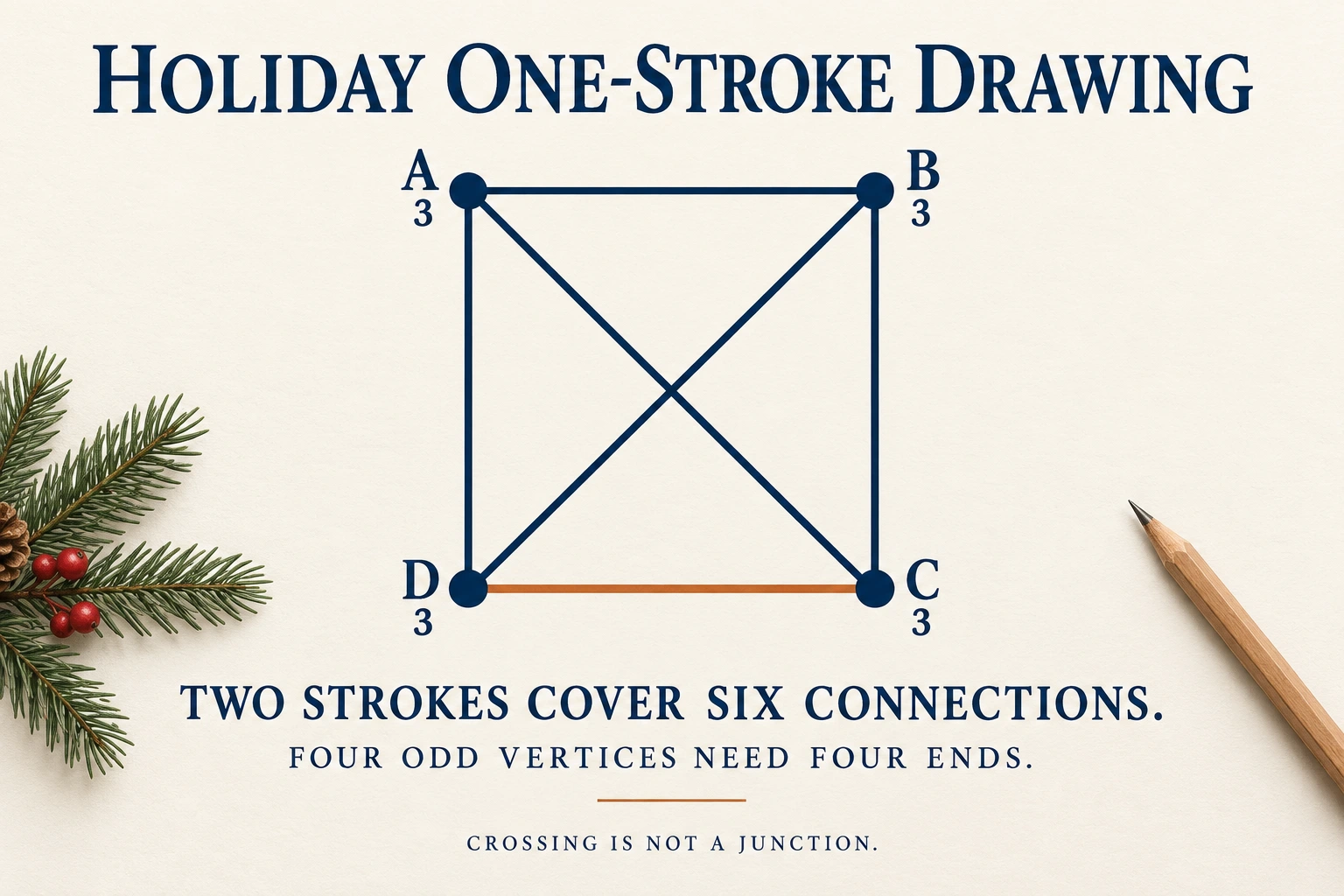
An original holiday-card paper motif has four points and six connections. Count the required ends, verify a two-stroke cover and keep a changed pattern separate.
Read guide →
A fictional caller finds a short note and compares it with another note through a phone exchange. Only one voice is printed; the other replies remain unwritten.
Read guide →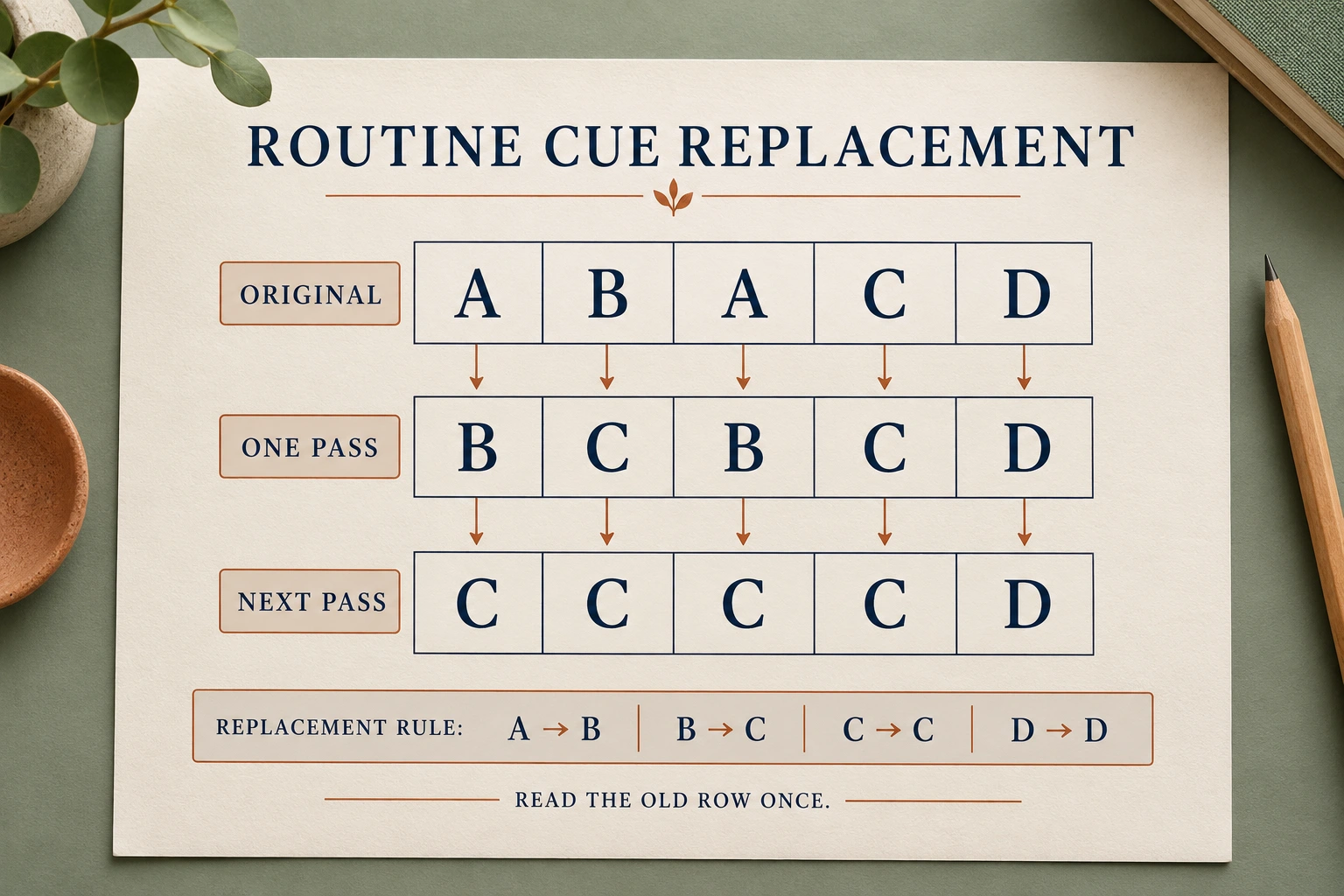
An original routine-cue worksheet freezes its old labels while writing a new row. Two mappings show how same-pass feedback changes the recorded result.
Read guide →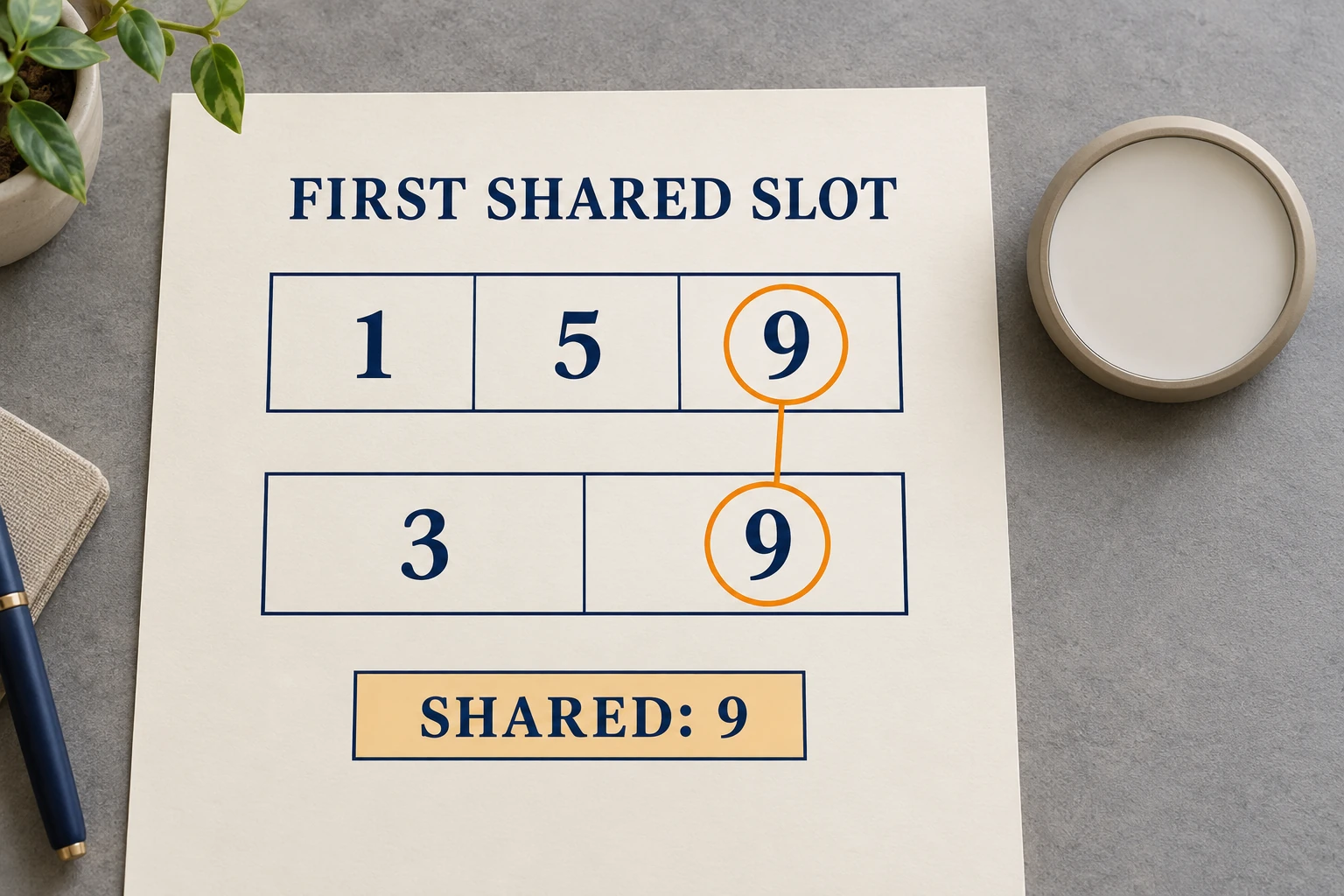
Test two fictional repeating slot lists for a common eligible position. Keep offsets and domain rules beside the first match and repeat gap.
Read guide →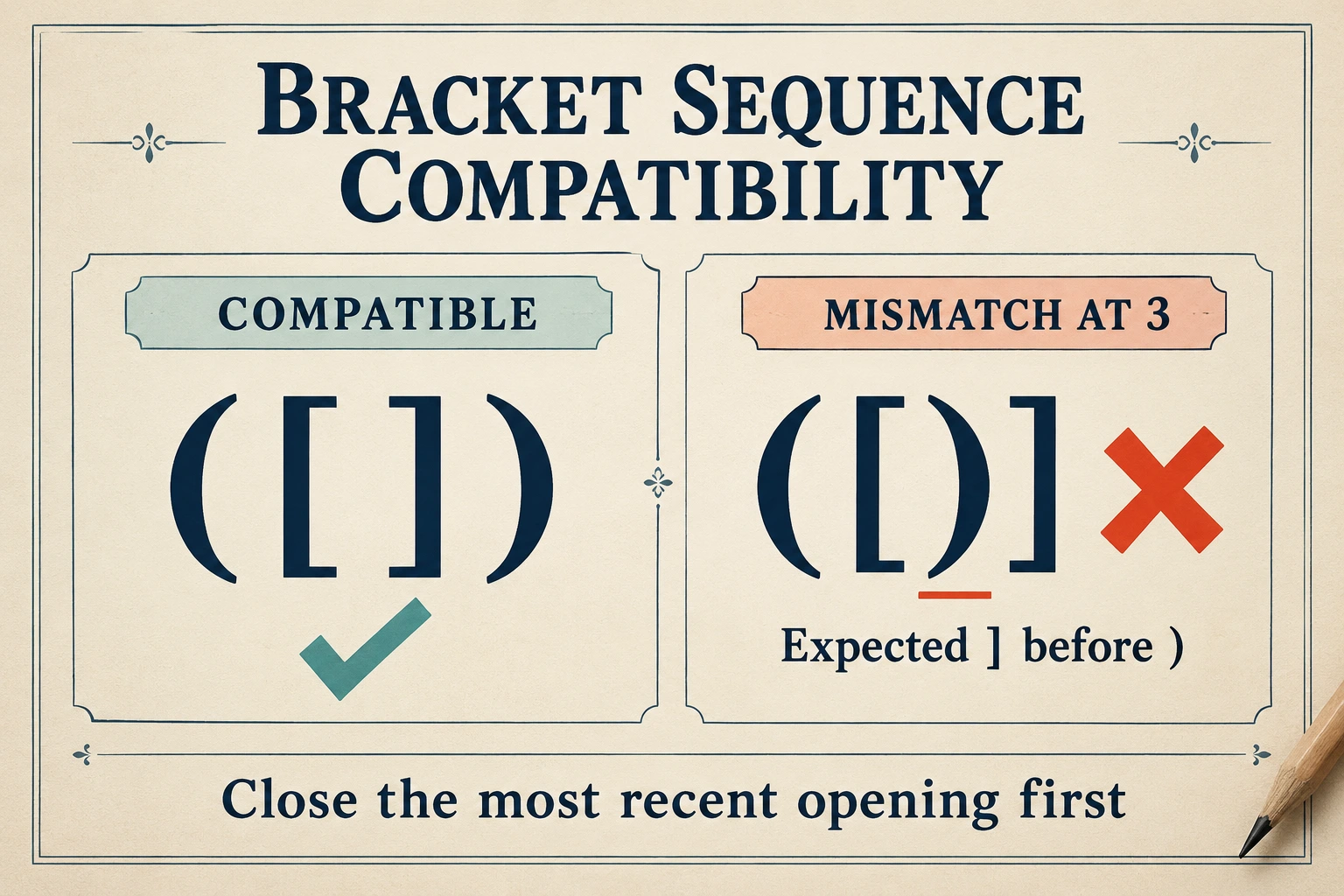
An original paper format uses two bracket types. Track the most recent unclosed opening mark to distinguish complete, mismatched and incomplete records.
Read guide →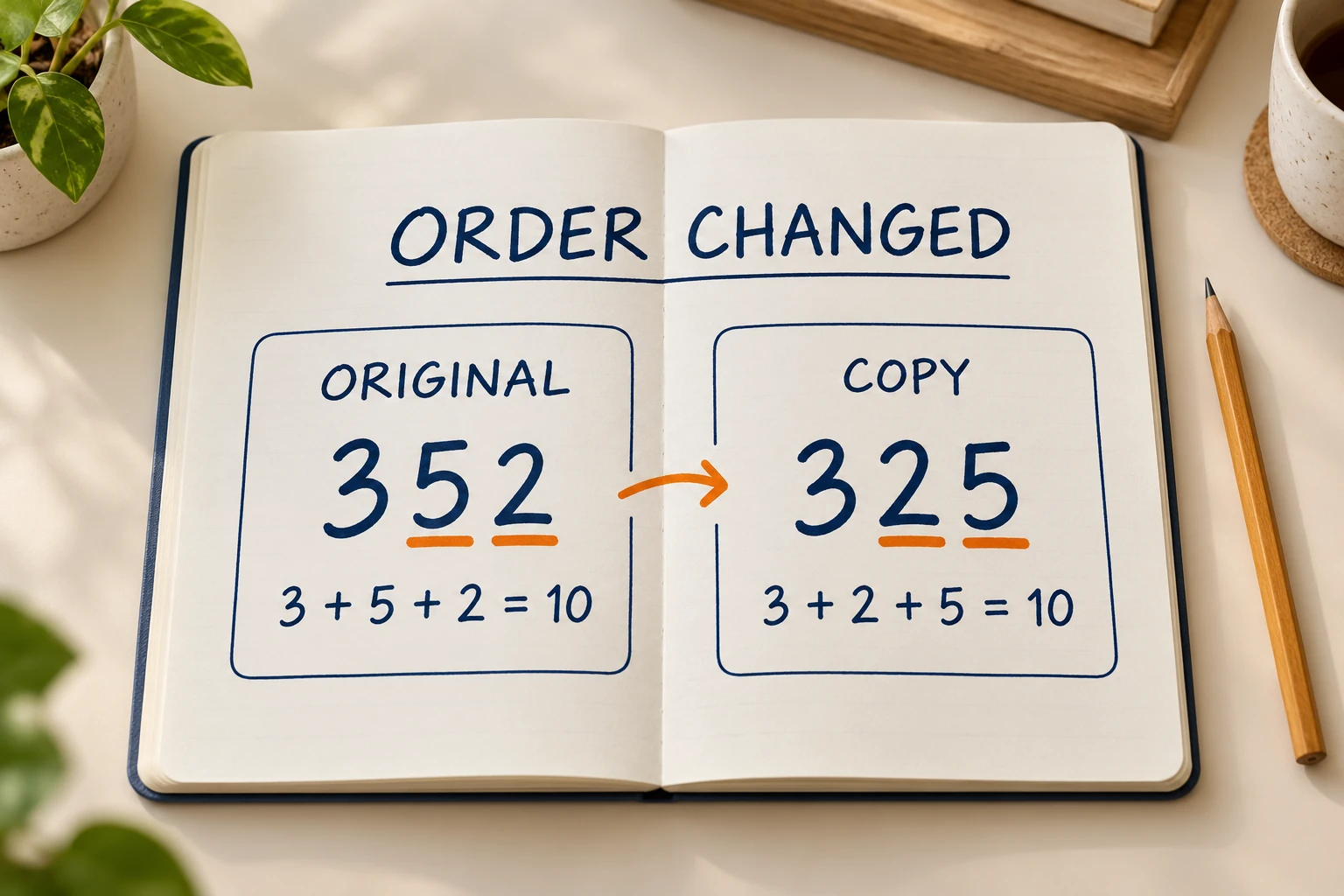
Diagnose a digit-sum check that passes after a decimal transposition. Compare a second defined check and its position-based limits.
Read guide →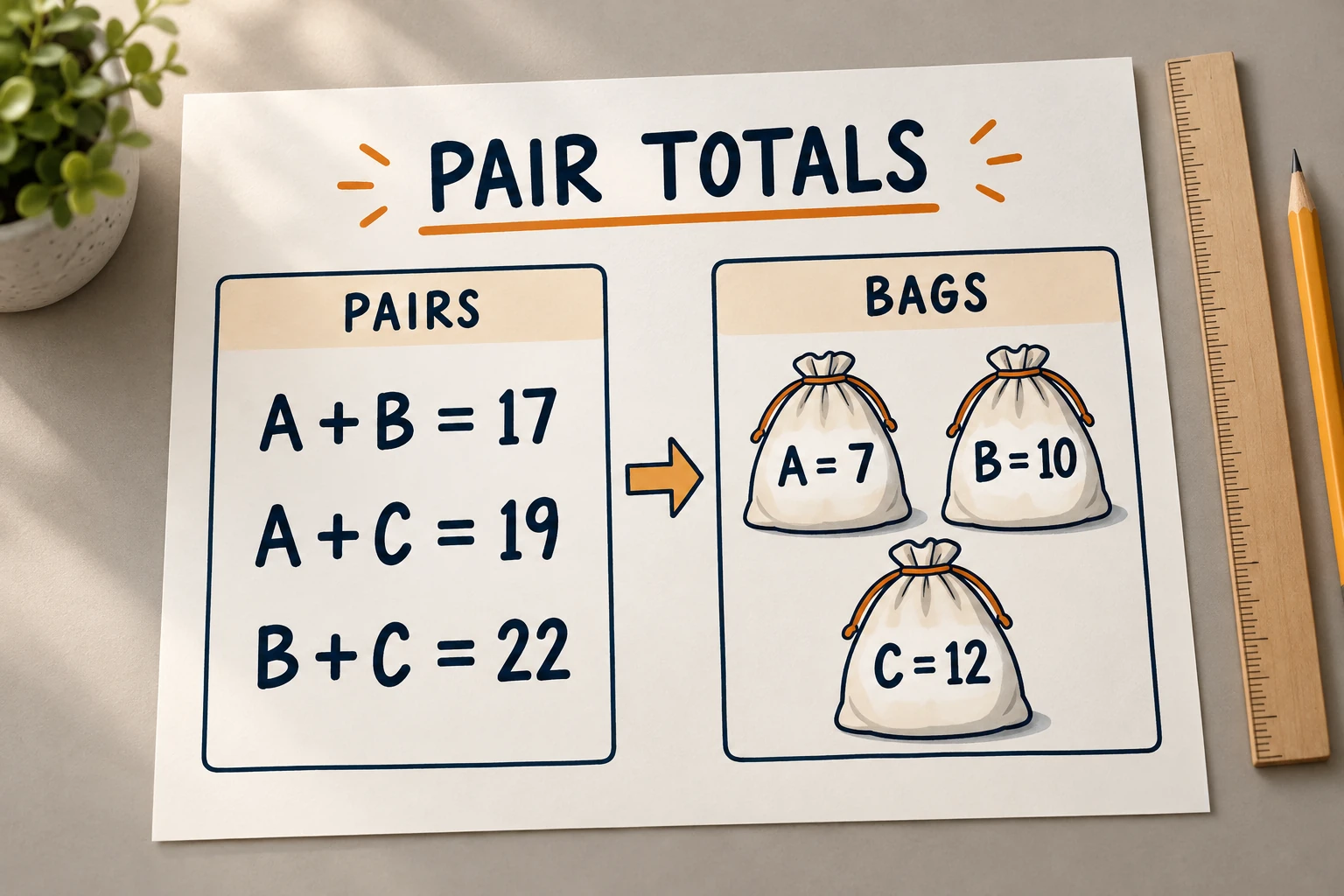
Recover three fictional bag counts from their pairwise totals, then test whether the unique algebraic answer satisfies the whole-count rules.
Read guide →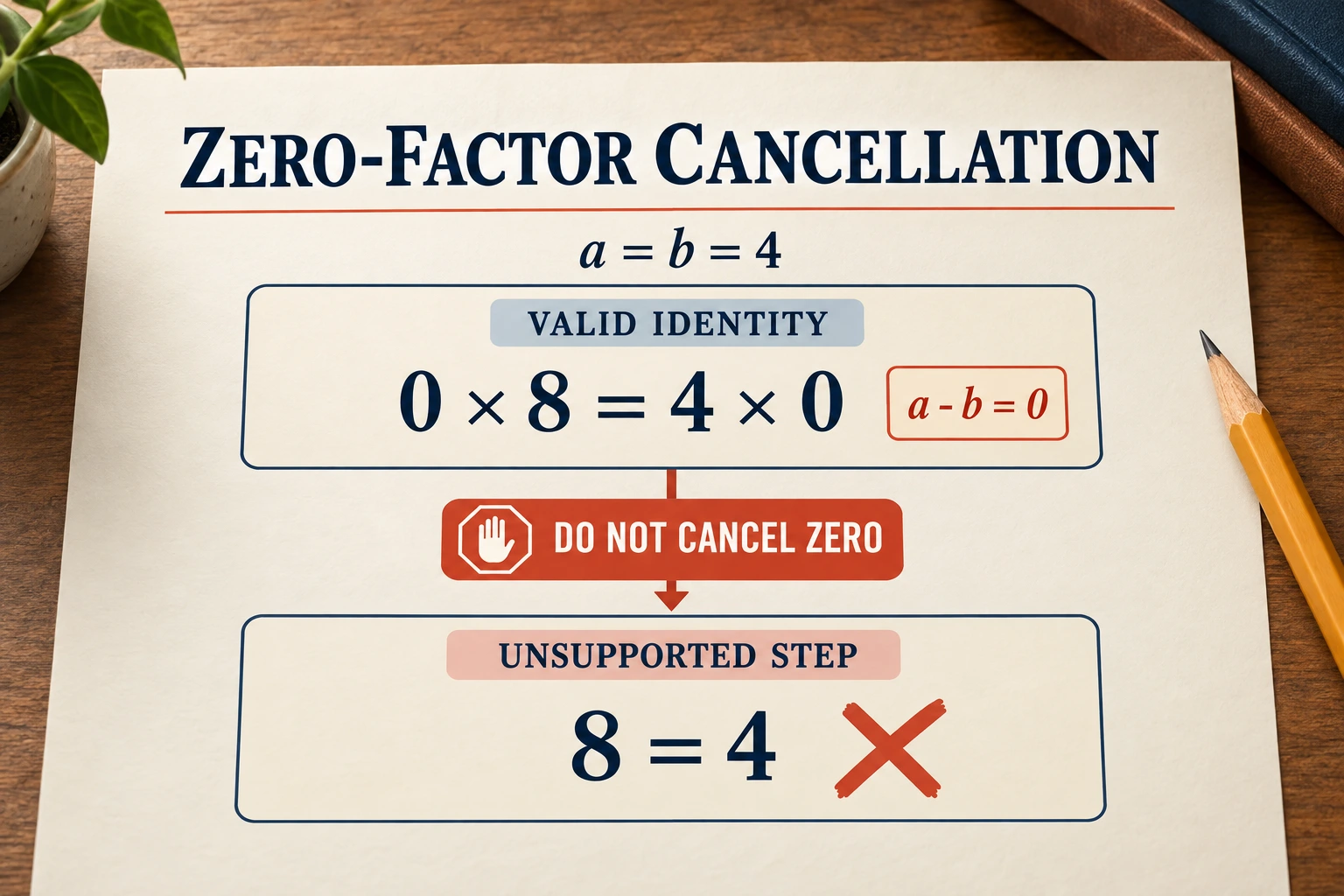
An original paper trace moves from true identities to an impossible equality. Track the factor forced to zero and retain the last valid line.
Read guide →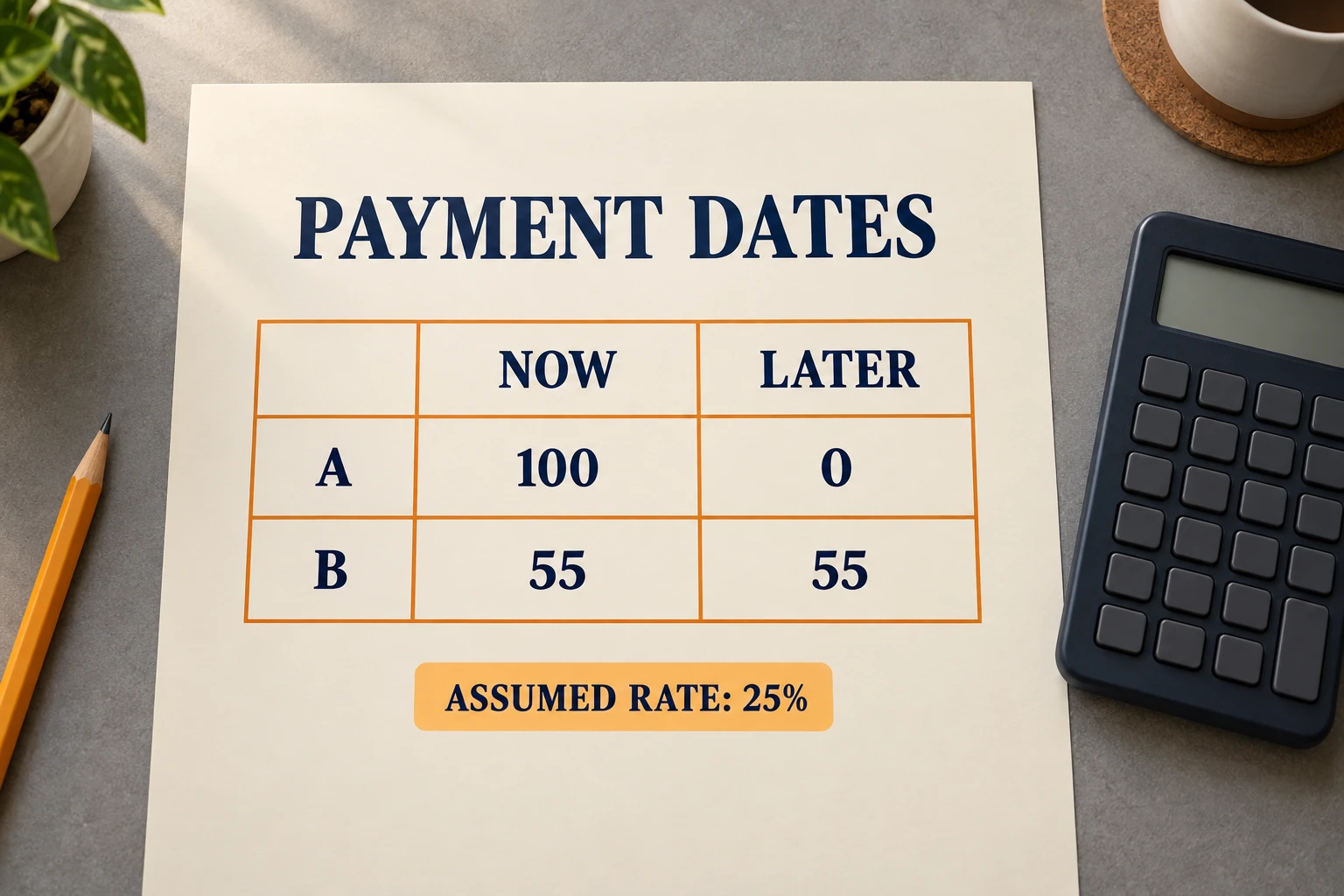
Compare fictional payments now and later at one common date. Keep the assumed conversion rule beside any conditional cost ranking.
Read guide →
An original 4-by-6 paper board loses two same-color cells. Eleven one-by-two pieces have enough total area, yet their equal-color consumption rules out a complete cover.
Read guide →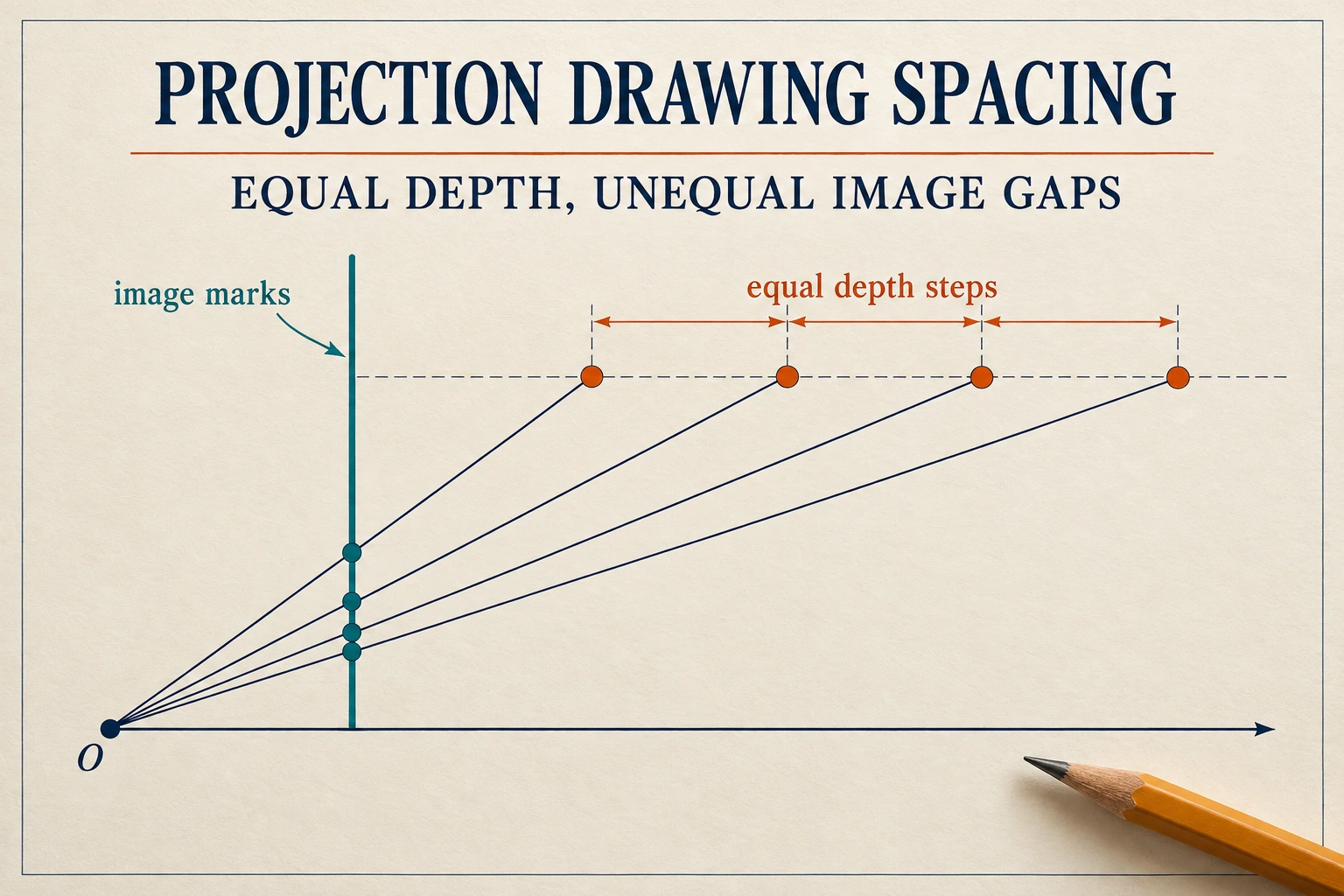
An original ray diagram maps equally spaced depth points onto a fixed image line. Exact fractions show where the projected marks belong.
Read guide →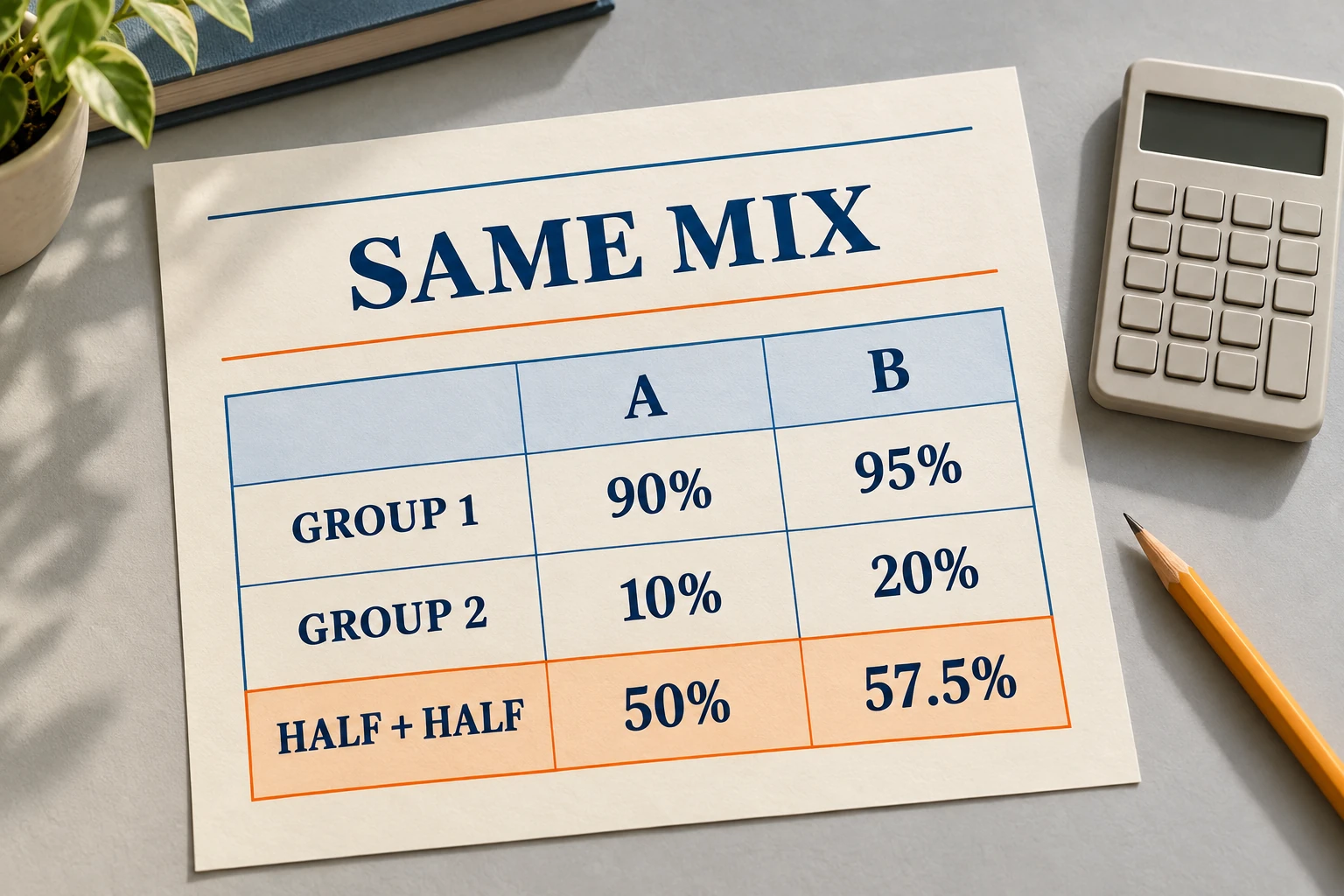
Two fictional routes reverse order when their subgroup counts are pooled. Check both summaries and compare an explicitly stated common mix.
Read guide →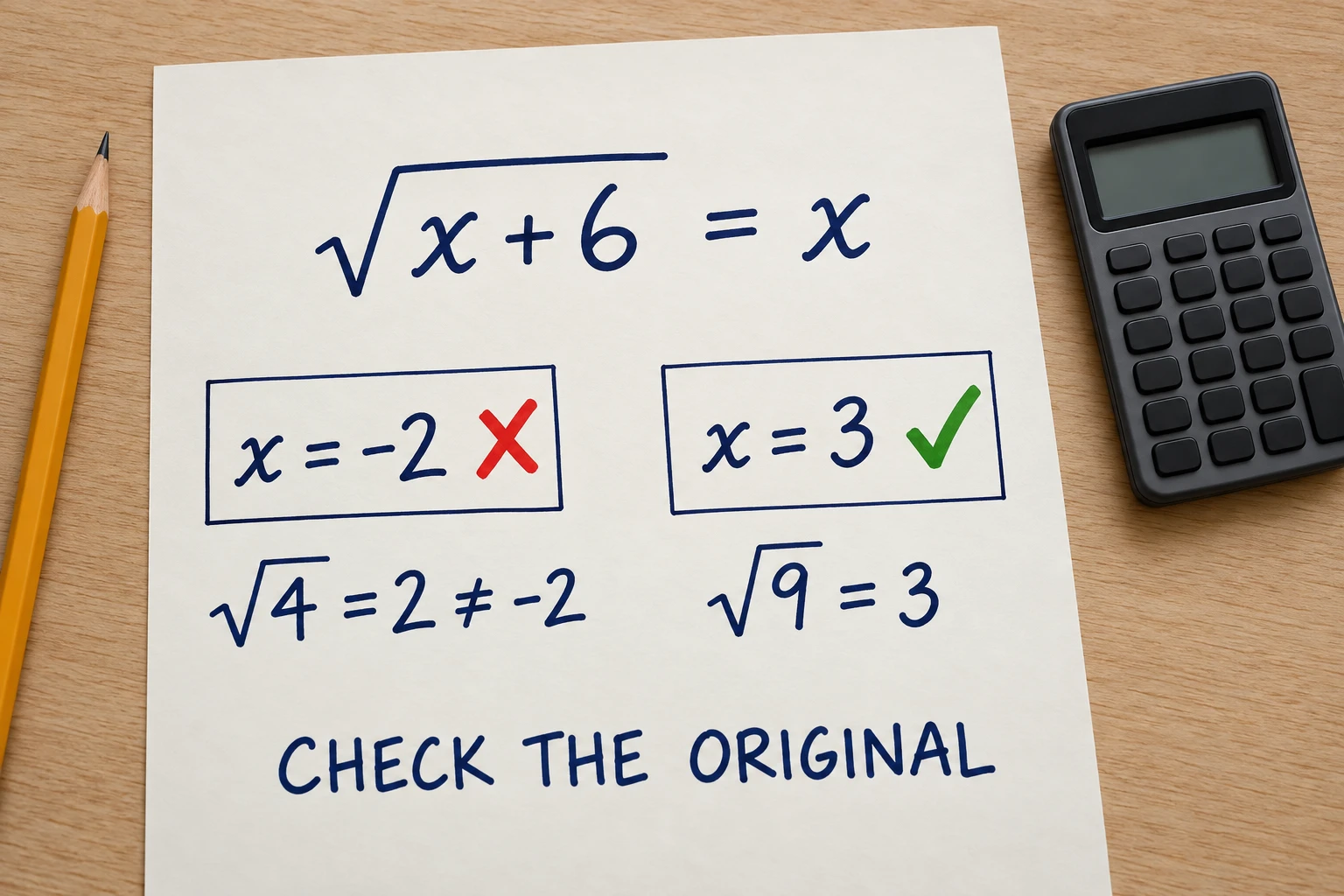
Diagnose a false radical-equation candidate by retaining sign and domain conditions, factoring exactly and checking both candidates in the original.
Read guide →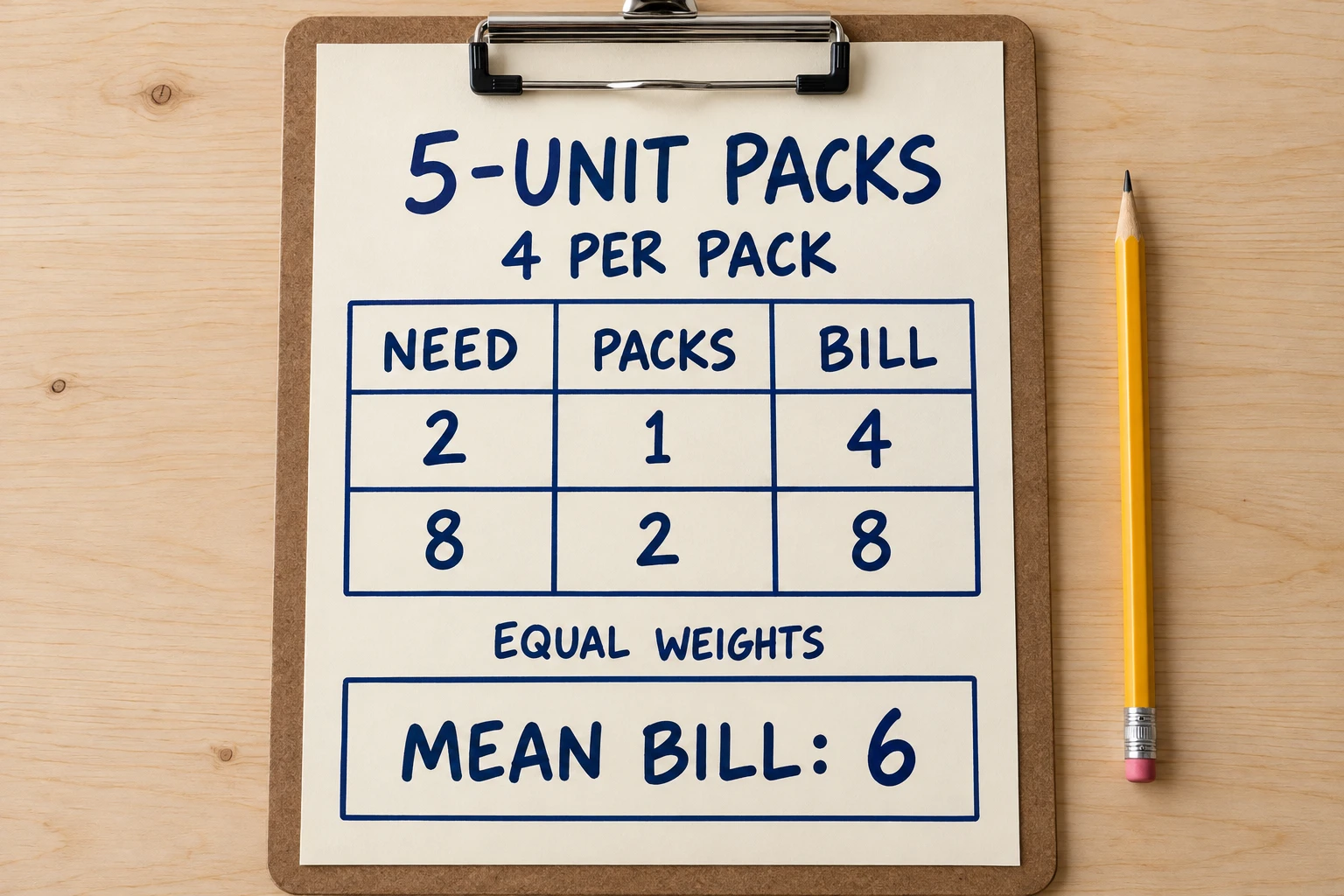
Compare a bill at mean demand with mean bills in fictional whole-pack cases, including equal means with different expense and a reversed-bias control.
Read guide →
An original winter scene follows Nila from a gathering into an earlier June moment, then back to the same table. Entry and return anchors keep the two story times identifiable.
Read guide →