Republeq Guides

Helpful answers for more confident shopping

From choosing everyday essentials to understanding how crypto checkout works, our guides explain the details in plain language. Compare options, plan purchases, and find practical answers before you check out.

Explore the latest guides

Crypto checkout

Understand supported payments and what happens at checkout.

Product research

Learn what to compare when choosing between similar products.

Practical guidance

Get direct answers without unnecessary jargon or hype.

Fresh perspectives

Latest guides

Showing 3001–3024 of 3086 guides

Screen aspect ratio decisions about fitting content completely, cropping it, or stretching it across a display.
Monitors & Displays · 9 min read

Compare screen aspect ratio before fitting content to a display

A rectangular image can fit completely inside a display without filling it. To predict the result, compare the image's width-to-height relationship with the viewing area's shape, then decide whether to preserve the whole image, crop it to fill the space, or stretch it. A higher pixel count does not settle that choice. The screen aspect ratio describes proportions; resolution supplies the pixel dimensions used to describe or calculate them.

Read guide →


Computer memory and storage guide to reading RAM and drive capacity as separate specifications.
Laptops & Desktop PCs · 9 min read

Compare computer memory and storage without adding them together

Compare RAM with RAM and drive capacity with drive capacity. Keep both figures separate, even when they use the same units. When a listing says "up to" or presents drives as alternatives, preserve that wording instead of treating the largest figures as the configuration you would receive. A useful comparison of computer memory and storage records what each number measures and whether it describes a stated configuration or an option.

Read guide →
Camera zoom ratios guide to comparing listed ranges without assuming how far a subject can be captured.
Cameras & Video Gear · 8 min read

Read camera zoom ratios without mistaking them for reach

A zoom multiplier and a focal length answer different questions. To read camera zoom ratios , look for the relationship between the shortest and longest focal lengths in a lens's range. To compare the view associated with different camera systems, look for focal-length figures expressed on a common basis. A larger number on one listing does not settle the comparison when the other listing measures something else.

Read guide →
Bluetooth audio direction guide to identifying the transmitter and receiver before pairing an audio setup.
Speakers, PA & Home Theater · 9 min read

Understand Bluetooth audio direction before pairing devices

To understand Bluetooth audio direction , identify which device would send the recording and which would receive it at each proposed wireless connection. Then identify where you want to hear the sound. A Bluetooth label alone does not answer all of those questions. Sending audio out of a CD player and receiving phone audio into that player are different requests, even though both involve wireless listening.

Read guide →
Refrigerator compartment capacity comparison that separates fresh-food and freezer space from an advertised total.
Refrigeration & Freezers · 9 min read

Compare refrigerator compartment capacity beyond the total

A larger advertised refrigerator total does not establish that its fresh-food compartment or freezer is larger. To compare refrigerator compartment capacity , you need the allocation for each model. The supplied Krib B description gives both compartment figures; the WAA description gives an overall capacity without a numerical split. That supports a comparison of advertised totals, but leaves a compartment-by-compartment ranking unresolved. For refrigerator compartment capacity , verify each step.

Read guide →
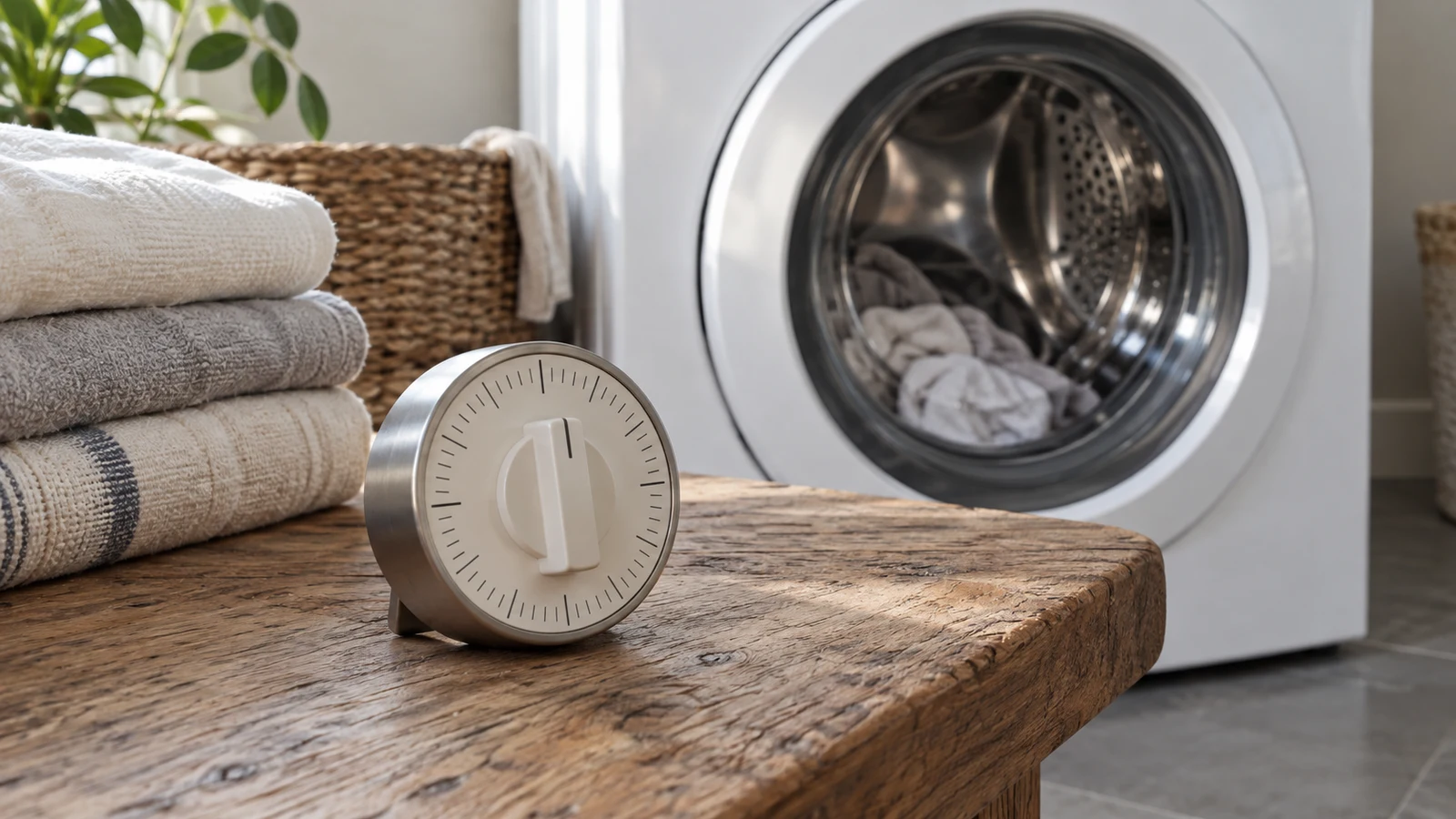
Appliance timer functions guide to separating a timed program from the other controls needed for a cooking task.
Appliance Care & Buying · 8 min read

Understand appliance timer functions before choosing a program

A timer description answers only part of the question you need to settle before choosing an appliance or a program. Look for what interval it measures and what action the appliance takes when that interval ends. A countdown, a transition to another temperature stage, and the end of a complete program are different things. Understanding appliance timer functions means keeping those events separate until the exact-model instructions connect them.

Read guide →

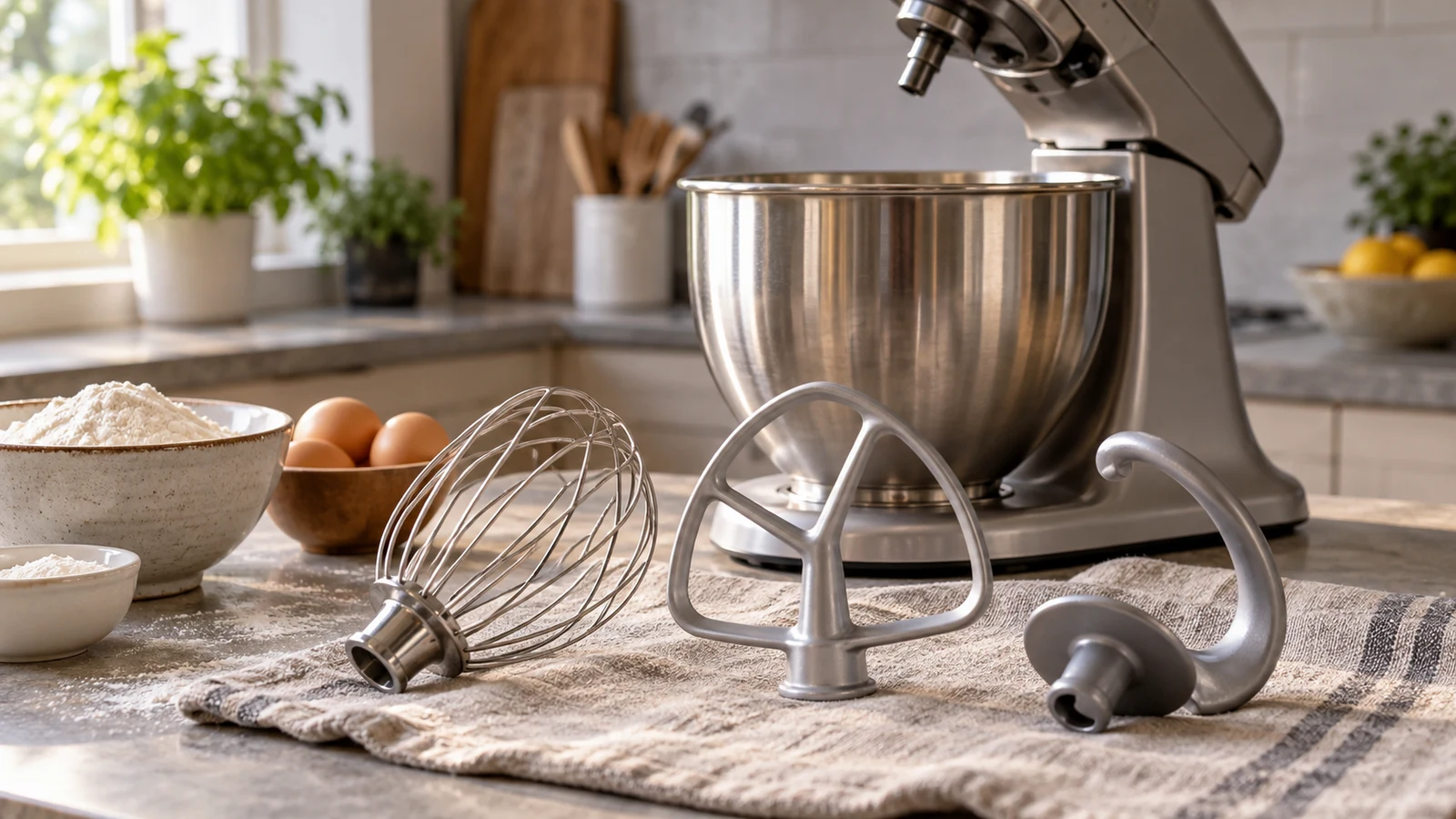
Stand mixer attachment selection based on the recipe action, ingredient state, and result needed at each mixing step.
Cooking & Food Prep · 9 min read

Plan stand mixer attachment selection around the recipe

When a recipe names an action instead of an attachment, read the ingredient state and intended result before choosing a candidate tool. For stand mixer attachment selection , distinguish what the recipe explicitly requests from what you infer. Then compare that reading with the instructions for the exact mixer. A plausible interpretation can help you prepare a question, but it does not establish that an attachment suits the recipe.

Read guide →
Spreadsheet duplicate records reviewed against registration meaning and conflicting fields before any row is removed.
Data & Spreadsheets · 9 min read

Review spreadsheet duplicate records before deleting rows

To review spreadsheet duplicate records , ask whether the rows describe the same registration occurrence, then record the evidence for that conclusion. Matching values identify candidates for review. They do not, by themselves, establish that a row is unnecessary. A repeated name might belong to someone attending another session, while a changed entry might be a correction that still needs clarification.

Read guide →
Scatter plot interpretation that reads paired values, spread, and exceptions without treating an apparent pattern as proof of cause.
Data & Spreadsheets · 9 min read

Practice scatter plot interpretation without assuming a cause

A scatter plot can show that larger values of one measurement tend to appear beside larger values of another. It cannot, by itself, explain why. Good scatter plot interpretation starts by identifying what each point represents, reading its coordinates, and describing the pattern alongside the observations that complicate it. Your finished note should distinguish what is visible from what remains unknown.

Read guide →
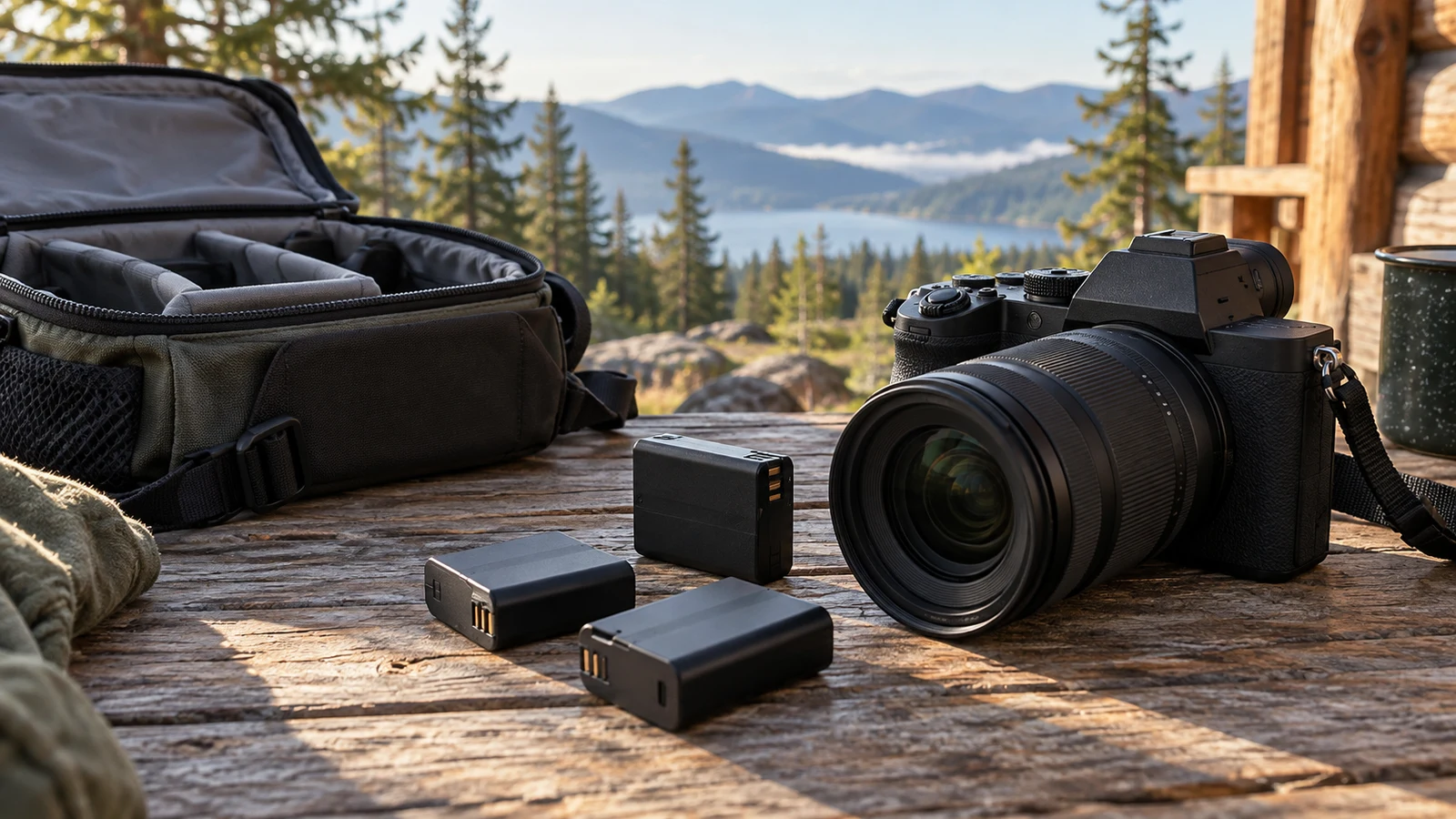
Camera battery planning guide to estimating time away from charging and checking a kit’s power options.
Cameras & Video Gear · 9 min read

Use camera battery planning for time away from charging

A spare battery count cannot tell you whether a camera will last through an outing. Useful camera battery planning starts with the occasions you want to record, the batteries you actually have ready, and the next charging opportunity you can depend on. Where endurance is unknown, make a provisional allocation and decide what you would leave unrecorded if power becomes uncertain. That gives you a workable set of priorities without pretending to know how long a particular battery will last.

Read guide →
Spreadsheet filtering planned so hidden rows are not mistaken for missing data or gaps in the original register.
Data & Spreadsheets · 9 min read

Plan spreadsheet filtering without mistaking hidden rows for gaps

To plan spreadsheet filtering , state which records should remain visible, identify the records that meet those conditions, and describe what the resulting view leaves out. Keep the complete source table separate from that description. A submission excluded by a filter still belongs to the source; a blank field still lacks information. Neither becomes a deleted record merely because the view answers a narrower question. For spreadsheet filtering , verify each step.

Read guide →
paraphrasing practice: rewording a passage while preserving the source’s meaning.
Writing & Documents · 8 min read

Use paraphrasing practice to preserve a source's meaning

A faithful paraphrase changes the wording while keeping the source's claims intact. For paraphrasing practice , leave the original passage visible, identify what it says and compare your rewrite against it in both directions. Every source detail should have a place in the new explanation, and every new statement should have support in the source. Pay particular attention to permissions, conditions and words that express uncertainty.

Read guide →
Ice maker capacity planning for a short gathering where ice must be available when drinks are served, not merely produced over a day.
Refrigeration & Freezers · 9 min read

Plan ice maker capacity around a short serving window

To assess ice maker capacity for a short gathering, compare the ice you expect to have available at each serving moment with the amount you expect to take out. A daily production figure cannot answer that question by itself. You also need a starting quantity, a plausible account of replenishment before each withdrawal, and enough usable holding space. Where those details are missing, the result should remain a provisional plan rather than a promise that the machine will keep up.

Read guide →
Spreadsheet formula references checked for destination-row inputs and shared fixed cells before copying calculations.
Data & Spreadsheets · 9 min read

Check spreadsheet formula references before copying calculations

Before copying a formula, decide which inputs belong to the destination row and which belong to a shared location. Then predict the addresses the copied formula should contain. Checking spreadsheet formula references this way helps you catch a formula that produces a reasonable number while reading the wrong cells. The question is whether each reference still points to the input you intended.

Read guide →
Meeting minutes framework for separating discussion, proposals, decisions, and assigned tasks in a reviewable record.
Workplace Planning · 9 min read

Write meeting minutes that distinguish decisions from discussion

To turn rough notes into meeting minutes , record what each statement establishes: a topic discussed, a proposal made, a decision reached, or a task accepted. Keep any conditions attached to an agreement. If the notes do not establish who accepted a task or when it is due, leave that detail unresolved and write a specific question for confirmation. A polished sentence should never make the meeting sound more decisive than the notes support.

Read guide →
Poetry line breaks compared by holding words and punctuation fixed while testing how different arrangements affect reading.
Writing & Documents · 8 min read

Explore poetry line breaks without changing the words

To compare poetry line breaks , keep the words, their order, and the punctuation fixed, then write alternative arrangements. Look at where each line ends in relation to the sentence. Decide whether those endings support the reading you intend, and explain your preference with a specific word or phrase. You do not need to find a universally correct arrangement. You need a reason for the boundaries you choose.

Read guide →
Active music listening guide to recognizing a recurring phrase across playback moments and audio setups.
Learning & Creative · 9 min read

Try active music listening by following a recurring phrase

Choose a short phrase in a recording, describe what makes it recognizable, and listen for places where it might return. When something sounds familiar, compare that feature with what you heard earlier and notice what surrounds it. This approach to active music listening gives you a manageable question: does this particular figure come back, and what seems different when it does? You do not need to identify every instrument or explain the whole piece.

Read guide →
percentage change: choosing the correct starting value for a directional comparison.
Data & Spreadsheets · 8 min read

Calculate percentage change using the right starting value

To calculate percentage change , subtract the starting value from the ending value, divide that difference by the starting value, and multiply by 100. The starting value answers the question "Compared with what?" Choosing it correctly matters because reversing a comparison changes the denominator. An increase and its reversed decrease can have the same difference in counts but different percentages.

Read guide →