Crypto Commerce
Use camera battery planning for time away from charging
A spare battery count cannot tell you whether a camera will last through an outing. Useful camera battery planning starts with the occasions you want to record, the batteries you actually have ready, and the next charging opportunity you can depend on. Where endurance is unknown, make a provisional allocation and decide what you would leave unrecorded if power becomes uncertain. That gives you a workable set of priorities without pretending to know how long a particular battery will last.
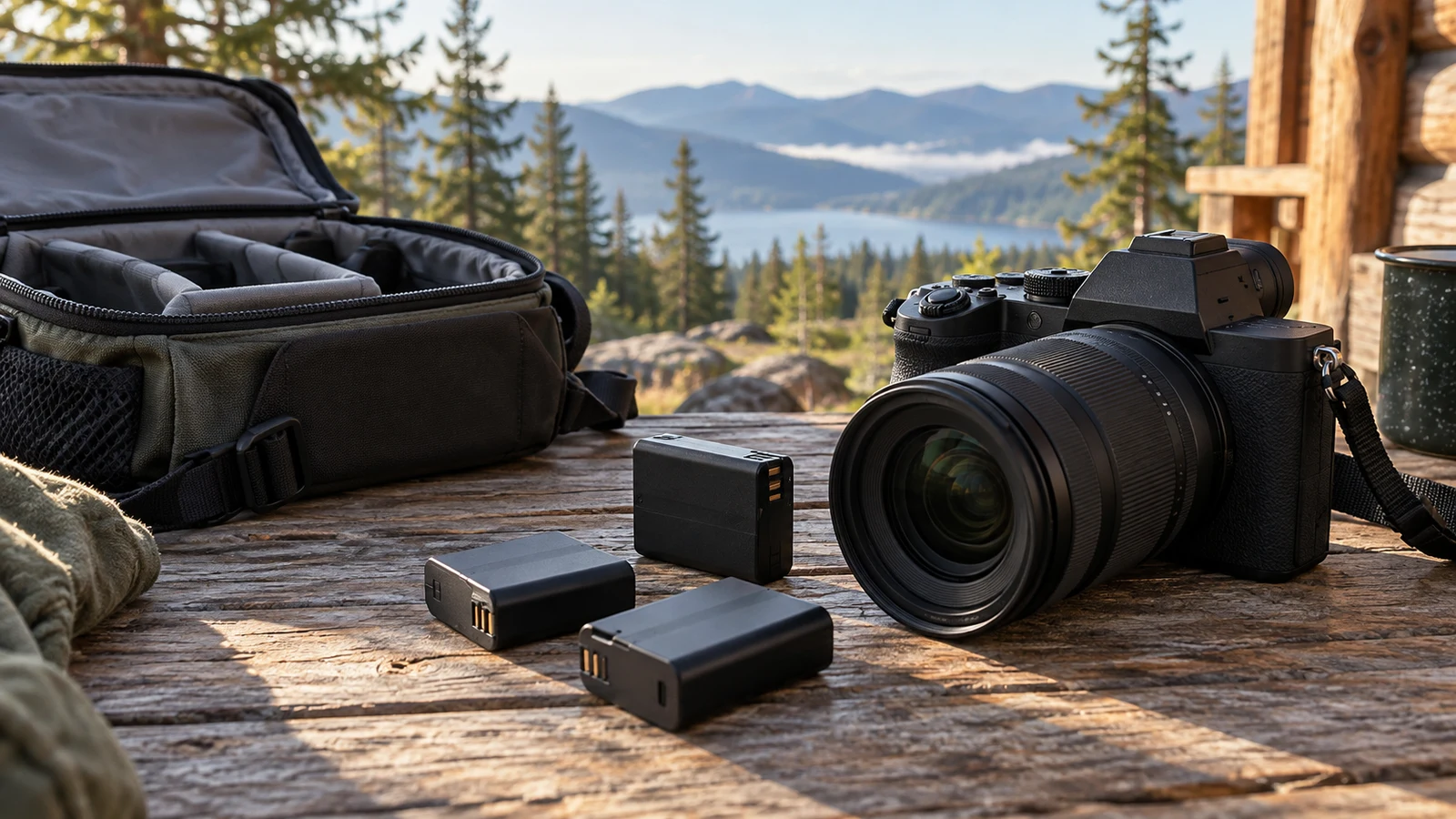
A spare battery count cannot tell you whether a camera will last through an outing. Useful camera battery planning starts with the occasions you want to record, the batteries you actually have ready, and the next charging opportunity you can depend on. Where endurance is unknown, make a provisional allocation and decide what you would leave unrecorded if power becomes uncertain. That gives you a workable set of priorities without pretending to know how long a particular battery will last.
For a personal photography outing with optional short video clips, the most useful result is a brief departure note. It should identify the period away from charging, the moments you care about most, and any reserve battery you intend to keep for later. Neither a long accessory list nor an included charger answers those questions by itself. The Sony and Canon bundle descriptions below illustrate how to separate listed equipment from the power you can responsibly include in that note.
Define Your Time Away Before Electronics Product Checks
Write down when you expect to leave dependable charging access and when you expect to regain it. Use the actual boundaries of your day: leaving home and returning home, for example, rather than just the time spent at your main destination. Travel and unscheduled stops belong within that period even if you do not intend to record anything during them. You are defining when you must rely on what you brought, not calculating continuous camera operation.
Next, name the occasions when you want the camera available. Perhaps you want photographs when friends arrive, a few pictures during a walk, and a short clip at a gathering afterward. Keep these descriptions broad. You do not need a detailed shooting script; you need to know whether your most important occasion comes early or late. A plan that treats every opportunity as equally important gives you little help when you have to choose.
Record any proposed charging stop separately. A lunch break is time in the schedule, but it is not automatically a usable charging opportunity. Until the arrangements and equipment suitability are established, mark that stop as unresolved and build the departure plan without crediting it with additional power. If dependable access is confirmed later, you can reconsider the plan. You do not have to make the entire outing depend on an unanswered question.
Read The Canon PowerShot G7 X Mark II Kit Alongside The Sony Bundle
The supplied description of the white Sony ZV-1 II bundle names a protective case, a memory card, a grip/tripod, software, and accessories. For camera battery planning with that particular bundle, the missing information matters: the description does not establish battery quantity or endurance. You cannot translate the word "accessories" into an assumed spare battery, or treat the other included items as evidence of power available during an outing.
The supplied description of the Canon PowerShot G7 X Mark II kit, identified as the International Version, is more explicit about battery inventory. It lists three NB13L replacement batteries and one NB13L charger. Those are useful contents to note, but the description supplies no endurance measurements, battery condition assessment, or charging duration. It also does not justify adding an unlisted battery to the stated count.
Keep the distinction narrow. The Canon description gives you a listed battery quantity that the Sony description does not provide; that difference does not establish which camera would last longer during your day. Nor does it establish that any listed battery will be charged when you receive it. Use the descriptions to identify what needs clarification, without turning this inventory comparison into a performance ranking.
What The Canon PowerShot G7 X Mark II Kit Count Leaves Open
A charger belongs in the equipment inventory, while a confirmed opportunity to use suitable charging equipment belongs in the outing plan. Listing the former does not establish the latter. Even if a stop is available, the supplied description does not tell you what charge state a battery would reach during it. Keep that unknown visible instead of assigning the stop an imagined amount of extra shooting time.
These products are examples, not requirements for the exercise. You can make the same departure note for equipment you already own. Keep each camera's battery information separate, and do not treat accessories from the two bundles as interchangeable. Exact battery and charger suitability needs its own equipment check; an allocation of recording priorities cannot settle it.
Separate Listed Batteries From Readiness In Electronics Product Checks
Give each battery a place in your notes according to what you know about it. A battery named in a listing is a proposed holding. A battery you have received is physically available, but its readiness remains a separate question. Only include a battery in your departure allocation after you have established that it is suitable for the camera and available charged for this outing. Do not let an expected delivery stand in for equipment already in hand.
Simple labels in your written note can help you distinguish the batteries you own. You might call them A and B, then record which one is intended for earlier use and which is being held for a later occasion. These labels describe your allocation, not their capacity or condition. If you cannot distinguish what you know about each battery, leave the uncertain entry unresolved rather than giving all batteries the same assumed readiness.
When there is only one established ready battery, the plan must express priorities within that limitation. You cannot create a physical reserve by writing one into the schedule. With several established ready batteries, you can choose to hold one back, but that choice still does not prove it will cover the later occasion. The useful change is that you have made an explicit decision about when you are willing to draw on it.
Resolve equipment questions through electronics product checks, including exact model, accessory, and connection details. Keep charging and operating procedures with the applicable equipment instructions. If you are considering a purchase using cryptocurrency where offered, the payment option does not answer any battery-readiness question. Settle what the proposed equipment contributes to your outing before treating it as part of the allocation.
Use Personal Experience Carefully In Electronics Product Checks
A previous outing can help you judge whether your expectations are modest or ambitious, provided you remember what actually happened. Consider whether you used the same camera and battery, whether the starting charge was known, and whether the day involved similar photography and video use. An experience with a different device or an unidentified battery gives you less direct guidance. Keep that difference in the note rather than silently assuming the experiences match.
Describe the observation in ordinary terms. For example, a reader might remember completing the planned photographs on an earlier walk but making none of the optional clips. That experience says something about the earlier walk; it does not establish that adding clips on the next outing will leave enough power for every later moment. Retain the part you observed and separate it from the extra use you now propose.
Also distinguish completing your intended recording from measuring endurance. If you put the camera away while it still had power, you did not find its maximum operating duration. There is no need to manufacture that number. A useful note might simply say that comparable use previously met your needs, while the remaining margin was unknown. If you have no relevant experience, start with a narrower recording intention and keep optional use genuinely optional.
Protect Later Moments Through Electronics Product Checks
Choose the occasion you would most regret missing, then look at what comes before it. If the important moment is late in the day, avoid allocating every ready battery to casual early use. Where a suitable charged spare is available, you might designate it for that later occasion. This is a reservation of an actual item, not a promise of a particular amount of remaining power.
Write down what you would omit first if the plan becomes doubtful. For one person that might be optional clips during the walk; for another, it might be additional photographs after the initial arrivals. Make the choice match your purpose. You do not need to change camera settings or predict the energy cost of each activity to decide that some recording opportunities matter less than others.
A reserve also needs a rule for early use. Suppose your earlier battery is no longer available before the main gathering begins. You can choose to use the reserved battery then, but acknowledge that you are changing the allocation. Reconsider the optional activities still ahead instead of continuing as though the original reserve remains untouched. If no ready power remains, the fallback may be to stop recording and take part in the outing without the camera.
Compare Outing Plans Before Final Electronics Product Checks
The following hypothetical plans use a camera with suitable batteries whose readiness the reader has already established. They make no claim about either listed model's endurance. Their purpose is to show how the same recording priorities can survive different levels of certainty about charging access, without converting battery counts into hours or promising that any occasion will be fully covered.
Electronics Product Checks For A Day Without A Recharge Stop
Imagine leaving home in the morning and returning after an evening gathering. You want a few photographs during an afternoon walk, but pictures with a visiting friend at the gathering matter most. In this example, batteries A and B are both suitable and available charged. You assign A to earlier photography and reserve B for the gathering. Optional walk clips are the first activity you would omit.
Before departure, the allocation reads: earlier photography uses A; the later gathering has priority for B; no additional power is assumed before returning home. If A becomes unavailable early, you decide whether the remaining walk photographs justify drawing on B. Choosing to wait is a valid outcome. The plan has made that tradeoff visible, even though it cannot tell you whether either battery will last for its intended role.
Electronics Product Checks When A Charging Stop Is Unresolved
Now imagine a similar outing with a possible stop at a relative's home before the gathering. You have not established the charging arrangements or whether suitable equipment will be available. Keep the same starting allocation and mark the stop as a question, not a replenishment event. Do not release B for casual earlier use merely because a break appears on the calendar.
If the arrangements are later established, reassess what is actually available afterward. Access to charging does not itself tell you the resulting readiness of a battery, and the supplied bundle descriptions provide no charging duration to apply. If the stop is cancelled or remains unresolved, your original priorities still stand. The difference between these two plans is the possibility of a later reassessment, not an assumed increase in endurance.
Finish your own camera battery planning note with the departure and return boundaries, the ready batteries you can identify, and the recording occasion each allocation is intended to support. Name the optional use you will drop first and the circumstances that would make you reconsider a reserve. Leave unresolved battery quantity, readiness, charger suitability, or charging-access questions beside the plan. Answer those questions before relying on new equipment, charging arrangements, or a purchase to cover the day.