Crypto Commerce
Read camera zoom ratios without mistaking them for reach
A zoom multiplier and a focal length answer different questions. To read camera zoom ratios , look for the relationship between the shortest and longest focal lengths in a lens's range. To compare the view associated with different camera systems, look for focal-length figures expressed on a common basis. A larger number on one listing does not settle the comparison when the other listing measures something else.
A zoom multiplier and a focal length answer different questions. To read camera zoom ratios, look for the relationship between the shortest and longest focal lengths in a lens's range. To compare the view associated with different camera systems, look for focal-length figures expressed on a common basis. A larger number on one listing does not settle the comparison when the other listing measures something else.
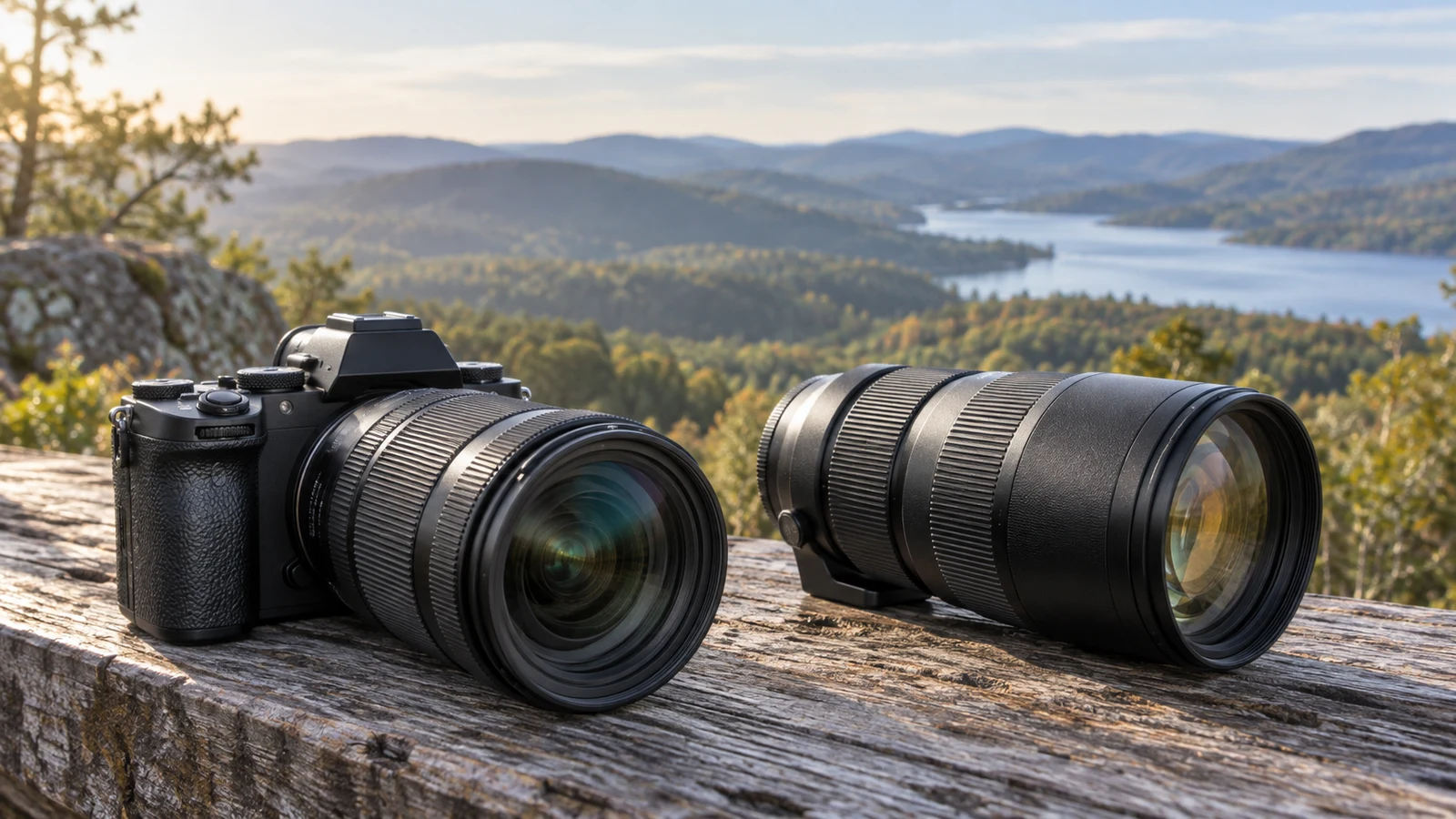
The supplied Canon PowerShot G7 X Mark II kit description advertises 4.2x optical zoom and a 24-100mm range labelled as 35mm equivalent. The separate manual lens description gives a 1000mm designation. Those statements provide a useful reading exercise, but they do not establish how the products compare on a particular camera, whether they work together, or which would suit your photography.
Identify The Quantity Before Electronics Product Checks
Start with the characters attached to the number. The multiplier in an optical zoom specification describes the longest focal length relative to the shortest focal length of that lens. It does not provide either endpoint by itself. Without those endpoints, you cannot tell where the range begins or ends, even when the multiplier looks substantial.
A focal length expressed in millimeters supplies a different kind of information. A single designation such as 1000mm is not a multiplier and does not describe a span between two stated endpoints. Keep its unit attached when taking notes. Rewriting both specifications under a loose label such as "zoom power" removes the distinction you need to understand them.
The words "35mm equivalent" also belong with the number. They identify a comparison convention for field of view, rather than simply reporting the lens's physical focal length. An equivalent range helps place different camera systems on a shared reference basis. Removing that qualifier can make an otherwise accurate transcription misleading when it is placed beside a separately sold lens's focal length.
Give each specification its own question. A ratio answers, "How does the long endpoint relate to the short endpoint?" A range answers, "What are the stated endpoints?" An equivalent range adds, "On what reference basis are these endpoints described?" These questions keep the reading focused without turning a catalog number into a promise about a finished photograph.
Read The Canon Range During Electronics Product Checks
The Canon kit listing provides a concrete example of camera zoom ratios because its supplied description includes both the advertised 4.2x optical zoom and the 24-100mm 35mm-equivalent range. Read those statements together. The multiplier describes the span in relative terms; the equivalent endpoints describe where that span sits on the stated reference scale.
Preserve the advertised precision. Record "4.2x optical zoom" and "24-100mm, 35mm equivalent" as catalog specifications, rather than treating the wording as exact laboratory measurements. Rounded endpoint figures and a rounded multiplier should not be used to manufacture additional decimal places. The description supports those advertised values, not a more precise measurement reconstructed from them.
Both endpoints matter. If you retain only the long endpoint, you lose information about the other end of the range. If you retain only the multiplier, you lose both endpoints. A useful comparison note therefore carries the ratio and the equivalent range in separate fields, with the qualifier visible beside the range instead of buried in a footnote.
The supplied description also contains specifications unrelated to this numerical distinction. They are not needed to explain the zoom ratio, and they do not turn it into a quality score. For this comparison, the defensible conclusion is narrow: the Canon description states a zoom multiplier and an equivalent range. It does not establish a tested advantage over the separate manual lens.
Read The 1000mm Manual Telephoto Lens Without Adding A Range
The supplied description of the 1000mm manual telephoto lens identifies a focal length and manual focusing. It does not supply a zoom range or a camera-specific equivalent field of view. Record the 1000mm designation as stated, then leave the absent information unresolved. There is no need to fill an empty range field merely to make the two listings look symmetrical.
Manual focus does not, by itself, establish whether a lens has a fixed focal length. Focusing and changing focal length are different matters. The evidence limit here is the absence of a supplied zoom range, not an inference drawn from the word "manual." If the distinction affects your decision, ask for an explicit focal-length specification for the exact lens being offered.
The description's reference to Canon cameras is also separate from the numerical question. Broad compatibility wording does not establish that a particular camera and lens combination is suitable. Nor does the shared Canon name make this lens an accessory recommendation for the PowerShot kit. These are contrasting listings for a specification-reading exercise, not a proposed equipment combination.
A short annotation can preserve all of that without dismissing the listing: "1000mm designation supplied; zoom range not supplied; equivalent field of view for the intended camera unresolved." This wording distinguishes missing information from a negative finding. It does not claim that a range cannot exist, that a camera is incompatible, or that the lens performs poorly.
Compare Hypothetical Ranges Before Electronics Product Checks
Consider two invented lens ranges expressed on the same basis: 25-100mm and 75-300mm. These are arithmetic examples only. Neither range is a specification for either product discussed here. Each has a longest endpoint four times its shortest endpoint, so both have a 4x ratio. Their endpoints are nevertheless different.
The first hypothetical range starts at 25mm and ends at 100mm. The second starts at 75mm and ends at 300mm. Calling both "4x" is correct but incomplete if your question concerns the endpoints. The equal ratios describe equal proportional spans; they do not say that the ranges occupy the same position on the focal-length scale.
What Equal Ratios Leave Open In Electronics Product Checks
Suppose an abbreviated comparison shows only those two 4x labels. You could correctly say that their longest endpoints bear the same relationship to their respective shortest endpoints. You could not recover the actual endpoints from those labels alone. Many different ranges can share a ratio, so the missing endpoint information is essential rather than a minor catalog detail.
Now suppose the full ranges are restored, but one is labelled as equivalent and the other is not. The arithmetic still describes each range internally, yet the cross-system comparison needs more context. Matching units on the page is insufficient when the figures use different reference bases. The words surrounding a number can matter as much as the number itself.
This exercise explains why a zoom multiplier cannot rank distant-subject reach across listings. It also avoids the opposite mistake of treating the largest millimeter designation as a complete buying answer. A meaningful comparison first needs compatible definitions. Questions about actual results and equipment suitability remain separate, even after the quantities have been correctly identified.
Keep Camera Context In Electronics Product Checks
Equivalent focal length provides a shared reference for comparing field of view across camera formats. A separately sold lens's physical focal length does not supply that reference by itself. The intended camera's sensor format matters to the comparison. Before placing its figure beside an explicitly equivalent range, establish what camera context applies and what each quoted figure represents.
For the manual lens, the supplied information does not establish the intended camera and the corresponding equivalent view. Do not calculate a conversion by selecting an assumed camera from a broad compatibility statement. A camera name mentioned in a description is not permission to substitute an unconfirmed setup for the one you actually intend to use.
Ask for the missing information in terms the supplier can answer precisely: whether the stated 1000mm is the lens's physical focal length, whether a focal-length range applies, and what documented equivalent figure applies to your intended camera. If an answer gives another number without its reference basis, the original comparison problem remains. Request the qualifier as well as the value.
For the broader questions of exact models, connections and suitability, use the separate guide to electronics product checks. Keep those questions distinct from the lens arithmetic. A confirmed specification meaning would not, on its own, establish compatibility, sharpness, low-light performance or value, and this numerical reading does not resolve those judgments.
Finish The Comparison With Electronics Product Checks
An annotated comparison should let you read the listings again without repeating the original confusion. Preserve the stated quantity, explain what it measures, and name the limit of the comparison beside it. The following notes keep the Canon description and the manual lens description separate while showing which information could support a later comparison.
- Canon advertised multiplier: 4.2x optical zoom. This describes the relative span of the lens's focal-length range. It does not independently identify the endpoints or rank the camera against another system.
- Canon advertised range: 24-100mm, labelled as 35mm equivalent. This supplies endpoints on a stated comparison basis. Keep the equivalent qualifier and the catalog's advertised precision.
- Manual lens designation: 1000mm. This supplies a stated focal length, not a zoom multiplier. The supplied description does not establish a range or the equivalent view for your intended camera.
- Unresolved comparison: the reference basis and intended camera context for the manual lens. Compatibility and optical performance also remain open, outside what these numbers establish.
Notice that the blank spaces are specific. You are not missing every fact about both products, and you do not need a general sales explanation to proceed with reading their specifications. You need the information that connects the lens designation to an identified camera context. A response about broad compatibility or "powerful zoom" would not answer that narrower question.
A focused inquiry could read: "Your description gives a 1000mm focal length. Does this exact lens have a focal-length range, and is that figure physical or equivalent? For my intended camera model, what documented field-of-view equivalent applies? Please address compatibility separately." Supply your camera model when asking, rather than expecting the supplier to infer it from the product name.
Before selecting equipment, keep this specification-reading note beside your shortlist: camera zoom ratios describe proportional range, while equivalent endpoints supply comparison context. Retain the Canon figures as advertised, leave the manual lens's missing context open, and resolve those focused questions before deciding. If cryptocurrency purchasing is offered, it does not change the optical information needed for that decision.