Crypto Commerce
Understand Bluetooth audio direction before pairing devices
To understand Bluetooth audio direction , identify which device would send the recording and which would receive it at each proposed wireless connection. Then identify where you want to hear the sound. A Bluetooth label alone does not answer all of those questions. Sending audio out of a CD player and receiving phone audio into that player are different requests, even though both involve wireless listening.
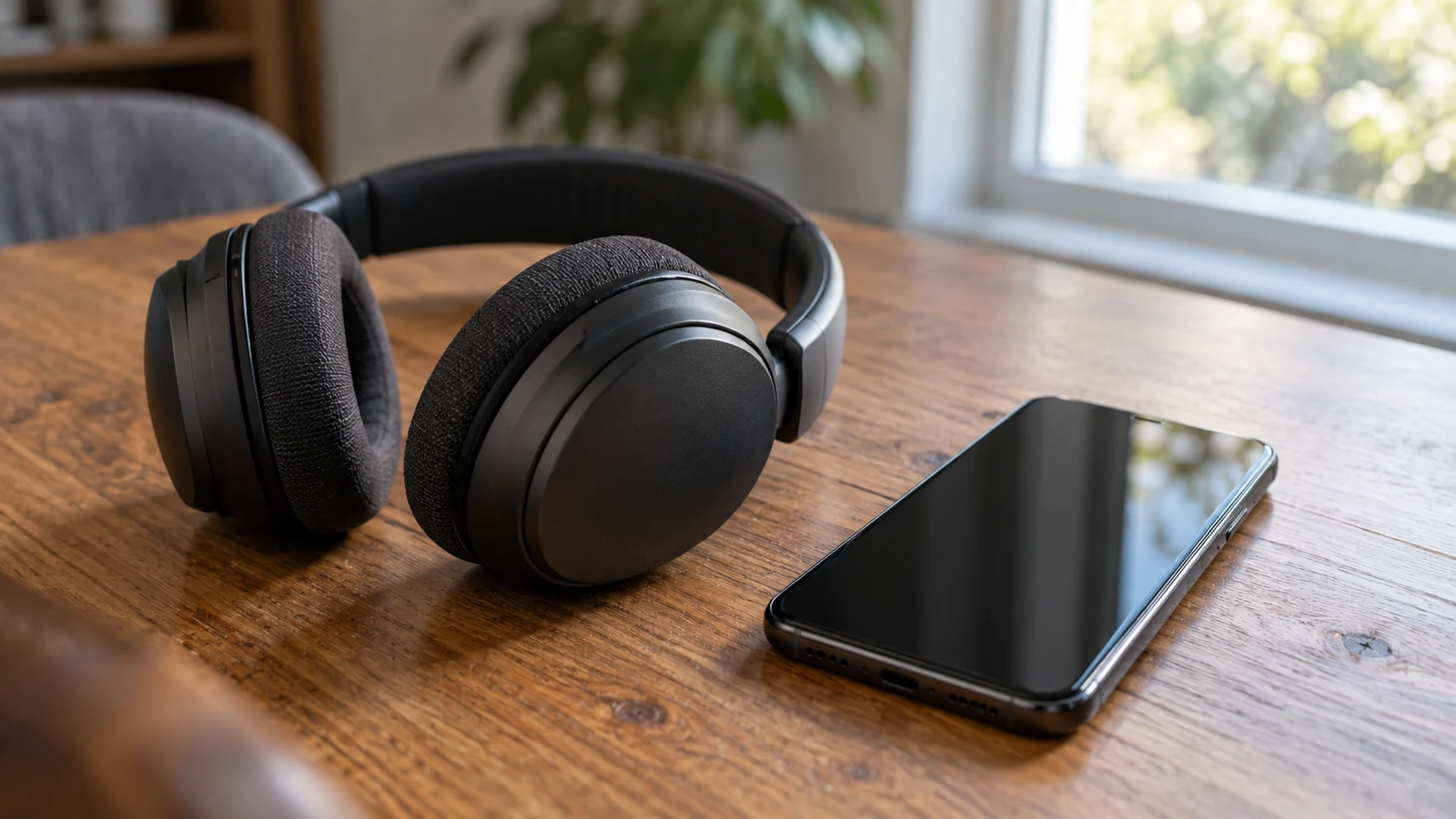
To understand Bluetooth audio direction, identify which device would send the recording and which would receive it at each proposed wireless connection. Then identify where you want to hear the sound. A Bluetooth label alone does not answer all of those questions. Sending audio out of a CD player and receiving phone audio into that player are different requests, even though both involve wireless listening.
The Yintiny rechargeable CD player and Pyle PDA69BU receiver bundle illustrate how to read those roles from product descriptions. The Yintiny description explicitly names a transmitter that sends audio to other devices. The Pyle description lists Bluetooth among its external sources and connections. Those descriptions give you a starting point for a proposed listening path, but they do not establish that these particular products pair successfully.
Describe Your Listening Intention Before Electronics Product Checks
Begin with a sentence that names the recording and its intended destination: "I want to hear a CD playing in this player through separate speakers." That tells you more than "I want Bluetooth." The disc is the recording source, the player handles playback, and the separate speakers are where you want sound reproduced. Any equipment between the player and speakers needs an explicit role.
Keep the recording source separate from the wireless sender in your notes. In this example, the disc contains the recording, while the proposed sending device is the CD player. Calling both simply "the source" can make a question unclear when you later discuss a receiver with several inputs. Naming the disc and player separately avoids that ambiguity without requiring technical specifications.
Next, decide whether you want to hear the player's own speakers or a separate listening device. Those intentions require different paths. A product can describe integrated speakers and a wireless sending function without explaining whether both operate together. If hearing both is part of your intention, write that as an additional question. Do not let an unstated preference become an assumed feature.
A useful initial note therefore reads: "Recording: a CD. Playback device: the selected Yintiny player. Desired listening destination: separate speakers. Proposed intermediate device: the Pyle receiver. Wireless compatibility: unresolved." This is a description of what you want, not a system recommendation. You can revise the destination without pretending that any connection has already been established.
Read The Transmitter Wording During Electronics Product Checks
The Yintiny listing provides a concrete example of Bluetooth audio direction: its description identifies a rechargeable CD player with integrated speakers and a Bluetooth transmitter for sending audio to other devices. Read "transmitter" alongside that stated sending function. Together, they support placing the player on the sending side of a proposed wireless audio connection.
That wording does not identify every possible receiving device. It also does not establish that the player accepts incoming Bluetooth audio. If your intention is to play a phone's recording through the Yintiny's integrated speakers, you need an answer about reception. Repeating the listing's transmitter wording would leave that question unanswered because it describes audio travelling outward from the player.
The integrated speakers belong in a separate note. Their presence describes a way for the player to reproduce sound locally; it does not turn those speakers into an independently established Bluetooth input. Avoid combining two listed features into a third, unlisted capability. "Has speakers" plus "has a transmitter" does not establish "receives wireless audio through those speakers."
For your sketch, label the Yintiny's outgoing role "sending described." Beside the proposed receiving device, write "compatibility with this player unresolved." If you also want local speaker playback during transmission, add that question beside the player itself. This keeps the uncertainty attached to the relevant function instead of putting a vague question mark over the whole purchase.
Locate The Input In The Pyle Home Audio Receiver Bundle
The description of the Pyle home audio receiver bundle identifies a PDA69BU amplifier receiver and four PLMR24B speakers, with speaker wire included. It presents Bluetooth among the receiver's accepted external sources and connections. For this reading exercise, that supports considering the receiver as the proposed incoming side of the wireless path, while leaving compatibility with the selected player unanswered.
Keep the receiver and the bundled speakers as separate items on paper. The receiver's Bluetooth reference belongs to the receiver description. The inclusion of speakers in the same package does not establish a direct wireless connection between the CD player and each speaker. An accurate question names the receiver as the proposed recipient and asks separately how the intended speaker arrangement is supported.
Be careful with the word "receiver," too. The product name is not a complete account of every wireless role the device may support. The supplied description presents an input context, but it does not establish Bluetooth transmission to another listening device. If your plan depends on the receiver sending audio onward wirelessly, that is another capability to verify rather than infer.
Separate The Speaker Path In The Pyle Home Audio Receiver Bundle
Draw a boundary after the receiver. On one side is the proposed Bluetooth input from the player. On the other is the downstream path toward the speakers. Answering the incoming wireless question does not specify the speaker arrangement. Conversely, knowing that speakers and wire are included does not answer whether the CD player can provide a compatible wireless input.
The sketch should stop short of installation instructions. Label the downstream connection "speaker arrangement to confirm in the applicable instructions." Do not use the drawing to choose terminals, assign speakers to channels, or decide how to use the included wire. Its purpose is to show which part of the listening path each question concerns before purchasing, pairing, or wiring anything.
Annotate Each Connection During Electronics Product Checks
A written path can make the unresolved handoffs visible without looking like a verified connection diagram. Read the following proposed sequence in order. Each entry identifies either a described product function or a question that remains open. The sequence represents a hypothetical wish to hear CD playback through the separate speakers, not evidence of a working Yintiny and Pyle system.
- CD recording to Yintiny playback: the product description identifies the device as a CD player.
- Yintiny playback toward another device by Bluetooth: the description explicitly identifies an audio transmitter.
- Yintiny transmitter to Pyle PDA69BU Bluetooth input: proposed connection; interoperability between these exact products remains unresolved.
- Pyle receiver toward the intended PLMR24B speaker arrangement: receiver and speakers are described in the bundle; the applicable setup requirements remain a separate question.
- Sound at the selected speakers: intended listening outcome, not a tested result established by the descriptions.
The most useful distinction is between "function described" and "connection established." You can have a described sending function at one end and an input description at the other without having confirmation that they work together. Keep those statements separate in your notes. Otherwise, two accurate observations about individual products can become an unsupported conclusion about a complete system.
When reviewing Bluetooth audio direction, name both ends of each proposed wireless connection. "The player sends" leaves the receiving side open. "The receiver accepts Bluetooth" leaves the sending device unspecified. A question that identifies both products and the desired direction gives the person answering it a defined connection to assess, instead of asking them to interpret what "works with Bluetooth" means.
Do not extend an answer beyond the connection it addresses. Confirmation about the player's outgoing role would not, by itself, settle simultaneous use of its integrated speakers. An answer about the receiver's incoming role would not establish wireless output from it. Record the scope of any answer beside the corresponding part of the sketch so that unresolved branches remain visible.
Compare Listening Intentions Within Electronics Product Checks
Consider a shopper who wants to send CD audio away from the Yintiny player. The description's transmitter wording matches the direction that intention requires. The remaining question concerns the exact receiving device and its compatibility with that outgoing audio. The shopper has found relevant wording, but should not replace the compatibility question with a claim that any Bluetooth-labelled destination will work.
Now consider a different intention: sending audio from a phone into the Yintiny player to hear it through the player's speakers. Here, the player would need to occupy the receiving side. Its stated transmitting function does not answer that request. The right inquiry is whether this exact player supports the desired incoming audio use, not how to activate the transmitter described in the listing.
A third intention stays within the player: hearing a CD through its integrated speakers. That uses the separately described local playback features and does not require drawing an external Bluetooth connection into the plan. If local listening is all you want, a proposed receiver need not appear in the sketch. Add equipment only when it has a defined role in the intended listening path.
A combined intention needs its own wording. Suppose you want sound from the player's integrated speakers and from a separate destination at the same time. Neither the presence of integrated speakers nor the stated transmitter function establishes simultaneous output. Write the combined requirement explicitly. An answer about either feature alone would not settle whether the proposed combination is supported.
These examples differ in where the audio must go, even when the same player appears in each. Decide which intention is yours before asking about compatibility. If you want several uses, write a separate path for each one. A clear answer for one direction should not silently become an answer for the reverse direction or for concurrent listening.
Use Electronics Product Checks To Prepare A Precise Inquiry
Keep your immediate inquiry limited to the audio path. For broader model, connection, and bundle questions, use the guide to electronics product checks. That broader purchase decision can follow the directional reading rather than replace it. If cryptocurrency payment is offered for your order, the payment choice still leaves the equipment compatibility question to be resolved on its own.
Identify the exact Yintiny listing in your inquiry because the supplied description does not provide a separate model designation. Name the Pyle PDA69BU receiver and PLMR24B speakers explicitly. Then state what you intend to play and where you intend to hear it. Avoid asking only whether "the bundle works with the player," which leaves the desired connection and listening destination unclear.
A proposed path to take forward is: "CD playback in the selected Yintiny player; outgoing Bluetooth audio toward the Pyle PDA69BU; sound through the intended PLMR24B speaker arrangement." Mark the player’s sending function as described, the exact wireless connection as unresolved, and the speaker arrangement as requiring its own applicable instructions. Keep that annotated path beside these questions:
- Does this exact Yintiny player support sending its CD playback to this exact PDA69BU receiver through the proposed Bluetooth connection?
- What requirements or limitations apply to that specific sending and receiving combination?
- Which instructions establish the supported speaker arrangement downstream of the receiver?
- If local sound is also wanted, can the Yintiny's integrated speakers operate during the intended wireless transmission?
- If phone audio into the Yintiny is a separate requirement, does the player support that receiving role?
Review the product descriptions with your chosen path in hand, then seek answers to the questions that affect that path before purchasing or attempting setup. Keep an unanswered connection marked unresolved. The useful result is a listening intention with named endpoints and a bounded compatibility inquiry, not a promise created by placing two Bluetooth labels next to each other.