Crypto Commerce
Try active music listening by following a recurring phrase
Choose a short phrase in a recording, describe what makes it recognizable, and listen for places where it might return. When something sounds familiar, compare that feature with what you heard earlier and notice what surrounds it. This approach to active music listening gives you a manageable question: does this particular figure come back, and what seems different when it does? You do not need to identify every instrument or explain the whole piece.
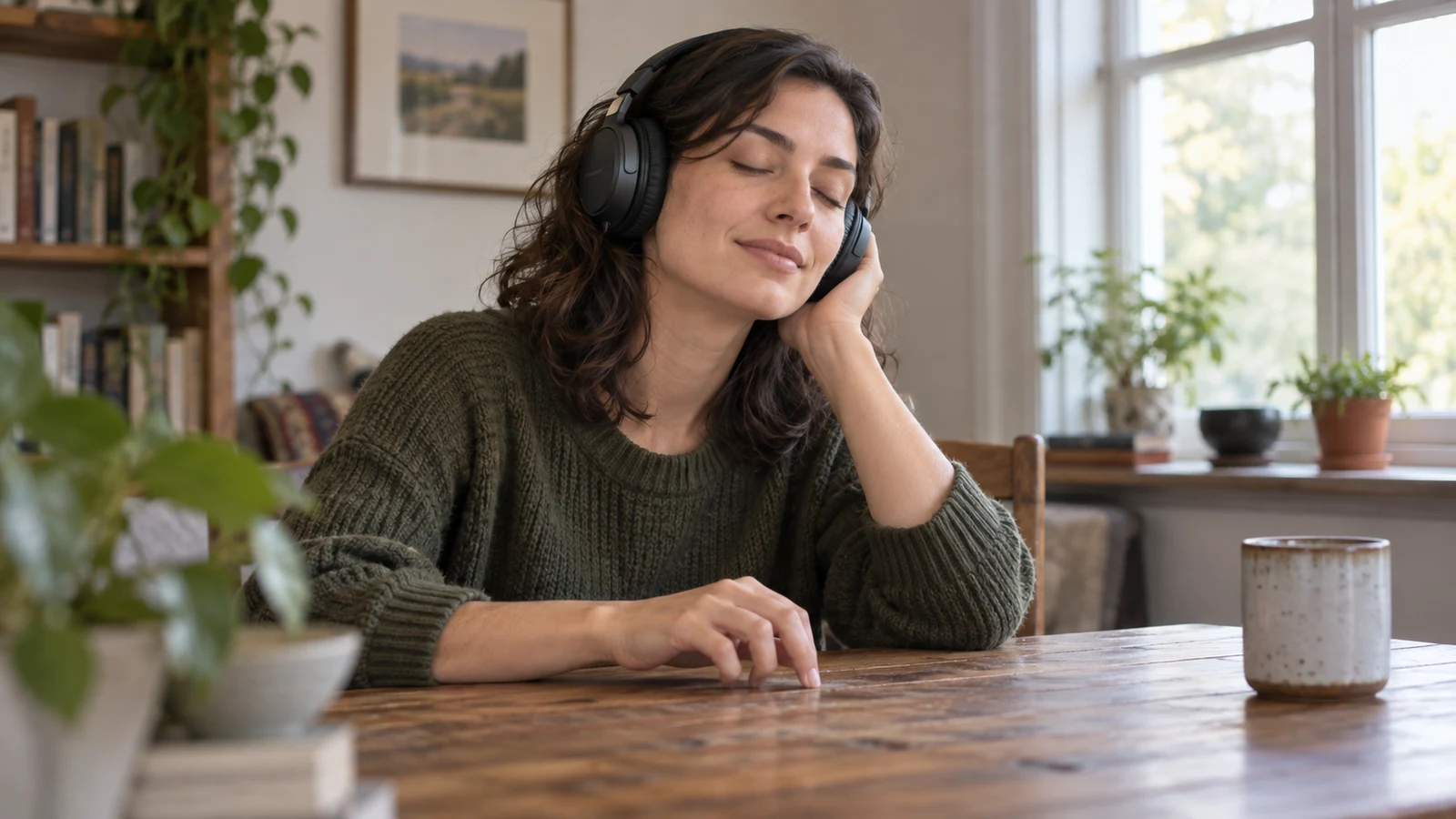
Choose a short phrase in a recording, describe what makes it recognizable, and listen for places where it might return. When something sounds familiar, compare that feature with what you heard earlier and notice what surrounds it. This approach to active music listening gives you a manageable question: does this particular figure come back, and what seems different when it does? You do not need to identify every instrument or explain the whole piece.
Use a recording you already have permission to hear and an available way to play it. The Yintiny CD player listing offers one possible playback example for active music listening; its catalog description names CD playback and integrated speakers. Neither that player nor a new equipment purchase is necessary for the exercise. Start with the musical passage you want to follow, leaving equipment suitability as a separate question.
Keep the question small enough to answer in ordinary language. Instead of trying to explain why a recording works, ask whether you hear a certain short pattern again. Your eventual note might describe a likely return, a changed background, or a resemblance you cannot confidently place. Any of those can be an honest account of what you noticed. There is no requirement to discover a repeating phrase if none becomes recognizable to you.
Phrase Descriptions Before Electronics Product Checks
Give the passage a description that helps you recognize it without pretending to transcribe it. For this exercise, a phrase can simply mean the short stretch of sound you have chosen to follow. You do not need to establish its formal musical boundaries. Choose a beginning and an ending that seem audible to you, then describe the feature between them that caught your attention.
Imagine a hypothetical passage with three short sounds followed by a longer one. That sequence provides something more specific to follow than a general impression such as lively or gentle. You might describe it as a little cluster that settles into a held sound. These are alternative descriptions of an imagined example, not observations from a named recording. For your own selection, use whichever words stay closest to what you actually hear.
Separate that recognizable feature from the source you suspect is producing it. If you hear a bright sound but cannot name the instrument, leave the instrument unnamed. A description such as a bright, short figure followed by a held sound still gives you a passage to compare. Guessing an instrument adds a claim that the exercise does not need, and it may distract you from the pattern you intended to follow.
A vocal phrase can work too. Describe its shape in your own words without quoting lyrics or trying to spell out the melody. Perhaps you notice a brief line that seems to rise and then linger at its end. If only the lingering ending is clear, record just that. Avoid filling in the earlier sounds from what you expect the line to contain. The description should remain usable even when part of the passage is indistinct.
Now consider a later passage that reminds you of the first. Ask which feature prompted the recognition. Was it the grouping of short sounds, the longer ending, or the way the phrase seemed to rise? Naming the resemblance lets you make a bounded comparison. It also leaves room for a difference: the ending may seem familiar while the beginning does not, or the rhythm may resemble the earlier figure without the same apparent shape.
In the hypothetical example, a later cluster might again seem to lead into a held sound. You could call that a possible return and explain why. You would not need to decide immediately that it is an exact repetition. Equally, a change in the surrounding sound need not make you dismiss the resemblance. Keep the shared feature and the difference visible in the same note rather than forcing the passage into a yes-or-no judgment.
Do not make a single resemblance carry an explanation of the recording's entire structure. Recognizing a possible return does not require you to label a section or identify a formal pattern. A narrow statement is enough: the short grouping seems familiar, but its ending is less clear here. If you cannot say what sounds familiar, leave the match tentative instead of adding musical terminology to make the judgment sound firmer.
Next, attend to what accompanies the phrase. In our imagined recording, the initial figure might have little else audible around it. A later appearance might sit within a fuller background. Describe those as separate observations: the figure seems to return, and more sound seems to surround it. That distinction lets you discuss a change in the passage without assuming that the phrase itself has changed in every respect.
Be specific about what fuller means in your note. You might mean that a continuing sound is now audible beneath the short figure, or that overlapping sounds make its ending harder to follow. Neither description requires an exact instrument count. Avoid turning a perceived contrast into a claim about measured volume or a particular recording technique. Stay with the relationship you can describe between the feature you are following and the sounds around it.
If the phrase becomes difficult to pick out, narrow the comparison further. Perhaps the short opening remains recognizable while the held ending disappears into the surrounding sound. Record that division rather than calling the entire phrase unchanged. You can be fairly confident about one part and uncertain about another. This is more informative than attaching a single confident label to a passage whose details you could not all follow.
Where your playback arrangement permits it, revisit one comparison that remains unresolved. Give that return a specific purpose, such as attending to the ending you could not distinguish. You do not need prescribed controls, exact timestamps, or a fixed number of listens. If returning to the passage is not practical, keep the uncertainty in your note. The exercise does not depend on repeatedly accessing the same few seconds.
After another listen, distinguish a newly noticed feature from an earlier assumption. Suppose you had expected the longer ending to recur but now notice only the opening cluster. Revise the note to reflect that narrower resemblance. You have not failed a memory test; there is no answer key here. The useful result is a description that says what you recognized and what remains unclear, without making either part more definite than your listening supports.
Playback Contexts For The Pyle Home Audio Receiver Bundle
The two catalog examples belong in different possible playback contexts. The supplied Yintiny description lists CD playback, a rechargeable battery, integrated speakers, and Bluetooth transmission. CD playback is the relevant connection to this exercise when considering a recording on disc. Those listed features do not establish which disc variants are supported, what passage-access controls are available, or how long a particular listening session could continue on battery power.
The description for the Pyle home audio receiver bundle lists a receiver with several source inputs and four bundled speakers. It names Bluetooth, AUX, USB, and SD among the source options. That makes the listing an alternative playback context to consider, not evidence that your chosen recording is ready to play through it. A suitable source and the details of its connection remain separate questions.
These descriptions do not establish that the Yintiny player and the Pyle receiver should be connected to each other. They also do not establish that either product will reveal a recurring phrase more clearly. Treat them as separate catalog examples, not a tested combined system or a listening comparison. The musical task stays the same whichever suitable arrangement you already have: follow a recognizable feature and describe its possible returns.
Electronics Product Checks For A Chosen Recording
For questions about source suitability, connections, configuration, and included equipment, use the guide to electronics product checks. Keep those technical questions separate from your listening note. An uncertain phrase match does not by itself show that equipment is unsuitable, and a catalog feature does not settle what you heard. If you consider purchasing with cryptocurrency, treat that option as conditional on what is offered for the intended order.
There is no need to turn an unresolved musical comparison into a buying decision. You can retain a note that says the later ending was hard to distinguish. Neither product description establishes the chosen recording's compatibility, usable playback controls, or fidelity in a particular arrangement. Once you have a suitable way to hear the recording, let the listening question determine your attention rather than making the exercise a search for additional features.
A Listening Trace Beyond Electronics Product Checks
Bring the observations together as a short listening trace: a few sentences following the chosen feature through the recording. For active music listening, this gives you a place to preserve both recognition and doubt. Use locations you can remember, such as the first exposed appearance or the later passage with a fuller background. Precise timestamps and technical section names are unnecessary if your wording identifies the moments well enough for your own comparison.
Consider this entirely hypothetical trace. At the initial appearance, three short sounds seem to lead into one longer sound, with little else drawing attention around them. The short grouping is clear enough for the imagined listener to use as a reference. The note does not name an instrument or claim to capture every sound in the passage. It identifies the feature that the later comparison will follow.
At a possible return, the same short grouping seems audible within a fuller background. The listener recognizes the opening pattern but is less sure about the longer ending. The perceived change concerns what surrounds the figure and how clearly its ending can be followed. This is a plausible place to write that the figure seems to return, while keeping the match provisional rather than declaring the whole passage identical.
At a later resemblance, the listener catches a held sound but cannot distinguish the short grouping that previously led into it. That is a weaker match. The trace can say that the ending recalls the earlier phrase, but the recognizable opening has not been established. There is no need to count this as another return merely to complete a pattern. The missing detail belongs in the note.
A statement that the short figure seems to return within a fuller background describes the comparison. A statement that the composer intended that return to express a particular message would go beyond it. Keep your trace at the level of audible features unless you have separate grounds for another kind of discussion. Choose your own short phrase, write the resemblance you can support, and leave the unresolved part explicit. In this imagined trace, the passage to revisit is the later held sound, specifically whether the short grouping is audible before it.