10 min read
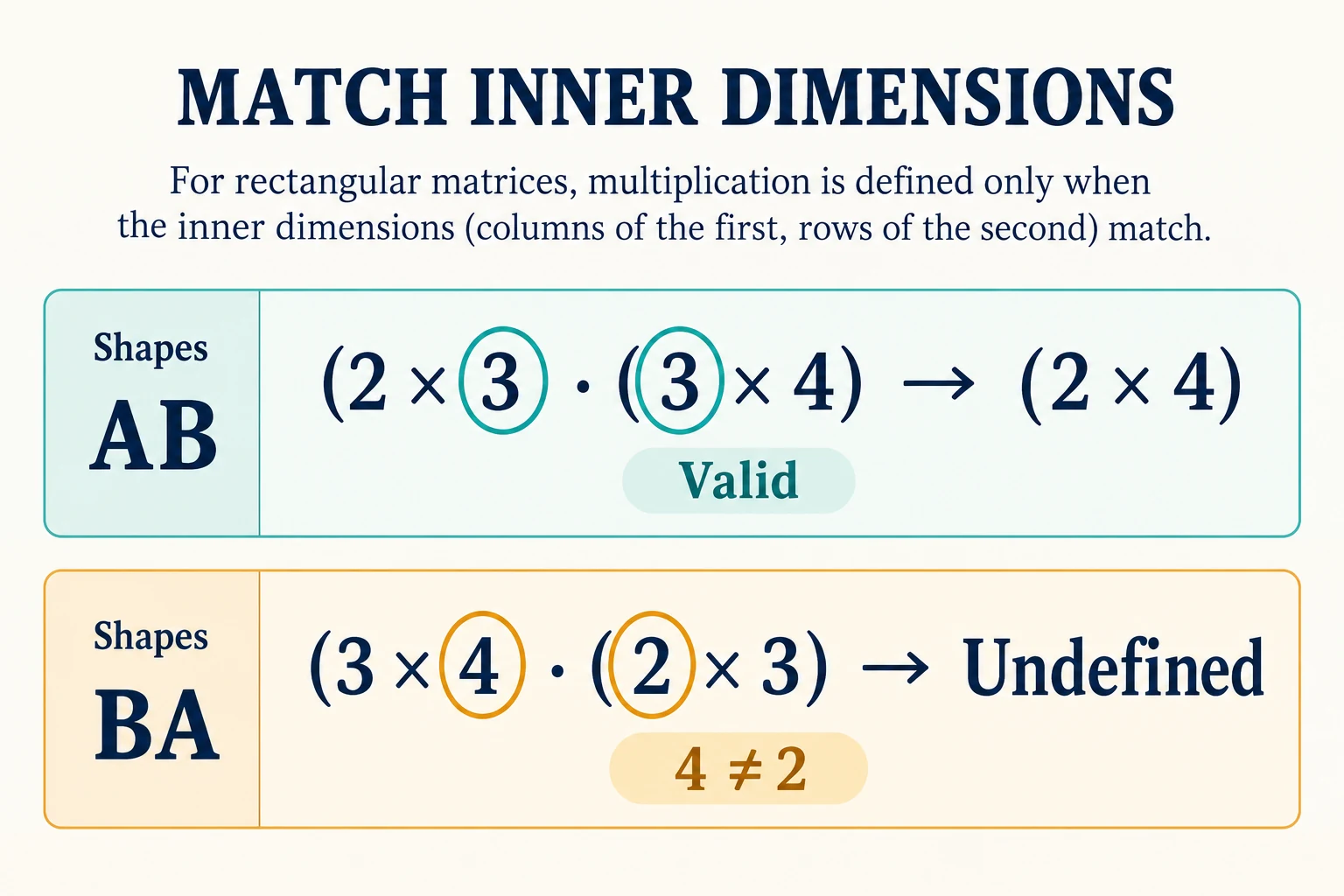
Matrix shape compatibility: match the shared dimension
Two explicit rectangular arrays separate the dimension check from entry calculation, with an undefined reverse order and a clearly changed-operand control.
Practical guides to documents, data, creative work, and everyday planning.
Showing 241–252 of 726 guides
Two explicit rectangular arrays separate the dimension check from entry calculation, with an undefined reverse order and a clearly changed-operand control.
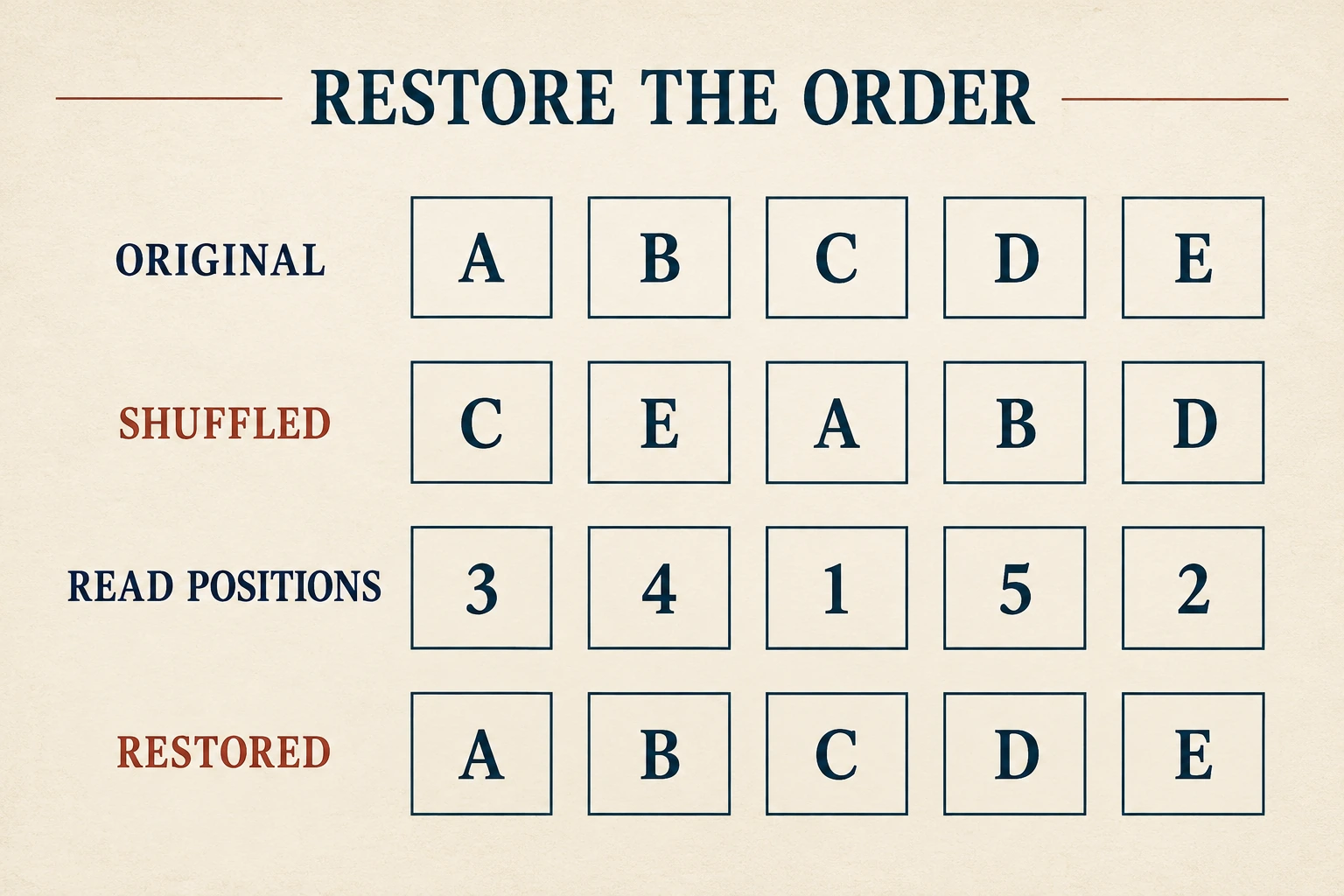
A read-from list sends A B C D E to C E A B D. Locate each original index to build the inverse list 3,4,1,5,2, then verify every restored position.
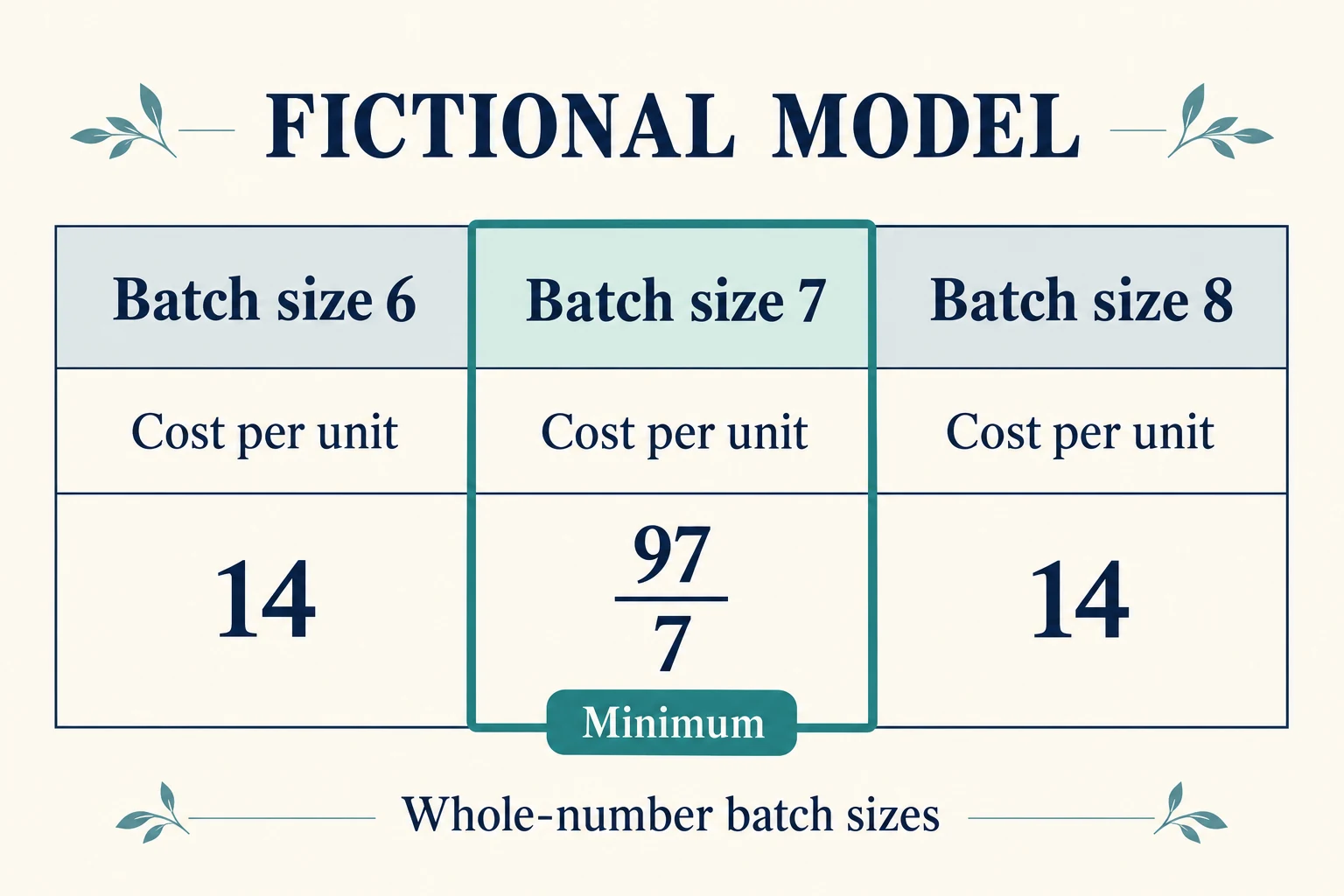
A stipulated per-unit batch cost uses opposing terms and adjacent differences to prove a unique integer minimum, with a separate changed-input tie control.
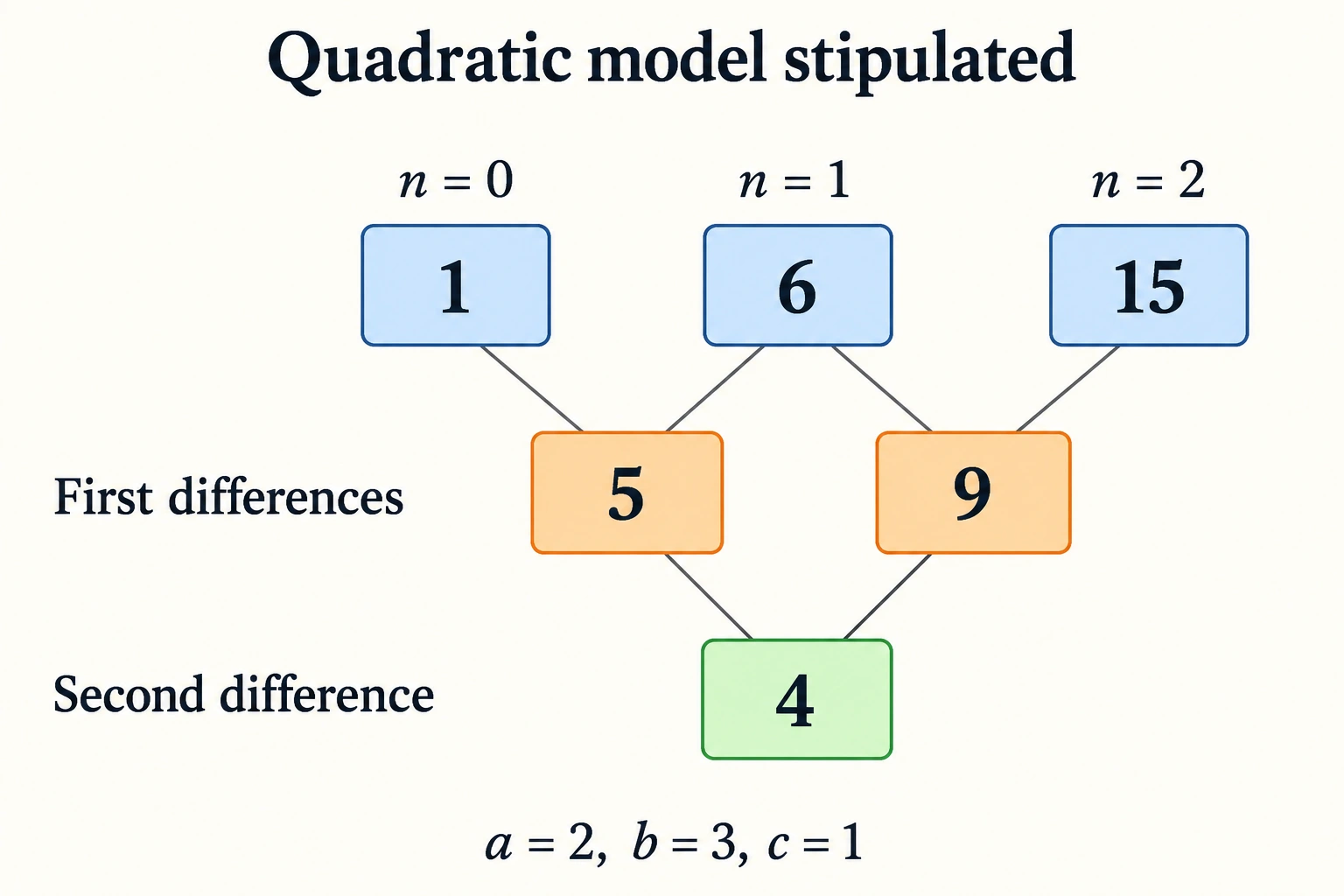
An original unit-spaced worksheet reconstructs a quadratic from three stipulated values, derives its coefficients through second differences and checks class consistency.
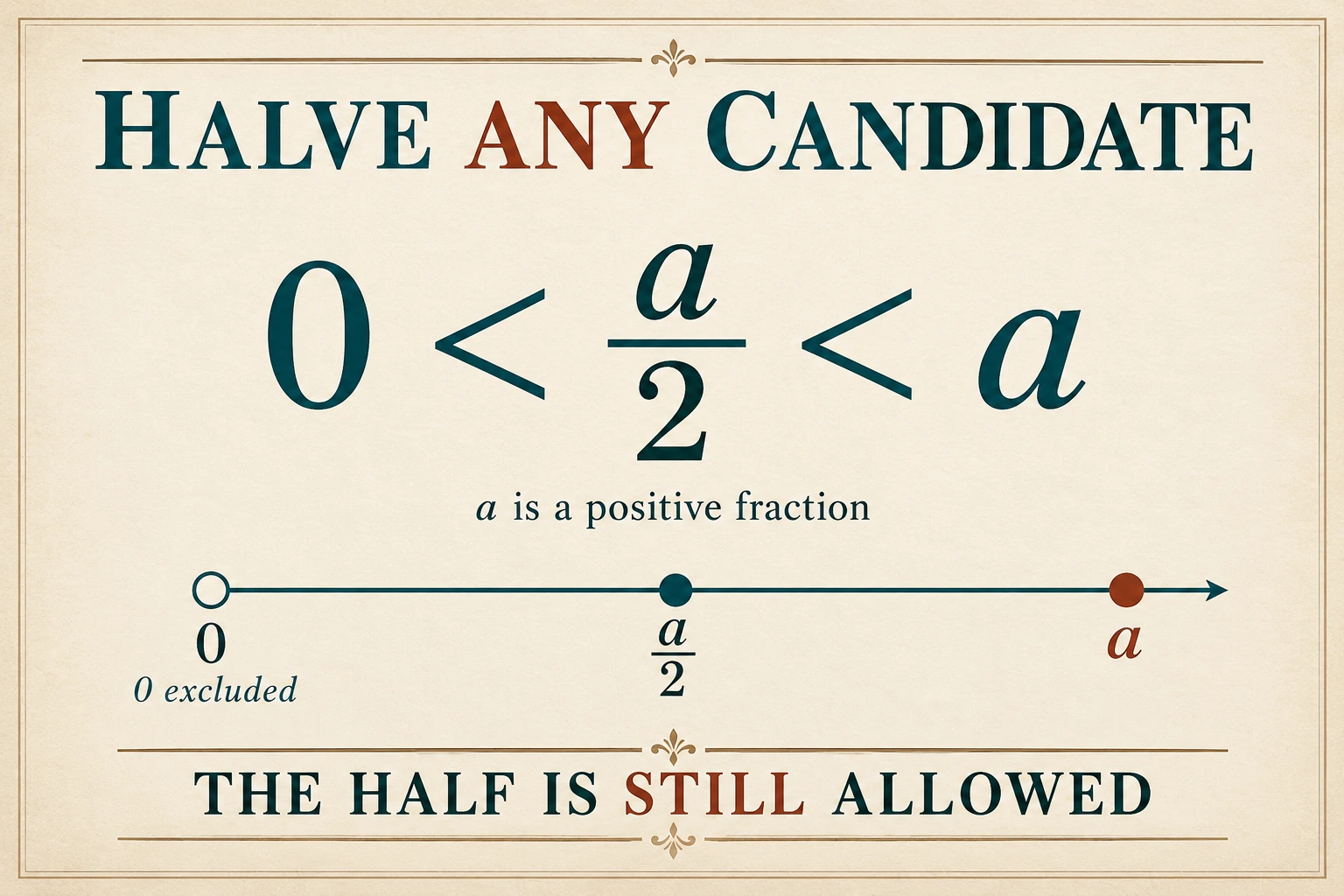
Every positive rational candidate has a smaller positive rational half. Zero is a lower bound outside the set; finite lists and the positive integers show why the domain matters.
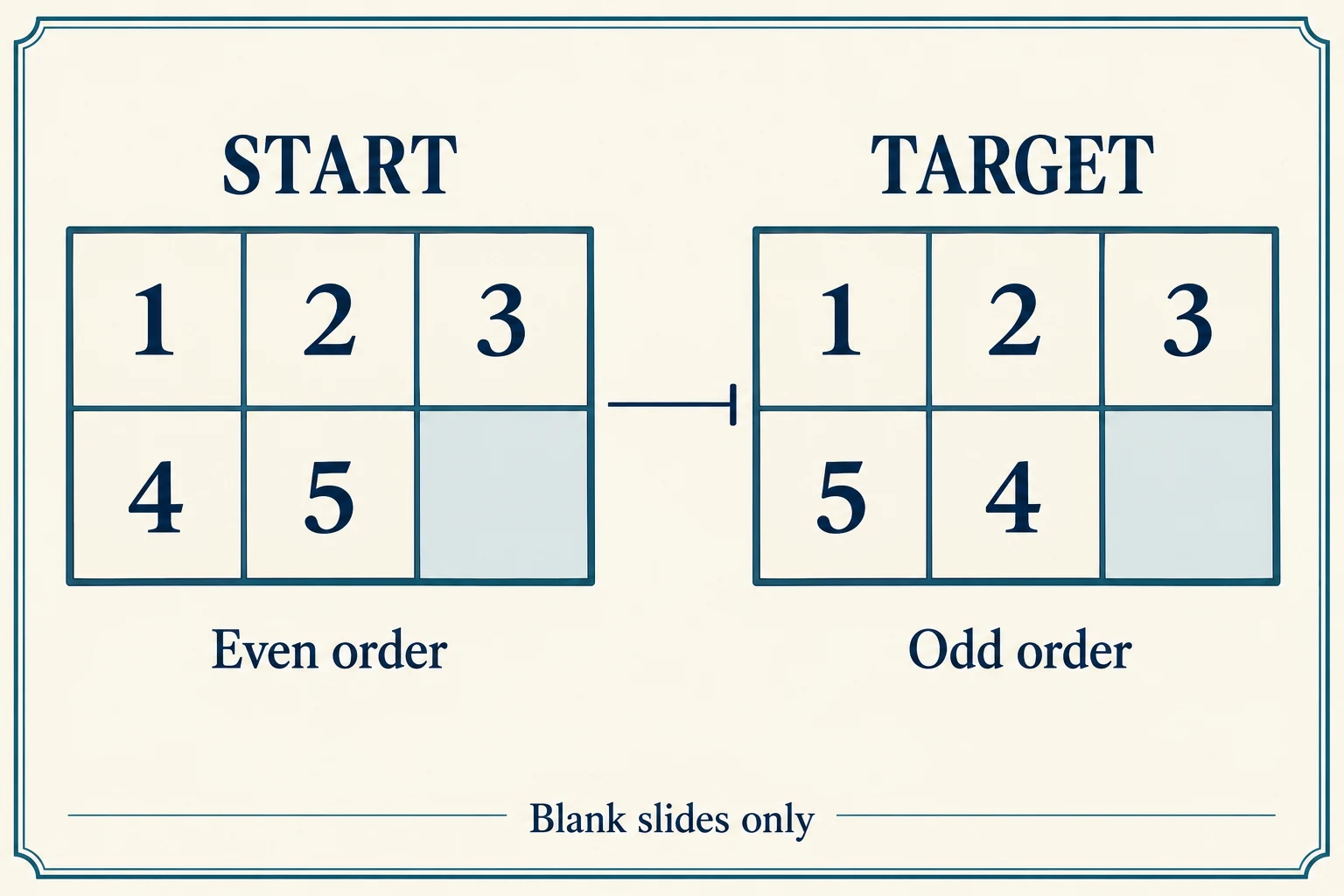
A defined two-by-three blank-slide model uses numbered-tile inversion parity to reject one unreachable target and a legal route to verify another.
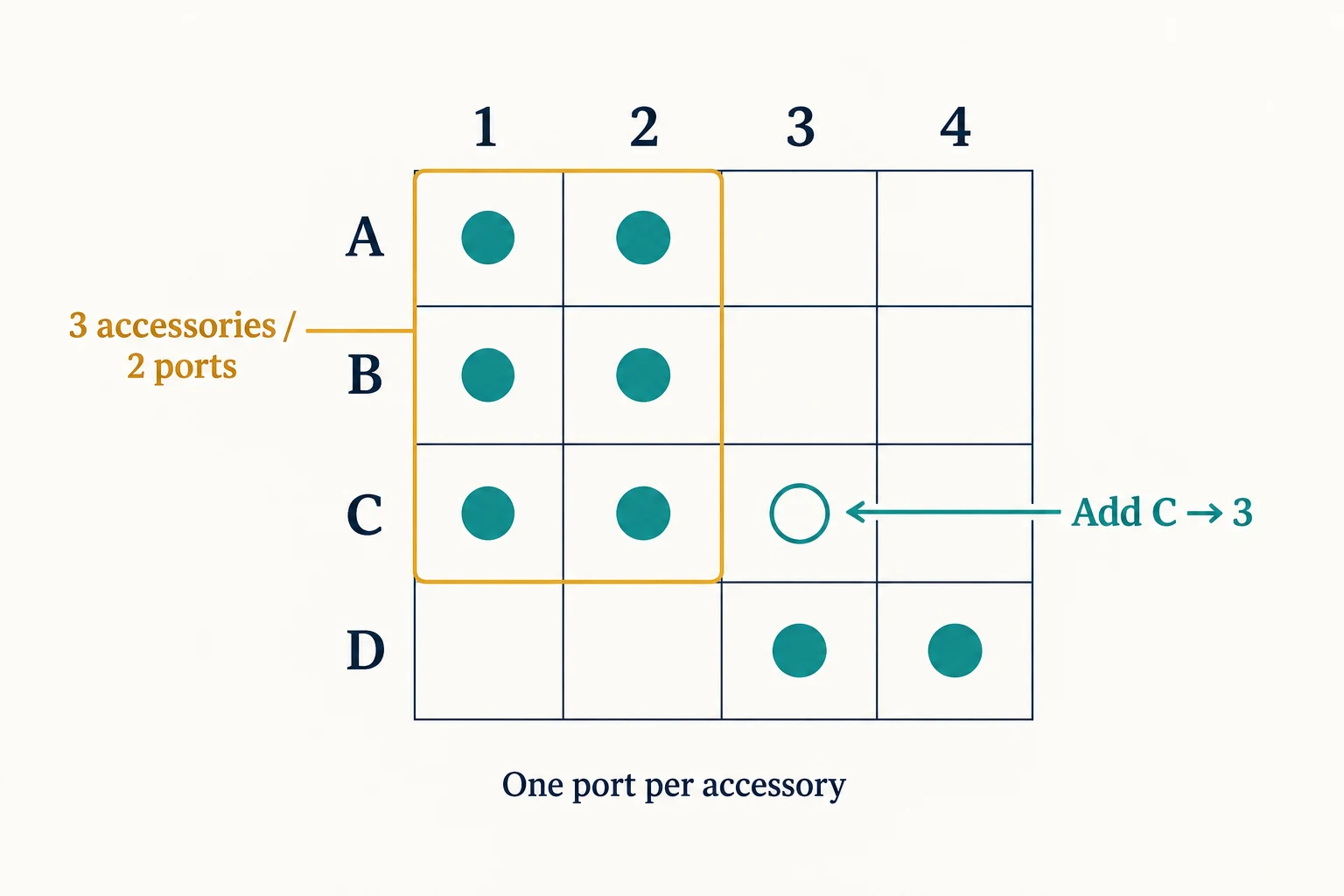
A fully specified paper compatibility model separates individual choices from simultaneous assignment, using a shared-choice obstruction and a verified repair witness.

An original two-voice kitchen scene keeps an agreed departure unchanged. A cup question has a clear literal referent while emotional interpretations remain possible, without a narrator confirming one.
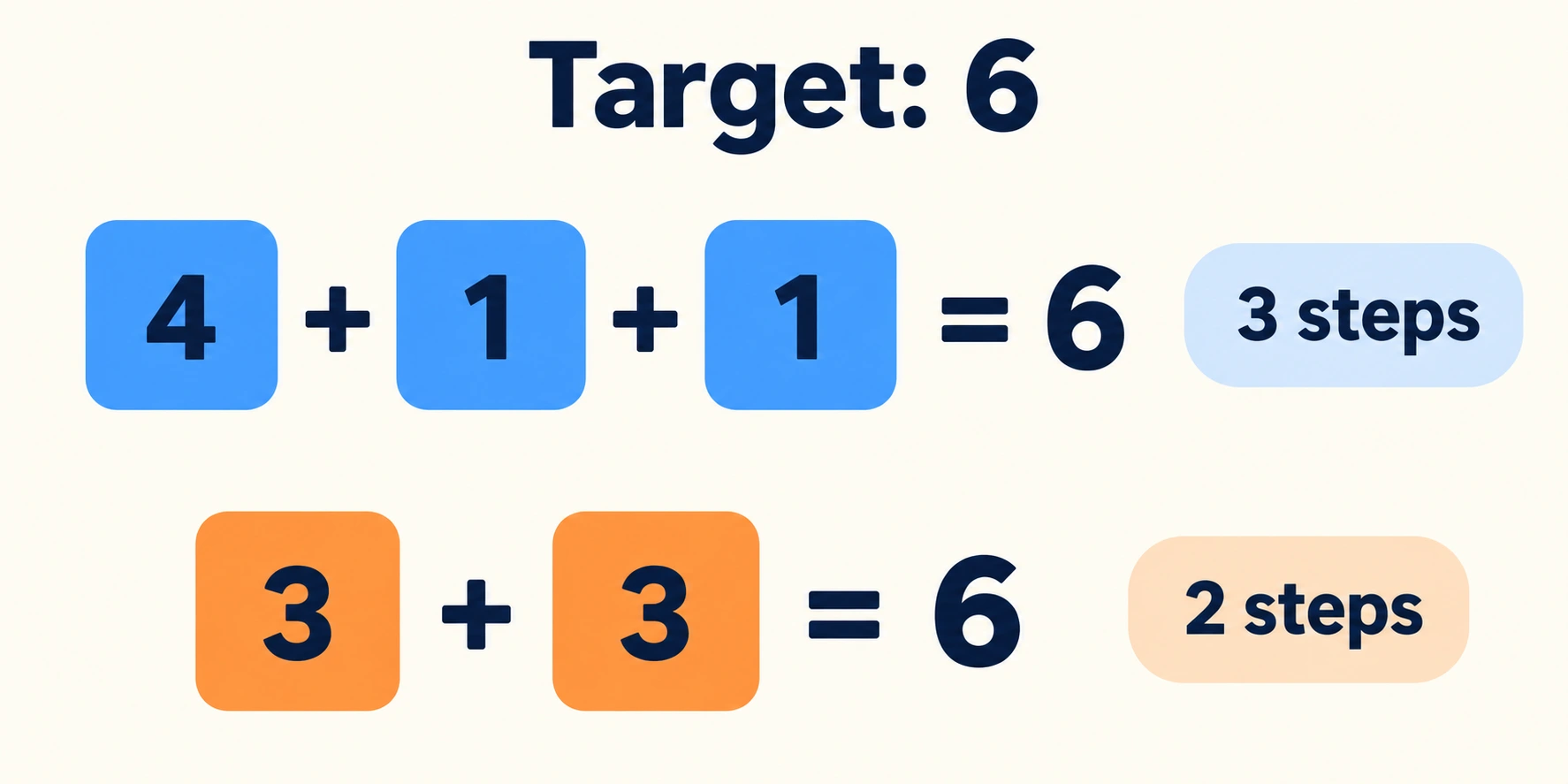
An original unit-cost move model reaches six in two steps of three, while a largest-first choice needs three steps. A last-move table proves the minimum.
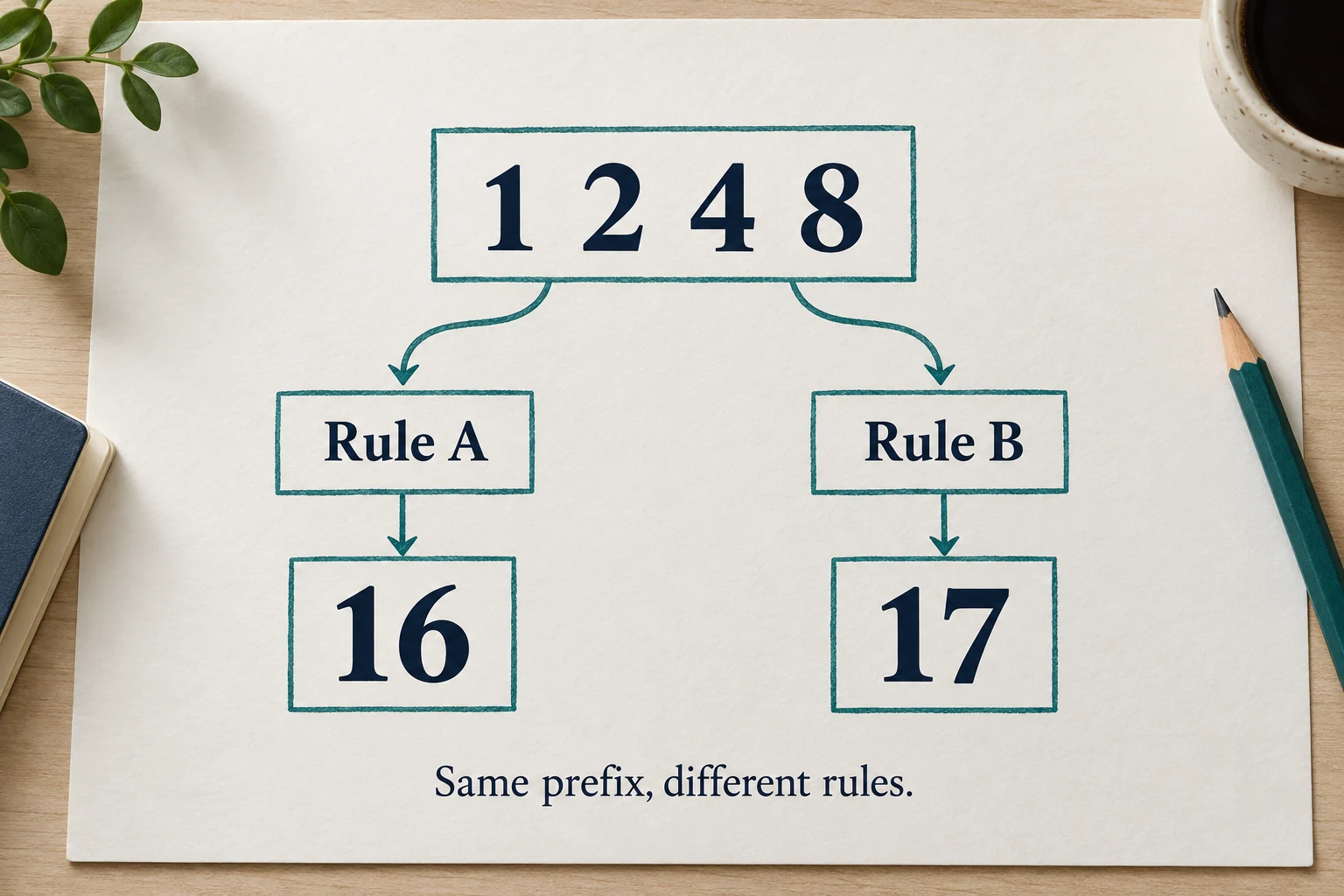
A fictional prefix diagnosis uses two explicit positive-integer sequences to separate an arithmetic error from a missing generation rule.
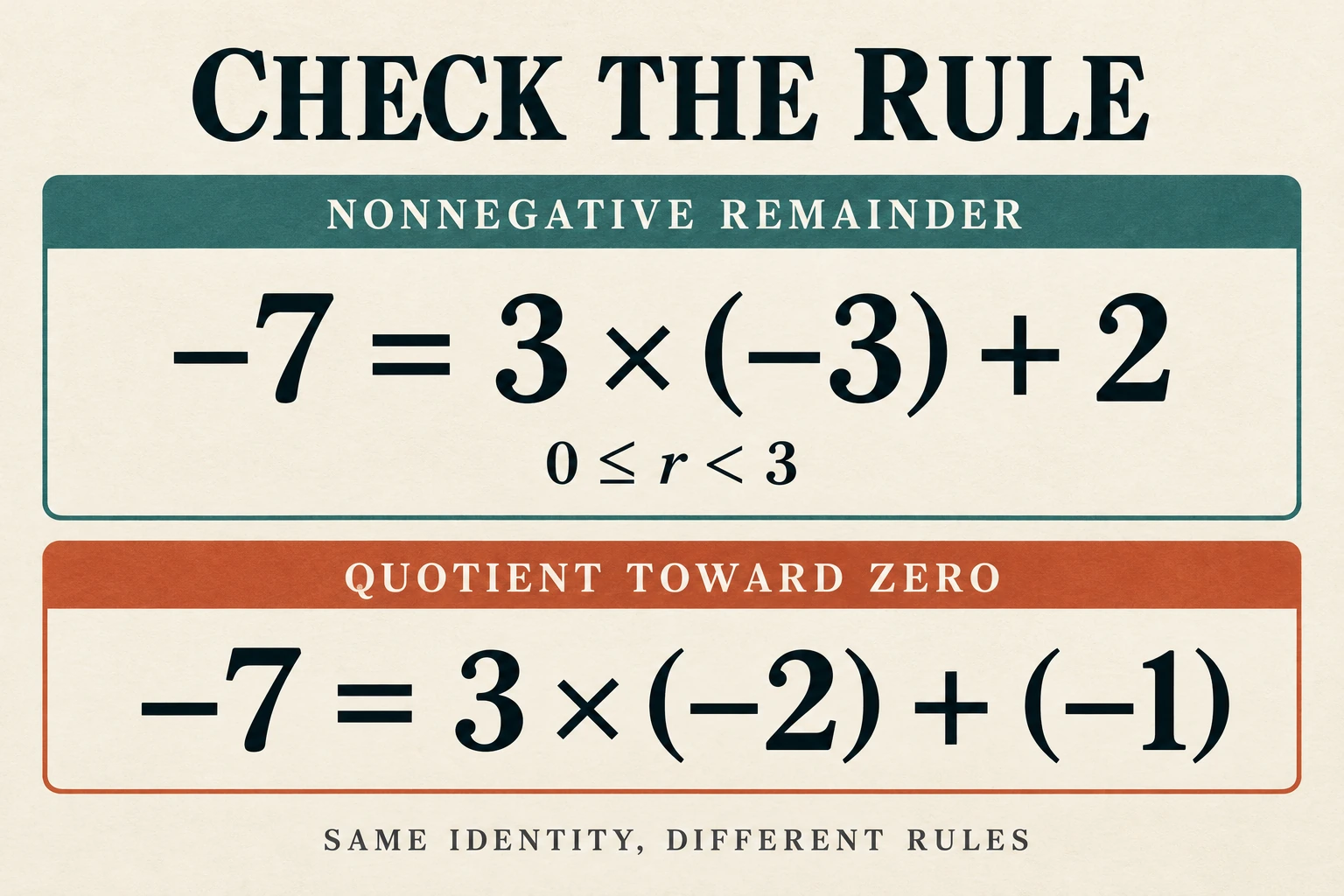
Two quotient conventions give different valid decompositions of minus seven by positive three. Identify the required remainder range, adjust the pair together and check controls.
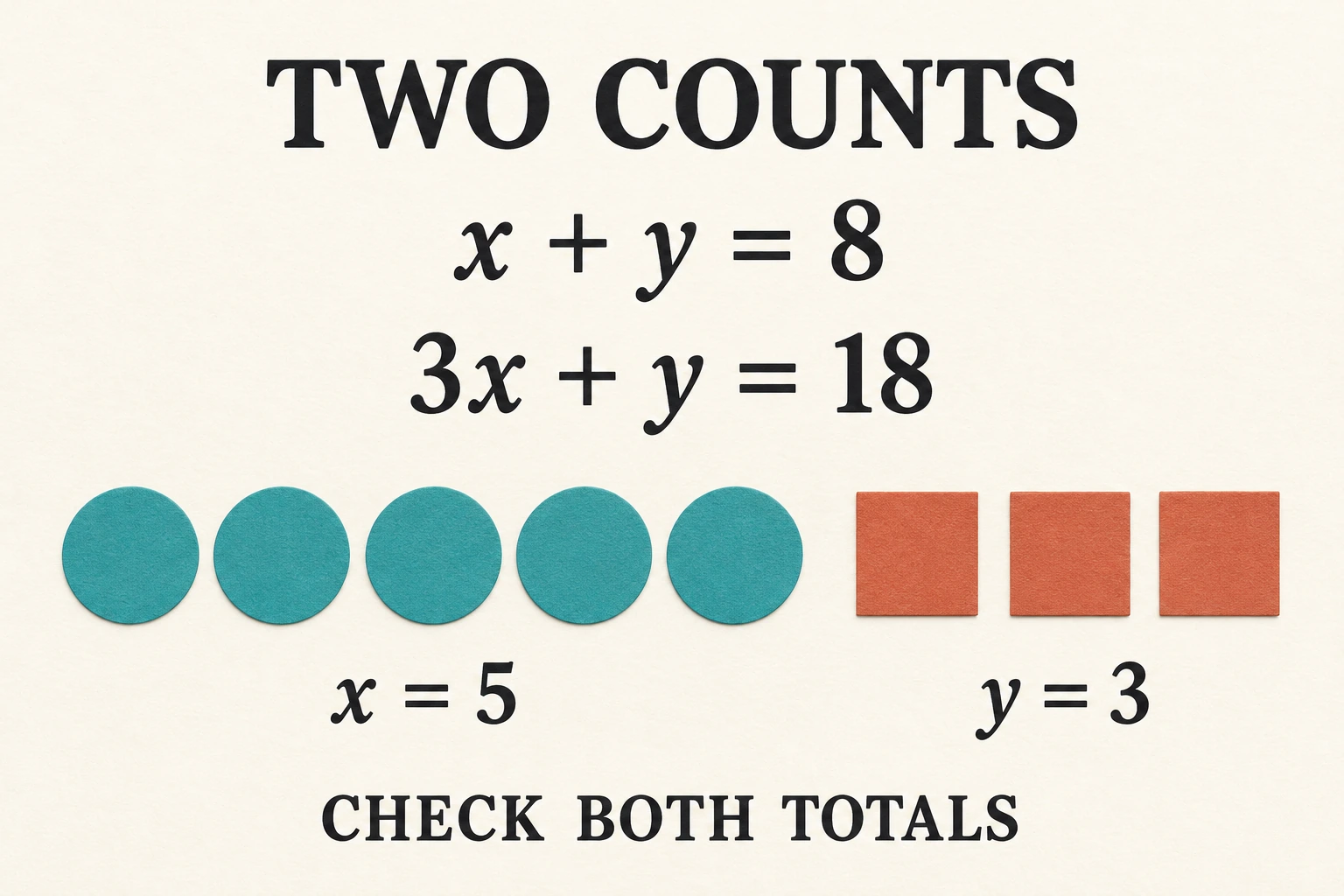
Nine pairs satisfy one eight-item total. A scaled copy retains every pair, while an independent weighted total identifies five and three; a changed odd total has no integer answer.