11 min read
Check a holiday task assignment count with every helper included
An original holiday task-card exercise counts assignments that give every helper at least one distinct task, using a two-one-one split and an independent exclusion check.
Practical guides to documents, data, creative work, and everyday planning.
Showing 253–264 of 726 guides
An original holiday task-card exercise counts assignments that give every helper at least one distinct task, using a two-one-one split and an independent exclusion check.
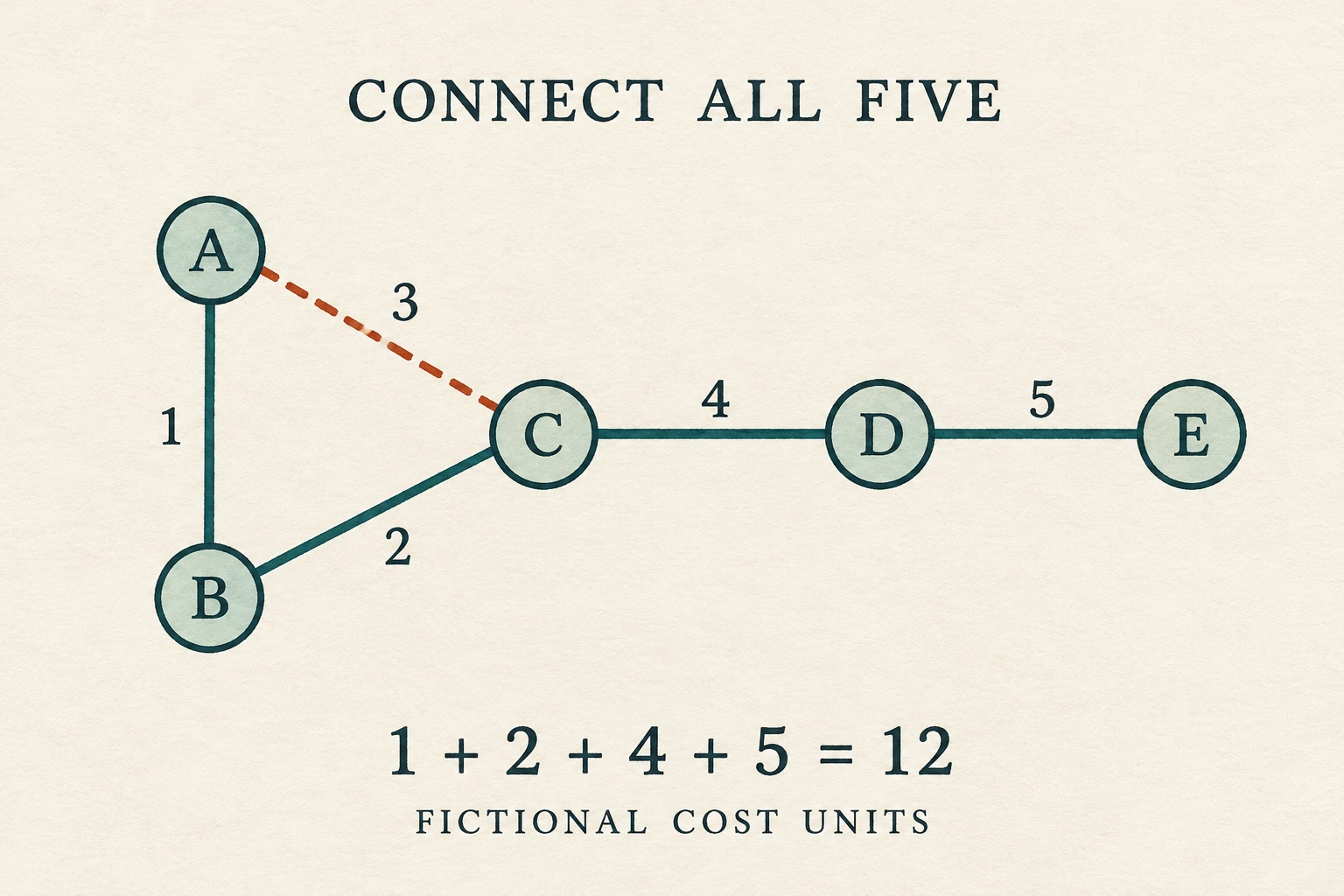
A five-point paper graph separates cheap edge selection from a connected minimum. Two forced links and a three-point choice establish a matching lower bound.
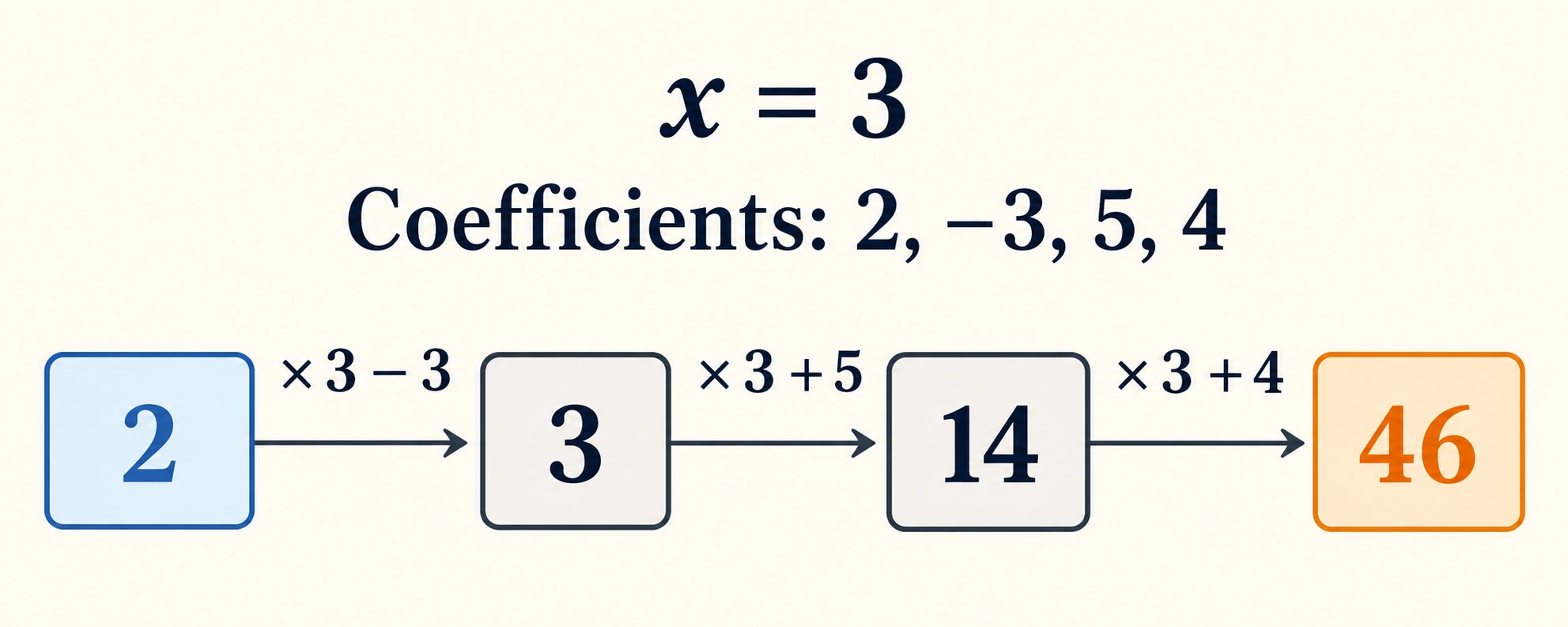
An original coefficient worksheet evaluates a cubic at a stated input, explains each multiply-add stage and shows why a missing-power zero must stay in the list.
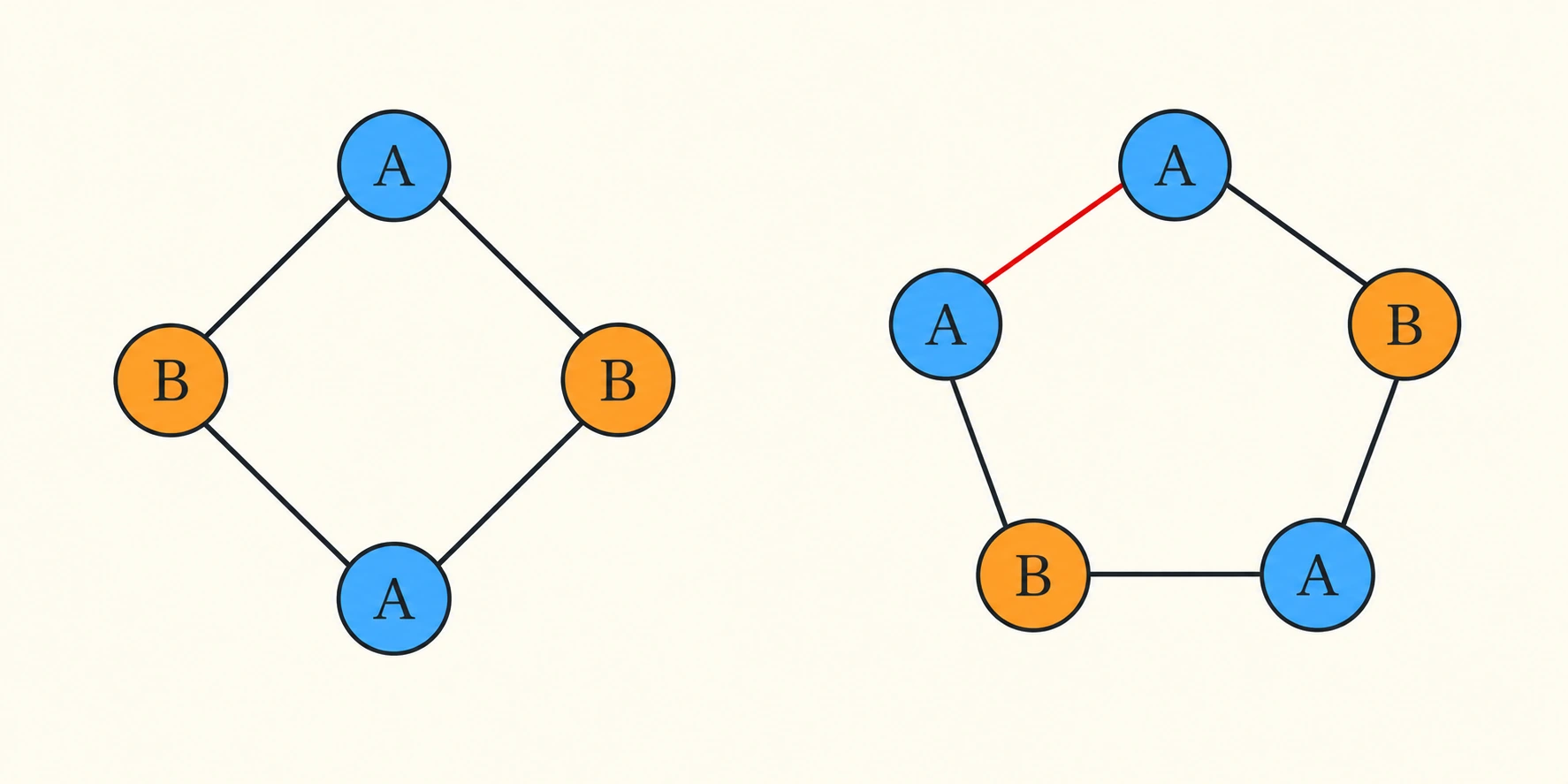
An original ring of labeled positions tests whether every neighboring pair can differ using exactly two labels, including the pair that closes the ring.
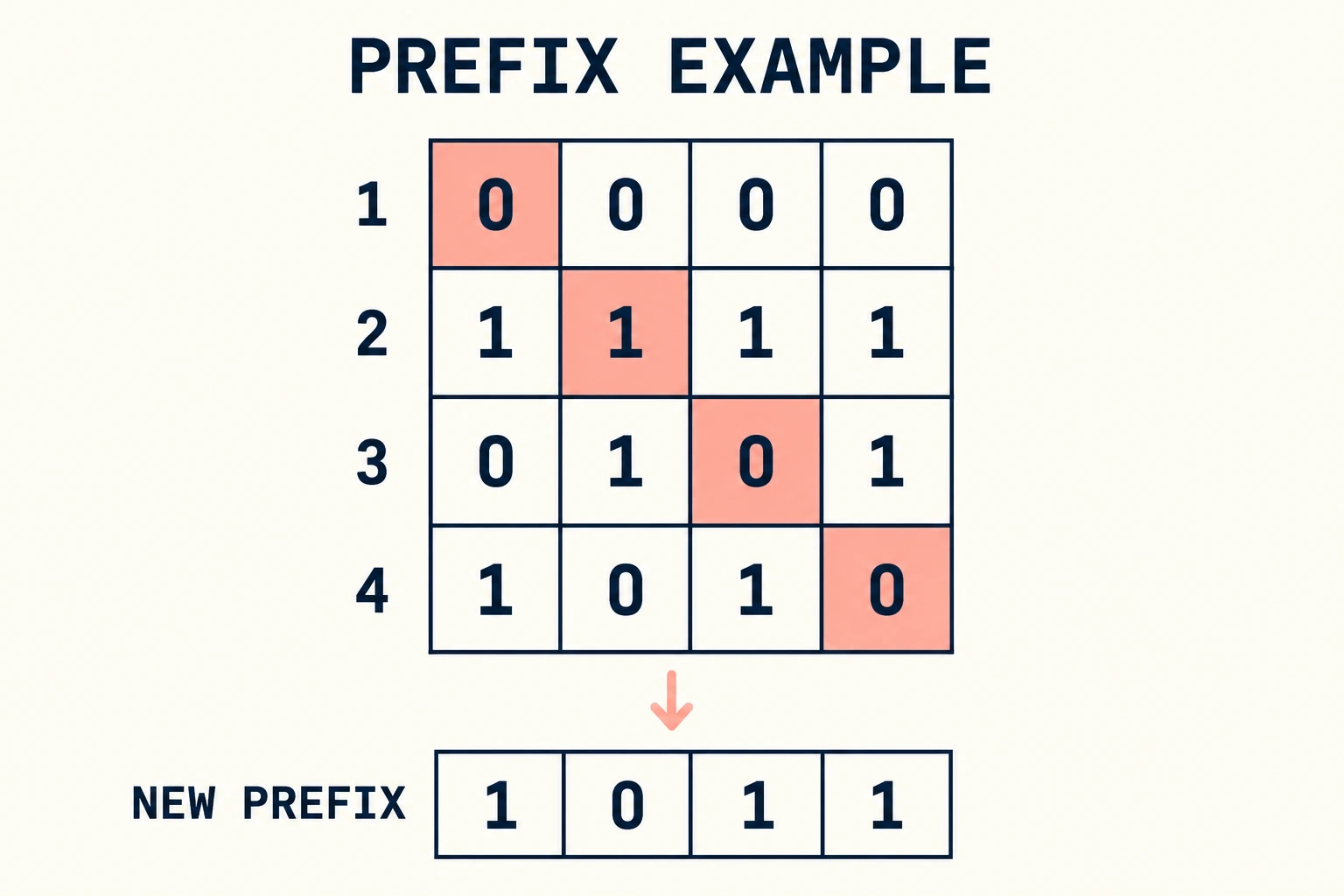
An original four-position binary example introduces the diagonal complement. An arbitrary-list proof supplies the infinite conclusion, with finite words kept in a separate domain.
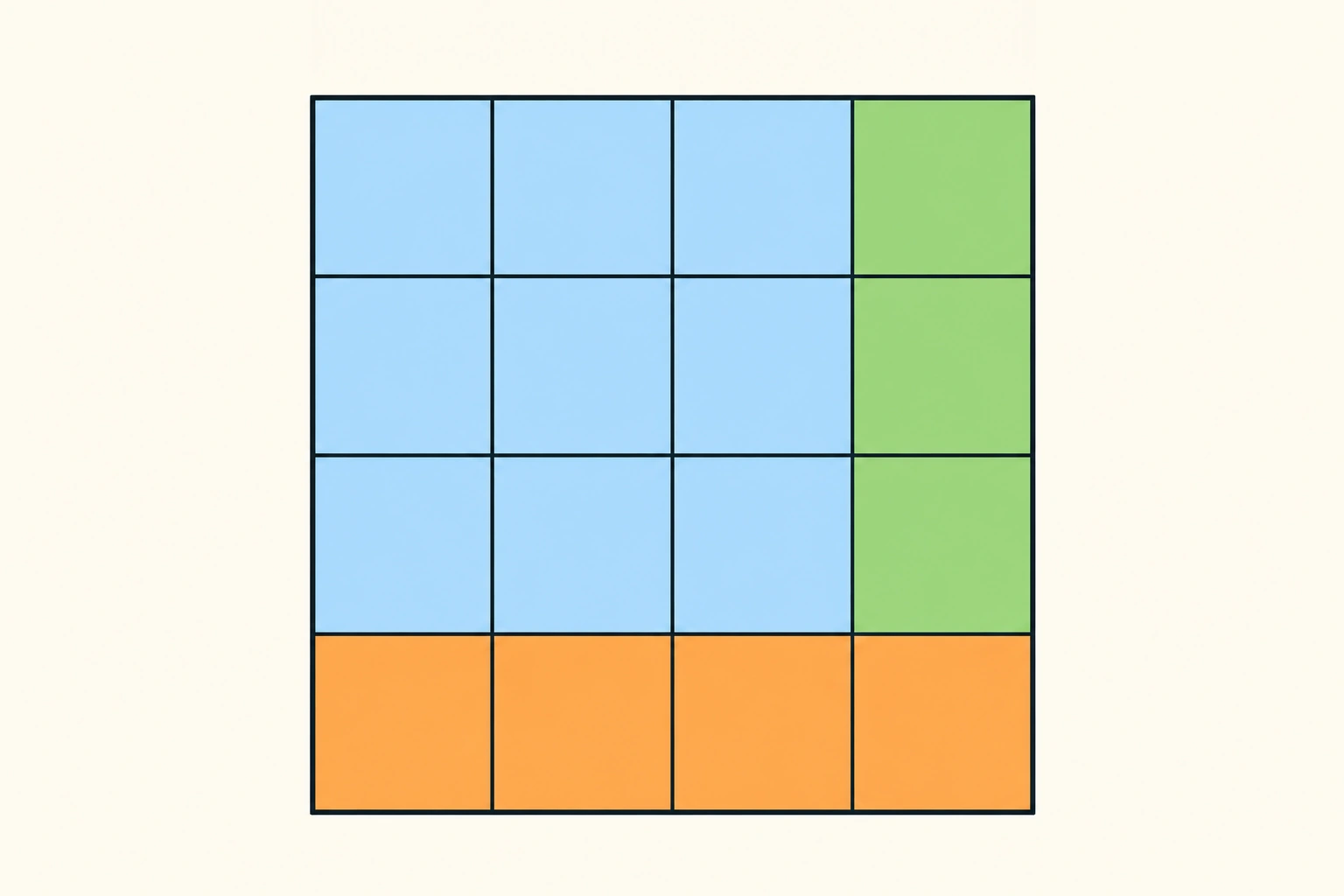
An original unit-cell square model separates each added L-shaped layer from the entire outer border and proves why the first n odd numbers total n squared.
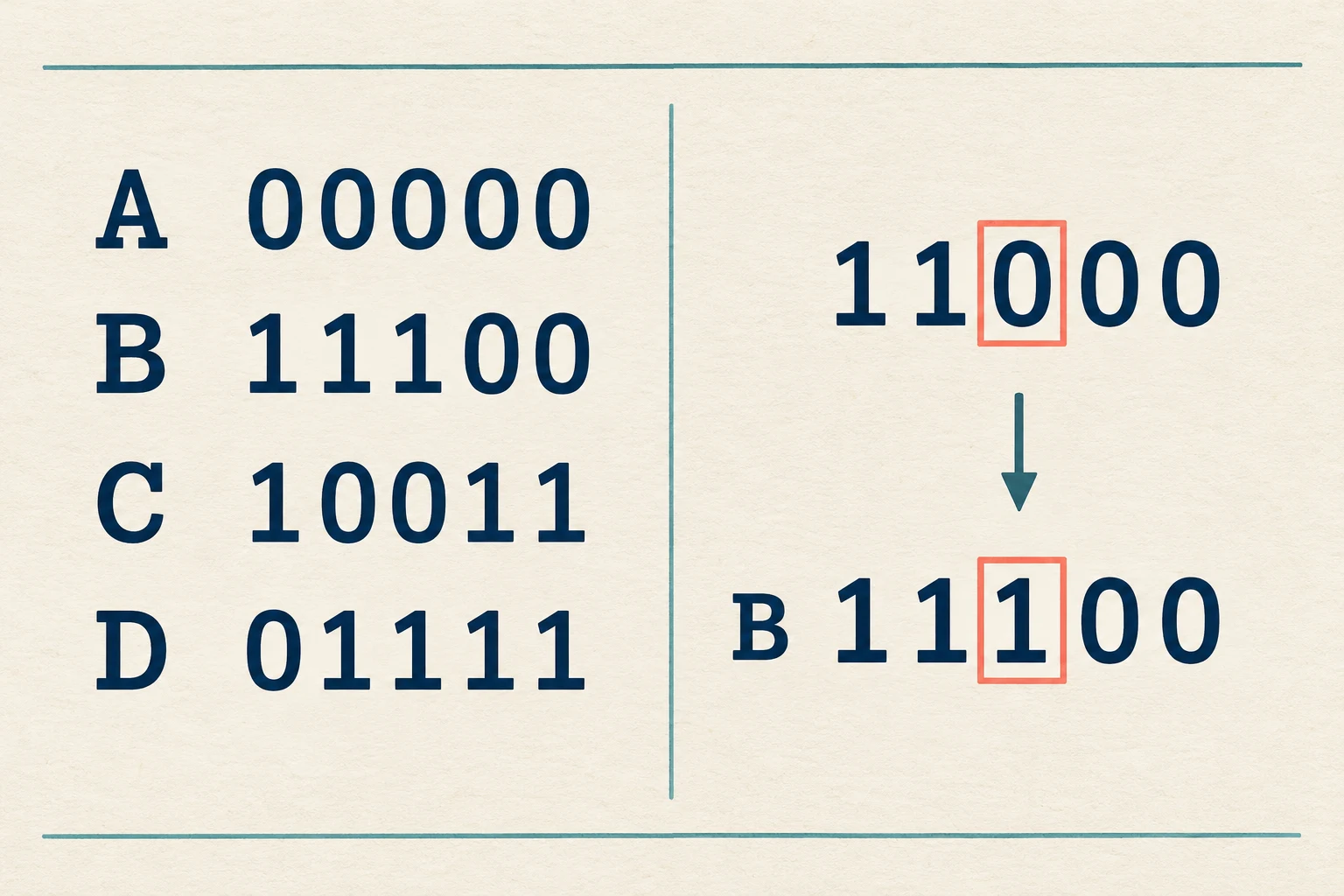
A fictional binary worksheet constructs disjoint correction neighborhoods and checks the exact limit of its one-flip guarantee.
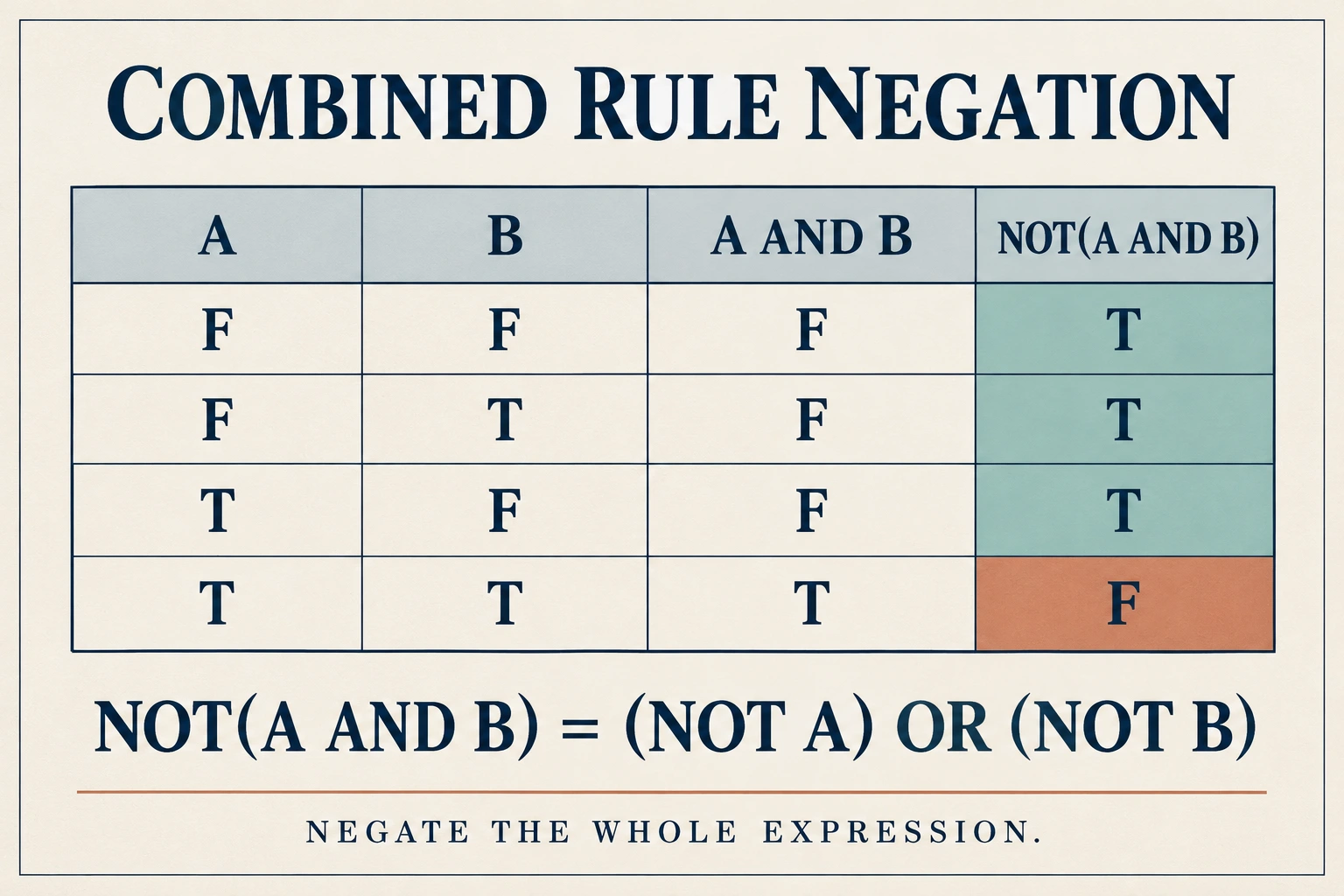
An original two-flag worksheet negates a complete AND or OR formula. Four defined input cases show why the connective changes and why false is not an inverse action.
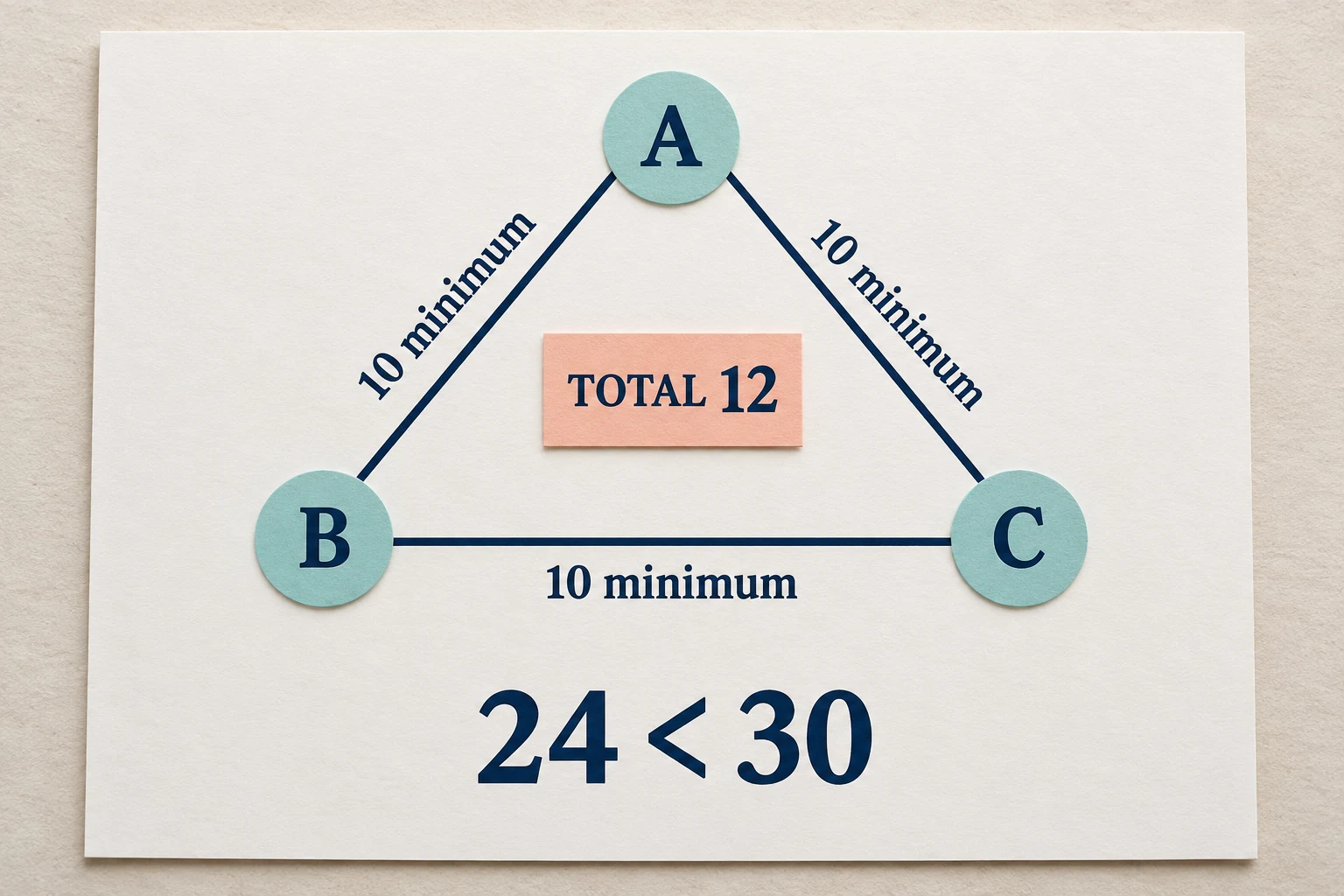
A fictional savings worksheet tests all three overlapping pair promises before choosing individual shares.
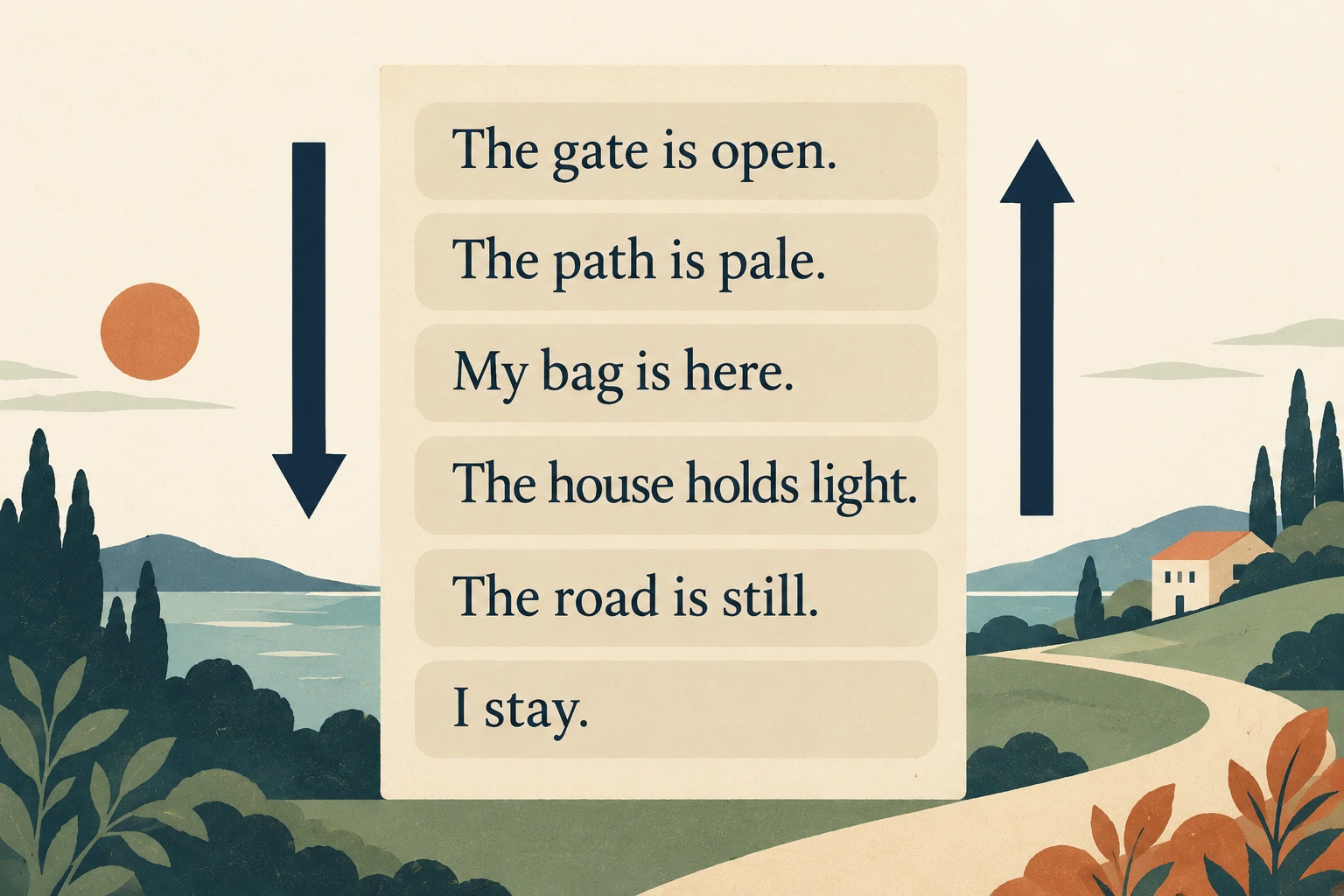
An original six-line poem keeps each complete sentence intact while reversing the order of its lines. A dependent-clause trial shows what needs repair before the wording is fixed.
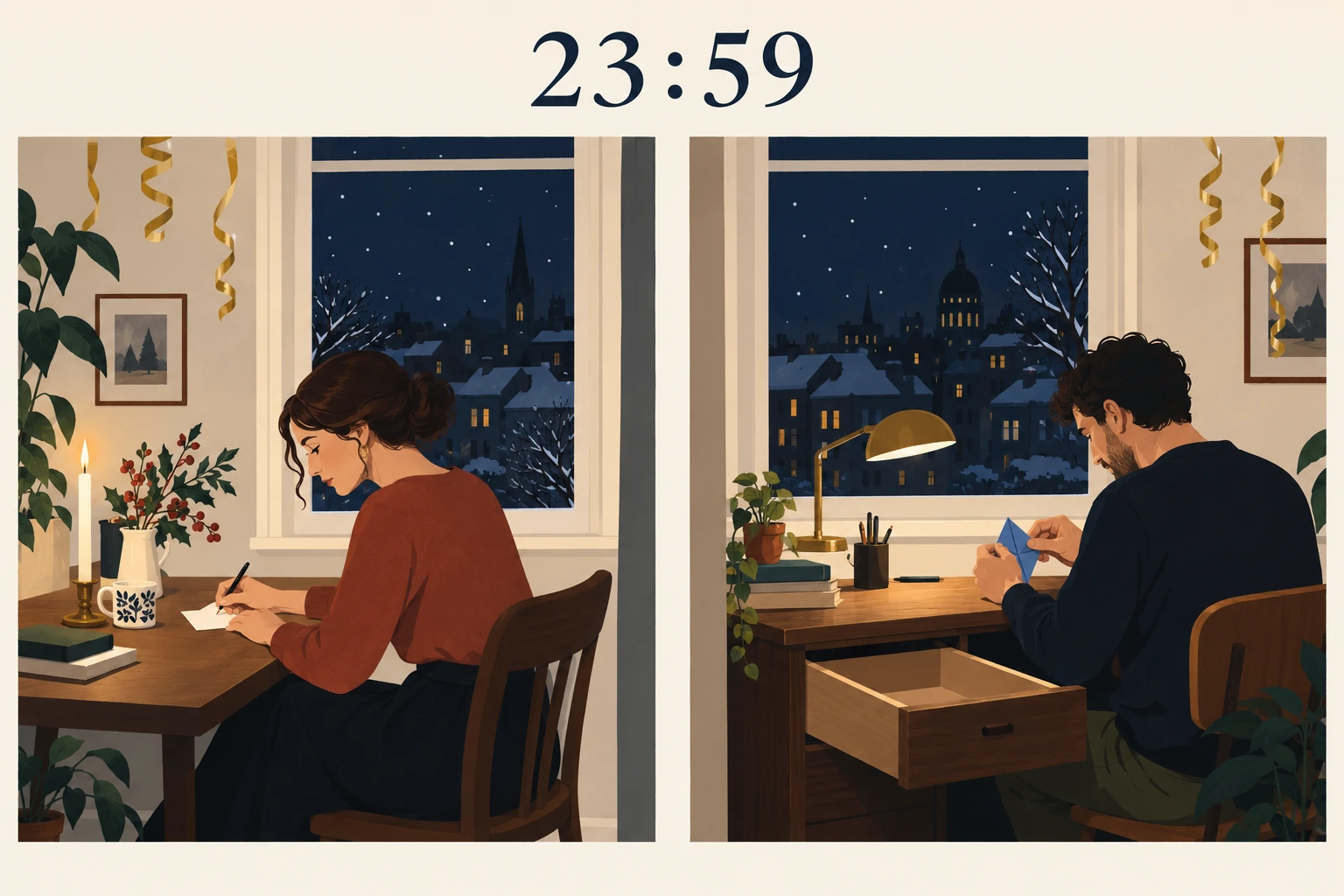
Two original fictional room scenes occupy the same declared New Year minute. Compare explicit time anchors, swapped page order and a revision that changes chronology.
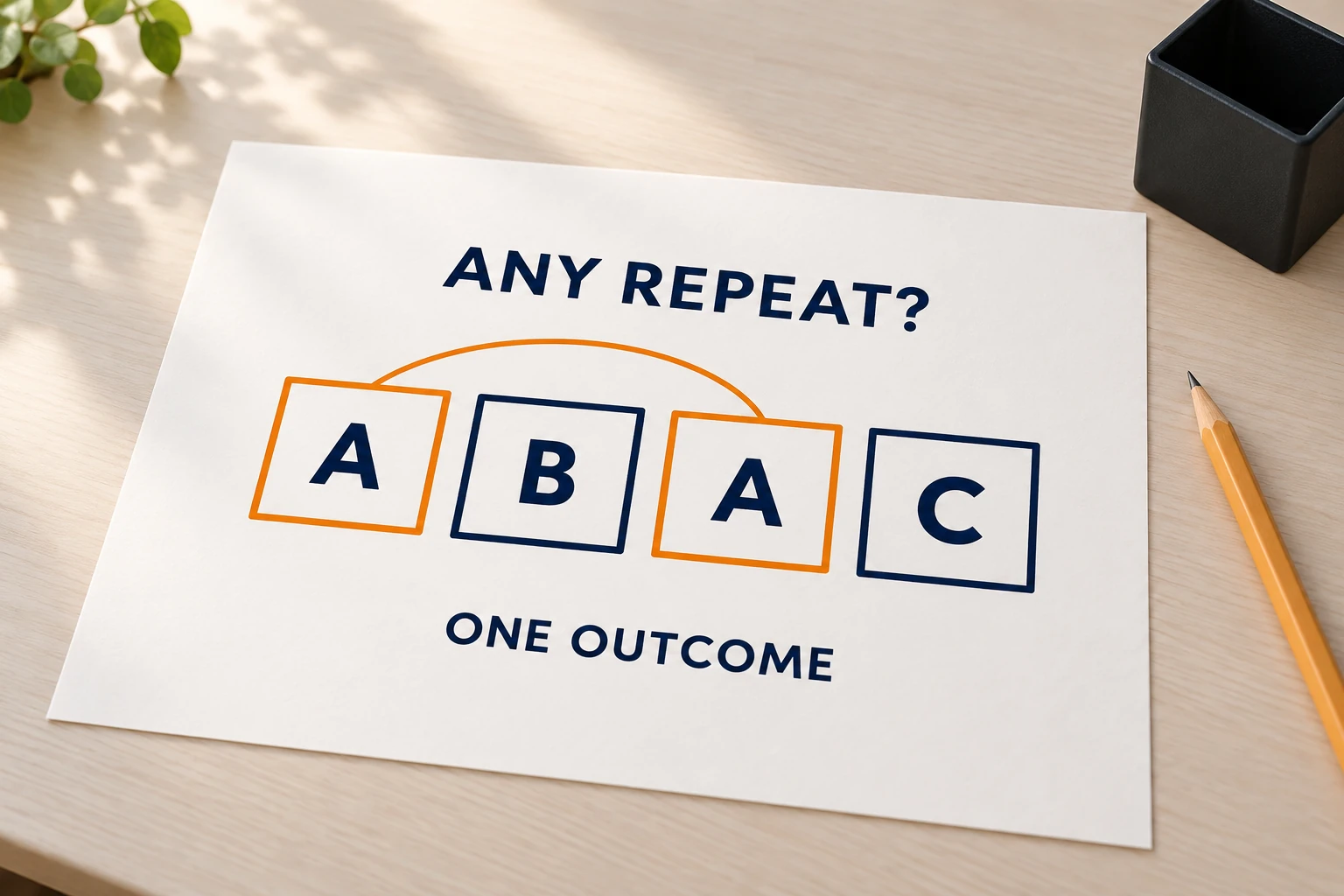
A fictional evening puzzle separates the chance of any repeated symbol from the number of matching pairs within an outcome.