9 min read
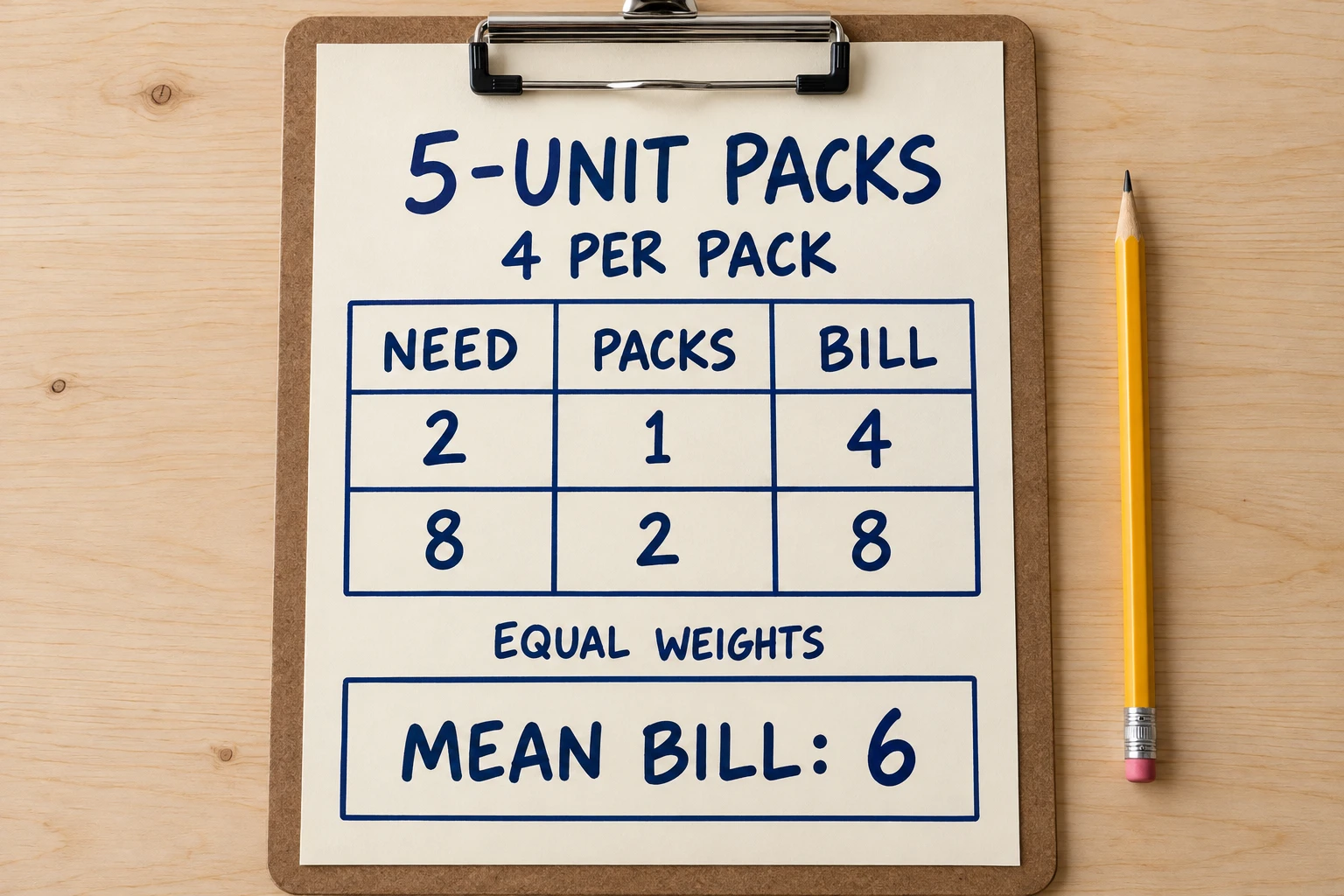
Average demand pack budget: price each case first
Compare a bill at mean demand with mean bills in fictional whole-pack cases, including equal means with different expense and a reversed-bias control.
Practical guides to documents, data, creative work, and everyday planning.
Showing 277–288 of 726 guides
Compare a bill at mean demand with mean bills in fictional whole-pack cases, including equal means with different expense and a reversed-bias control.

An original winter scene follows Nila from a gathering into an earlier June moment, then back to the same table. Entry and return anchors keep the two story times identifiable.
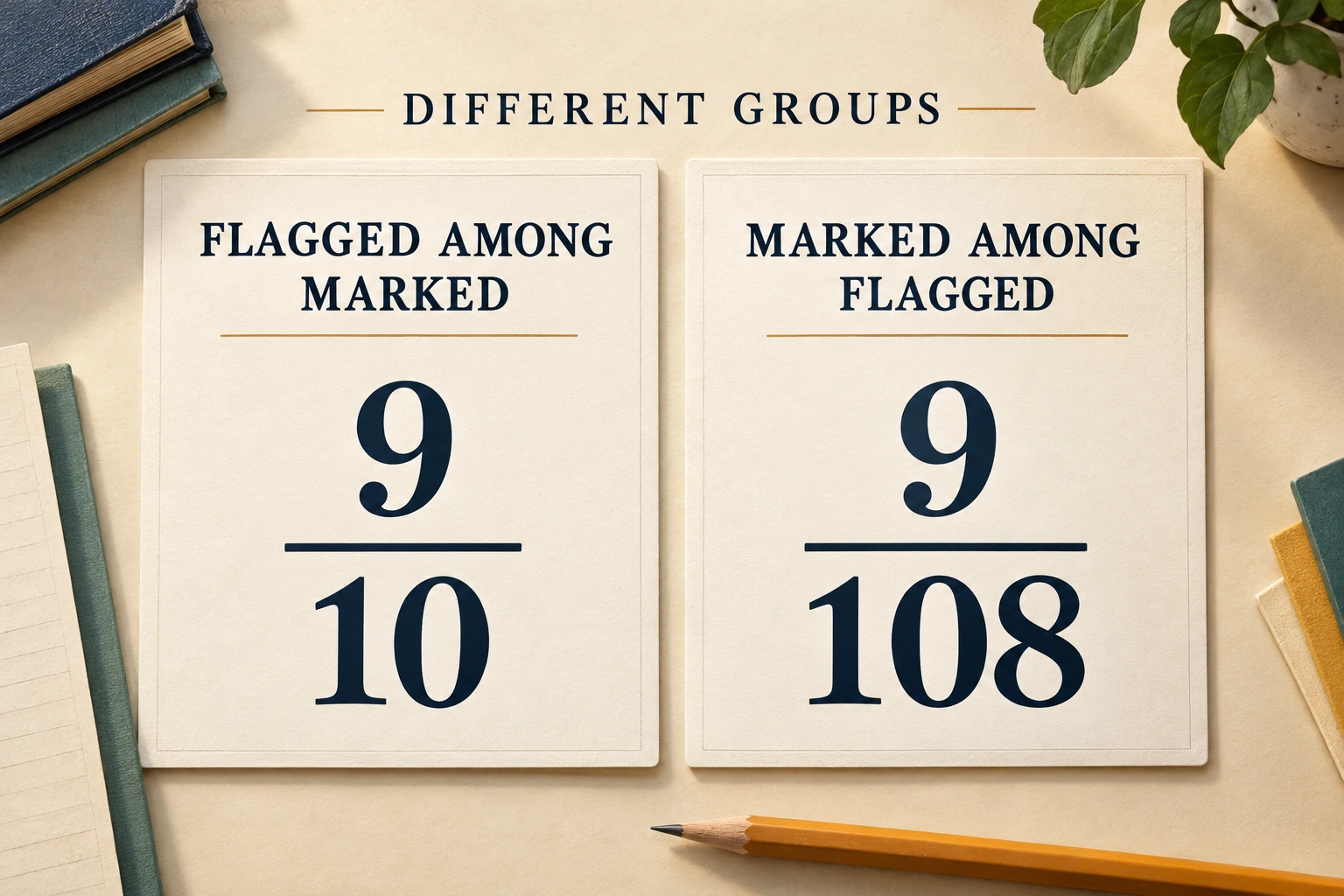
An invented 1000-record table distinguishes the flagged share of marked records from the marked share of flagged records, then changes the underlying group sizes.
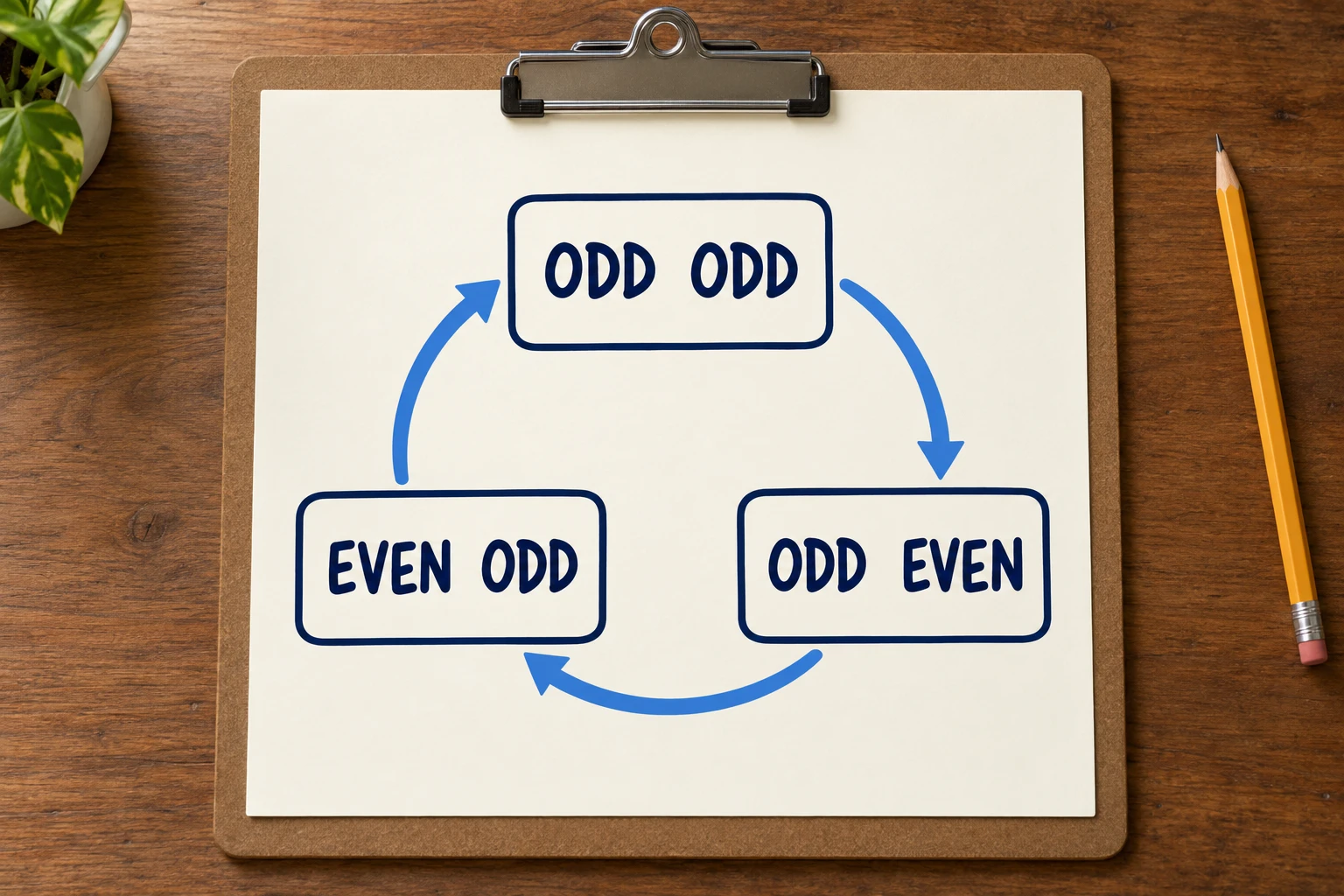
Derive the odd-odd-even pattern from a defined Fibonacci recurrence, prove its repeating parity pair cycle and keep seeds and positions explicit.
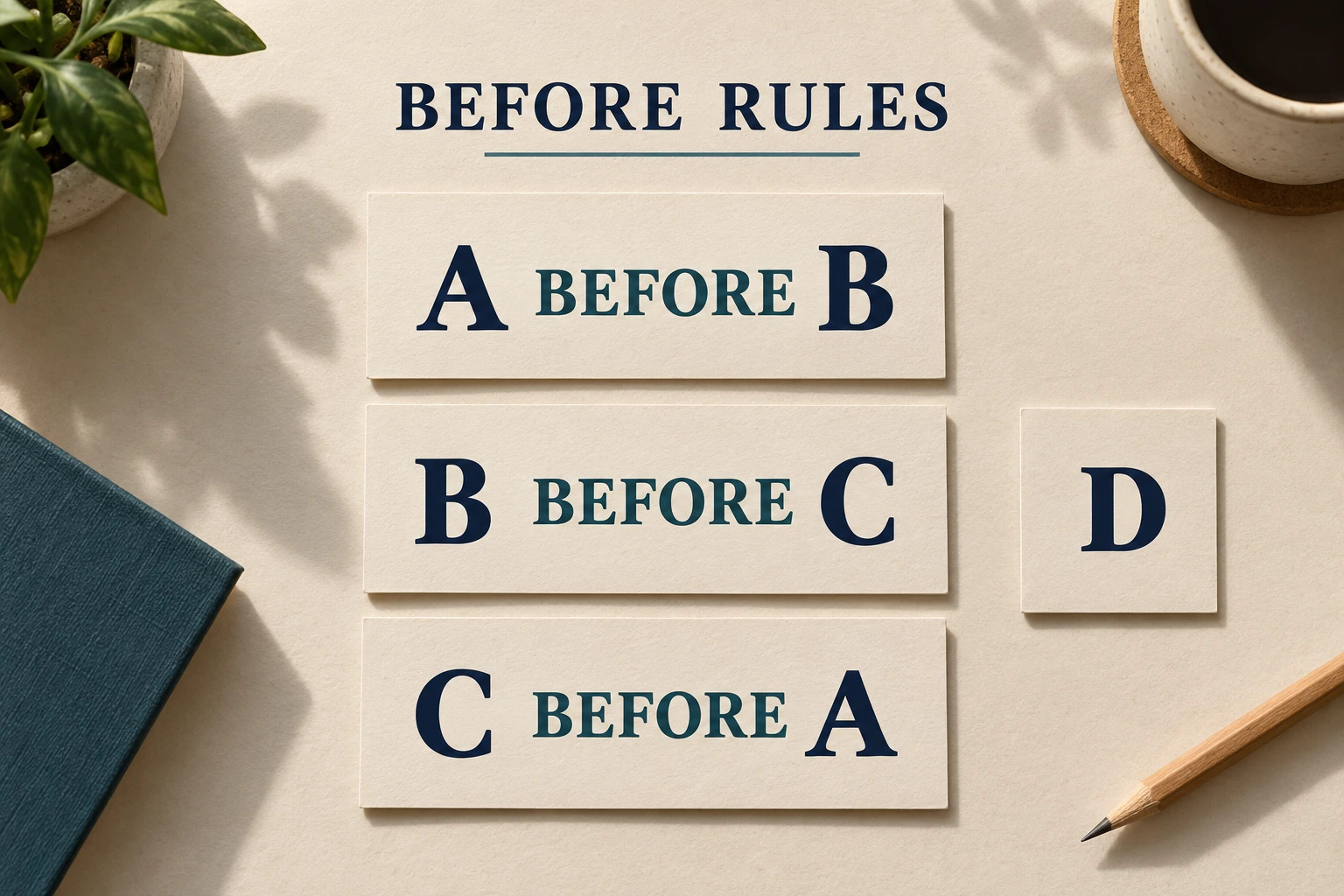
An original A-before-B, B-before-C, C-before-A exercise has no one-pass order. An explicit rule change restores several valid arrangements without making one unique.

Write a fictional town bulletin where rain travels upward, letting a morning, a pause and an evening share one clearly declared imagined rule.
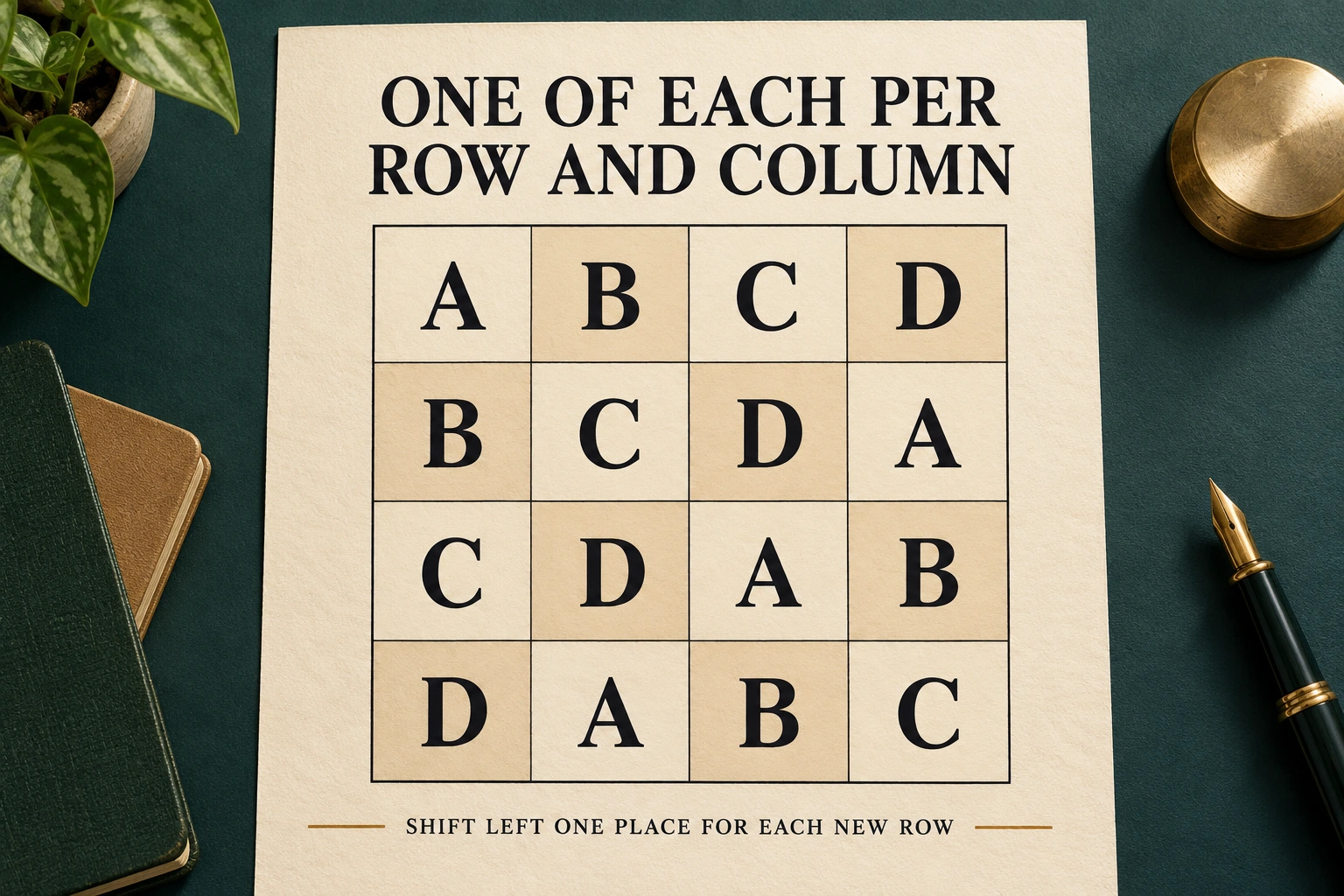
An original four-by-four letter grid uses cyclic row shifts to place A, B, C and D once in each row and column. A repeated-row comparison shows why both directions need checking.
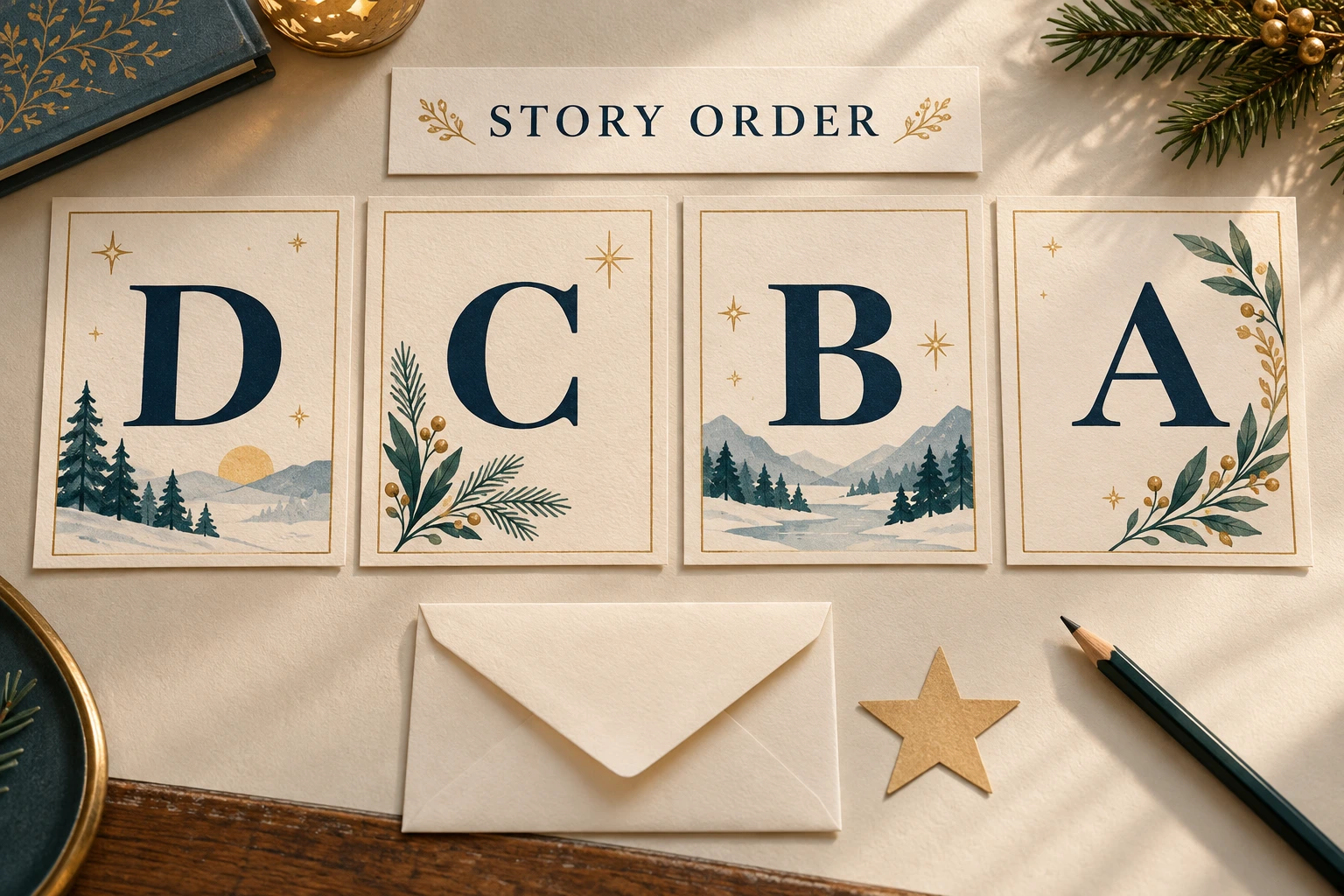
A quiet holiday writing activity presents an original paper-star story in D-C-B-A scene order while retaining its A-B-C-D events, with an explicit continuity check.

Check whether an exact sketch pad documents a refill interface before treating loose paper as a replacement. Keep sheet removal separate from refilling.
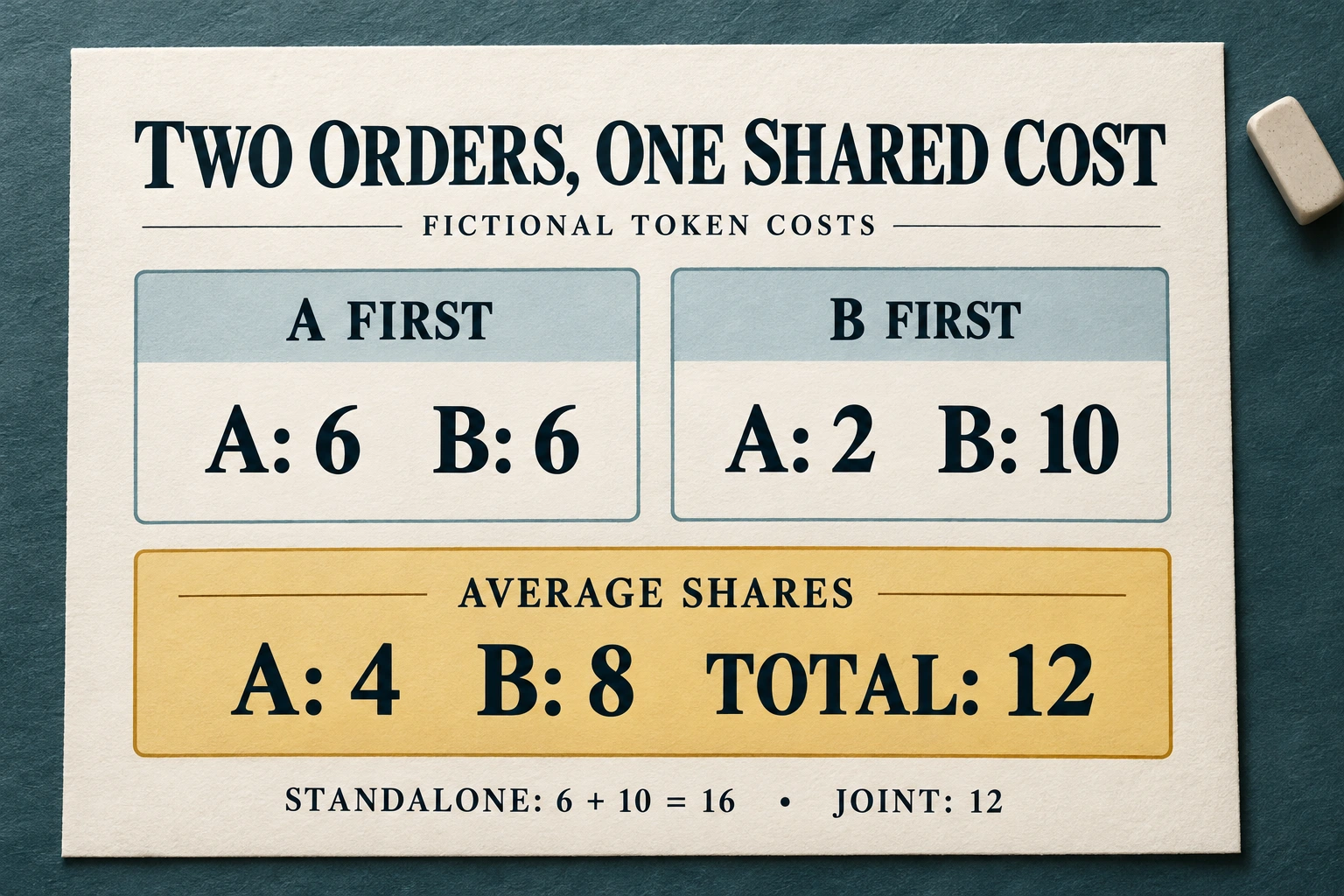
An original joint-cost example assigns fictional costs of six, ten and twelve tokens. Averaging each party’s increments across two entry orders gives shares of four and eight.

Try a private, optional change to a small imagined drawing and keep the unexpected detail you like, without promises about ability or wellbeing.
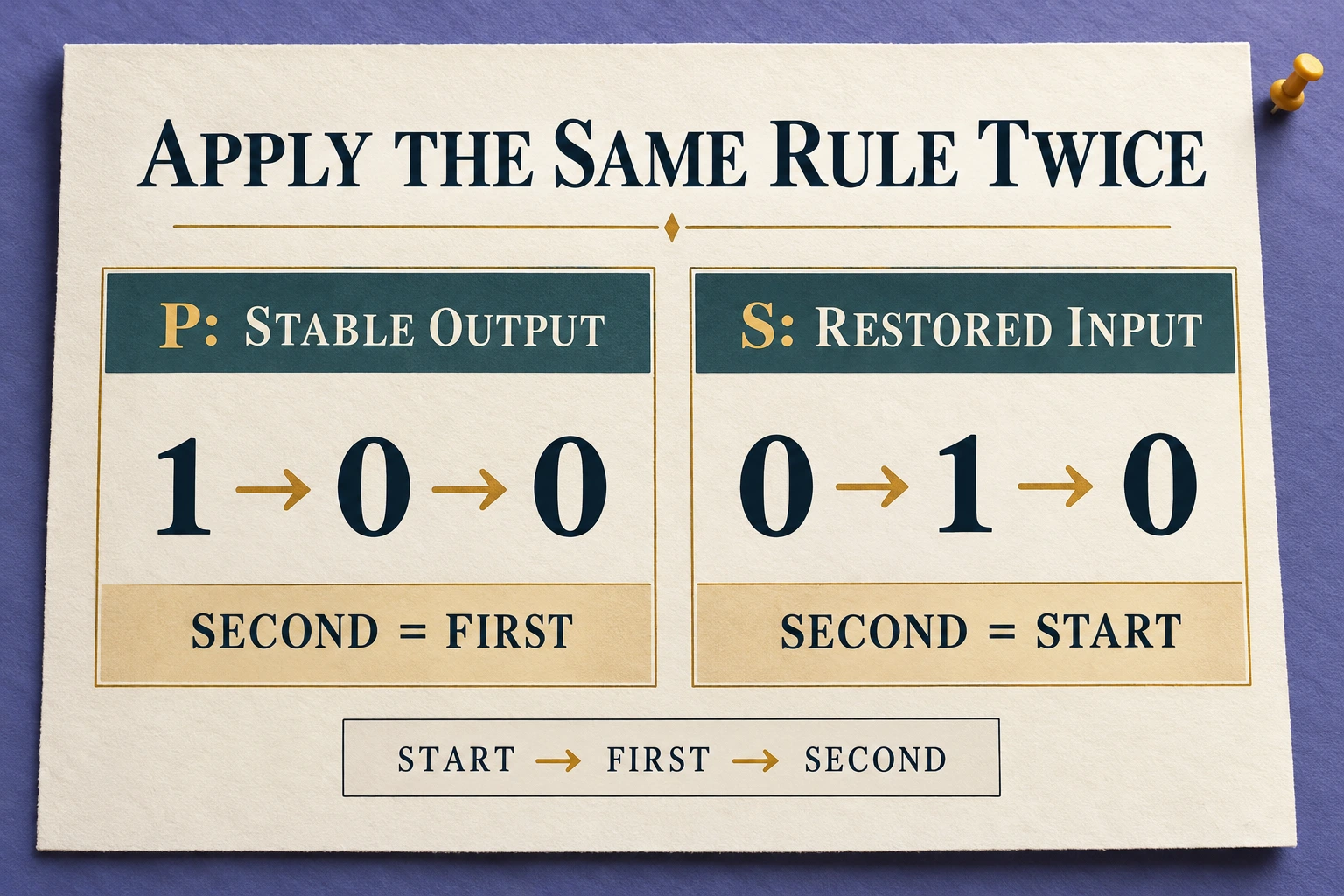
Original four-state rules separate a second output matching the first from a second output matching the start. Complete tables keep the two checks distinct.