9 min read
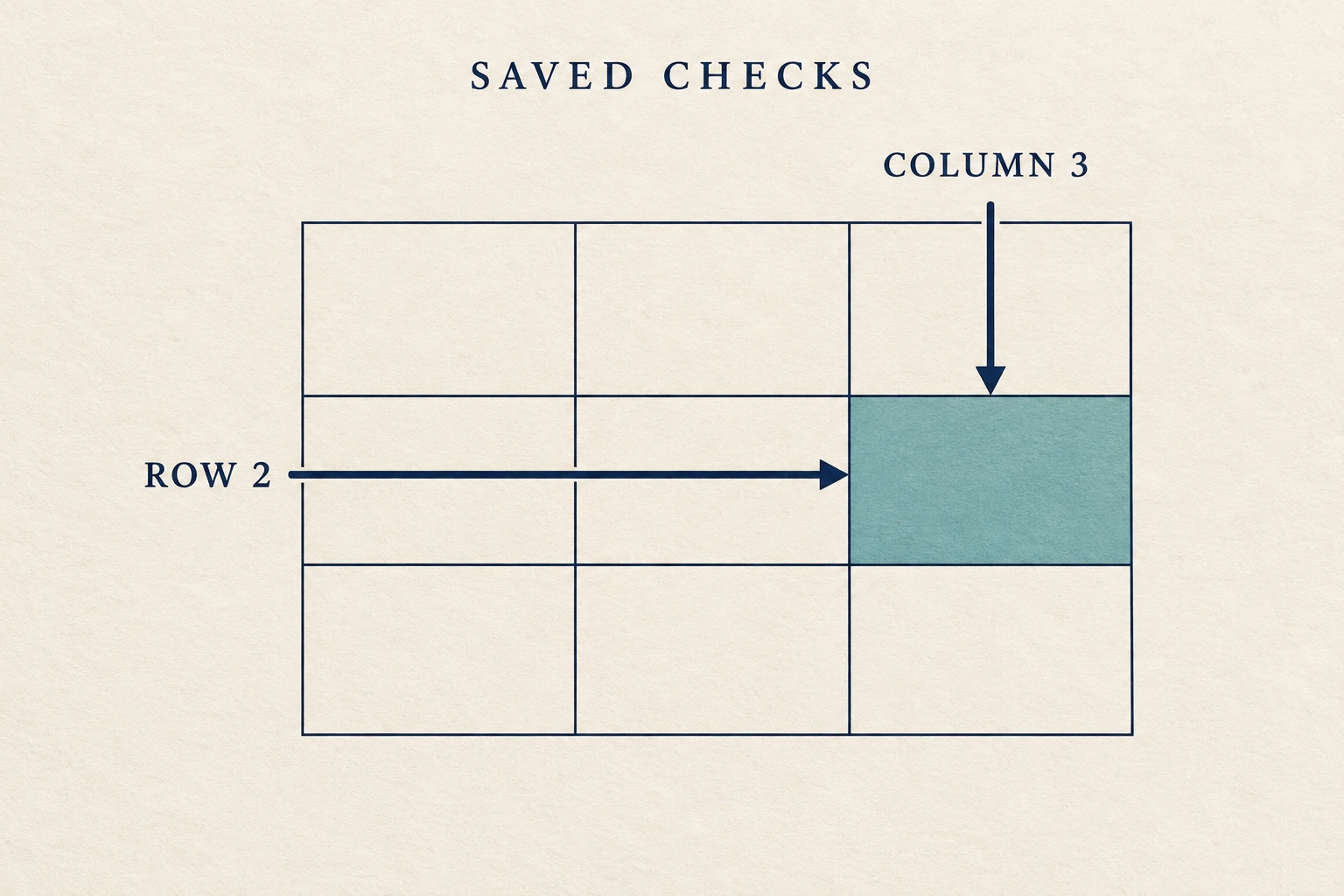
Row and column total mismatch: find one changed entry
An original three-by-three count table uses independently trusted row and column controls to locate one stipulated changed entry, with counterexamples limiting the diagnosis.
Practical guides to documents, data, creative work, and everyday planning.
Showing 289–300 of 726 guides
An original three-by-three count table uses independently trusted row and column controls to locate one stipulated changed entry, with counterexamples limiting the diagnosis.
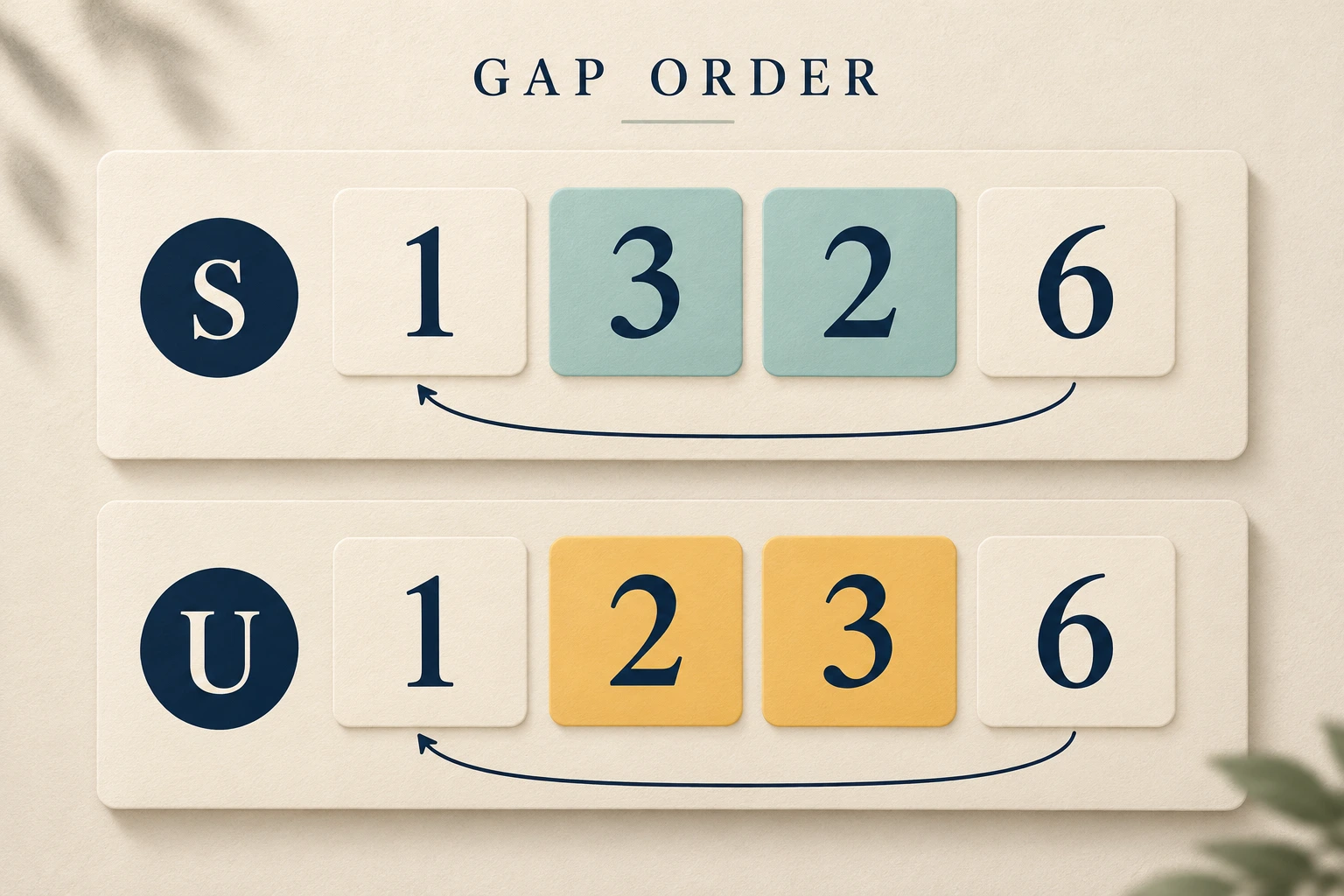
Two fictional four-marker ring patterns share a gap-length multiset but cannot align under any allowed rotation. An original registration model preserves cyclic order.
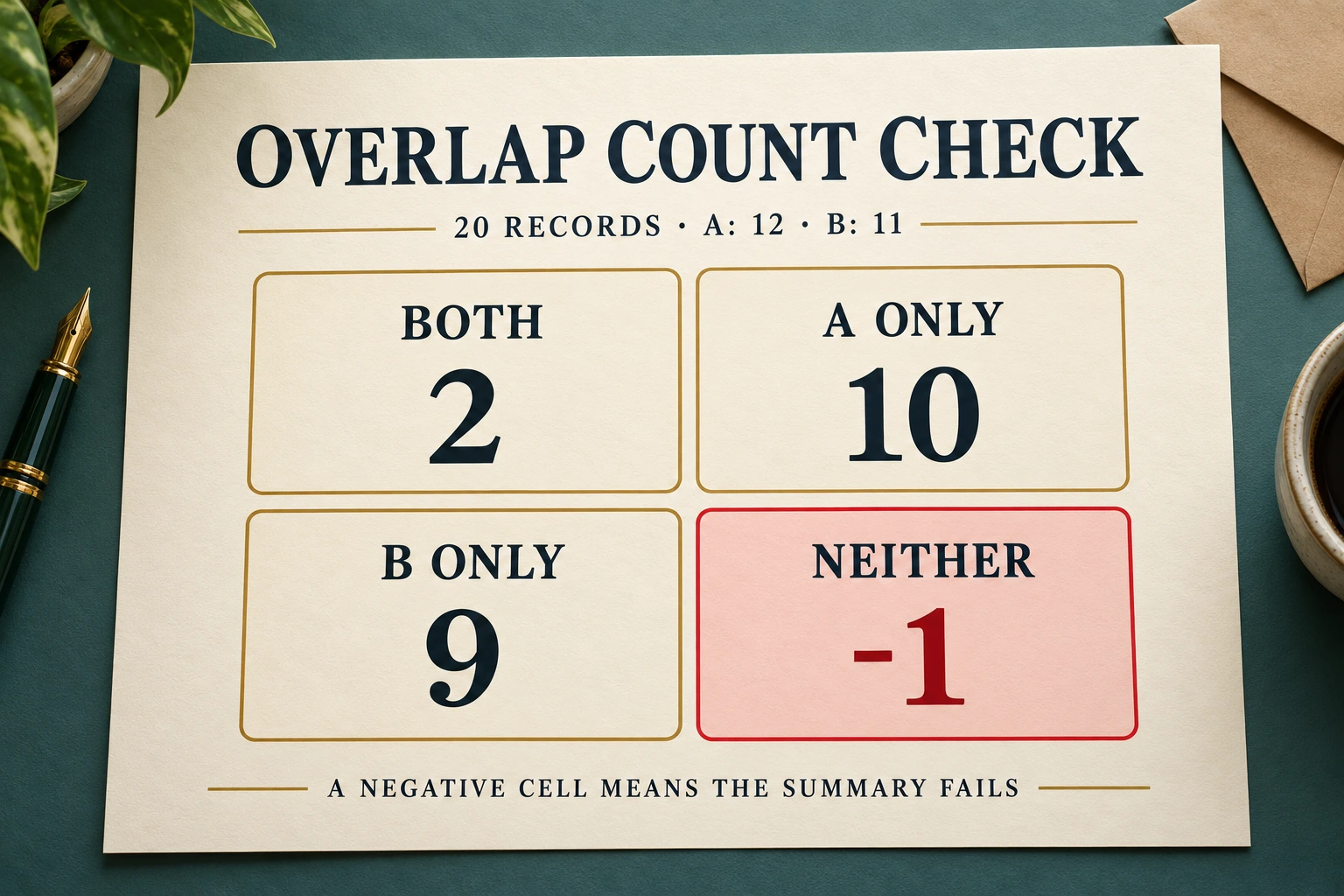
An original twenty-record tally shows why an overlap of two is impossible when the two group totals are twelve and eleven. Several larger overlaps remain possible.
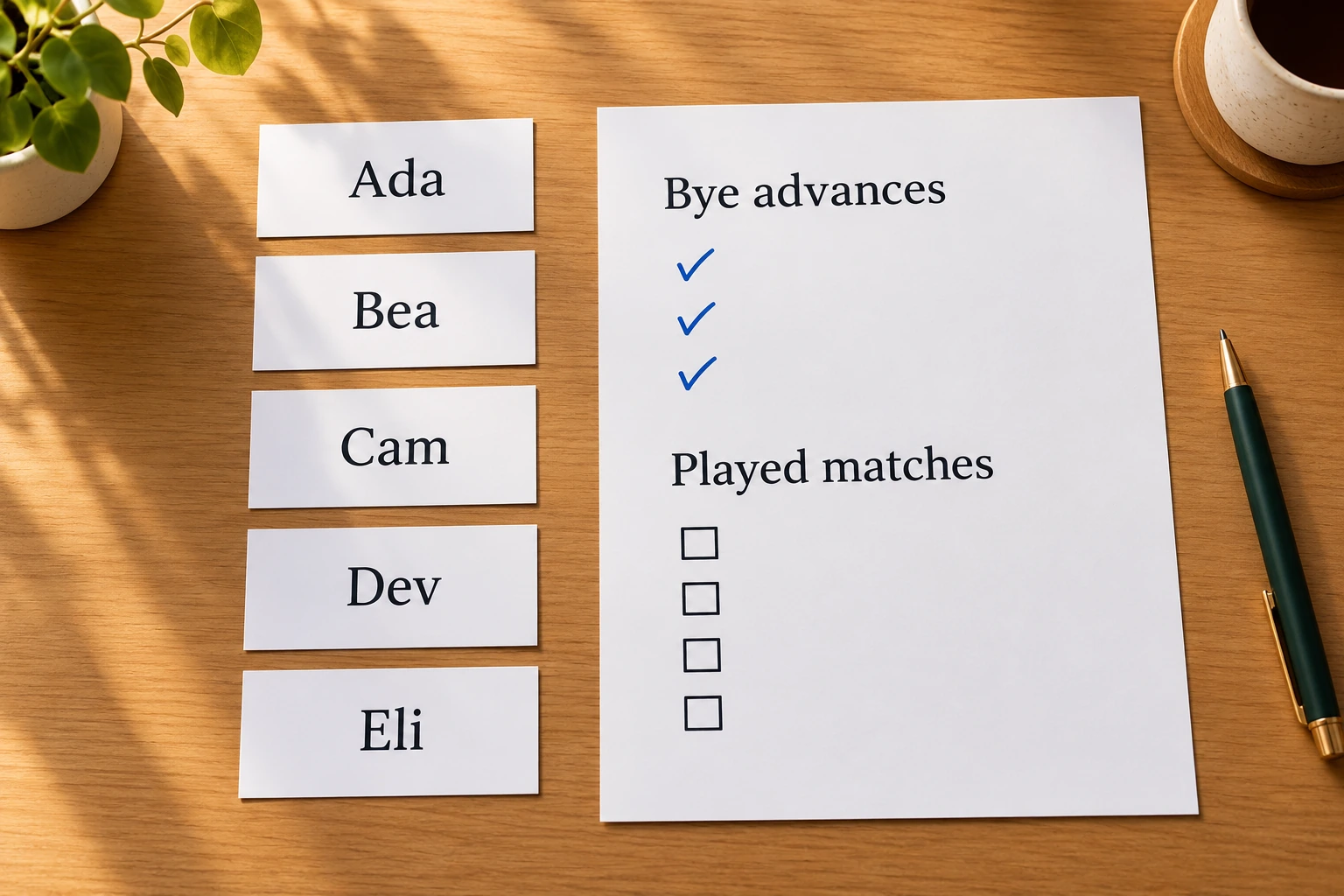
Construct a fixed five-name paper bracket, distinguish three bye advances from actual wins and trace four eliminations through one worked result.
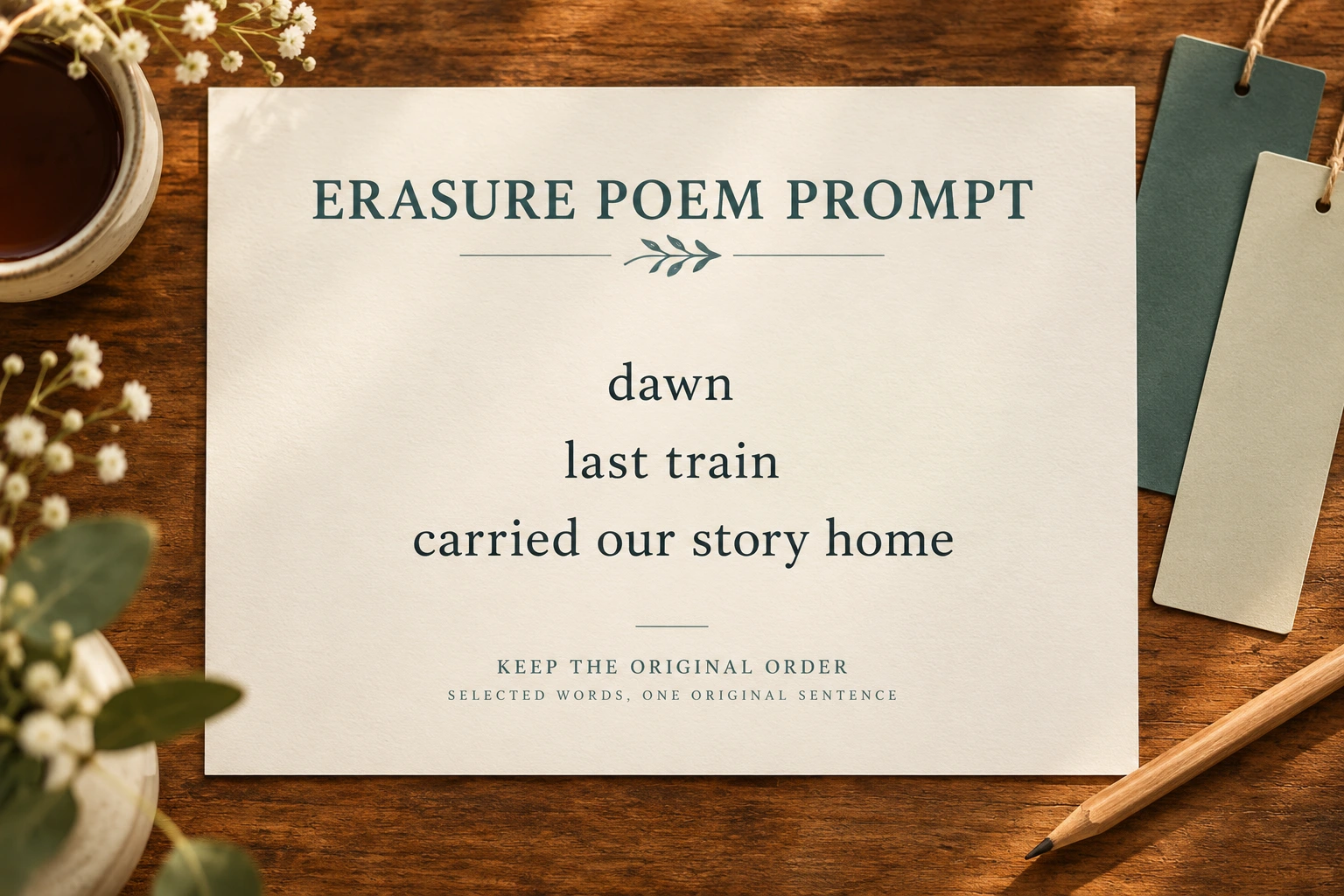
A new eighteen-word sentence supplies two deletion-only poem trials. Keep the selected word occurrences in source order, saving additions or rearrangements as different projects.
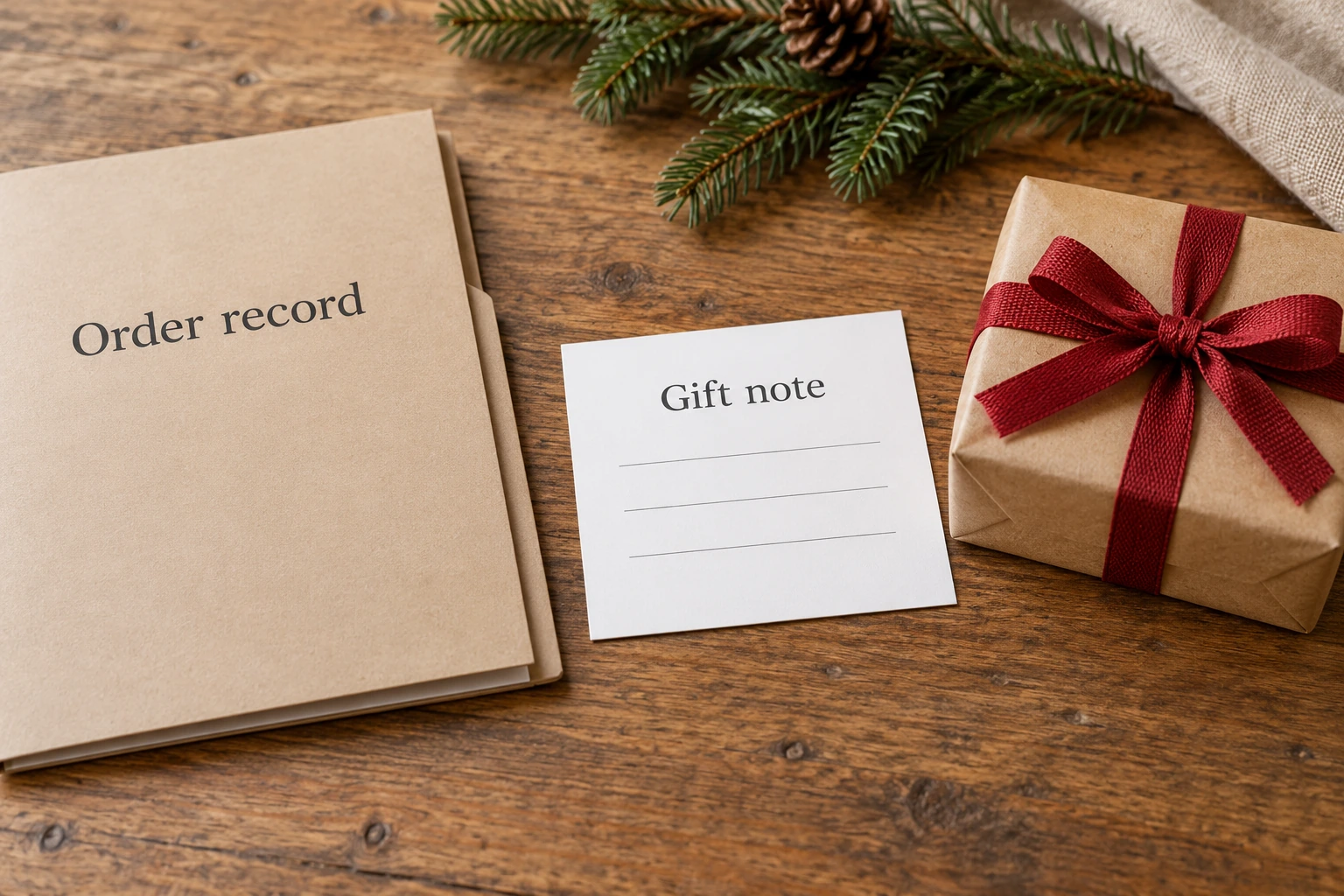
Prepare a holiday gift handoff with distinct roles for the original order, any seller-issued gift document and a plain recipient note.
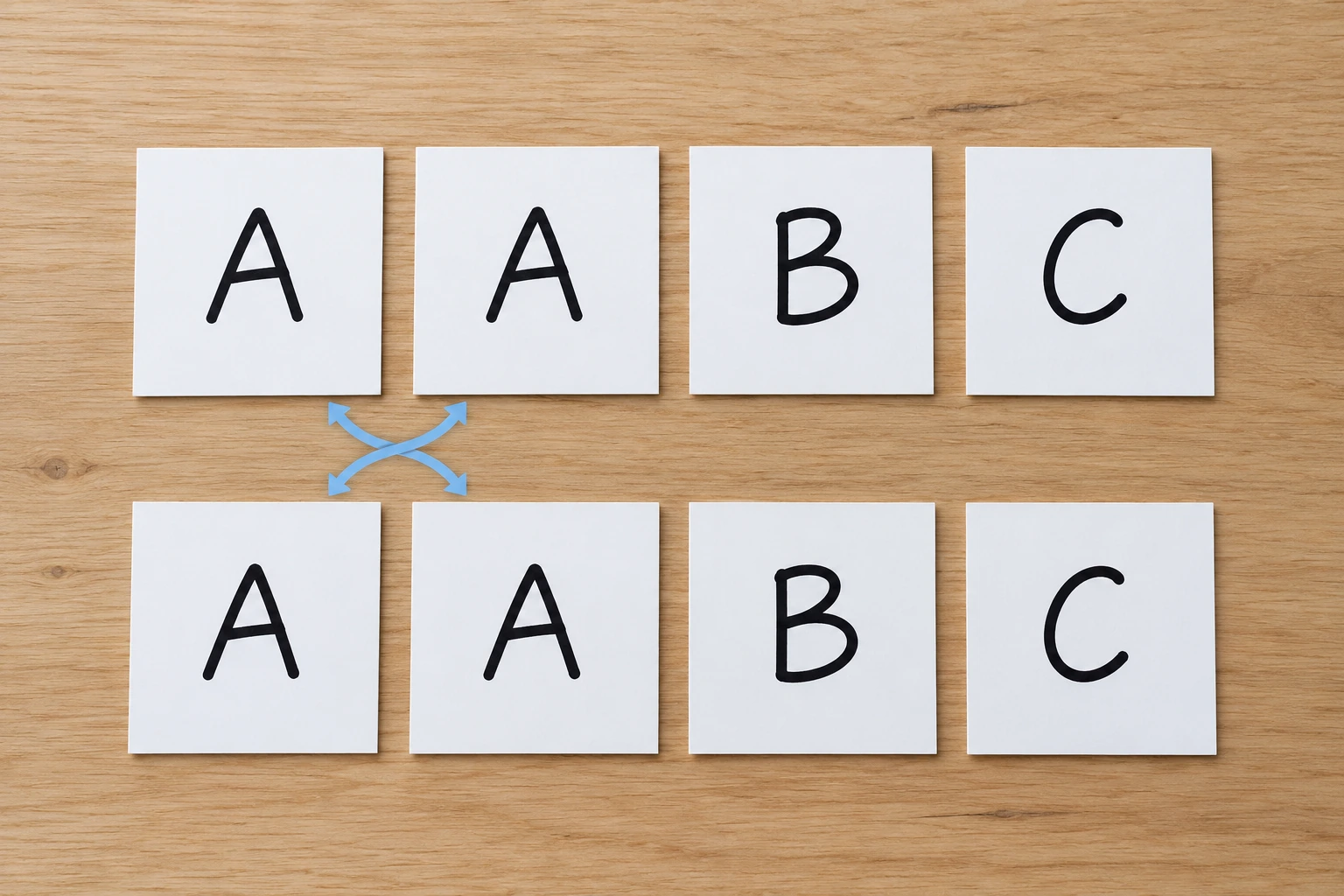
Keep the original24 labelled orders, define visible identity and verify12 distinct AABC strings without discarding a valid arrangement.
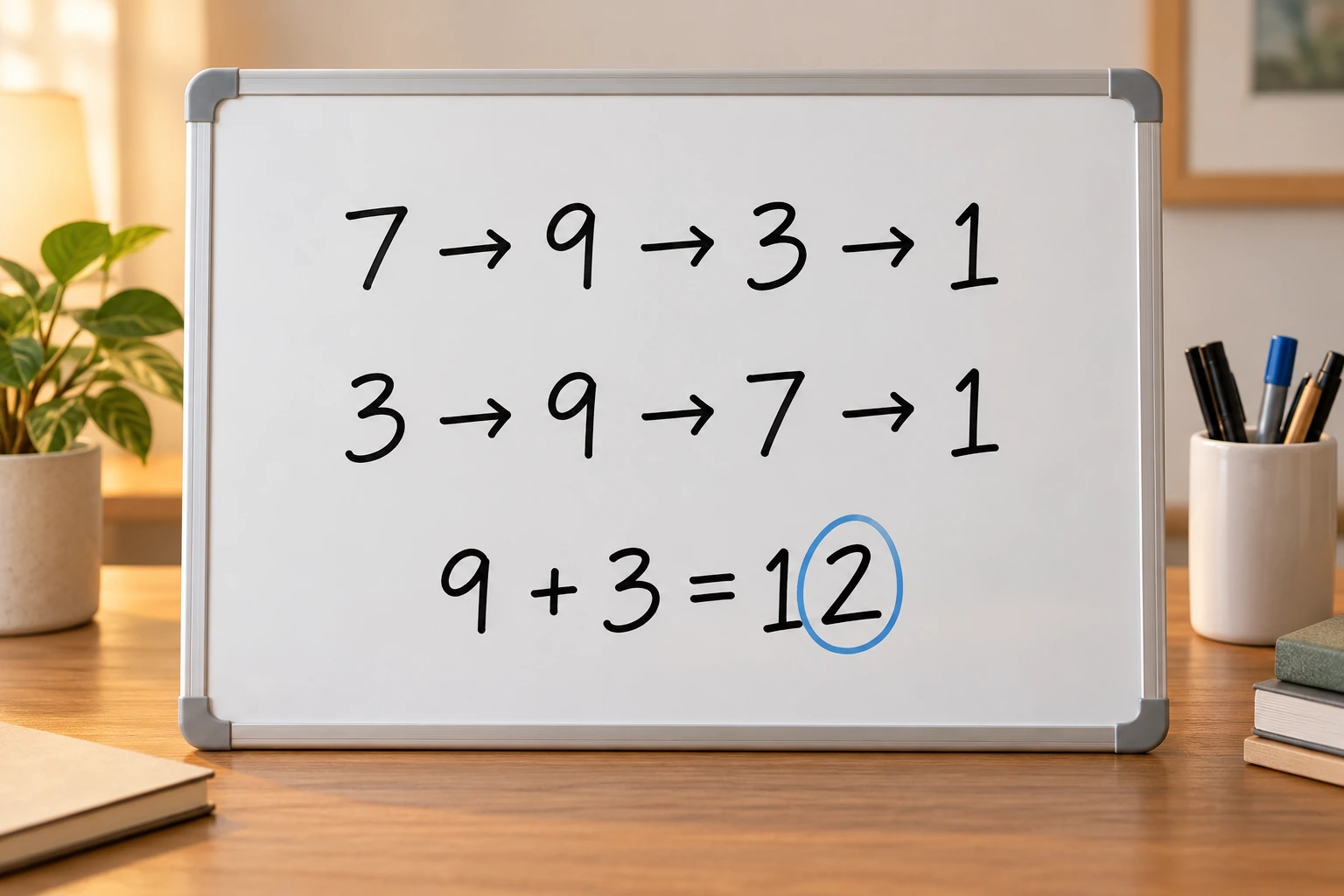
Find the final digit of an original large integer power sum using two proved four-step cycles and an independent exact check.
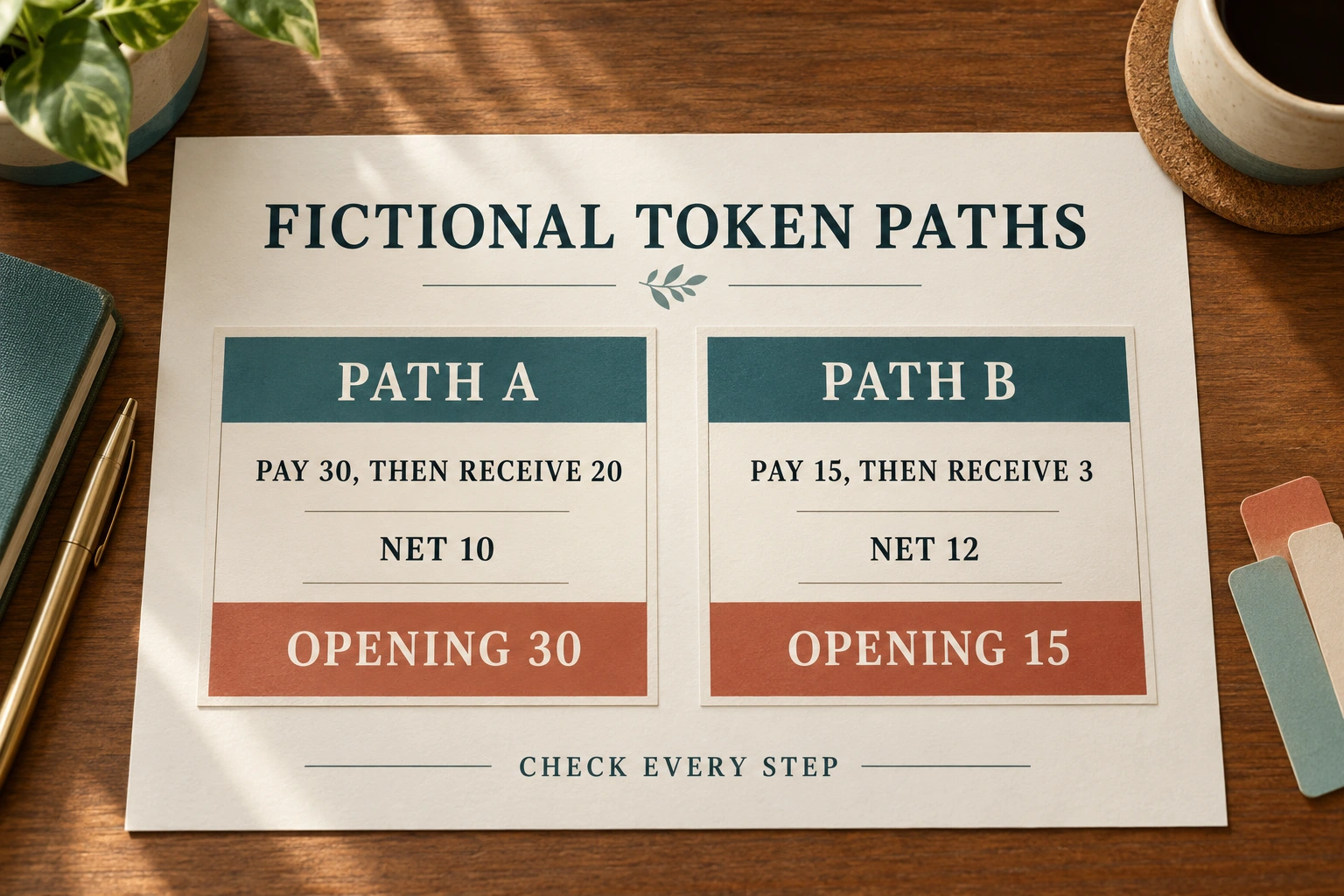
Original token ledgers show why a lower final net outlay can need more funds at the start. Check every intermediate balance under the declared event order.
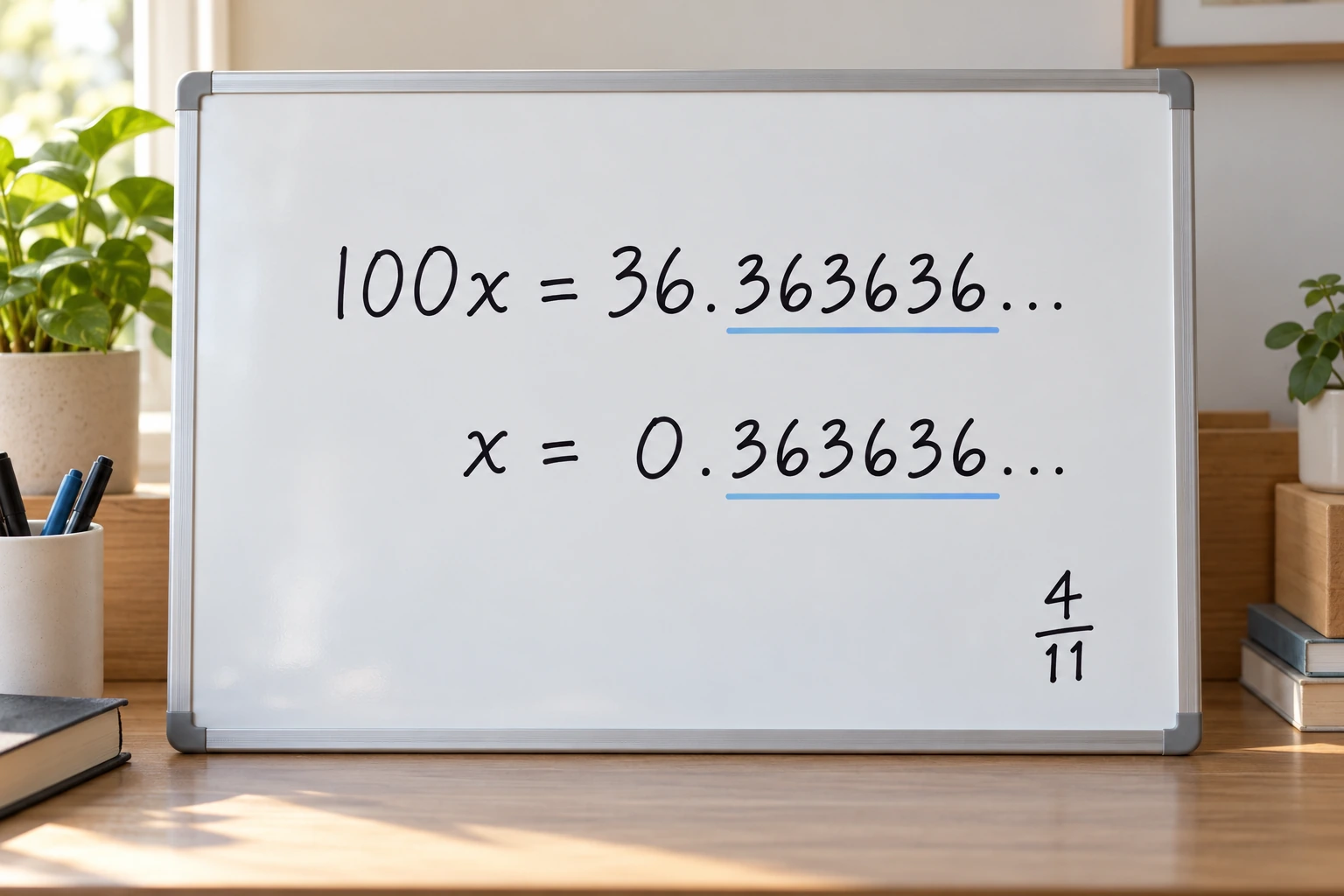
Use the stated infinite repetitions of36 and072 to obtain exact fractions, keeping a finite display separate from a declared repeating decimal.
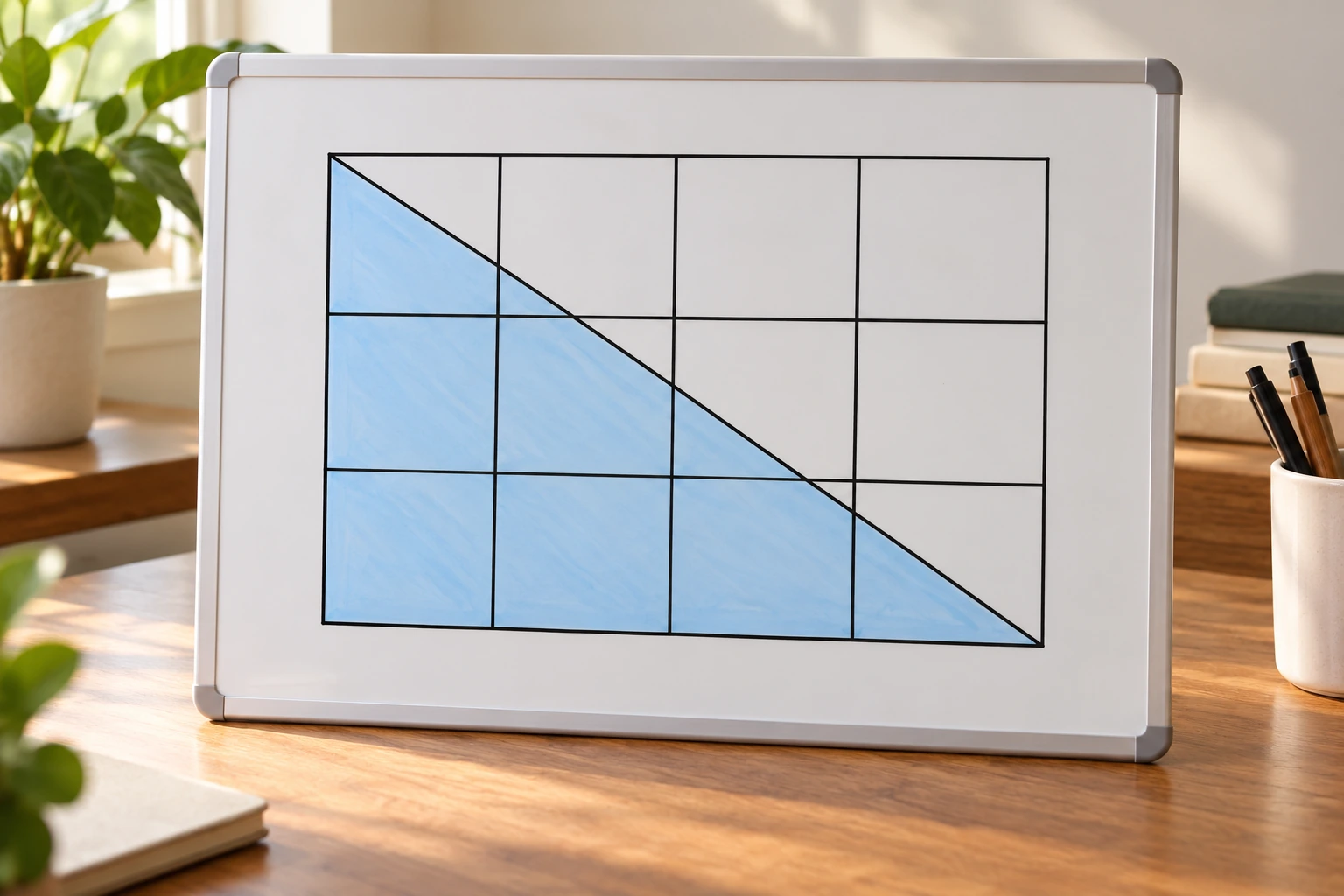
Repair an occupied-cell counting error with an original four-by-three unit-grid triangle and an independent area check.
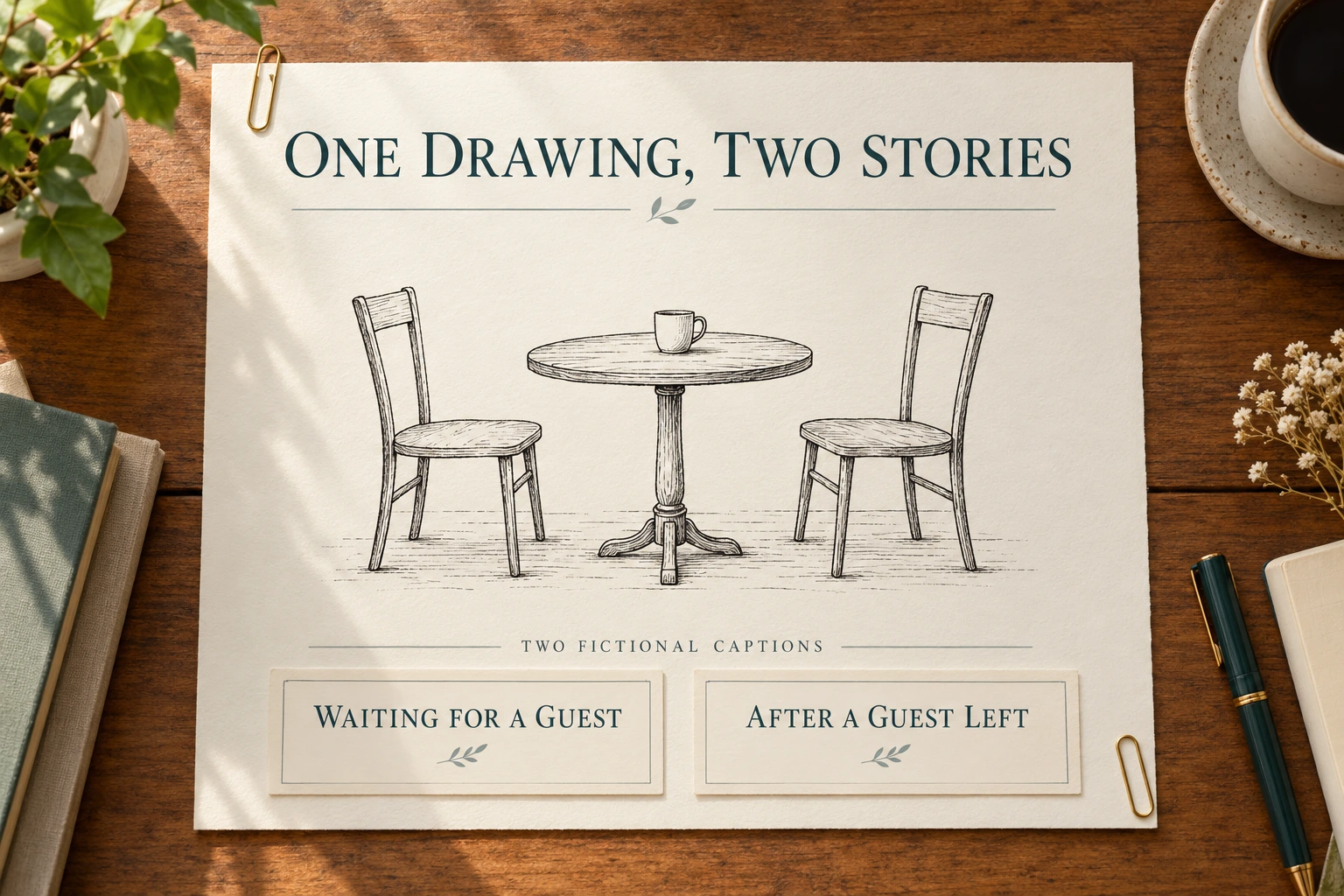
Keep a table, two empty chairs and one cup unchanged while writing two fictional captions. Compare a guest yet to arrive with a guest already gone.