10 min read
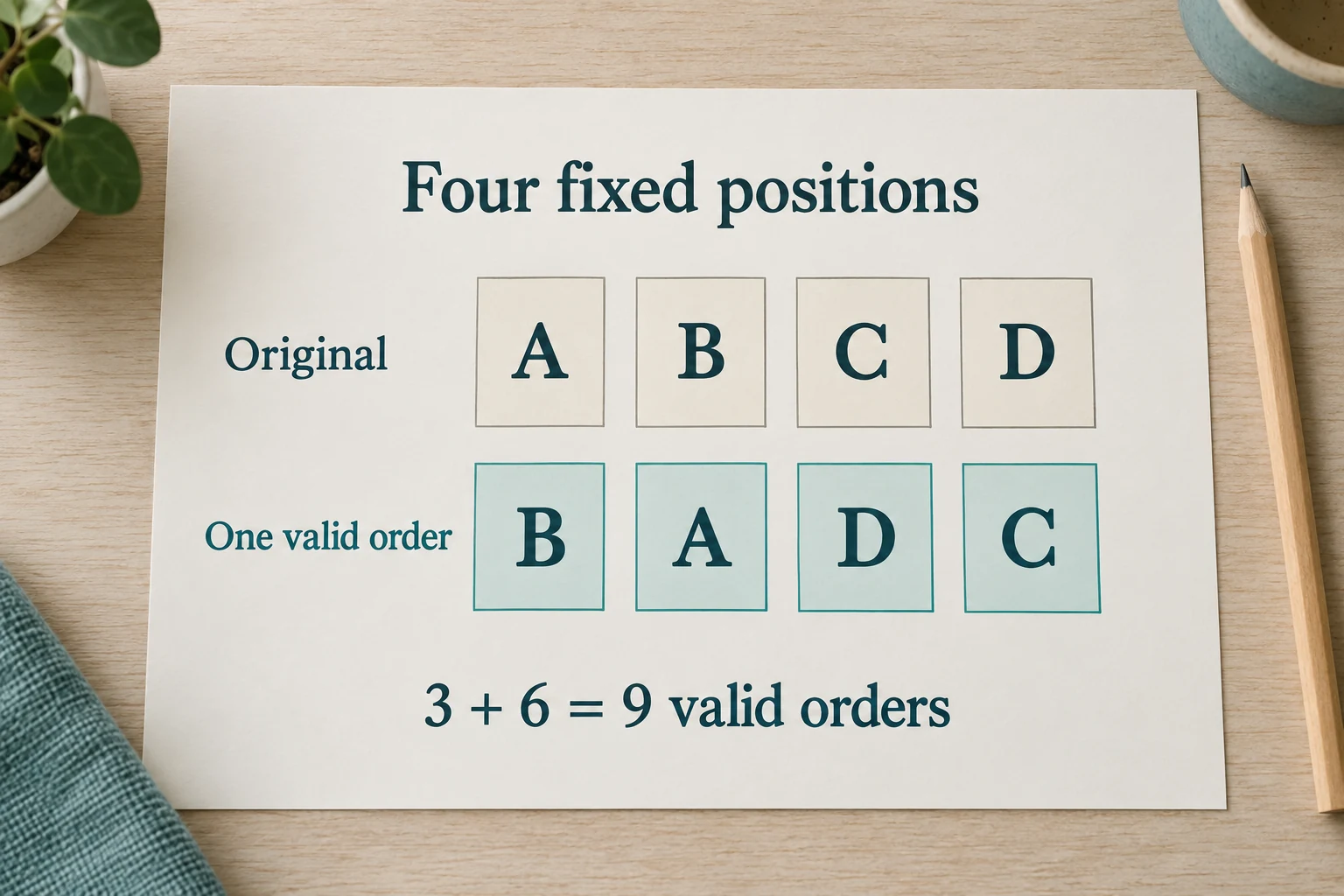
Derangement count: sort four-card orders by cycle type
Four distinct labels occupy four fixed named positions. Classify orders with no matching position into three pair-swap orders and six four-cycles, giving nine.
Practical guides to documents, data, creative work, and everyday planning.
Showing 217–228 of 726 guides
Four distinct labels occupy four fixed named positions. Classify orders with no matching position into three pair-swap orders and six four-cycles, giving nine.
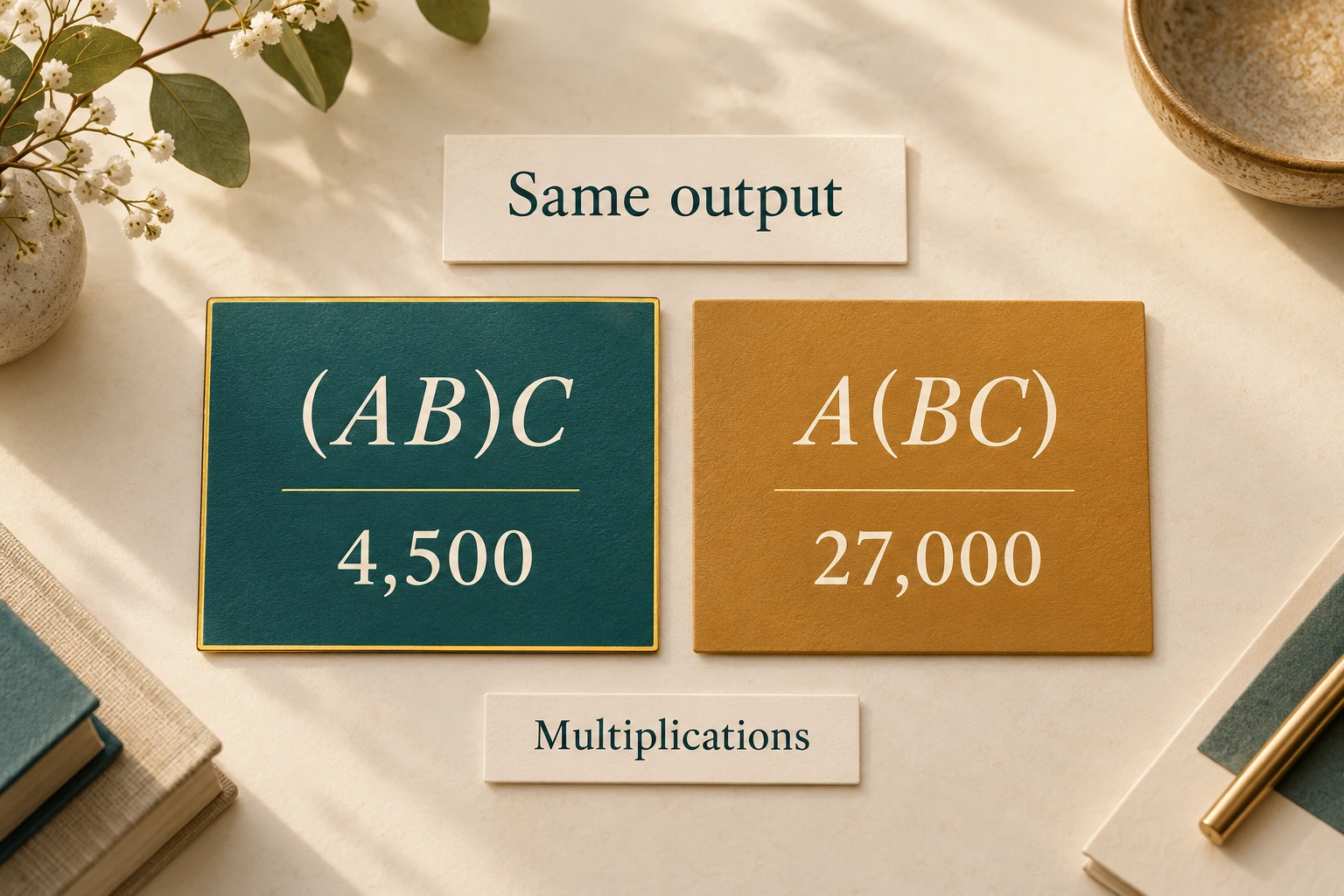
Compare two parenthesizations of three conformable real matrices under a declared dense multiplication count, with an exact savings calculation and clear limits.
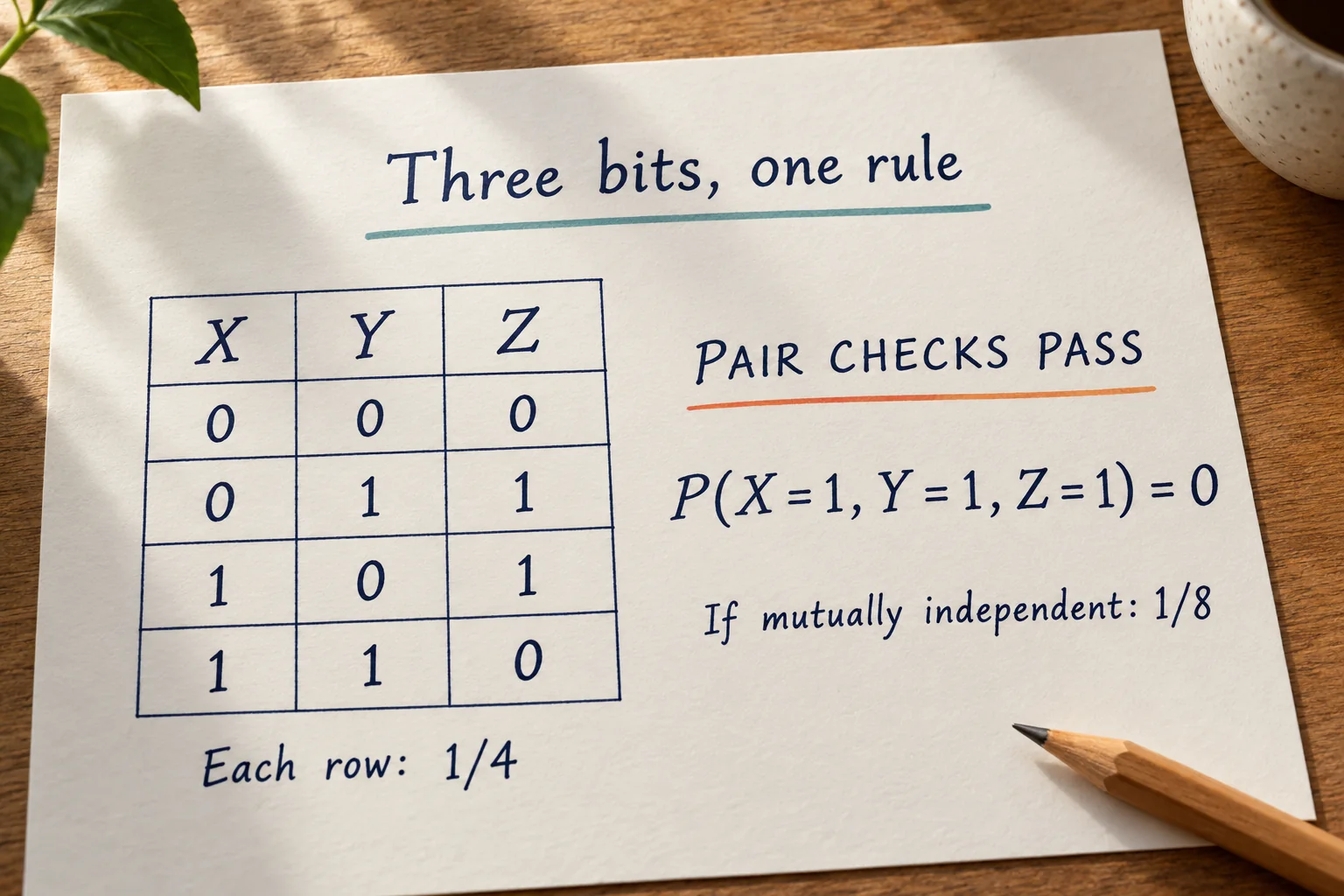
Four equally likely bit records pass every pairwise independence check while a missing all-one triple exposes their joint dependence.
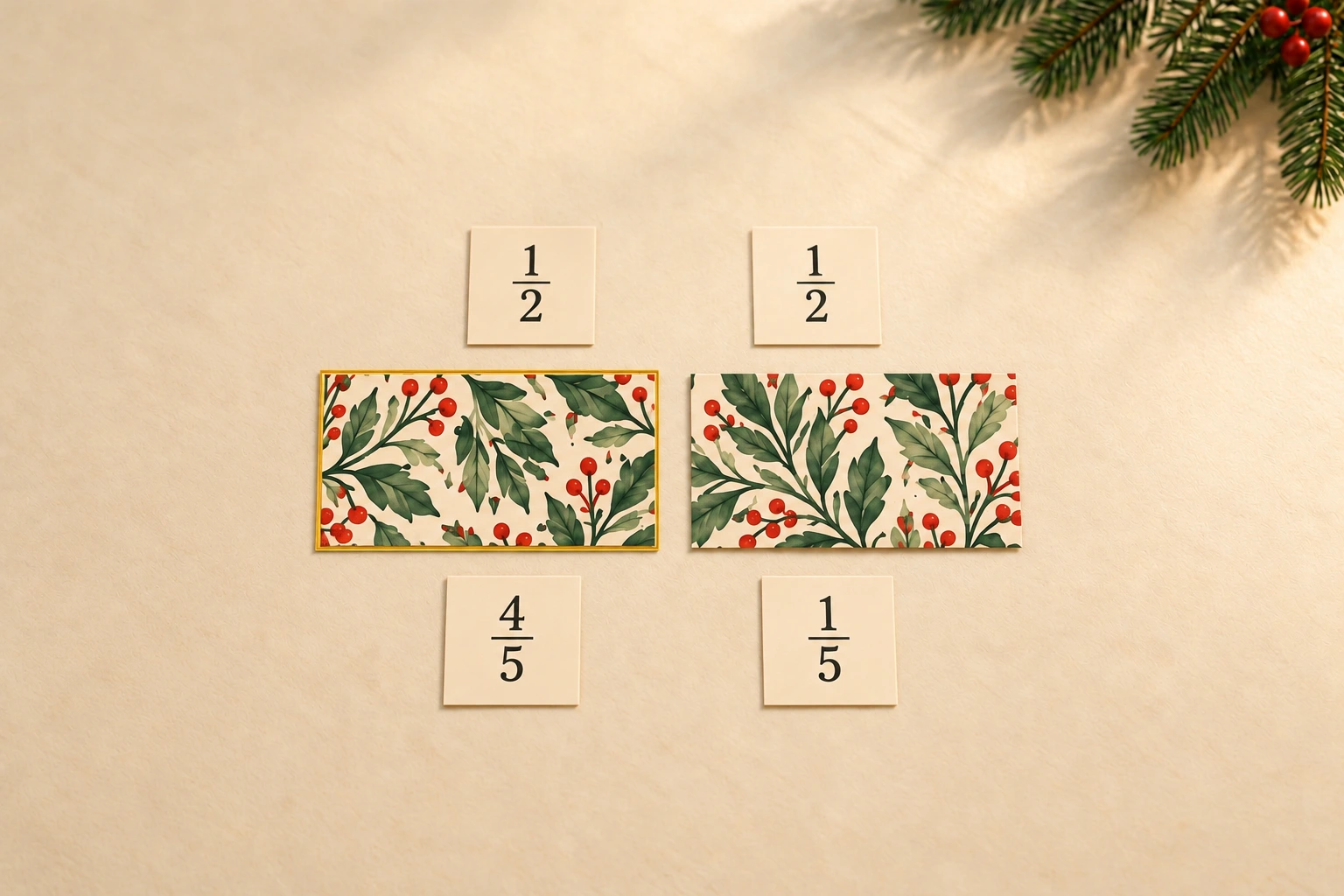
Check a two-person holiday paper-share procedure with declared subjective values, an equal-value cut and a chooser preference, with clear limits.
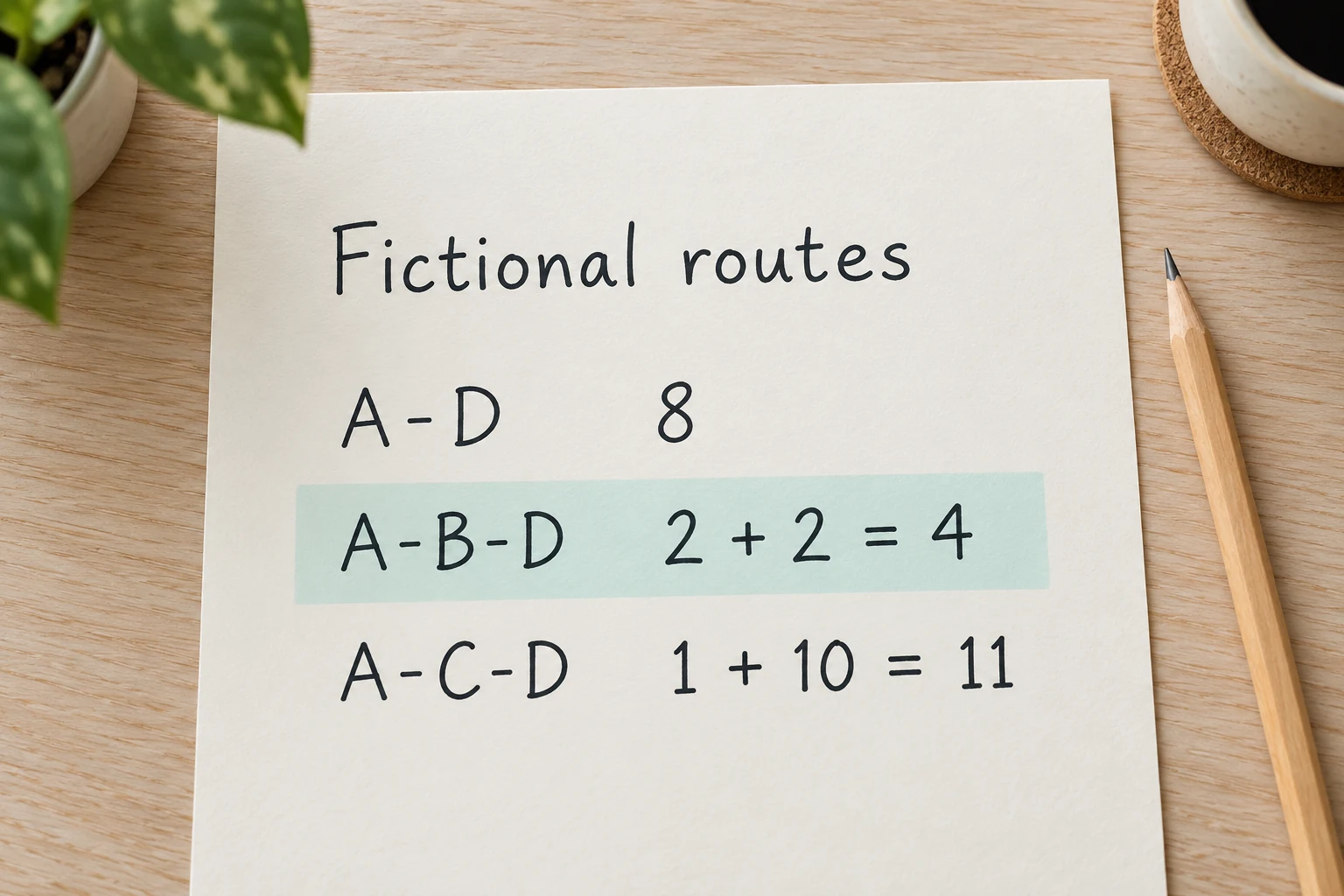
Three invented directed paths cost 8, 4 and 11. Compare complete sums, distinguish edge count and test the cheapest-first-edge proposal against all routes.
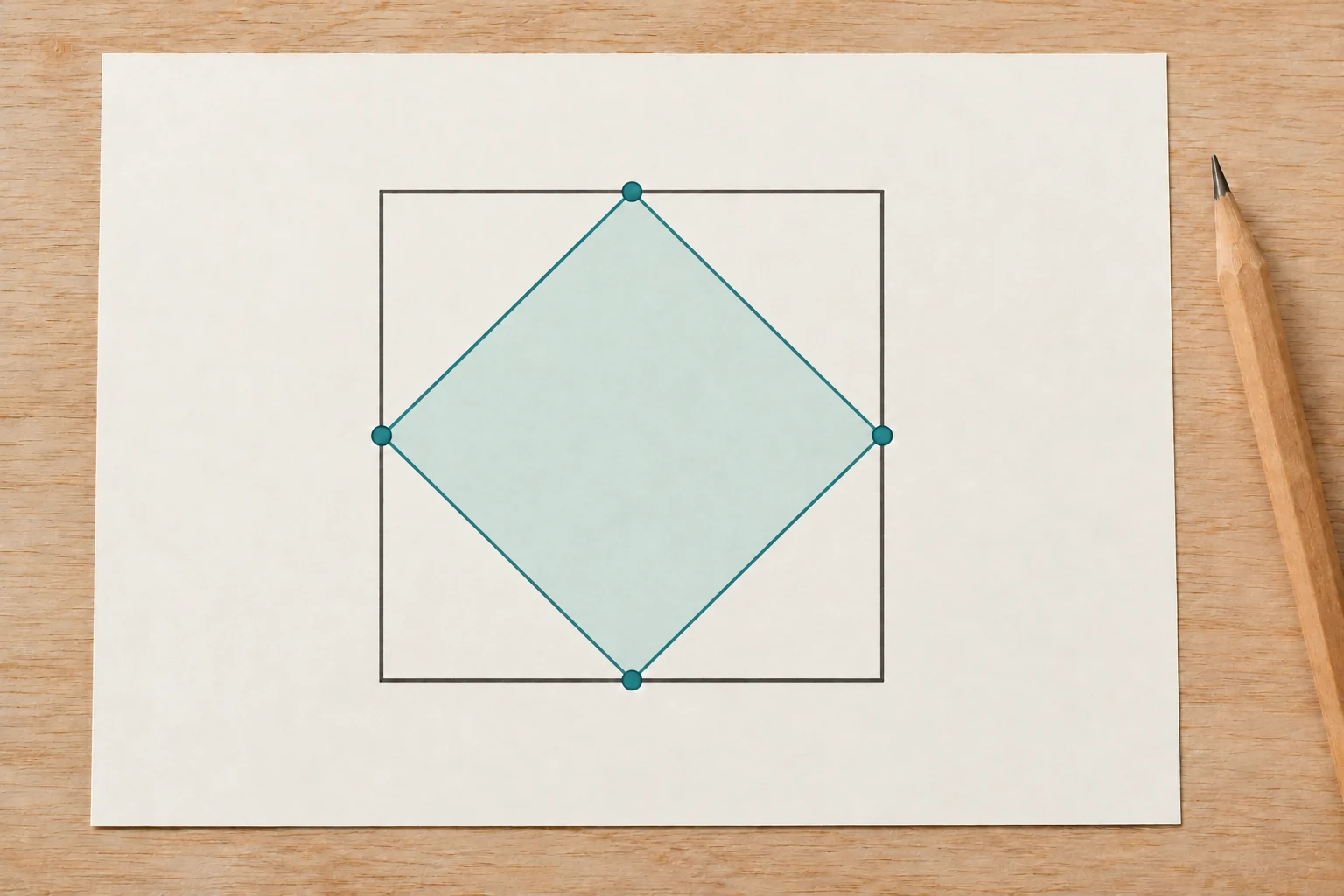
An original convex trapezoid gives an inner midpoint parallelogram of area 14 within outer area 28. Check parallel sides and a same-area wrong-midpoint control.
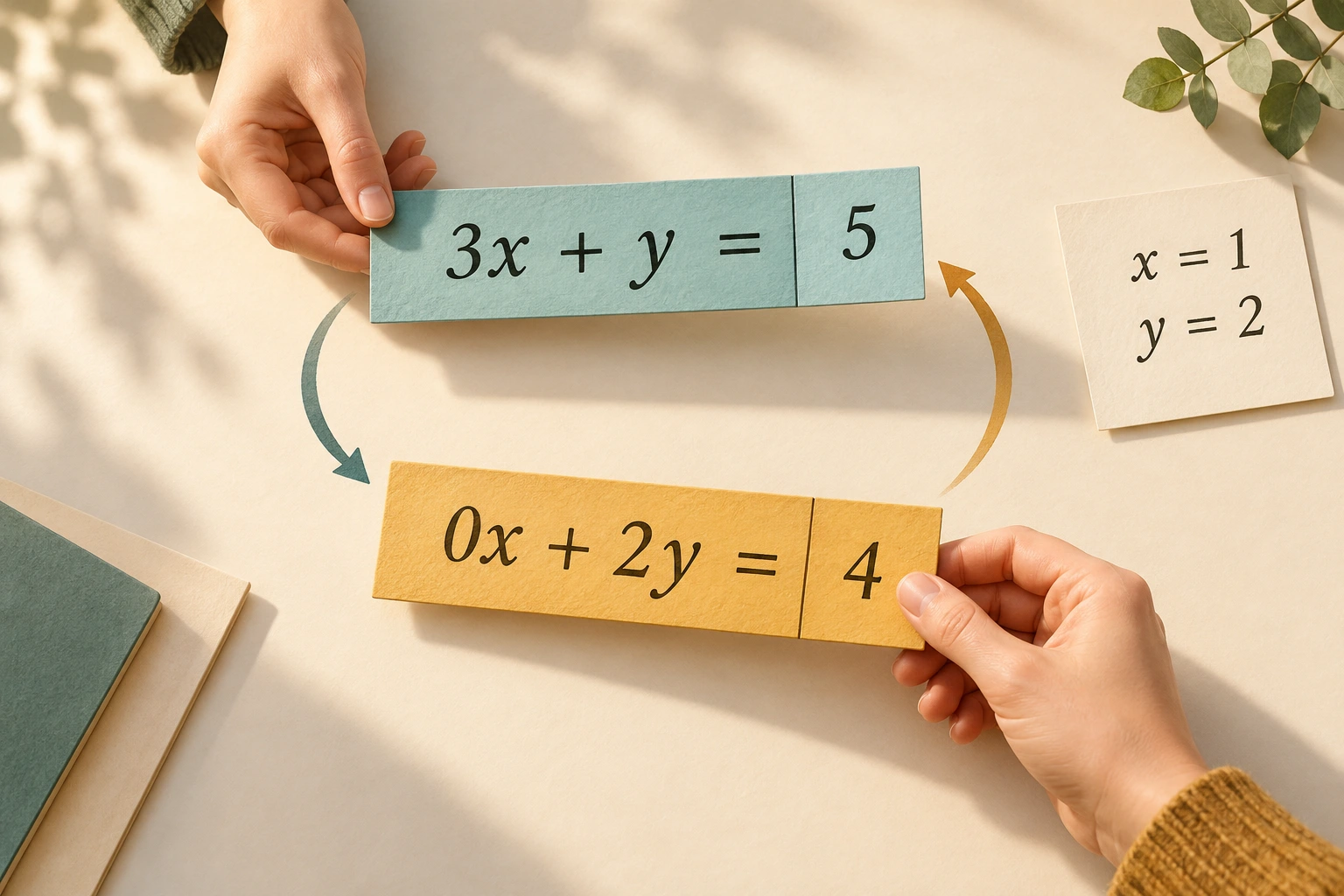
Repair a zero-first-pivot worksheet by interchanging complete equations, preserve the solution set and check the answer against the original system.
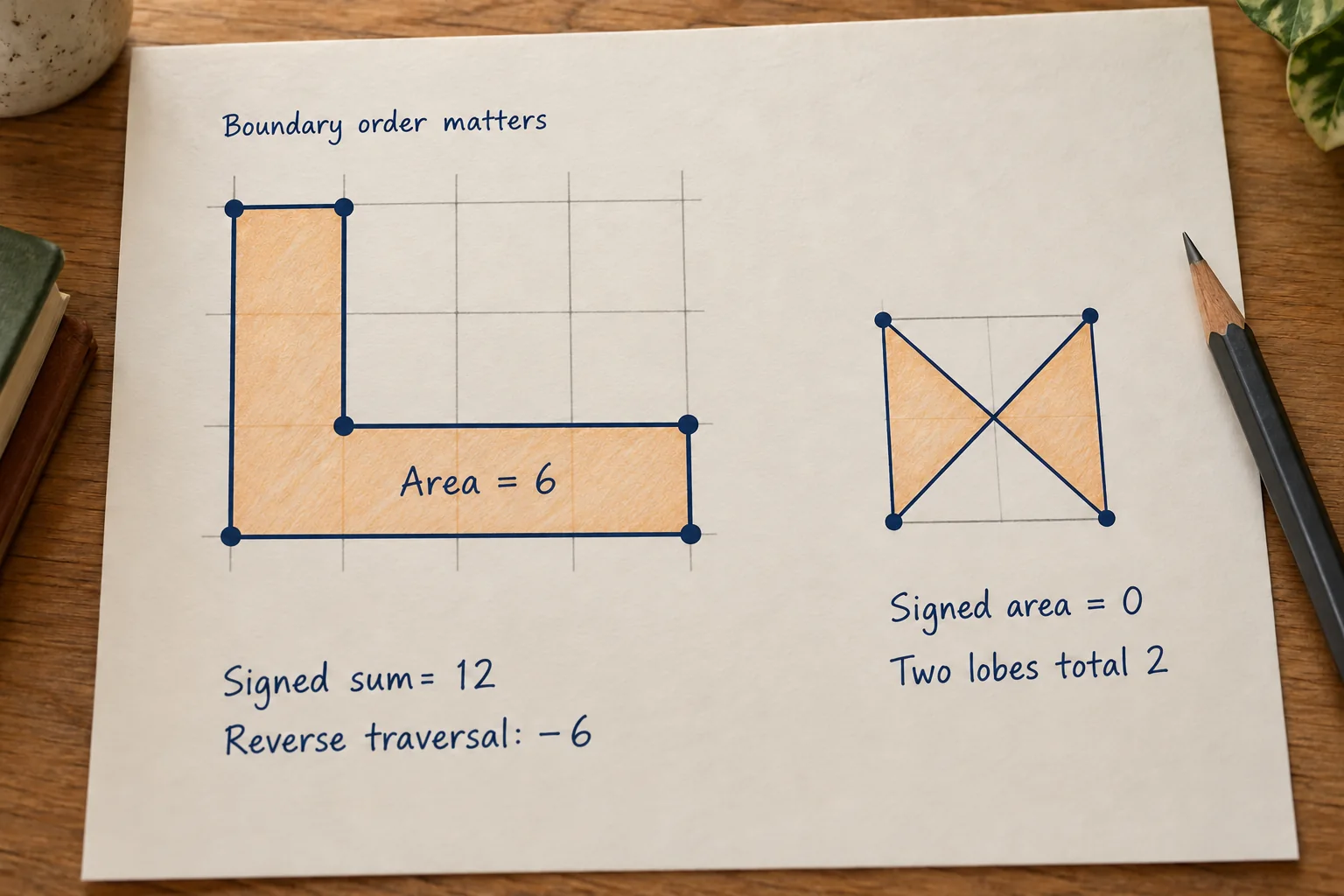
A boundary-ordered coordinate ledger gives one L polygon area six, with independent area checks, sign reversal, translation cancellation and a self-crossing control.

Prove equal mixing gives the best worst expected points in a fictional two-choice zero-sum model, and see why observing the sampled choice changes the result.

In an exact fictional model, payments of 9 grow the initial balance, 10 holds it steady and 15 reduces it. Cap the final smaller payment and reconcile the total.
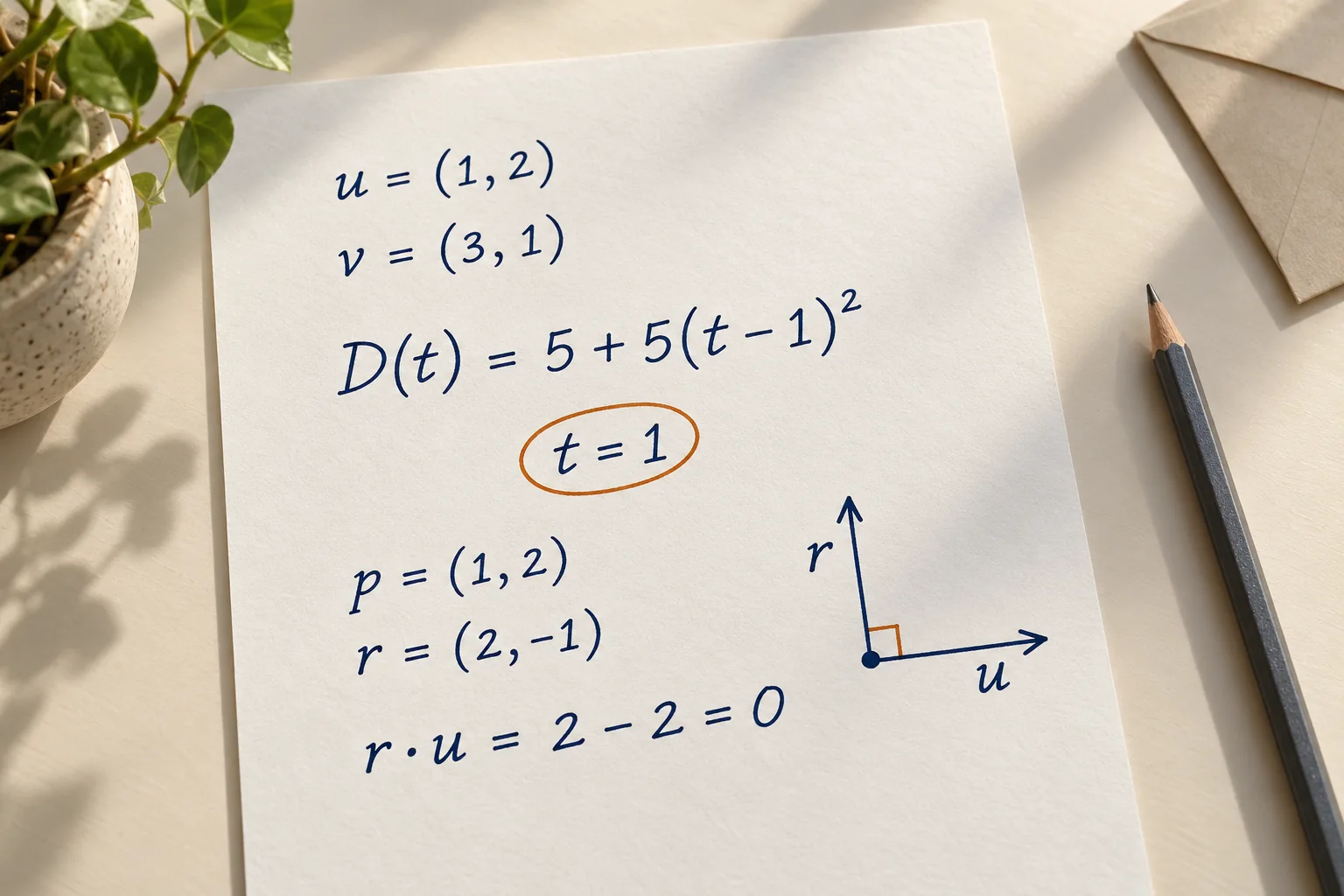
A fixed two-coordinate model separates exact scalar compatibility from a unique closest approximation, with a residual proof and direction-rescaling controls.
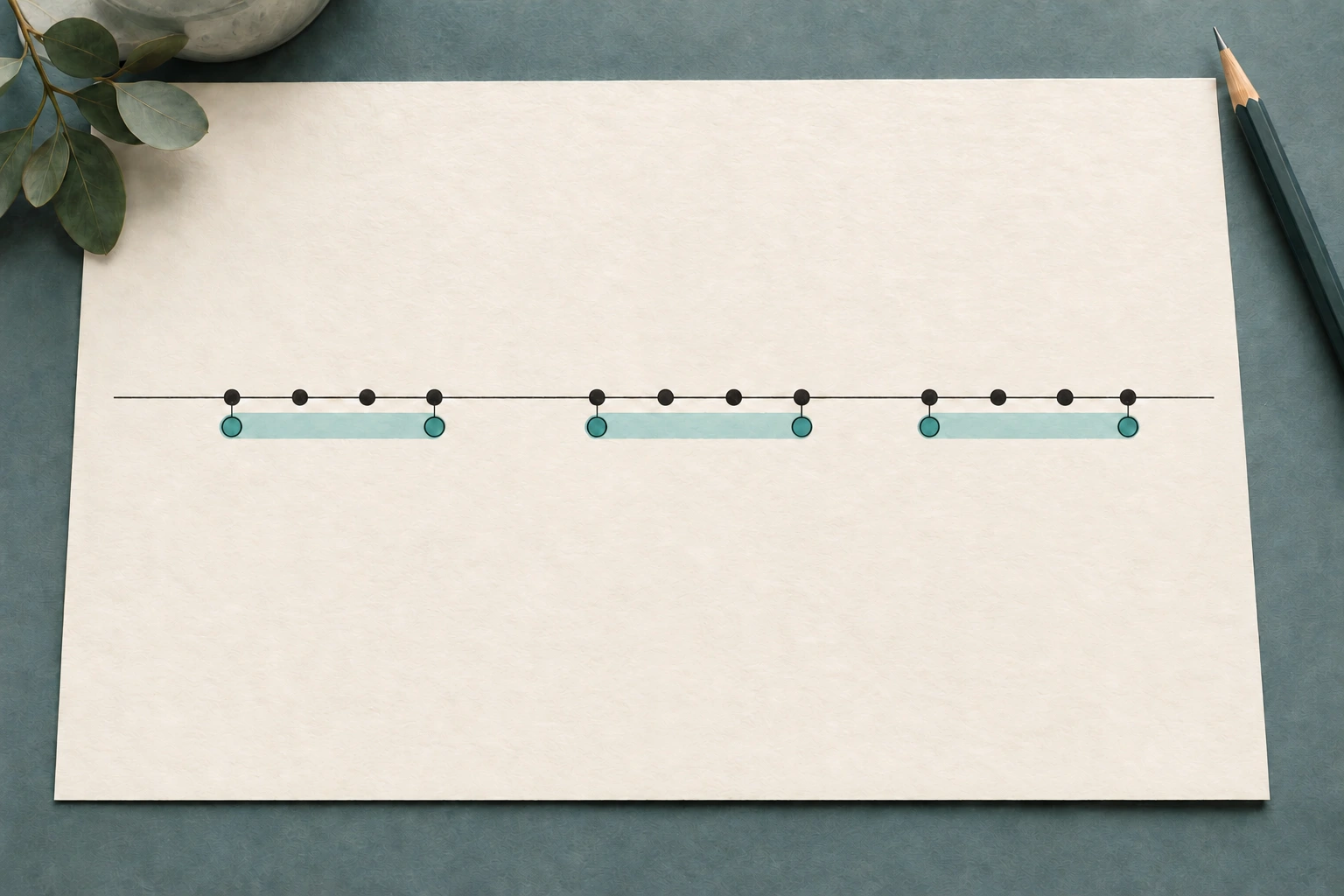
Cover fictional points on a line with fixed-length closed intervals and prove the minimum count and declared unit cost.