Skills & Planning

Practical guides to documents, data, creative work, and everyday planning.

Showing 25–36 of 102 guides

Calculate elapsed time across midnight guide to checking dates and time intervals in an observation log.
9 min read

How to calculate elapsed time across midnight

A clock reading identifies a time of day, but a duration needs two dated readings. To calculate elapsed time in an overnight equipment-observation log, write down when the observation began and ended, including the date on each entry. Then count from the start to midnight and from midnight to the documented finish. An earlier-looking finish clock time does not, by itself, tell you which day that finish occurred. For calculate elapsed time , verify each step.


Read two-way tables by separating overlapping groups, intersections, and totals in a shared-activity example.
8 min read

How to read two-way tables with overlapping groups

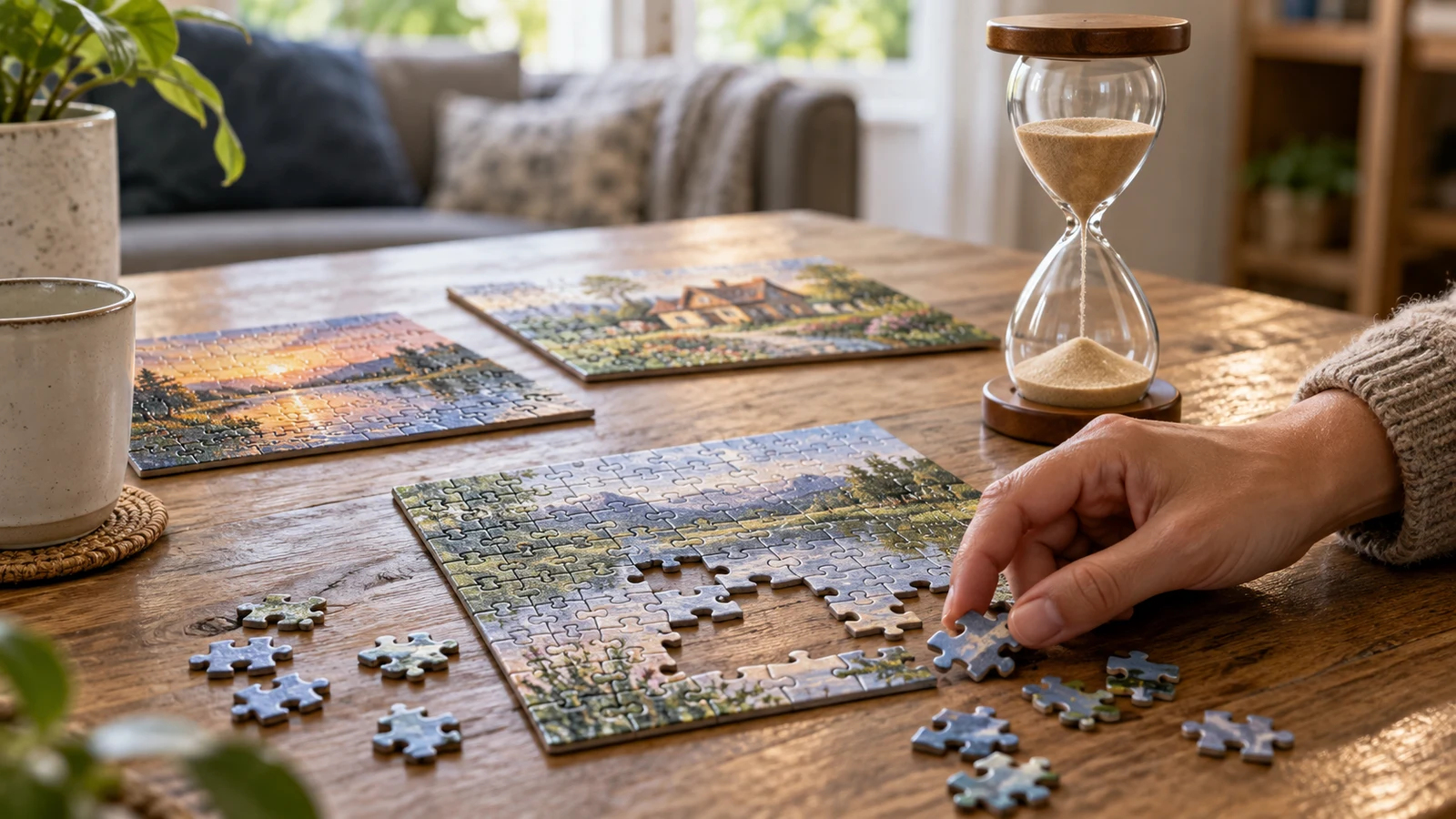
Suppose twelve people are invited to two activities held at different times: a reading circle and a puzzle session. You want to know how many attended either activity, yet some people attended both. To read two-way tables accurately, give each person one place in a grid defined by two questions: Did they attend the reading circle? Did they attend the puzzle session? Then add the appropriate cells for the question you are answering. Adding the two activity totals without accounting for shared attendees would count some people twice.

Survey response rates guide to defining the invited and completed counts before calculating a percentage.
9 min read

Calculate survey response rates with clearly defined counts

When a workplace questionnaire closes, three numbers may appear in the same report: people invited, questionnaires returned, and people who answered a particular question. Each number describes a different group. To calculate survey response rates without quietly changing the denominator, name the group you are counting first, then show the fraction beside any percentage. A return percentage uses invitations as its denominator; an answer percentage for an optional item can use returned questionnaires. Neither percentage explains why someone did not participate.

Reading cumulative totals in a progress report means distinguishing the running count from work completed during each interval.
9 min read

Practice reading cumulative totals in a progress report

A progress report might say that 31 handouts had been distributed by 11 a.m. That number describes everything counted up to 11 a.m., not just the work done during the preceding hour. To find an hourly count, you need an earlier observation on the same counting basis. Subtract the earlier running total from the later one, then name the interval those observations actually enclose. If an observation is missing or the counter has restarted, the report may support a wider interval or no reliable difference at all.

diagram connector routing: drawing connector paths that readers can follow without ambiguity.
9 min read

Plan diagram connector routing for unambiguous paths

A diagram can preserve every intended relationship and still make a reader follow the wrong line. To revise an existing drawing, first record which shapes are supposed to connect. Then trace the visible paths against that record, looking closely at crowded endpoints, crossings, and arrowheads. Move shapes or reroute lines only after you know which connections must remain unchanged. The test is whether a reader can follow each path from its stated origin to its stated destination without mistaking a nearby line for part of it.

Median and mean guide to comparing puzzle completion times without confusing the two measures.
8 min read

Compare median and mean for uneven puzzle completion times

Six fictional puzzle sessions took 8, 9, 10, 10, 11 and 42 minutes. If you want the arithmetic average duration across these recorded sessions, calculate the mean. If you want the middle duration after putting the records in order, calculate the median. Those are different questions, even though they use the same six observations. The 42-minute session makes the answers especially different: the mean is 15 minutes and the median is 10 minutes. Neither figure says how long another session will take. The useful choice is which description fits the sentence you need to write about these six fictional sessions.

Argument mapping guide to connecting reasons, evidence, and a recommendation before choosing a supporting device.
10 min read

Use argument mapping to examine a recommendation's support

A recommendation can sound reasonable before anyone has checked how its reasons connect to the proposed action. Argument mapping gives you a way to mark those connections in a short piece of prose. Start with the author's actual words, name the conclusion, and ask which statements support it alone or only together. Mark any missing connection as a question. The map helps you see what the recommendation still needs; it does not establish that the claims are true or that the action should be taken.

Story point of view guide to keeping a fictional scene’s perspective consistent for the reader.
9 min read

Check story point of view across a fictional scene

A narrator can describe an envelope on a desk without knowing why someone put it there. If a scene is meant to stay close to one character, that difference matters. To check story point of view , take an existing passage and ask who could know each detail as the scene unfolds. Keep the author's intended narrative approach beside the passage. A sentence that exceeds a limited viewpoint might be entirely appropriate in an intentionally omniscient story.

Story tense consistency guide to checking the narrative clock across a fictional scene.
9 min read

Check story tense consistency in a short fictional scene

A scene can move between past and present without anything going wrong. A character may speak about what is true right now while the narrator recounts something that happened yesterday. To check story tense consistency , first decide when the main action takes place in the telling. Then ask whether each change of verb tense signals a real change in time or merely interrupts that chosen frame. The useful question is not whether every verb matches its neighbor. It is whether a reader can tell when each action happened.

dialogue paragraphing: using paragraph breaks to make speaker changes clear in a scene.
8 min read

Use dialogue paragraphing to make speaker changes clear

A conversation can leave a reader guessing even when every spoken sentence is easy to understand. If two characters speak in the same paragraph, or an action sits beside the wrong line, the page may suggest a speaker the writer never intended. Dialogue paragraphing gives each confirmed turn a visible place. The practical task is narrow: keep the dialogue, actions, and their order intact while deciding where one paragraph ends and another begins.