8 min read
AQSQ countertop dishwasher — Two countertop dishwashers for different water routines
Compare AQSQ countertop dishwasher by water setup, loading, cycles, placement, and daily care.
Countertop, portable, and built-in dishwasher guides.
Showing 25–32 of 32 guides
Compare AQSQ countertop dishwasher by water setup, loading, cycles, placement, and daily care.
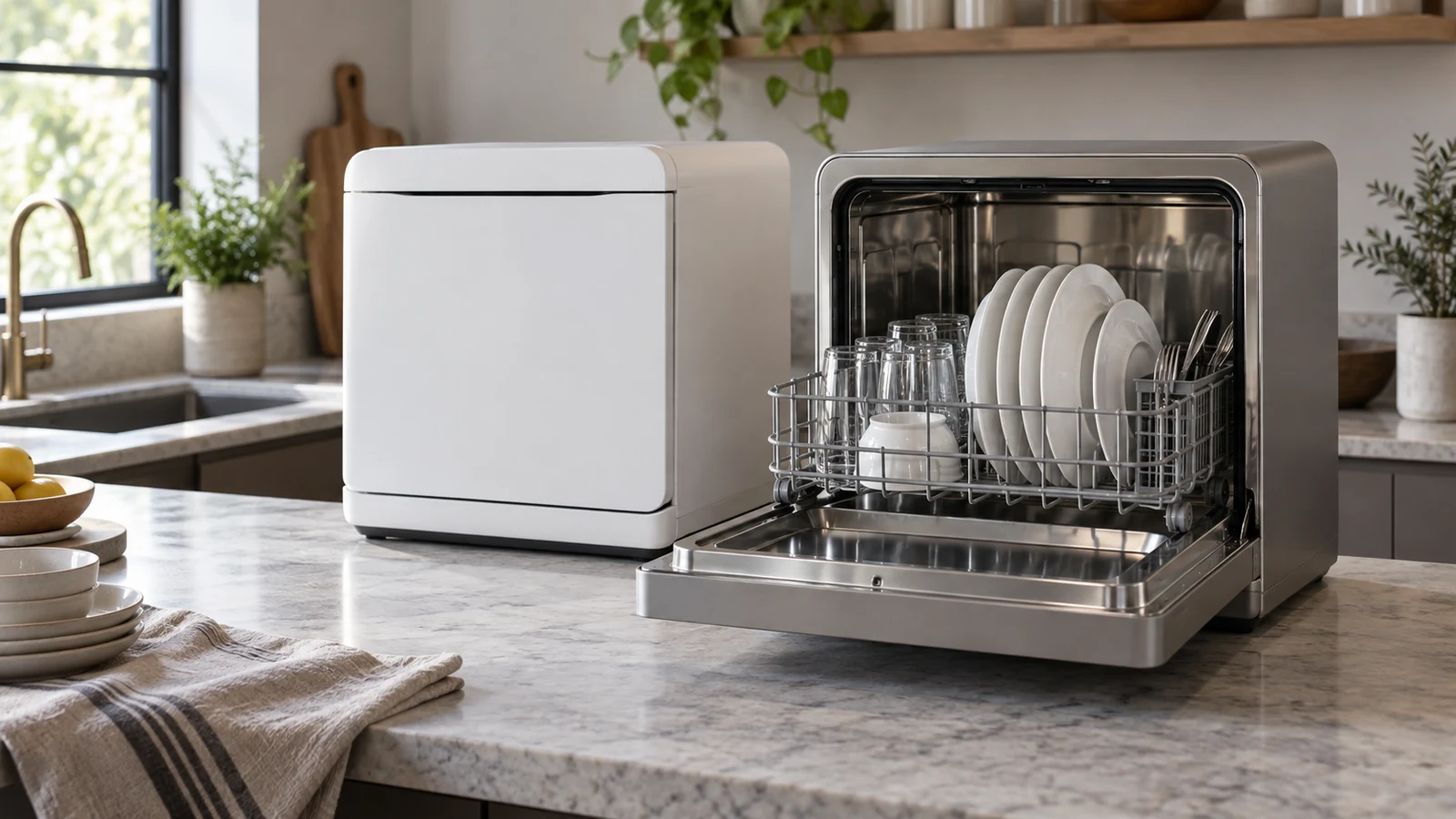
The Auseo six-program countertop dishwasher gives you a specific reason to compare these models: its description names separate Eco, Normal, Intensive, Rapid, Glass and Fruit programs. Peakora describes fast, standard and strong washing, along with inlet and outlet connections. Auseo is worth investigating if those additional program choices address something you expect to wash regularly. Peakora merits consideration if its stated washing options cover your needs and its connection requirements suit your kitchen. Neither description establishes a cleaning-performance winner.
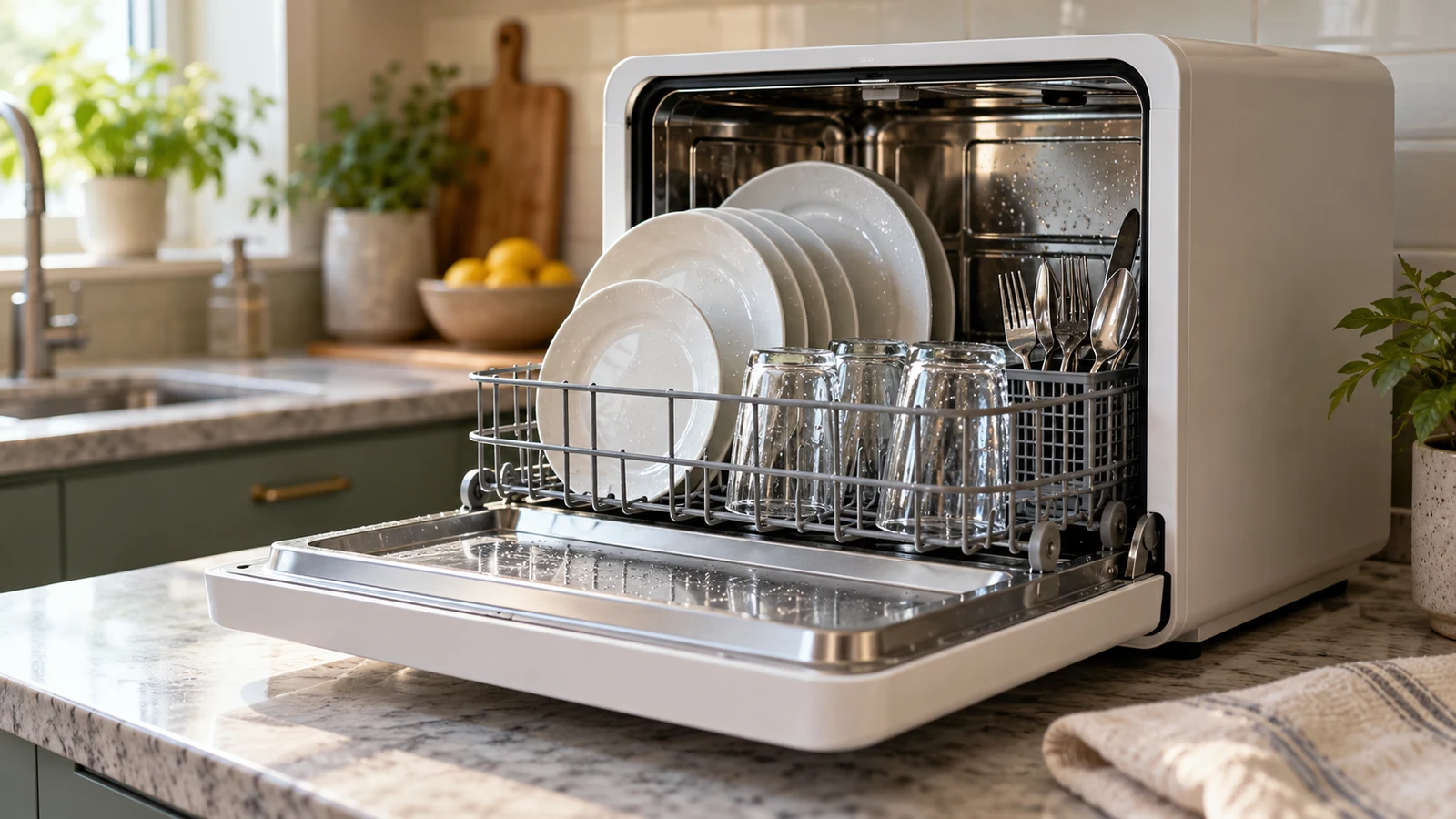
The Loyalheartdy countertop dishwasher has a cycle-count discrepancy worth resolving before you choose it. Its product title says “4 Washing Programs,” while its description names three: quick wash, standard wash and intensify wash. Those statements do not establish what a fourth program does, or whether the supplied unit actually has one. The description also leaves the water-inlet arrangement unspecified. Ask for the operating instructions for the exact item before deciding which cycle and connection would suit your kitchen. For Loyalheartdy countertop dishwasher , verify each step.
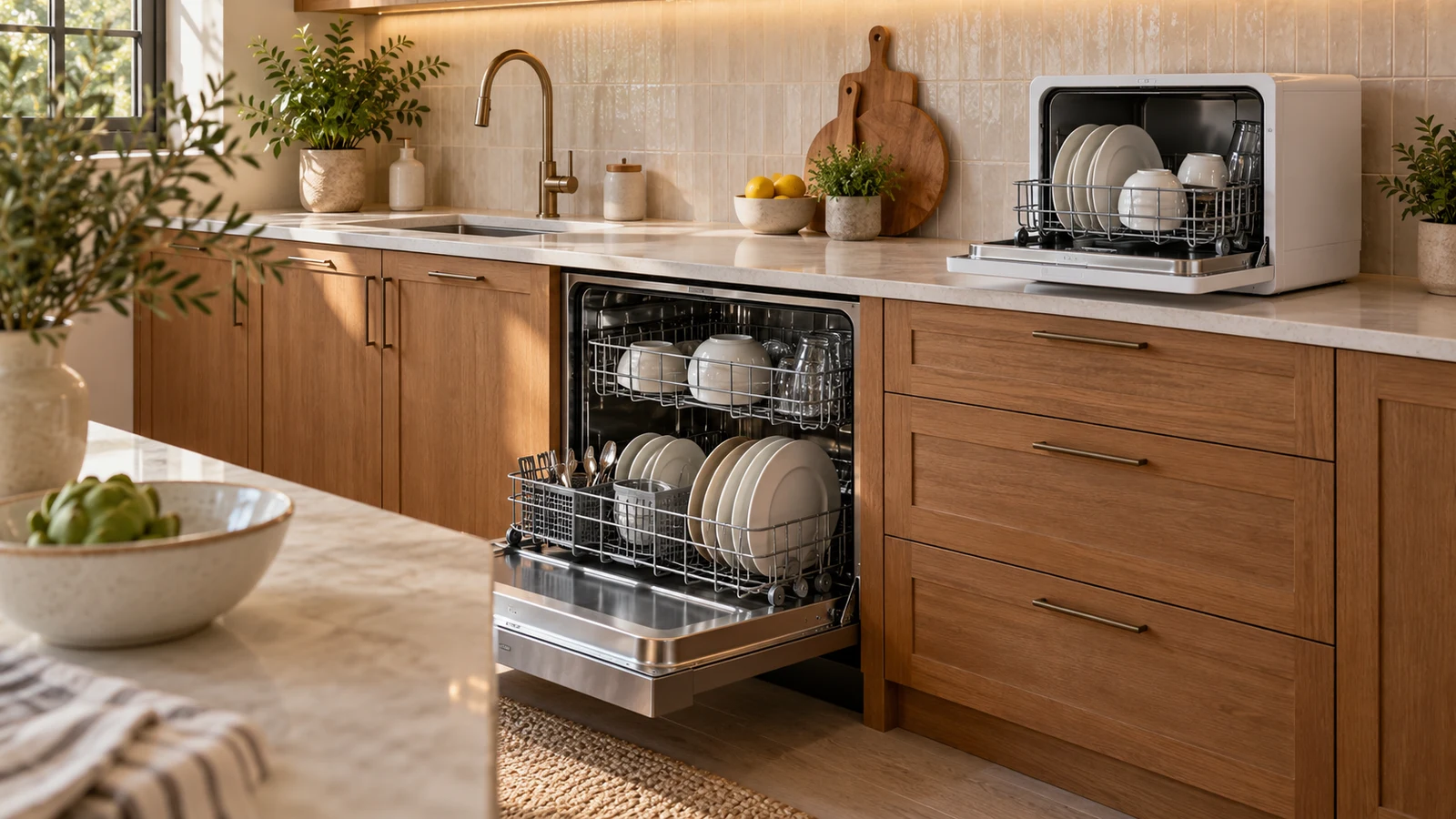
The Amana built-in and Hermitlux HMX-DW03 present a choice between a listed 12-place-setting capacity and a four-place-setting countertop appliance. If you want the larger stated capacity, investigate the Amana ADFS2524RS and establish whether its installation requirements match your kitchen. If you want a countertop unit with a documented tank-fill option, investigate the Hermitlux. Neither description alone settles the complete installation, particularly the drain arrangement and electrical requirements.
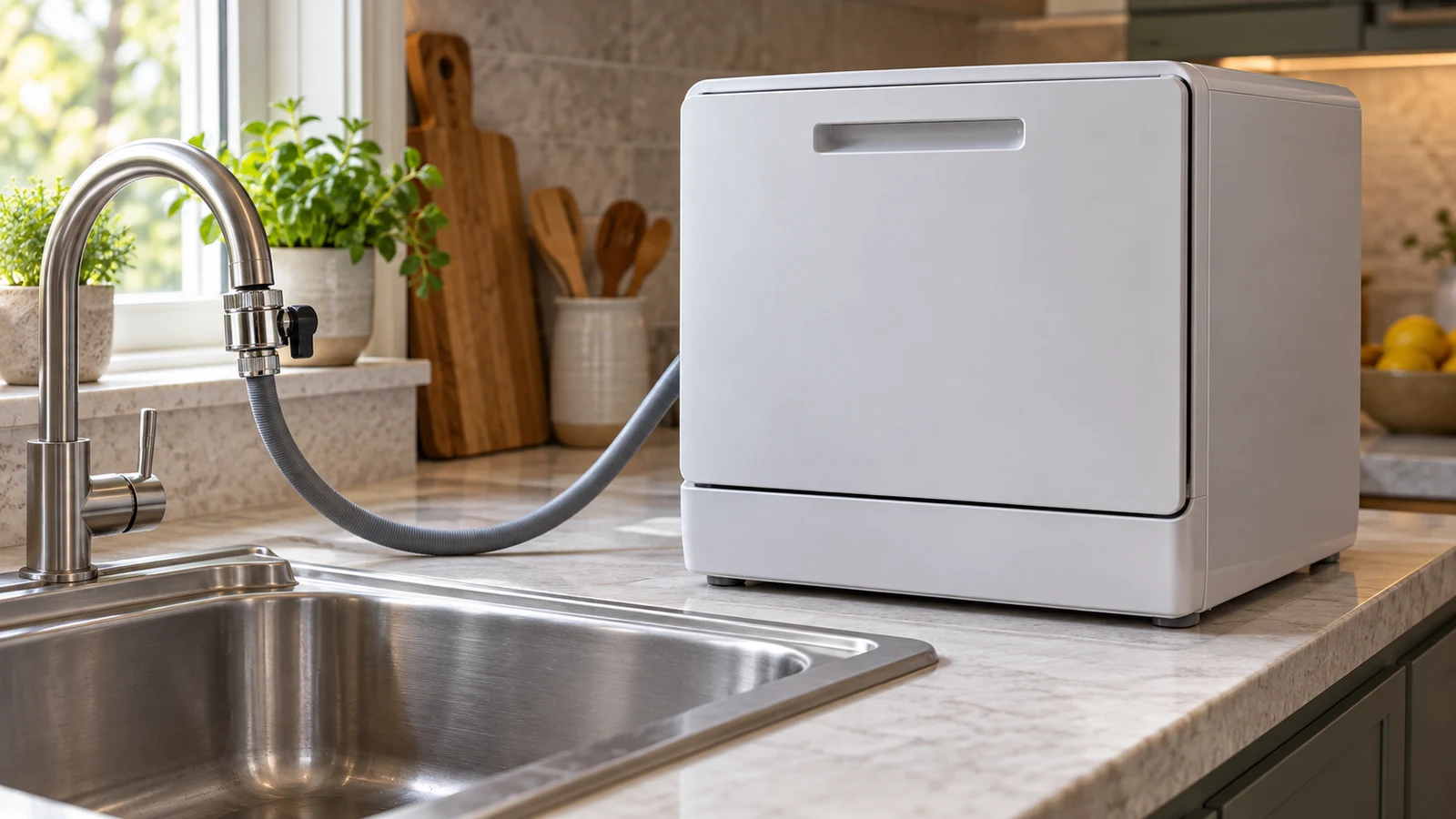
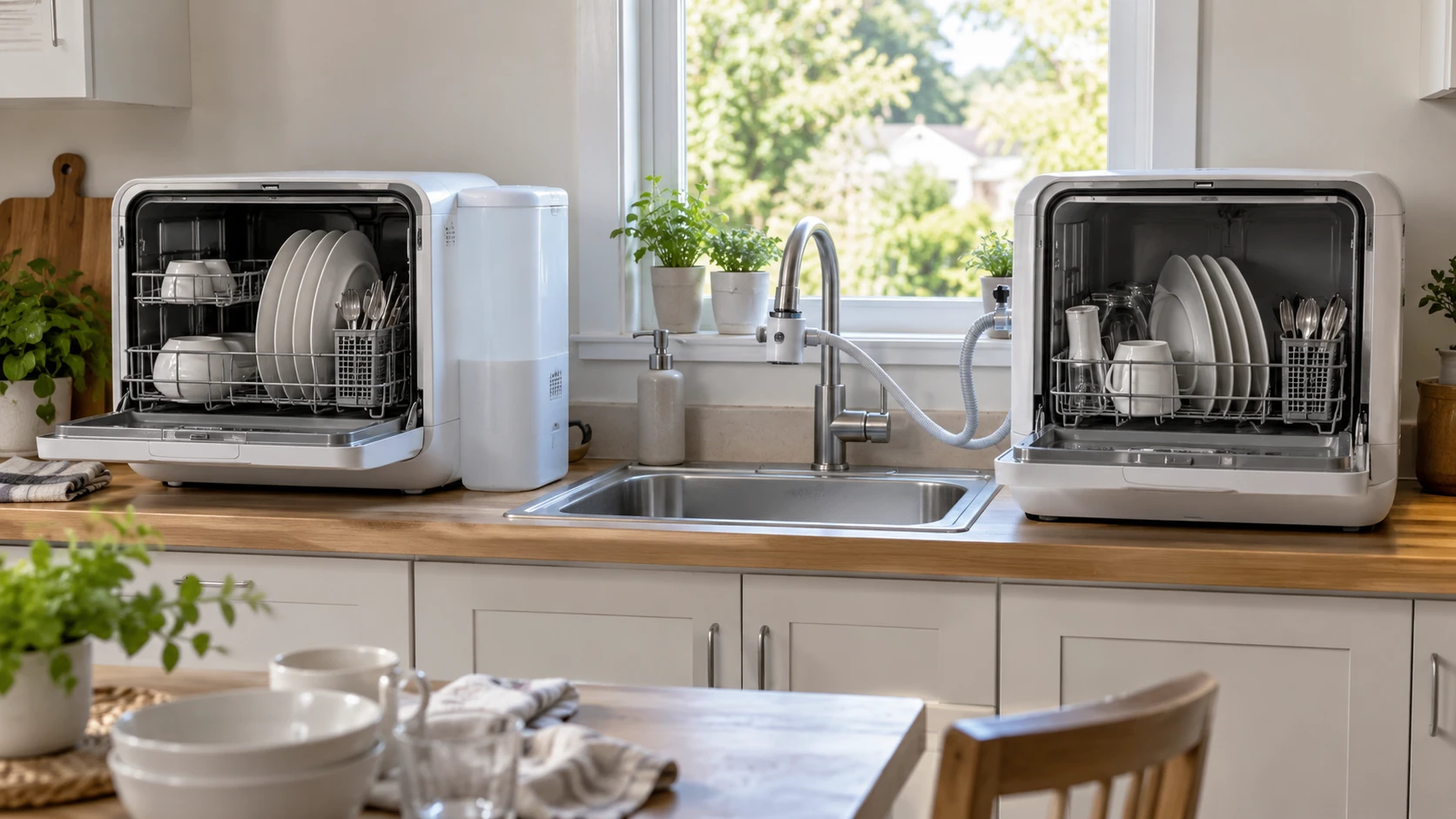
The water-hookup difference in these descriptions is specific: FETCOI states that a water hose is included for a direct connection to a kitchen faucet, with the adapter excluded. The ToppiJoy description does not identify its water inlet method. That leaves a practical question unanswered before purchase: how does this exact dishwasher receive water, and what connection equipment does the buyer need? FETCOI provides a starting point for checking a faucet connection; the other listing needs clarification about the connection method itself.
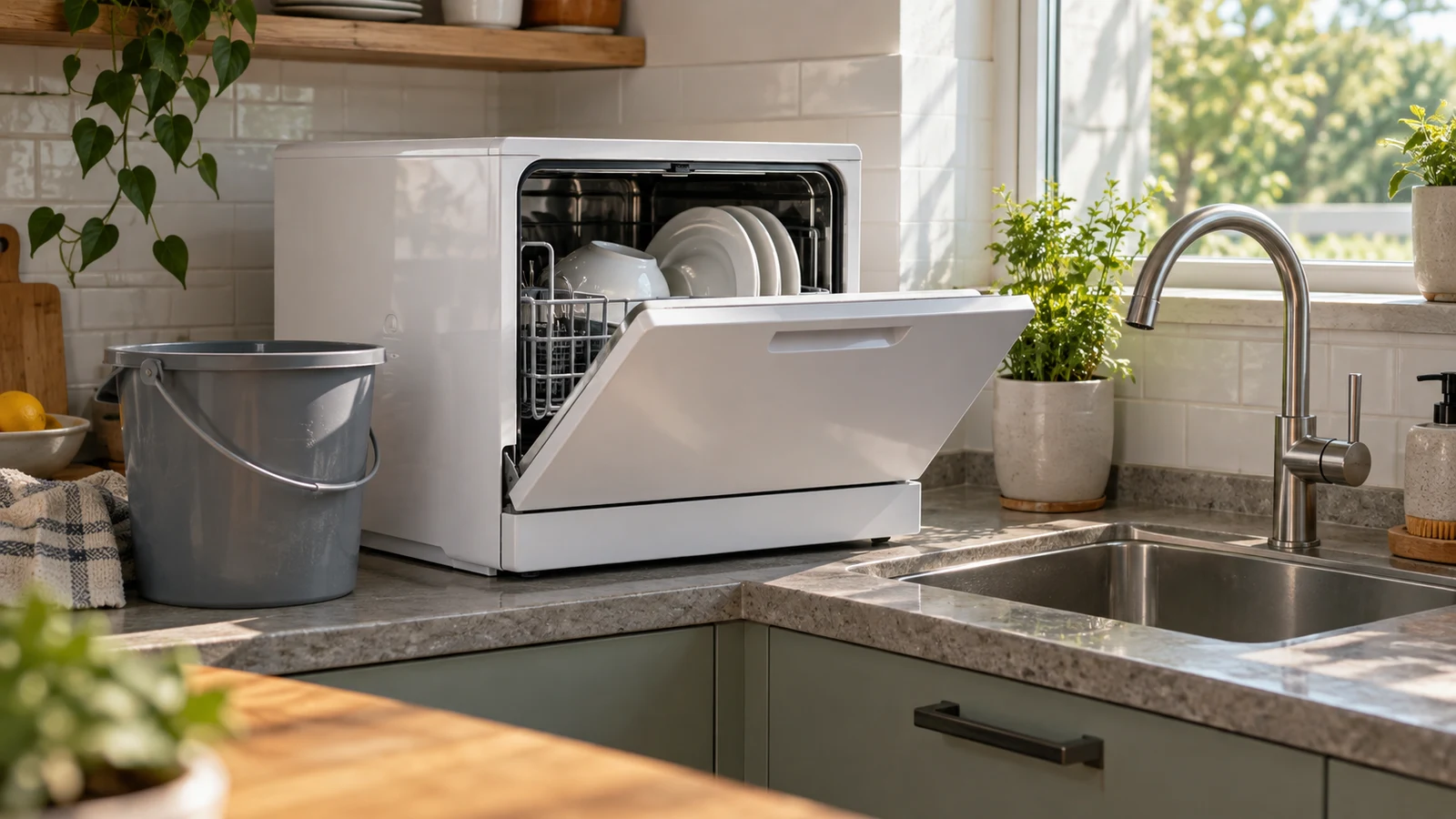
A kitchen without a dedicated dishwasher connection raises an immediate question: where will the wash water come from? The RIEDHOFF countertop dishwasher , model PHO_15I35OXT, lists two inlet options: connection to a faucet or drawing water from a bucket. That makes it a candidate for this situation. Whether it works in your kitchen still depends on the connection instructions, drainage arrangement and space around the appliance.
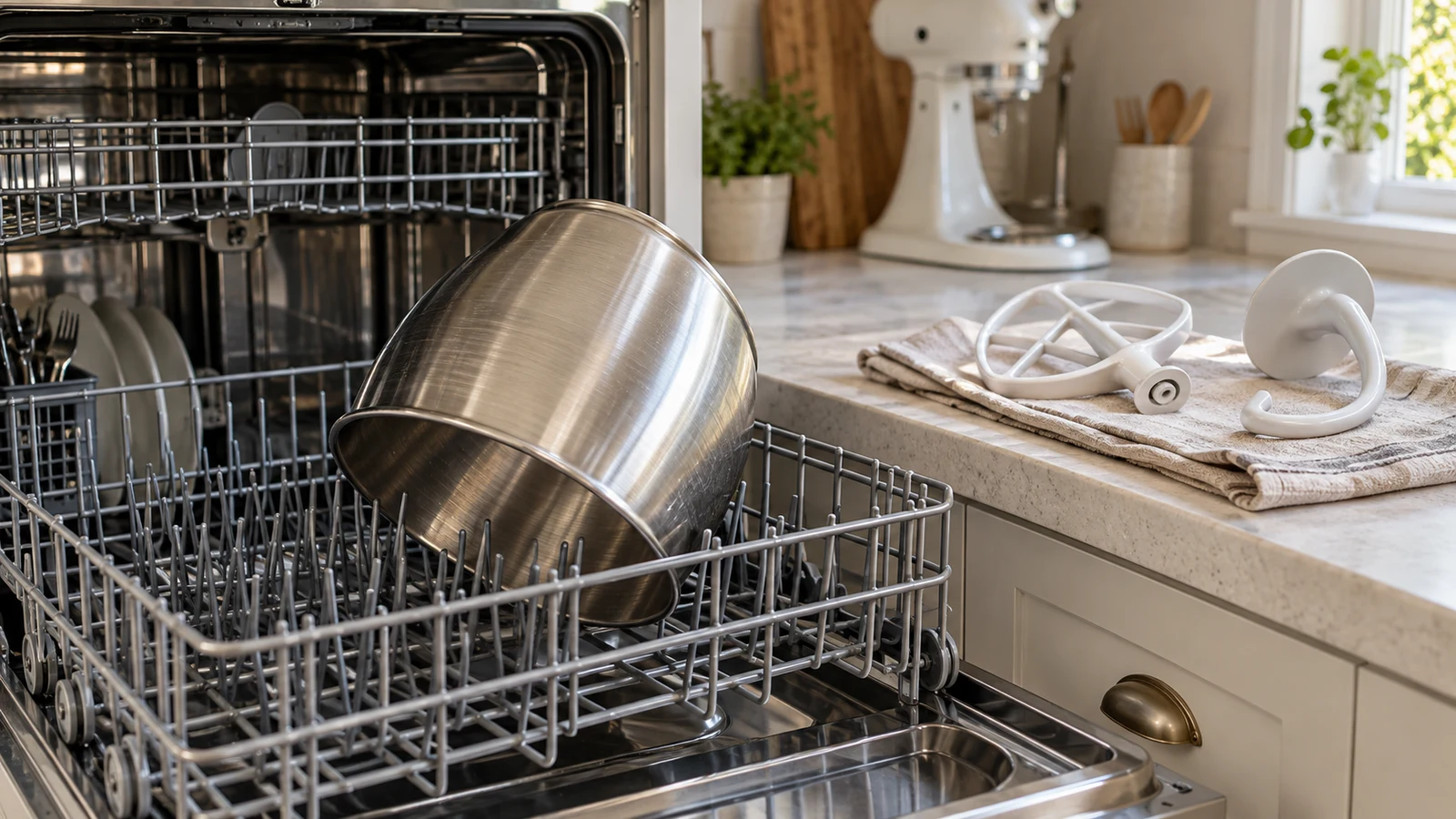
A mixer listing may call a bowl or attachment dishwasher safe, yet that description alone cannot tell you where the part can go in a particular dishwasher. Before buying the Bosch SHV78CM3N dishwasher to use alongside parts from a SKYSHALO SM-1503HL stand mixer, answer two questions for each part: do its own care instructions allow machine washing, and can you place it as those instructions and the dishwasher guidance require? Keep an unanswered question open rather than treating an apparent fit as proof.
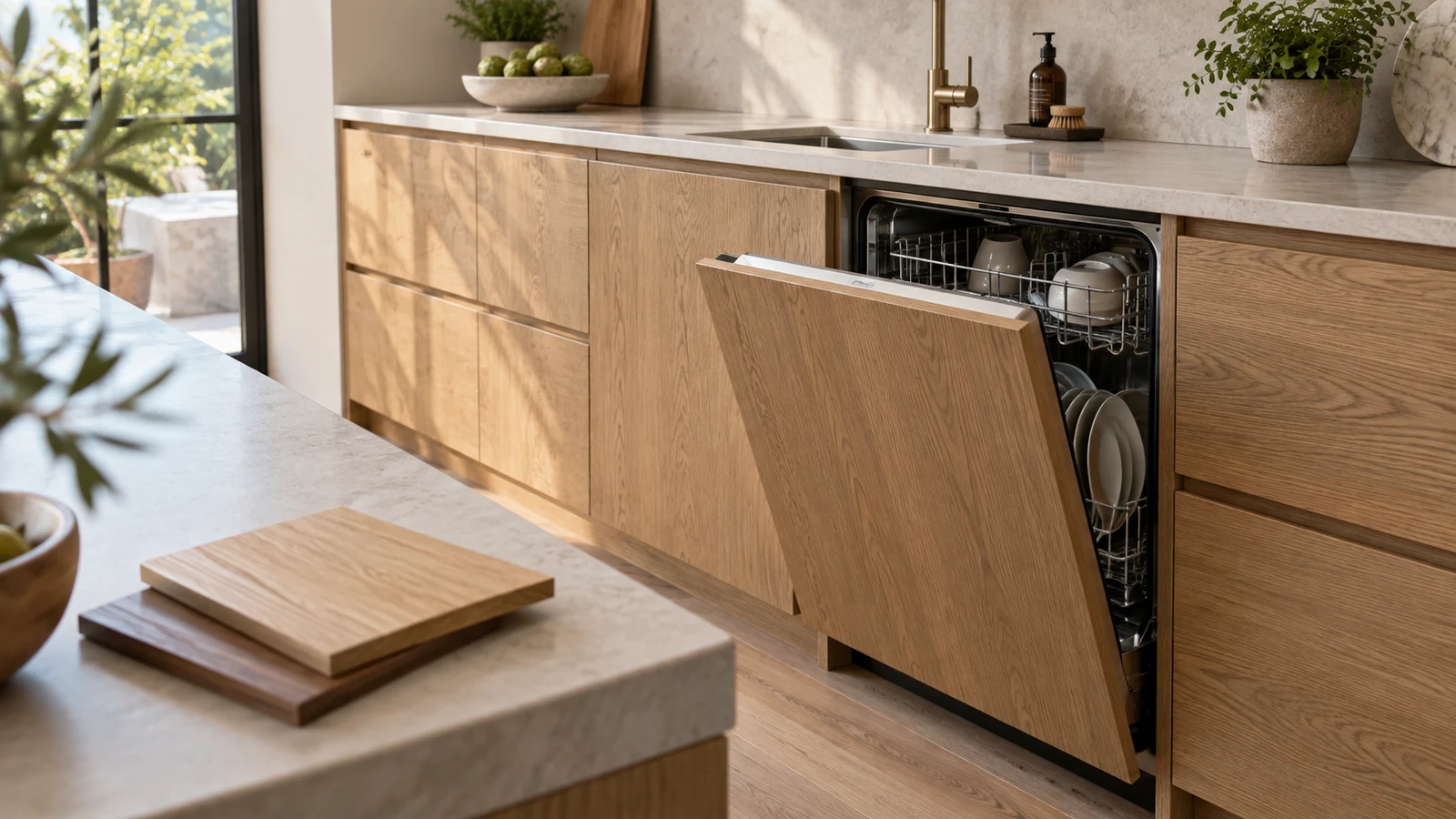
A product description can identify a panel-ready dishwasher without settling what the finished kitchen will look like. The Bosch SHV78CM3N is described as an 800 Series built-in, panel-ready dishwasher. For a shopper, that description opens a practical question: what has to be specified and supplied before the visible front can be considered complete? Start panel-ready dishwasher planning with that question, rather than treating the product name as an inventory of decorative parts.