Home & Living
why a wall picture frame keeps tilting after hanging
Trace a tilting frame to its back, wall fastener, wall material or contact before choosing a compatible hook or cleat.
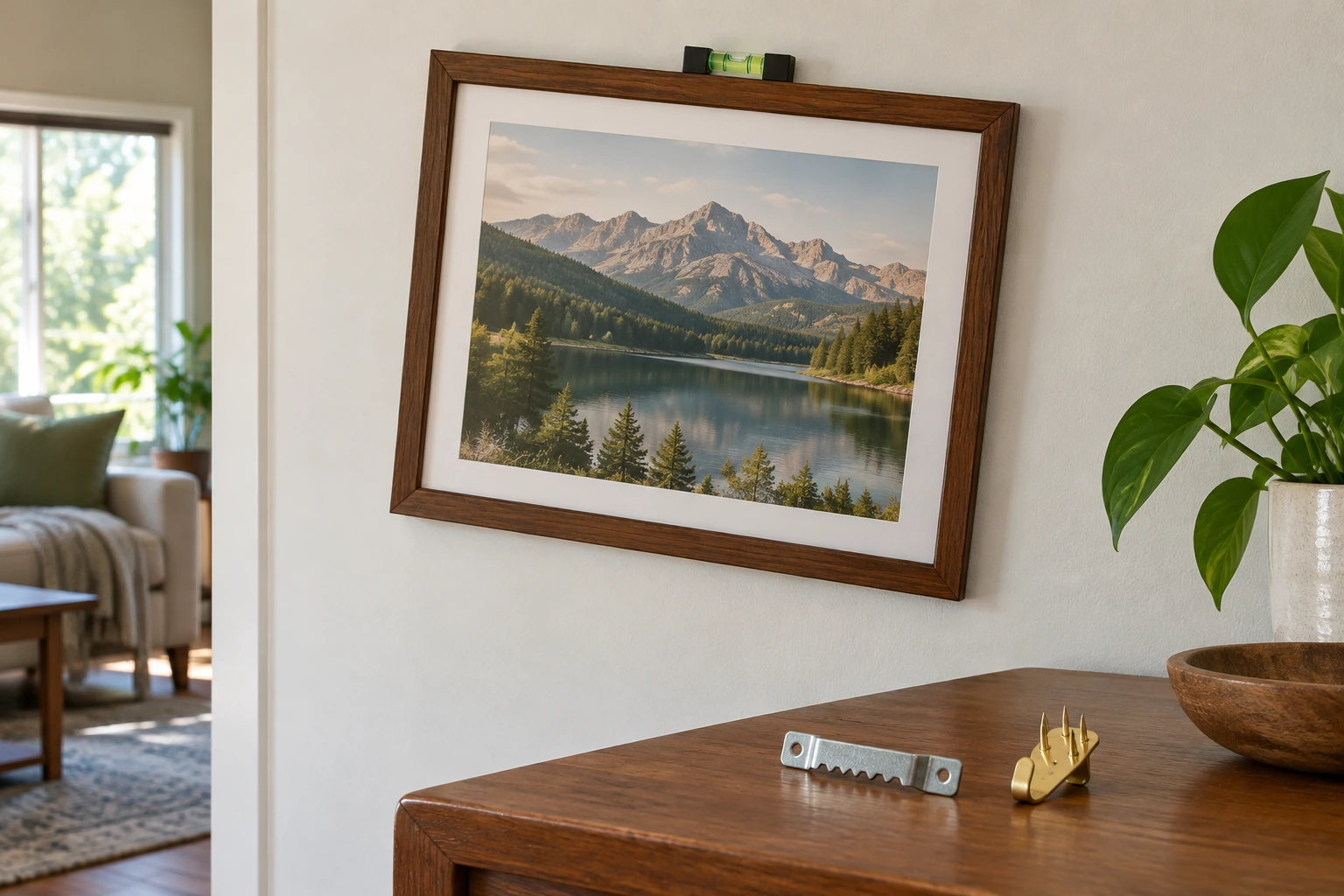
A picture frame that looks level when you step away can slowly tilt after a door closes or someone brushes the wall. Before replacing a hook, identify which part moved: the frame, its back hardware, the wall fastener or the wall surface itself. This guide explains why a wall picture frame keeps tilting after hanging and how to choose a suitable next step without treating every wall and frame as interchangeable. Take down a frame that feels loose or could fall on someone while you investigate.
Start with a photograph of the crooked position. Then support the frame with both hands and lift it down according to its existing hanger. Do not pull a heavy frame straight out from a cleat or twist a brittle back. Put it on a protected surface and inspect the wall and back separately. A bubble level can tell you that the top edge is no longer horizontal, but it cannot tell you why. A loose wire, a crooked wall fastener and an off-center frame back can make the same visible angle.
Two current hardware listings illustrate different ways to hold a frame. The SKYSONIC French-cleat picture hanger listing describes two interlocking 30-inch cleats with fasteners and a flush-mounted result. The Coolnut claw drywall hanger listing describes a pack of 50 small hardened-steel claw hooks intended for gypsum drywall. These are different connection systems. Neither listing proves suitability for your wall, frame, weight or hanging point without measuring and following the exact instructions.
Find which connection is shifting
Look first at the frame back. Does a wire slide through eyelets, or is there a sawtooth, D-ring, cleat or other fixture? Pull gently only within the maker's intended handling to see whether the attachment itself is loose. A wire suspended from one wall hook can let a frame rotate when bumped. A centered rigid bracket behaves differently. If the screws in the frame back are pulling out or the wood is split, a stronger wall hook will not fix that failure. Repair or replace the frame attachment through its maker or qualified framing shop.
Next inspect the wall fastener without load. If a hook rotates in the wall, if the drywall crumbles, or if an anchor is withdrawing, stop using that location until the wall and hardware are assessed. Do not press a larger hook into a damaged hole just to hide it. The wall material matters: plaster, masonry, wood and gypsum drywall accept different fasteners. The Coolnut listing specifically describes gypsum drywall; it does not establish a safe installation in plaster, brick or tile. Ask a qualified installer when wall construction is uncertain.
Mark where the frame's center of mass sits. A wide frame with an uneven mat or a heavy object inside can pull toward one side if it hangs from a single point. Remove any loose item from inside before hanging again. If the image itself looks tilted within an otherwise level frame, the issue may be the mount or mat, not the wall. The public guide on why a picture frame hides part of an image addresses picture placement behind a physical frame. This guide stays with the hanging system and the frame's outside angle.
Check the hanging height and traffic around the wall. A frame near a door may be touched repeatedly by a bag or coat. A vibrating cabinet or slamming door may expose a marginal connection. Do not use adhesive patches, tape or hidden shims as a substitute for secure hardware on a heavy item. Repositioning the frame out of the contact path can be simpler than changing the hanger. If children or pets can reach the bottom edge, plan for that ordinary movement.
Decide whether one hook or a cleat suits the frame
A single hook can be simple for a small frame with an appropriate back fitting and a wall that can safely take it. It may still permit some rotation. A pair of correctly spaced points can resist rotation, but must match the frame's hardware and the wall installation plan. A French cleat uses mating parts along a longer edge; it may provide a more constrained position when correctly installed, but it requires enough suitable frame-back area and wall attachment points. Do not assume a cleat can be screwed into a thin decorative molding.
The SKYSONIC page labels the set as two 30-inch cleats, yet some generic instruction text in the same description refers to other cleat lengths and screw counts. Treat that mismatch as a reason to verify the exact delivered kit and maker instructions. Do not apply the screw count for an 18-inch or 41-inch example to a 30-inch part by guesswork. Measure the actual cleat, hole spacing, fasteners and the frame's structural back. The supplied screws may not be correct for every wall substrate.
The Coolnut listing claims a per-hook load capacity and easy press-in installation for gypsum drywall. Do not treat the stated number as permission to hang any mirror or cabinet from one small hook. The true load path includes the wall condition, the back attachment, the way the frame is touched and the maker's instructions. Do not multiply a per-hook claim into a safe system rating without a design that distributes load as intended. For valuable, heavy or overhead pieces, seek appropriate professional mounting advice.
Before choosing either system, weigh the complete frame as it will hang, including glass, backing and contents. Inspect the wall where the fastener will go. Identify any electrical, plumbing or other hidden services before drilling or pressing hardware into a wall. Follow building and rental rules. If the installation requires structural support, use the maker's specified anchors or qualified help. A label that says “no damage” cannot guarantee a mark-free wall after removal; the claw listing itself describes small holes.
Make a level mark that can be checked
Choose the intended top edge and mark a light reference line with a level. Check the level itself on a known surface if its reading seems odd. Measure from a fixed reference such as a door casing or shelf, not from the floor alone if the floor slopes. If two wall points are used, verify both their horizontal alignment and spacing against the actual frame hardware. A neat mark on the wall does not compensate for incorrectly attached hardware on the frame back.
For a cleat, follow the exact delivered kit's instructions on orientation, fastener positions and wall type. Both mating pieces must be level and fully engaged. If a frame seems to sit on only one corner, take it down and investigate before adding weight or pushing harder. For a claw hook, use the maker's specified wall type and placement method. Do not hammer a press-in part into an unknown hard surface. If the first placement fails, preserve the hole and choose an appropriate repair or new position rather than pressing the same part repeatedly into damaged gypsum.
Rehang with another person if the frame is large. Support its weight until you know the hardware is seated; then release gradually while keeping hands ready. Use a level across the frame top, step back and view it from normal distance. A room's trim may be out of square, so distinguish a truly tilted frame from an optical effect caused by a sloped ceiling or nearby picture. If the frame is level but still looks wrong, adjust the composition or neighboring objects without weakening the hanger.
Observe what happens over a few ordinary days. Mark the top-edge position lightly or take a photo from the same spot. If it shifts again, record whether the wall piece moved, the frame-back attachment moved or the frame rotated around a stable single hook. That observation should determine the next correction. Do not keep tightening a loose frame-back screw in worn material or enlarging a wall hole without addressing the underlying cause. A repeated shift is information, not a reason to apply more force.
Keep nearby hanging jobs separate
A doorway hanger can also shift when it touches a frame or trim, but it uses a different load path. The public guide on a holiday doorway hanger shifting at the frame covers that separate contact problem. A wall picture frame may share the idea of checking the actual contact point, but a door-top hanger is not evidence that a drywall hook or French cleat is suitable for a picture. Always identify the material and connection in front of you.
Likewise, do not solve every crooked appearance with hanging hardware. The photograph may have slipped inside the frame; a mat may be cut unevenly; the frame itself may be racked. Place the frame on a level table and compare its top and sides before changing the wall. If the outside edges are square but the picture is not, have the image mounted properly. If the frame joints have opened, repair the frame before mounting it. A wall fastener cannot make a damaged object rigid.
If you are renting or frequently rearranging pictures, choose a solution that suits both the wall and the planned number of moves. Small hooks may be easier to relocate than a long cleat, but they still leave marks and need compatible drywall. A cleat may be better for a stable location and suitable larger frame, but installation is more involved. Do not choose based only on the number of items in a pack. Count the actual frames, wall surfaces, weights and available back attachment points.
Keep the hardware's instructions and a note of the wall type with the frame. That helps when you move it or hand the room to someone else. Remove old fasteners properly when the display changes, and repair holes according to the wall finish and lease terms. Do not leave a protruding hook at face height after a picture comes down. A tidy record is particularly useful for a long cleat whose mating part can be separated from the frame during storage.
The answer to why a wall picture frame keeps tilting after hanging is found by separating the frame back, wall fastener, wall substrate and nearby contact. The two example listings offer a long interlocking cleat and a gypsum-drywall claw hook, with different installation assumptions. Check the actual delivered hardware, frame weight and wall before using either. A level, stable result comes from a sound load path, not from repeatedly straightening a frame that can still move.