Audio & Video
how to set two music stand positions for a shared rehearsal
Place two sheet-music stands for a shared rehearsal using the players, score pages, sightlines and room path as the test.
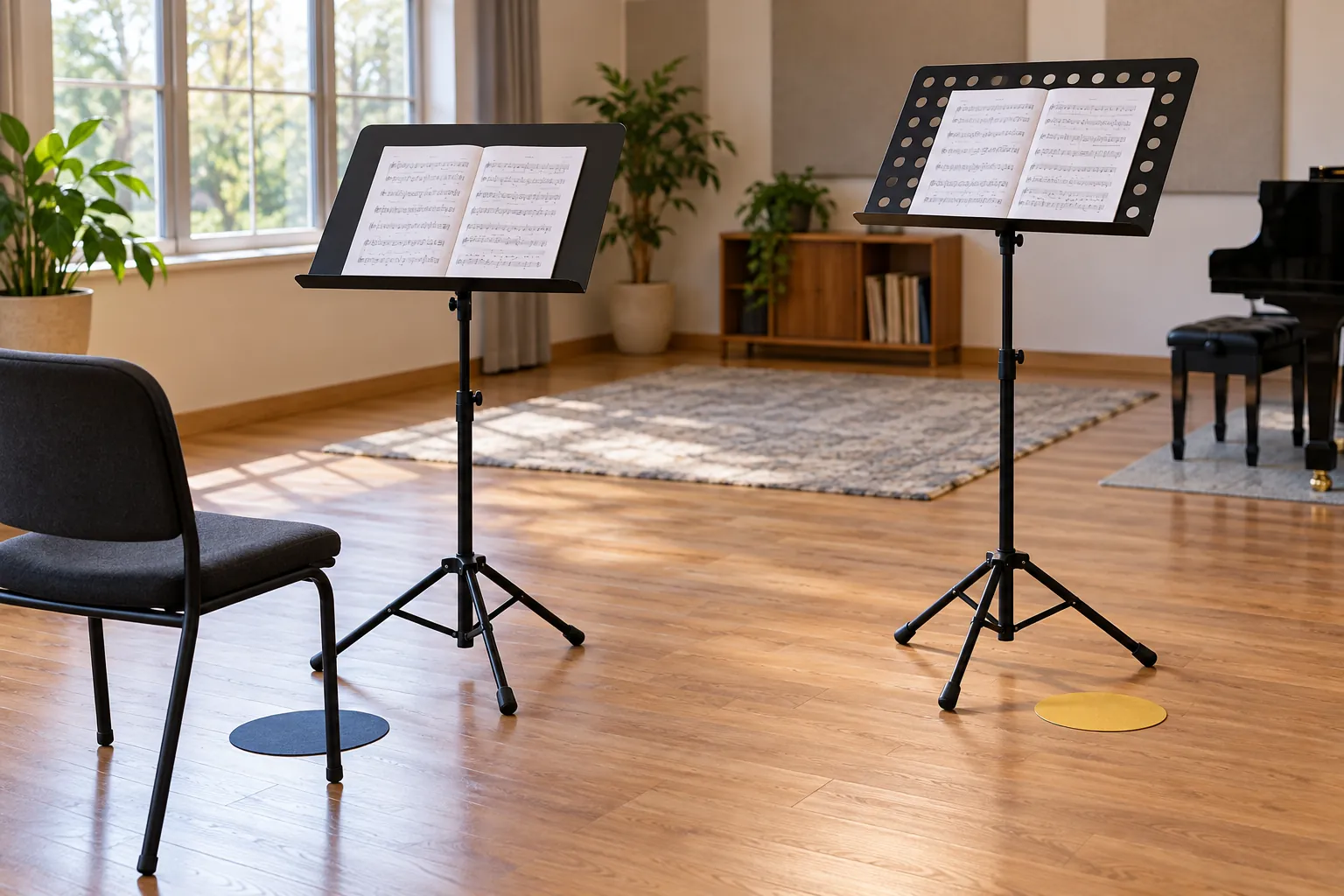
Two people rehearsing from printed music can each have a stand and still struggle to see the page. One stand may sit where a player naturally looks; the other may block the route across the room or leave a page too far away for a quick turn. Setting up two music stand positions is a small room-planning job. Put the players and their actual scores in place first, then move the stands until both pages are usable.
Mark two player spots, place the stands empty, and test each score from its player's position.
This procedure uses a solid-desk conductor stand and a perforated-desk orchestra stand as examples. Their current product pages identify the stands and show their shapes. They do not establish a particular height range, weight limit, adjustment sequence, or score size. Let the instructions supplied with the actual stands control assembly and adjustment, and use the pages you will play from to test the finished arrangement.
Start with the players and the room
Put two chairs or standing marks where the players expect to rehearse. If one person switches instruments or stands for part of the session, mark both of that person's positions. Leave the music stands out of the first sketch. Walk the path to the door, the instrument cases, and any shared table. A stand should not become the object everyone steps around when they need to move through the room.
Now set an empty stand near each player. Do not adjust everything at once. Move one base until the player can face the expected direction, then check whether the other player's route still works. Repeat with the second stand. The goal is a pair of positions that can be used together, not two individually convenient spots that collide when the rehearsal starts.
Use a page held at ordinary playing position to judge the distance. A person reading from a chair may need a different view than someone standing. Ask each player to look from where their hands and instrument actually will be, rather than stepping forward to inspect the stand. If they need to lean into the stand to read, move the stand or the chair before trying to solve it by guessing a product's advertised adjustment.
Check the stand you actually have
The Proline GMS80A conductor stand is listed as a solid sheet-music stand that can collapse for portability. Its two gallery images show a solid black score desk on a tripod base. The Stagg 22046 orchestra stand is listed as a medium orchestra stand; its single gallery image shows a perforated black score desk on a tripod base. Both are music stands, but the pages give little detail about adjustment or permitted loads.
Read the instructions that came with each actual stand before opening, locking, tilting, or folding it. Inspect the supplied parts and the base on the floor you intend to use. A product photograph is useful for identifying a solid versus perforated desk; it is not a setup manual. If a part is missing, a clamp does not hold, or the base rocks on that surface, stop and resolve the issue with the maker or seller rather than propping a score on an unstable stand.
Keep each stand's parts and instructions with its name. In a shared room, one player may bring the Proline one week and a different stand the next. A short label on the case or storage spot prevents a familiar-looking knob from being mistaken for a part of the other stand. Do not infer that the two stands use the same adjustment mechanism just because both have black poles and tripod bases.
Set one viewing line at a time
Once each empty stand is stable according to its own instructions, put one actual score on the first desk. Have the player take their place and glance at the page as they would while playing. Ask whether the top and bottom lines are visible, whether the page is close enough to read, and whether the stand hides another player or a person leading the session. Change the position in small steps and check again.
Then repeat with the second player and stand. Look at the pair together. A move that improves one view may place a desk in the other's sightline. If the players need to see each other for cues, test that while the music is on the stands. Do not assume the stands need to be at matching heights or angles. Each player's actual seat, instrument and score decide the view.
Mark the successful floor positions with a removable reference that suits the room, or note them on a quick sketch. Avoid placing tape where it could damage a finish or become a trip point. The purpose of the mark is to make next rehearsal's setup easier, not to certify one permanent position for every piece of music.
Test the pages, not a generic sheet
Try the largest and smallest score formats expected for the session. A single loose sheet may rest differently from a bound book or a folder opened across two pages. Put the actual material on the desk and check where its lower edge sits. If part of the page hangs off, closes by itself, or is hidden by another object, do not count the layout as finished. Move the stand, use a more suitable score format, or seek item-specific guidance before rehearsal.
Neither product page gives a load rating for a thick book or tablet. Both sell sheet-music stands, and their images show score desks. Check the exact stand's instructions before putting other material on it. Even when a score fits on a desk, test whether it stays put during page turns or a breeze.
Try one page turn from the player's position. The player should not need to reach across the other stand or move the instrument into a walkway. If the turn catches on a neighboring page, open the score to the passage you expect and test again. In a duo, ask the other player to remain at their spot while this happens; the movement belongs to the shared setup.
Notice the room around the score
Check the page at the time of day when rehearsal will happen. Daylight from a nearby window may fall across one desk while the other faces a dimmer corner. Read a few lines from each player's position with the room's ordinary lighting. If someone has to move close to distinguish the notes, try another stand location or a suitable light before deciding the stand itself is the problem. Do not point a bright lamp into the other player's view merely to improve one score.
Look for objects that will enter the playing space after setup. A chair pulled back, an open instrument case, a bag on the floor or a guest joining the session can change the route you first checked. Clear the area you expect to use and repeat the walk with both stands loaded with pages. If a player needs to leave their spot during rehearsal, they should be able to do so without reaching through another person's music. This is especially easy to miss when both stands were positioned in an empty room.
Keep the trial specific. A blank page may be easier to see than a densely printed score; a short single sheet may be easier to turn than a bound part. Use the pages you will actually rehearse from. When the music changes, repeat the viewing and page-turn checks instead of treating the floor marks as a permanent solution.
Rehearse a short passage with both stands in place
Choose a brief section that includes an ordinary page turn or a place where players look up for a cue. Play it once at the actual volume and pace planned for the session. Notice whether anyone steps toward a score, shifts a chair to see around the other desk, or pauses to straighten a page. These observations are more useful than a vague impression that the stands look aligned from across the room.
Stop and change one thing if needed. You might move a base a few inches, turn a desk, or reposition a chair. Run the short passage again and decide whether the change helped. Do not adjust a stand while someone is leaning on it or playing from it. Follow its own instructions for any locking or height change, and verify the stand is stable before the score goes back.
If the room has a shared conductor or teacher, ask that person where they need to see the players and the scores. Their view may require a clear central line that was not obvious when the two players stood alone. Give them a temporary place in the trial rather than assuming a product called “conductor” must occupy the center.
Keep neighboring decisions in their own guides
Stand placement does not settle whether audible practice is welcome at home. The shared home guitar rehearsal guide addresses when playing is welcome and how people can interrupt or change that agreement. Set the sound arrangement separately from the physical score positions.
A page that goes missing between sessions has another problem. The reference-sheet display guide looks at a nonmusic sheet that keeps being misplaced and whether a wall or desktop display fits that task. A music stand may hold today's score, but this rehearsal setup does not replace a filing or retrieval plan for every page used in the room.
Leave the next session a usable note
At the end, record what you tested: who sat or stood where, which score sizes worked, and which position was changed after the trial passage. Keep the note with the stands or the rehearsal folder. If the session will move to another room, treat the note as a starting point. Floor, furniture, lighting and walking paths can change, and the old marks may no longer help.
Empty the desks before folding or moving either stand. Follow each stand's own instructions for storage. If a joint, base or page rest behaved oddly during rehearsal, note the exact symptom and hold that stand out of the next setup until it has been checked. A convenient two-stand plan is useful only when both stands remain suitable for their actual scores and the people can move around them.
For the next shared rehearsal, rebuild the positions from the players and the pages. Check the route across the room, test a page turn, and run one short passage. Those steps keep the setup tied to the session in front of you rather than to a photograph of a stand in an empty room.