Garden Care & Watering
tiered plant stand wobbling after pots: check floor, frame and load
Unload a wobbling stand, compare its floor contact and model-specific assembly, then add permitted pots one at a time.
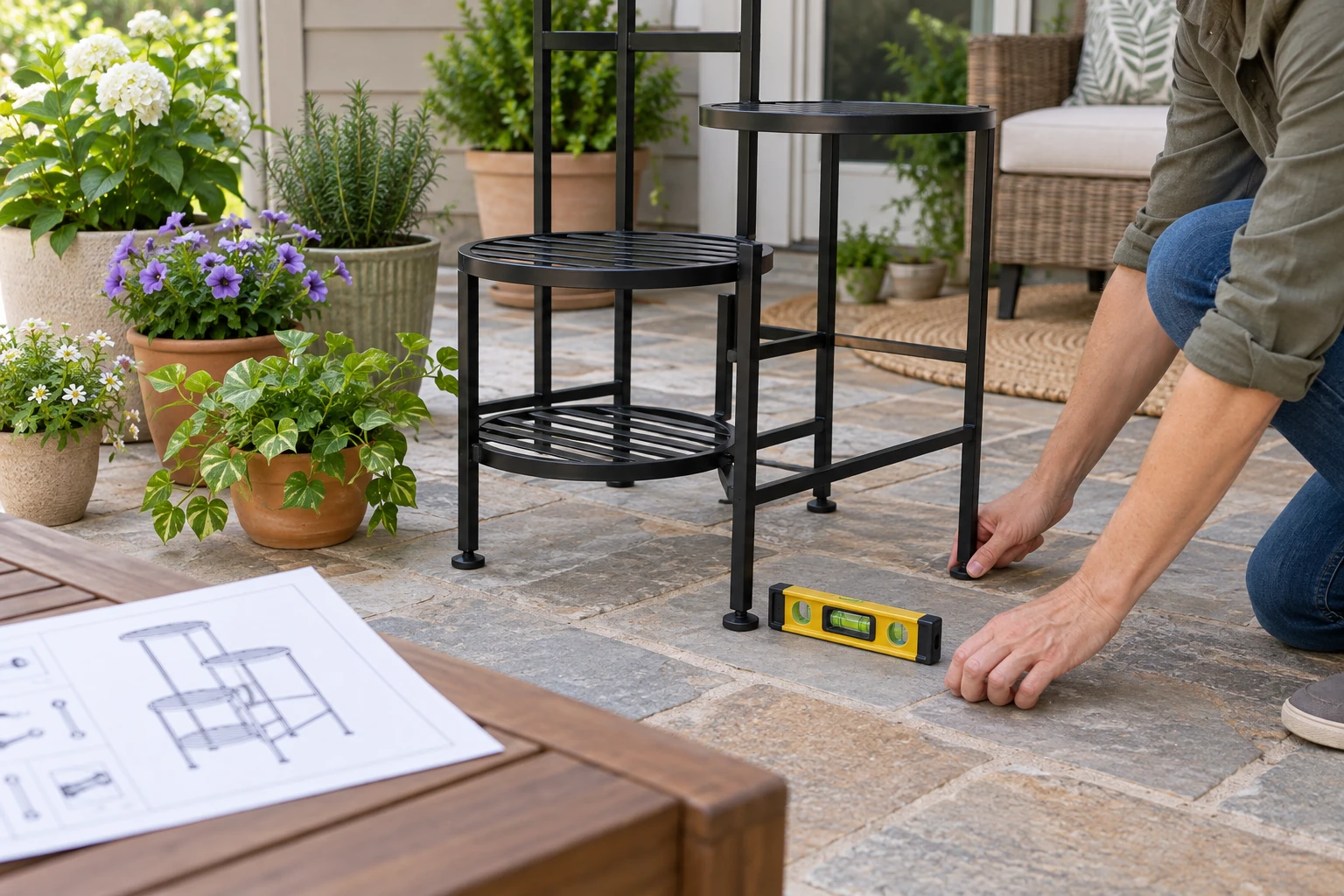
A tiered plant stand that wobbles after the pots go on it can have several causes. One foot may sit on a low tile, an assembly joint may be loose, a wheel may not be locked, or the pots may be placed beyond the stand's intended pattern. The safe first move is to take the plants off and protect them, then observe the empty stand. Do not keep nudging a loaded rack until it seems steady. A wobble under weight is a reason to pause use, not a normal settling step.
Remove the load and record what moved
Move pots one at a time to a stable surface. If a container is too heavy to handle safely, get help rather than pulling it off a high shelf alone. Keep the watered pots away from a walking route while you check the rack. Record whether the wobble started during assembly, after one particular pot was added, or after the stand was moved. A short video from a safe distance can show which foot lifts, but do not shake the stand for a dramatic demonstration.
Inspect nearby hazards. A stand next to a door, stair or play area should not be left leaning while you look for a fix. If a shelf, weld, fastener or leg is visibly cracked or bent, stop using the product and contact the seller or maker. Do not brace a damaged frame with a book, tape or an improvised tie and then return heavy pots to it. The purpose of this sequence is to isolate a safe setup condition from a product failure that needs support.
Check the exact model and supplied assembly instructions. Similar tiered stands can have different feet, shelf connections and wheel parts. Photograph the label, fasteners and the joint that seems to move before changing anything. If the instructions list a missing component or a required wall restraint, follow those model-specific directions. Do not use a generic stand photograph to decide which screw should fit yours.
Separate the floor from the frame
Place the unloaded stand on a clear, firm section of the intended surface. Look at all contact points. A foot on the edge of a tile, rug seam, gravel patch or floor drain can lift the opposite side. A small level or straightedge may help identify a sloped location, but do not treat a single bubble reading as proof the frame is square. Move the empty stand to a known flat area as a comparison if its maker permits moving it.
If the stand is steady in one spot and rocks in another, the location likely contributes. That does not establish that the frame can safely bear a full plant load at the first spot. Check the maker's allowed surfaces and leveling parts, if any. Do not wedge a random item under one foot. A loose shim can slide when the rack is watered or bumped. For a fixed outdoor position, consider a genuinely stable base that meets the product's instructions.
The live TFCFL four-tier plant stand listing shows a curved metal display frame with six pot positions and wheels in its first gallery. A wheeled base introduces a model-specific question: are all relevant wheels installed and in the state the instructions require when parked? The gallery does not prove a locking mechanism on every wheel or certify the load of the pictured pots. Check the actual unit and supplied directions before using it.
The live Autrinix corner plant stand listing shows a four-tier metal structure with narrow legs and rounded trays. It is a different base geometry from the wheeled TFCFL display. Do not transfer a wheel check to a fixed-leg model, or assume a tray of similar shape uses the same fastener. Compare the empty stand's feet and upright connections with its own instructions. Product photographs establish form, not whether a particular assembled unit is square.
Inspect the assembly without guessing a repair
With the rack empty, look for a shelf that sits unevenly, a joint that has not seated, or a leg that does not meet the floor. Check the visible fasteners against the supplied assembly diagram. If a step was missed and the instructions provide the exact correction, follow that step with the right parts and tools. Do not overtighten an unknown fastener or drill a new hole. A visibly misaligned part may need replacement rather than force.
Pay attention to the order in which a multi-piece frame was built. Some stands need components aligned before final tightening. The manual for the exact model controls that sequence; the two captured product galleries do not show it. If the manual is missing, obtain it from the seller or maker before disassembling a loaded stand. A partial loosening without a safe rebuild plan can make a wobble worse.
For a wheeled model, examine each wheel and its connection while the frame is unloaded. Clear ordinary debris only as the maker permits. If a wheel does not turn, attach or park as instructed, stop and request the correct part. Do not replace it with a visually similar wheel from another stand without confirmed compatibility. A small difference in stem or overall height can make a frame rock even when the wheels look nearly identical.
Check any leveling feet only if the supplied instructions identify them. A threaded foot can change the way one corner meets the ground, but adjusting it without knowing the intended range can leave too little thread engaged. Make small changes on an unloaded frame as directed and confirm all contacts again. If a foot is missing, cracked or stripped, obtain the specified replacement. A makeshift washer stack is not evidence that the stand has regained its original support geometry.
If the frame is visibly twisted or one shelf slopes while all feet are on a flat surface, do not hide it by changing the pot pattern. Note the condition and contact support. A loaded rack can conceal a misassembled joint until it shifts. The problem-solving boundary is reached when the empty product cannot stand as specified. The article does not diagnose a weld, metal fatigue or manufacturing defect from a photo alone.
Return pots conservatively
Only after the empty stand is stable and assembly matches its manual should you consider adding pots back. Check the stand's stated load limits and how the maker distributes weight. Do not invent a universal rule that the heaviest pot always belongs on the bottom; follow the exact model's guidance. Place a first suitable pot, then stop and observe. If wobble returns immediately, remove it and note that the load or placement changed the behavior.
The tiered plant stand compatibility guide owns the separate shelf-and-pot fit decision: pot footprint, height, light access and tray clearance. Use those measurements before assigning a pot to a tier. This article owns a wobble that appears after assembly or loading. A pot can fit on a shelf and still make the overall stand unsafe if the frame, surface or load distribution is wrong.
Make sure the pot and its saucer rest fully on the intended shelf and do not hook against a rail. A pot perched on an edge can shift its weight or spill water onto a lower joint. Do not stack pots, soil bags or watering cans on an unapproved tier to make a display look fuller. Keep the stand within its listed capacity and its intended indoor or outdoor setting. If the listing is unclear, ask the maker before using the maximum-looking arrangement in a photo.
After each added pot, observe the stand from the front and side without pushing it. Does a foot lift, a wheel roll, or a shelf sag? Remove the last pot if the behavior changes. Record which tier and pot caused the change. This controlled sequence is more useful to support than a statement that the whole rack “feels flimsy.” It also limits the chance of a cascade of falling containers during a crowded test.
If the wobble appears only after watering, compare the arrangement before and after the pot and soil gain water. Wet soil changes weight, and a saucer can shift if it fills unevenly. Do not estimate the change by lifting a heavy wet container without help. Record the observation and return the stand to a safe unloaded state if it moves. The maker's capacity applies to the real loaded condition, not merely the dry pot you placed there during assembly.
Keep other plant supports separate
The macrame plant hanger setup guide addresses a different support path: a suspended pot, hanger and mounting point. Its hanging clearances do not diagnose a freestanding metal rack. The shared lesson is to identify the exact support and its load path before adding a plant. Do not use advice for a ceiling hook to compensate for a wobbling floor stand.
On a porch or patio, wind, water and uneven paving can change the situation after an apparently successful dry setup. Follow the maker's outdoor-use and anchoring instructions if applicable. Do not leave a tall stand where a door can hit it or people must squeeze past. If the location is exposed and the product lacks suitable restraint guidance, find a safer site or seek maker advice. A temporary calm-day observation does not certify storm stability.
Keep children and pets away from an unstable setup. A tall stand invites contact with a leaf or hanging pot, and a slight wobble can become a fall when bumped. The exact home hazard depends on the location and contents. Remove the load while the cause is unresolved. Safety does not require you to prove which bolt, wheel or tile caused the issue before taking pots off the rack.
When asking for help, provide the exact model, purchase record, assembly stage, flat-surface comparison, photographs of the feet and joints, and the pot placement that first caused movement. This evidence lets the seller or maker distinguish a missing part from a location or load question. Do not claim a defect that has not been observed. A clear description is more useful than repeated unrecorded attempts to tighten everything.
A tiered plant stand wobble is resolved only when the exact unloaded frame is stable on an approved surface, assembly matches the maker's instructions, and an allowed pot arrangement remains steady during ordinary use. Stop at damaged parts or unresolved movement and seek support. The goal is a safe placement for the plants, not a clever way to mask a wobble under another pot.