Garden Care & Watering
tiered plant stand compatibility: match pots to each shelf
Measure each pot and shelf, then check clearance, load limits and watering access before filling a tiered plant stand.
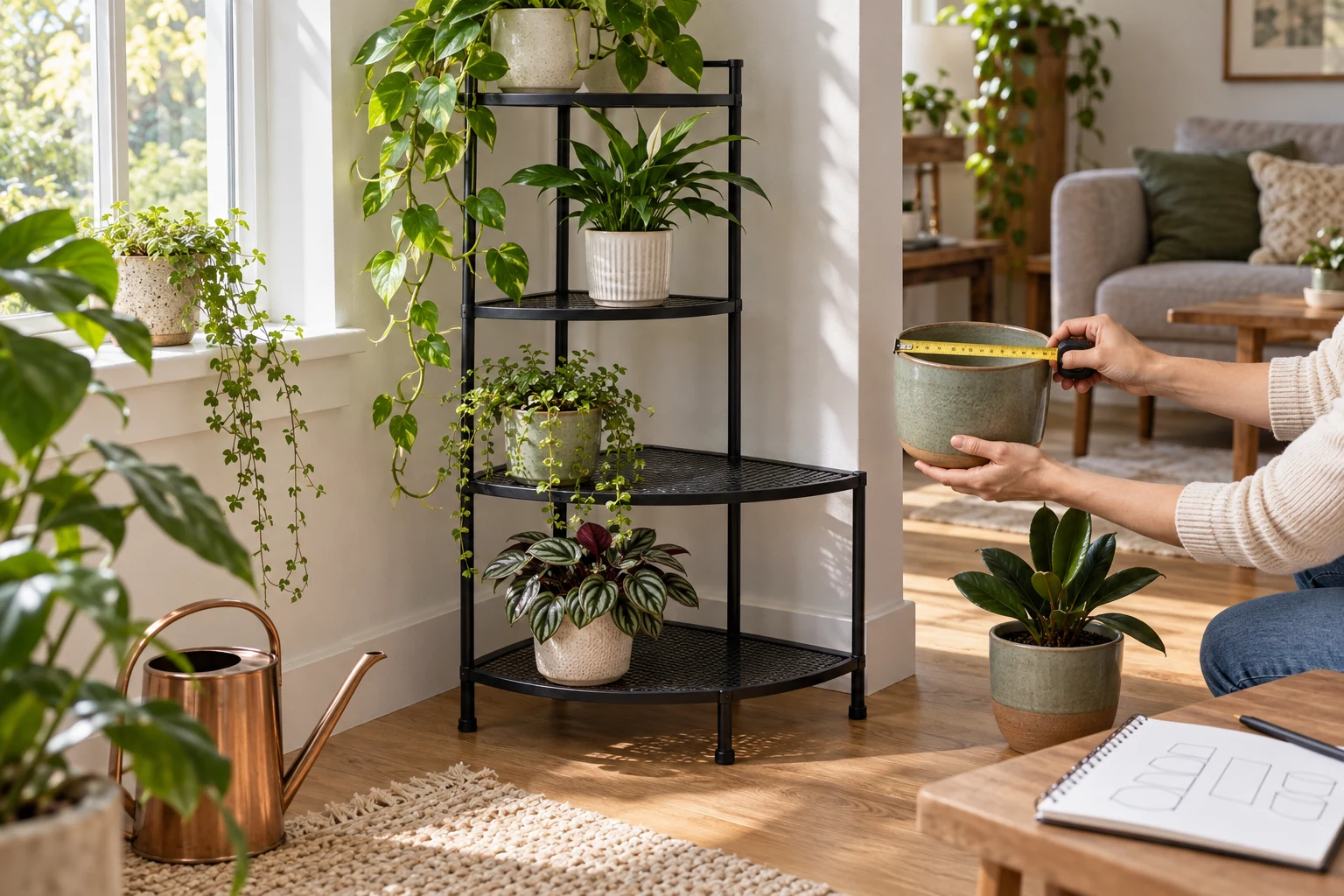
A tiered plant stand may advertise room for four or six pots, yet that count does not tell you whether your actual pots, leaves and watering routine fit. Compatibility starts with a specific pot on a specific shelf, in a specific corner of the home. This guide compares a wheeled circular display rack and a compact tiered corner stand as examples. It gives you a shelf-by-shelf fit sheet before you buy or assemble a stand. It does not treat a styled product photograph as a capacity test.
Measure the placement area first
Choose the intended floor location and measure its usable width and depth. Include nearby baseboards, door swing, curtains, a radiator, furniture drawers and the space needed to walk past. A nominally narrow stand can still put leaves into a doorway or hide a light switch. Mark the largest footprint you can tolerate with removable tape or a sheet of paper. If the site is a balcony, also check the surface and any building rules that affect what may be placed there. Do not infer outdoor suitability from a casual lifestyle image.
Measure height from the floor to any sill, shelf or projecting fixture above the intended position. A plant can grow beyond its present leaves, so leave space for the actual foliage and a realistic growth allowance. If the location is near a window, note how the window opens and whether the stand would block cleaning or access. Light conditions belong to the plant's own care requirements; a stand's height alone cannot make a shaded corner suitable for a sun-dependent plant.
Now list the pots you want to display. For each, record the pot base width, the widest outer body or foliage width, total height with the plant, approximate loaded mass, and whether a saucer is needed. A tapered pot can have a small base but broad upper rim. A shelf that just supports its base may still collide with the rack's frame or with the plant next door. Measure the real pot and the part that must be placed on the shelf, not the plant label or a seller's decorative example.
Keep weight estimates conservative. A pot becomes heavier after watering, and ceramic, soil and a saucer add mass. If you do not know a stand's verified shelf load rating, do not assume that several apparently small pots are safe together. The maker's assembly instructions, level-floor requirements and maximum load for the selected version govern use. A photograph can show what fits visually while saying little about stability, load distribution or the effect of rolling a loaded rack.
Read each stand as a different layout
The live TFCFL plant-stand listing calls its product a four-tier, six-pot metal display rack. Its first inspected gallery image depicts a circular arrangement of basket-like pot platforms and casters. Those visible features matter when measuring separate pot positions and the travel path if the rack is moved. They do not prove the exact loaded capacity, delivered caster configuration or every dimension. Check the selected variant and supplied instructions before placing six filled pots on it.
The live Autrinix corner-stand listing describes a 31.3-inch-tall black metal tiered rack. Its first inspected gallery shows several circular shelf positions at staggered heights on a compact frame. The layout suggests an alternative for a corner where a wider circular rack might intrude into the room, but the image cannot establish each shelf's usable diameter or carrying capacity. Confirm those details for the exact item before assigning pots.
Do not merge the two pages' claims into one fictional stand. One is presented with wheels and a circular collection of platforms; the other is presented as a stationary compact tiered frame. The word “tier” can refer to height levels rather than a count of independent pot seats. Draw the platforms you can identify from the listing, then leave dimensions blank until an authoritative specification or the assembled item provides them. A count in a title is a starting question, not a compatibility result.
Build a pot-to-platform fit sheet
Give each platform a row on paper. Note its usable surface width and depth, nearby frame clearance, vertical clearance above it and distance to the neighboring pot position. If the platform has an open grid, consider whether a small pot base or saucer would sit securely rather than rocking or slipping between bars. Record “unknown” where a listing lacks a dimension. An unknown platform cannot be counted as a confirmed match merely to reach the advertised pot count.
Match the heaviest suitable pot to the lowest stable position allowed by the maker's instructions, then place lighter pots where their heights and leaf spread fit. This is a planning preference, not permission to exceed any load limit or modify a stand. Avoid putting a top-heavy pot at the edge of a small circular platform just because the base seems barely supported. The full assembly must remain level and stable with the planned distribution; stop if it rocks, flexes unexpectedly or interferes with normal movement.
Leave hand access around each pot. You need room to check the mix, lift a pot when appropriate, remove a saucer, prune dead growth and wipe a spill. A shelf may fit the pot's outline but be so close to the shelf above that watering becomes awkward. Try the movement with an empty pot first. If you cannot reach or remove it safely, that platform is a poor match even when its measured diameter is large enough.
The plant saucer multipack guide counts a tray as usable only when it suits a real pot and surface. Apply that narrower accessory check here: a stand shelf also needs room for whatever drainage tray the pot uses, plus safe access to empty it. A saucer can catch some drainage but is not a guarantee that the floor below a metal rack will remain dry. Do not silently remove a needed saucer to force a pot onto a shelf.
The overwatering and watering-can guide keeps plant water needs separate from the watering tool. A stand has the same boundary. Its tiers do not determine watering frequency, mix dryness or whether roots should sit in drained water. Use each plant's actual care information, and choose a position from which you can inspect and water it without soaking a wall, shelf, cable or nearby furniture.
Check wheels, floor and assembly
For a wheeled rack, measure the path from its placement spot to any watering or cleaning area. A rack that fits in the corner may not pass a doorway when loaded with outward-growing leaves. Check floor transitions, rugs, thresholds and power cords. Do not drag a loaded stand across a surface if the wheels or instructions do not support that use. Secure any caster locks as directed before tending plants. A decorative photo of wheels does not confirm brakes, movement limits or safe loading.
For a stationary stand, check how its feet contact the actual floor. Uneven tile, deep carpet or a sloped balcony can make a narrow rack wobble. Level and assemble it according to the supplied instructions, with all specified parts fitted. Do not improvise shims or remove a crossbar to accommodate a tall pot. If a stand must be anchored under its instructions, follow that requirement. If you cannot meet its installation conditions in the chosen location, pick another placement or stand.
Consider water on the floor as part of compatibility. Open metal platforms may allow drips to pass through to lower plants, trays or flooring. Place and empty appropriate saucers, protect the surface according to its maker's guidance, and observe the first watering in a safe location. A catch mat may help only when it is suitable for that floor and does not make the stand unstable. Never assume that “indoor/outdoor” in a seller title promises rust resistance or waterproof protection in your actual setting.
Before final placement, inspect the delivered rack for bent shelves, missing fasteners, loose welds, damaged feet or casters and instructions that conflict with the product page. Keep the packaging and exact selected listing until the item is assembled and checked. If the measured platforms differ from the listing or a required part is missing, use the seller's resolution process rather than compensating by overloading another shelf. A visually plausible display is not evidence that a defective rack is safe.
Test the arrangement before filling every tier
Assemble the stand on a level, appropriate surface. Place one empty pot and its tray at a time, starting with the platform whose dimensions are best supported by the supplied specifications. Check the pot's base contact, surrounding frame clearance and the route your hand will use for maintenance. Then remove it and repeat with the next platform. This dry layout finds collisions before wet soil and fragile leaves complicate the work.
Only after the dry layout fits should you place loaded pots within verified weight limits. Keep the stand still and look at the entire arrangement from several sides. Leaves may overlap in a way that blocks inspection or rubs against a frame. Move a pot to a different approved platform or leave one position empty rather than forcing the advertised count. A stand can be useful with fewer pots than its headline capacity if those pots can be cared for safely.
Recheck the arrangement after a normal watering and again when a plant grows or is repotted. A larger container changes its base, mass and drainage needs. A fuller plant changes reach and light exposure for neighboring pots. The compatibility sheet is tied to the present pot and location, not permanently to a plant species or an old product photograph. Update the measurements before adding another plant rather than assuming the vacant-looking platform is free.
If the listing never supplies a shelf dimension or load rating that your planned arrangement needs, ask the seller or select a rack with clearer information. Do not invent a number from the height in a title, the apparent scale of a photographed plant or the number of baskets visible in a gallery. Record which uncertainty prevented a match. That one blank cell is more useful than a confident but unsupported “fits six pots” conclusion.
A compatible tiered plant stand supports particular pots at particular positions while leaving room to reach, water and clean them. Measure the floor site, each pot and each usable shelf; respect the supplied load and assembly instructions; test a dry arrangement; then keep drainage and care accessible. The best match is the stand that accommodates the plants you own in the space you have, even if several advertised positions stay empty.