Garden Care & Watering
macrame plant hanger setup: fit the pot and verify the support
Match a real pot to its rope cradle, verify the mounting support, test the empty pot, then place and maintain the planted pot.
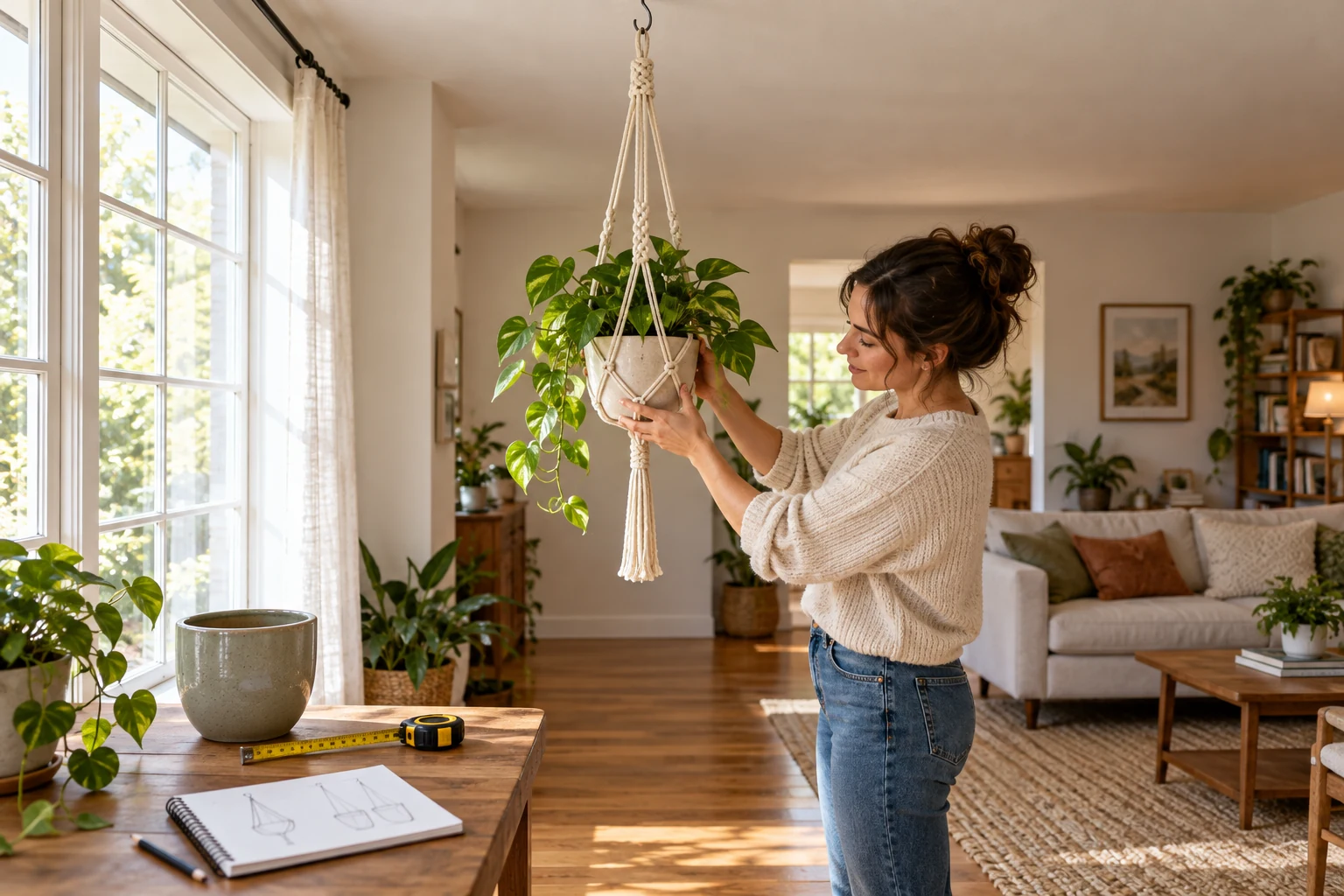
A macrame plant hanger can look ready to use straight from the package, but the first task is to match a real pot, a sound mounting point and a place where water can be managed. The rope cradle only supports a pot when its strands are arranged around that pot as intended. This tutorial walks from the unopened hanger to a careful first use without inventing a universal hook, ceiling anchor or load rating. If the mounting surface or hardware capacity is uncertain, stop and obtain instructions or qualified help before suspending a planted pot.
Choose the pot and site before the hook
Pick one present pot rather than an imagined future plant. Measure its widest body and base, note whether it has drainage holes, and weigh or conservatively estimate its mass after watering. A ceramic container filled with wet mix can be substantially heavier than the empty decorative pot shown in a gallery. Keep the saucer or cachepot arrangement in the measurement too. Do not assume that a hanger described for a certain pot diameter will support every pot of that width or every loaded weight.
Choose a proposed location with enough space below and around the plant. The hanging pot should not block a door, window, walkway, curtain or heating equipment. Allow room to reach the mix, lift the pot out, trim growth and clean a spill. A trailing plant may extend well beyond the pot, while the tassel may hang below it. Measure the full height from the suspension point to the lowest strand or leaf, then decide whether the floor or furniture beneath needs protection.
Check the plant's own light and temperature needs separately from the hanger. A photo near a sunny window shows a styling choice, not proof that a particular plant will thrive there. Look at direct sun, cold glass and airflow at the actual site. If the useful light is on the other side of the room, do not hang a plant in a dark corner simply because a hook happens to be available. The location must work for both the plant and the people who use the room.
Inspect the exact hanger and its instructions
The live LLToo macrame hanger listing advertises a six-pack. Its first inspected gallery graphic shows an off-white rope cradle, a metal ring, a pictured hook and length markings. Those are seller illustrations for the listed design, not a verified load test or proof that each advertised piece or hook is in the selected package. Confirm the exact variant, included hardware and maker's stated pot and load limits before use.
The live Wellsay macrame hanger listing presents a multi-hanger set. Its first inspected gallery shows reddish-pink rope designs with several different cradle shapes and decorative knots. That variety matters: each hanger in a set may hold a pot differently, and a styled gallery may not represent the selected color or every included item. Use the supplied instructions for the individual strand pattern you received rather than treating all braided hangers as interchangeable.
Unpack one hanger on a clean surface. Look for frayed load-bearing strands, damaged knots, a bent ring, missing parts or inconsistent lengths that make the cradle lopsided. Separate tangled strands gently without cutting or retying structural knots. If a product arrives damaged or its supplied directions are missing where they are needed to determine use, preserve the packaging and ask the seller. Decorative loose ends and the strands that carry the pot have different roles; do not trim a support strand for a neater appearance.
Read the hanger maker's instructions and the mounting hardware instructions together. The lower capacity controls the finished setup. A rope rating, if supplied, does not establish what a ceiling hook can hold; a hook rating does not establish that the surface behind it is sound. A gallery picture of a screw hook is not a specification for every wall, ceiling, beam or rental unit. Do not copy a generic installation recipe across plasterboard, masonry, timber and unknown structures.
Confirm the mounting point
Identify what structure would carry the hanger and how the approved hardware is attached to that structure. If you cannot verify the material, mounting method and loaded capacity, do not drill or hang the pot. Obtain the building or hardware maker's directions or a qualified installer. This article does not supply anchor sizes, drilling depths or a universal weight limit because those depend on the actual support and hardware. A surprising failure overhead can injure someone or damage the room.
Check any lease, building or household constraints before altering a ceiling or wall. A freestanding hanger support may be an alternative only if it has its own suitable instructions and capacity for the planted pot. Do not substitute a curtain rod, light fitting, shelf bracket or decorative nail merely because it is already in the right place. Keep children, pets and frequently used seating out of the fall zone while you assess the setup.
Once a suitable, rated mounting point is installed according to its instructions, inspect its position from the floor. Verify that the hanger can swing slightly without hitting glass, a wall, a fan or a person walking past. A pot that clears an obstacle when still may touch it when moved for watering. Plan a reachable height so the plant can be checked and removed without climbing onto unstable furniture. If the chosen height cannot meet both clearance and access, choose another site.
Seat an empty pot first
Lay the hanger open and identify the central cradle and the strands intended to run around the pot. Put an empty, unplanted pot of the intended size into the cradle while supporting its weight with your hands. Spread the strands evenly around the container according to the product's directions. Check that they rise at comparable angles and that the base sits inside the support rather than balancing on one knot. An irregular pot shape may need a different hanger even if its top diameter seems to match.
Lift the empty pot only a short distance above a safe surface, still keeping a hand underneath it. Watch whether it tilts, slides or pushes the strands toward the lip. If it does, lower it and adjust only in ways the maker allows. Do not tie new structural knots, add clips or shorten one strand as a quick correction. If the empty pot will not center reliably, do not try to solve the problem by adding wet soil and weight.
Use this dry test to check the drop length. Mark the distance from the approved hook to the pot base and to the lowest tassel. The hanger may stretch or settle somewhat under load, so preserve floor and furniture clearance rather than aiming for an exact tight fit. Also leave enough room above the plant to remove the pot without dragging leaves through the hook. Revisit the location if the usable height is smaller than the photo suggested.
The tiered plant stand compatibility guide checks each pot against a particular platform instead of trusting the advertised pot count. The transferable principle is a dry fit with the real pot and maintenance access. A suspended rope cradle has different mounting and movement risks from a floor rack, so its hardware and support must be established separately. A shelf's apparent stability does not validate a hook.
Add the planted pot and manage water
After the dry fit and mounting instructions are satisfied, place the planted pot in the cradle while supporting it from underneath. Check that the strands remain evenly positioned and that leaves are not trapped in knots. Let the hanger take the load gradually, observing the ring, hook, structure and pot alignment. If anything shifts, cracks, loosens or tilts unexpectedly, take the pot down. Do not leave an uncertain overhead load in place for later observation.
The plant saucer multipack guide measures trays against actual pots and surfaces. For a hanging pot, a suitable catch arrangement also has to fit within the rope cradle and remain secure while the pot is lifted. A tray can collect some drainage, but it does not make the hanger waterproof or eliminate the need to empty water. Never force an oversized saucer between strands just to protect the floor.
Decide how you will water and drain the plant before the first watering. Some pots may be easier to remove and water over a sink; others may be watered in place only if the maker's setup and the room allow spills to be caught and cleaned. Follow the plant's own care needs rather than watering to test the hanger. Keep water away from electrical items and inspect the floor or furniture beneath after drainage. A cloth rope that becomes wet may need cleaning and drying according to its care instructions.
Do not turn the hanger into a storage hook for tools, a second pot or decorations unless the manufacturer explicitly supports that arrangement. Added objects change the load and balance. Likewise, do not pull on a tassel to rotate the plant; support the pot itself, and move it only as the setup allows. If pets are attracted to dangling strands, consider another placement that removes access rather than relying on the plant to remain out of reach.
Keep the setup serviceable
After the first day, inspect the ring, hook, knots and pot alignment again. Then make a quick visual check whenever you water or move the plant. Plant growth, repotting and a wetter mix can change the loaded mass and swing clearance. A larger pot requires a fresh fit and capacity check; it does not inherit approval from the smaller container. Replace damaged rope or hardware according to the maker's directions rather than repairing a load-bearing strand by guesswork.
Keep the purchase page, selected variant and supplied instructions with a note of the actual pot used. This makes it easier to identify which hanger in a set is suitable when plants are moved. If two similar-looking ropes have different dimensions or limits, label them without altering the structural fibers. When a hanger is taken down, inspect it before reuse; a past successful suspension does not prove that worn knots or a new mounting point are safe.
The useful finish line is a real pot seated evenly in a sound, instruction-compliant support, with room to reach the plant and manage drainage. Measure the pot and drop, verify the mounting point, test the cradle empty, and observe the first loaded use. If the instructions or support facts remain unclear, leave the plant on a stable surface while you resolve them. A macrame hanger is a way to display a plant, not a substitute for structural hardware or plant care.