Home & Living
Tape measure storage after use and between jobs
Prepare an inactive cased tape measure for its next move, then choose and check the place where it will travel or stay.
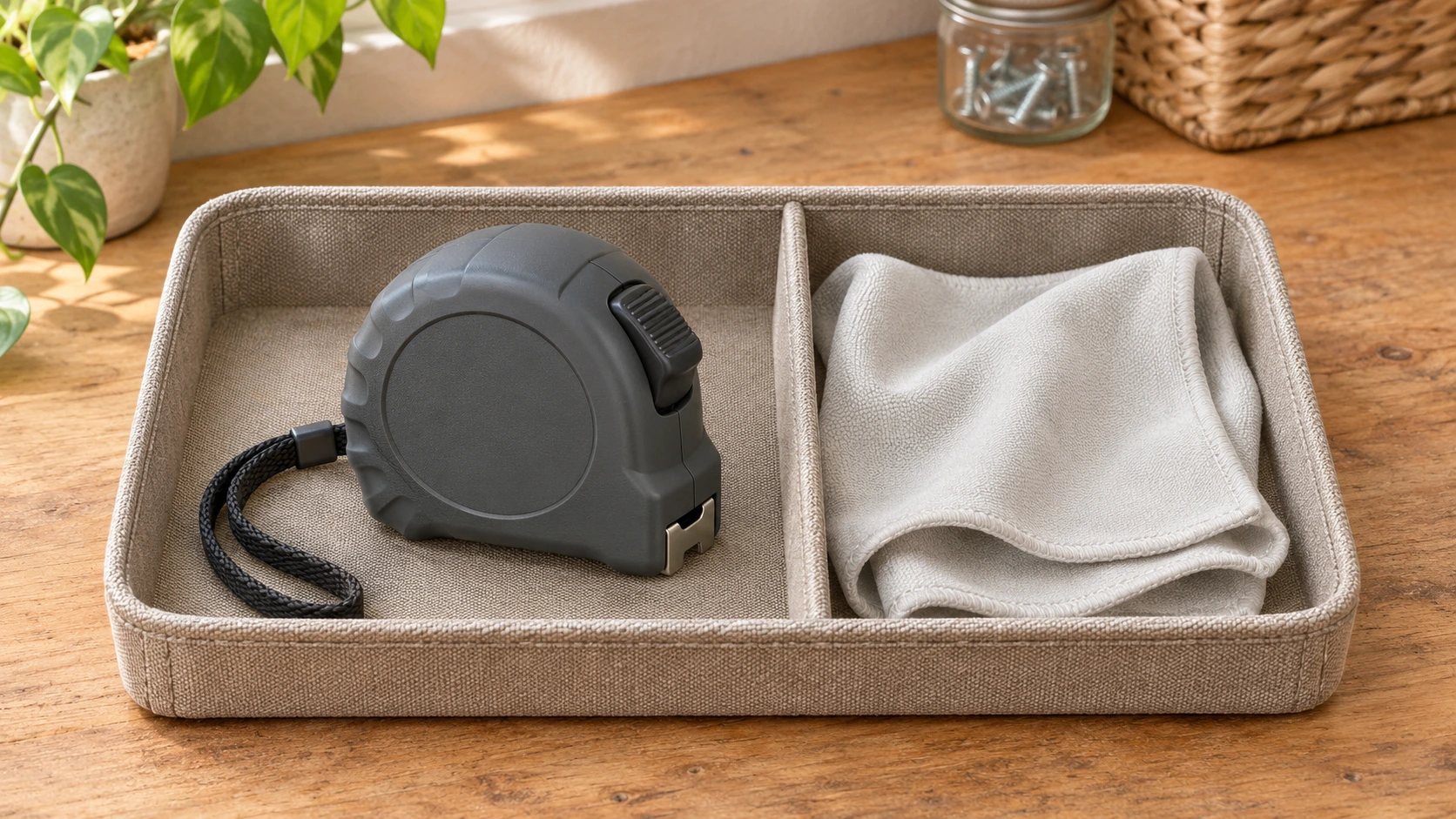
Tape measure storage starts before the tool reaches the drawer. Finish the current task, follow the directions for putting that exact tape into its inactive condition, and decide where the complete case will go. A tool left on a work surface still needs that decision. This guide follows the transition from finished work to a chosen storage or carrying place. Keep the blade contained while you assess that place, and leave any unresolved condition attached to the tool.
Identify the tool before putting it away
Begin with the tape actually in your hand. Keep its supplied instructions and identifying information available if you need to check how its controls work. A familiar-looking case does not settle which direction a lock moves or how the maker intends the blade to return. If you cannot identify the applicable directions, resolve that question before improvising with a control. The storage plan can wait while you establish the permitted handling.
Separate the tool's present state from the place you want it to occupy. Perhaps it has just finished a job on a table, while the bag that will carry it is elsewhere. Clear a place to complete the tool's own after-use routine before starting to pack other things around it. This avoids making the crowded bag the location where you first try to sort out an extended strip, an unfamiliar control or an unresolved condition.
U.S. Tape's general maintenance article advises controlling the blade's return instead of letting it whip into the case. It also recommends wiping the tape with a clean, lint-free cloth and keeping it dry. These are general maker-published care points. Establish the instructions that apply to your own tape before choosing a treatment or operating its controls.
The same article identifies bent or torn blades and damaged edges as replacement questions. Keep such findings visible when you put a tool aside. A storage compartment does not resolve damaged material. This guide supplies no blade replacement, casing-opening, hook adjustment or internal service procedure for either retail example.
Keep the retail examples attached to their own accounts
The STANLEY FatMax Next Generation tape listing describes a 5m/16ft tape with a 32mm blade. Its sole gallery shows a complete black-and-yellow cased tape, a graduated blade and an end hook. The native model field says FatMax Next Generation. No numeric maker model is established here, and the short account supplies no model-specific storage, cleaning or return procedure.
The DEWALT 26ft tape measure listing has one complete closed case in its sole gallery, visibly labeled DEWALT, TOUGH SERIES and 8m/26ft. Its native model-number field is empty. Small printed model text remains uncertain, so no exact regional model equivalence is asserted. The listing identifies a cased measuring tool, without establishing a particular operating or maintenance sequence.
Use those examples to keep an enquiry specific. If you are considering an offer, save its exact reference and ask about the information needed for that proposed tool. If you already own a tape, use the identity supplied with it. A photograph from a different offer does not become the missing instruction sheet for your existing equipment. Keep any seller clarification with the product reference it actually addresses.
Choose the place with the blade contained
Once the permitted after-use steps are complete, assess the available location using the whole inactive tool. You might choose a drawer compartment, an appropriate pocket in a tool bag or another designated place. Begin with what is actually available. A photograph of an appealing organizer cannot tell you whether your own case fits its opening, whether a closure can operate around it or what else will occupy that space.
Try the placement before adding the rest of the bag's contents. Set the case into the intended location with its contained blade and observe what contacts it. Can you place it without pressing on a control? Can you take it out by holding the case? Does another item need to be moved first? Answer those questions from the arrangement in front of you. If it requires an awkward packing maneuver, revise the location while the bag is still open.
Consider a simple packing example. Someone finishes a shelf-planning task at home and wants to carry the tape to another room. The proposed bag pocket already contains loose project items. Instead of balancing the case over them, the person empties that pocket, selects a dedicated location for the tape and puts the loose items elsewhere. The example proposes a packing decision. It establishes no tested protection rating, load capacity or compatibility for a particular bag.
Now check what will happen when the bag is closed. Follow the carrier's directions and see whether the closure can be completed without forcing the tool into position. An item that fits through an opening may still occupy the space needed by a flap or zip. Leave the arrangement open while you resolve a conflict. Choosing another compartment is a reasonable outcome when the proposed space does not accommodate the actual equipment and closure together.
Check the carrying arrangement before moving
A carrying place needs to work through the move you intend to make. With the tool inactive, consider how you will lift the carrier and where you will set it down. Use the carrier's handles and closures as its instructions require. Keep an unresolved attachment or fit question open. This guide provides no approval for a belt clip, tether, lanyard or improvised attachment, and it assigns no load limit to a pocket.
Revisit the packing example when the destination changes. Moving a case from a bench to a nearby drawer may call for a different arrangement from taking the same tool in a bag to another site. Decide which move is actually happening before choosing the location. Avoid giving a temporary resting spot the status of a travel arrangement merely because the tape happened to stay there during the previous task.
At the destination, choose where the carrier will stay while the tape is out of use. Keep access to the tool deliberate. If several people share the room, make its designated location understandable to the people who need it. A simple agreed place can be enough. The point is to complete the handoff from active work to stored equipment, with the tool's condition and any unanswered question still clear.
Make the next handoff understandable
Suppose the tool belongs to a shared household kit. One person finishes the current task, puts the inactive tape in the chosen compartment and tells the next person where it is. If that person noticed an unresolved condition, include it in the handoff instead of presenting the tool as ready. This is an ordinary coordination example. It makes no claim that a particular case, lock or storage product can prevent another person from using the equipment.
Keep the note proportionate to the issue. A message about an unidentified operating instruction can name the tool and the information still needed. A visible condition can be described without guessing which internal component caused it. Put any photographs or seller correspondence where the responsible person can find them. There is no need to build a complicated inventory system for a single tape if a clear location and a short explanation answer the actual handoff question.
The next use begins with the tape's own checks and instructions. Finding it in its designated compartment establishes where it was left. It does not establish its measurement performance or resolve a condition that was still open when it was stored. Keep those questions with the equipment and the person responsible for using it. This storage routine provides no calibration test, scale-reading lesson or permission to continue with a damaged tool.
Keep different tool questions separate
The published long-tape winding guide concerns external observations and stop-use decisions for manually wound open reels. That format has a winding problem of its own. It supplies no spring-return repair method for the cased tools considered here.
The published pruning-shear storage preparation guide keeps garden-tool care attached to applicable equipment and plant-health instructions. Its chemical, disease-hygiene and mechanical-service discussions remain specific to that task. None becomes a tape-cleaning recipe.
Return to the storage decision when an adjacent question appears. If the tape needs an applicable care instruction, obtain it. If the proposed bag location does not fit, change the arrangement. If a mechanical condition is unresolved, keep the tool aside through the appropriate process. Each answer changes what you can do next. Packing around an unanswered question would simply pass that question to the next person.
Keep an optional order tied to the selected tool
If you later consider ordering a cased tape measure at republeq.com and the actual checkout offers USDT or another cryptocurrency, keep the proposed item and the payment decision connected. Review the exact offer reference, selected variant and stated contents in the basket. Obtain an answer to an important identity or instruction question before committing to a tool whose supplied account you have not understood. A preferred payment method cannot identify a small printed model or establish how an existing tape should be stored. Read the total and any separate charges shown by the services involved. Check the asset, network and receiving information actually presented for the authorized transaction. This article verifies no live checkout availability, wallet address, exchange rate, fee, settlement time or financial protection. Follow the service's current transaction instructions. Never send wallet recovery phrases or private keys in a product enquiry. Read the delivery and return terms that apply before deciding whether the proposed order is acceptable. Retain the chosen reference, the seller's applicable clarification, the displayed terms and the resulting confirmation according to the service's instructions. If the selected item changes, check whether the earlier answer still concerns that item. An unanswered amendment request does not confirm an order change. Reconcile an uncertain payment through the authorized channel before considering another payment. Keep a later delivery discrepancy attached to its order record so the seller can identify the transaction involved. After delivery, compare the actual supplied identity and contents with that retained record and obtain the equipment directions that apply. A purchase confirmation records an order. It does not inspect the delivered case or establish a storage arrangement for it. Keep any unresolved condition of the old tool visible while you decide separately how that equipment will be handled.
Finish with a place you have checked
Tape measure storage is complete when the permitted after-use routine and the chosen placement have both been addressed. Leave the inactive case in the location you actually checked, with the contained blade and any remaining question clear to its next user. If the plan involves carrying it, complete the carrier's own packing and closure requirements before moving. Return the tool to that deliberate location after the next task, and reconsider the arrangement whenever the equipment or intended move changes.
A dedicated compartment keeps tape measure storage separate from other loose items.