Garden Care & Watering
Pruning shear cleaning before storage
Prepare a manual pruner for inactive storage with appropriate residue removal, disease-specific hygiene, complete drying and a protected place.
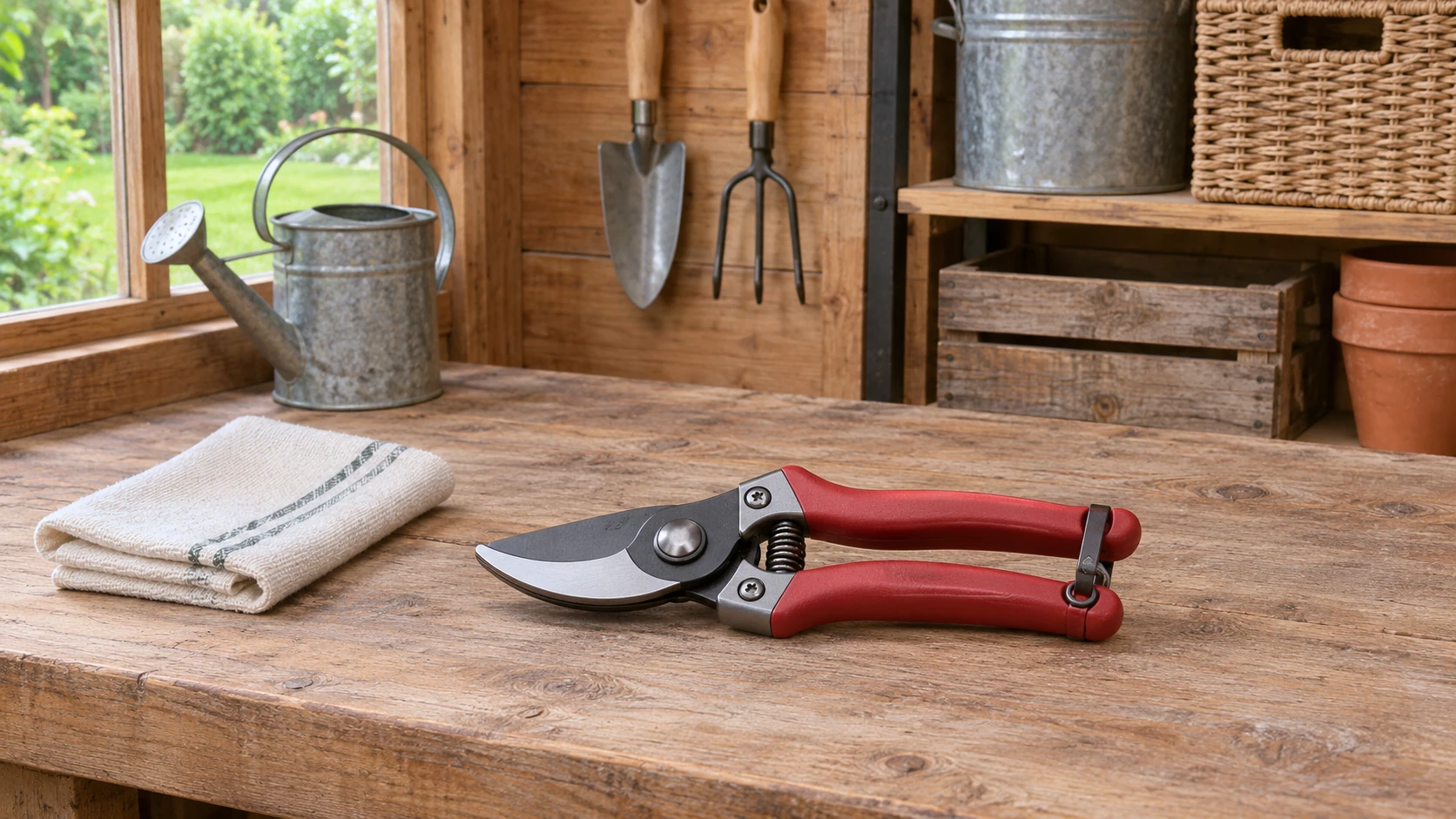
Remove residue before the long break
Pruning shear cleaning begins with the material left after use. The Royal Horticultural Society explains that plant sap attracts grime to cutting blades and can eventually make them stick. Before putting a pruner away for an inactive period, establish the cleaning directions that apply to its surfaces. A blade coating, cushioned handle and exposed metal pivot may need different treatment.
The RHS describes removing dried sap and wiping away the remaining cleaning spray, followed by attention to working parts and a clean, dry storage place. Its named abrasives, sprays and oils are guidance to assess against your equipment instructions. Check that match before choosing something from the cupboard. Keep fingers away from the cutting edges while following the tool's handling directions.
Finish the residue question before calling the pruner ready for storage. Look at the areas the applicable instructions tell you to clean, including places where material has accumulated. A remaining patch can require another permitted cleaning step. It does not establish that a stronger solvent, a wire brush or a mechanical adjustment is appropriate for your tool.
Keep plant disease hygiene separate
University of Minnesota Extension distinguishes visible cleaning from disinfection. Plant pathogens can travel in soil, debris and sap, while a clean-looking surface can still carry microorganisms. Its guidance includes cleaning tools before winter storage and after work on an infected plant before moving to another. Removing visible debris comes first because leftover material can interfere with disinfection.
For plant disease hygiene, identify the relevant plant problem and obtain suitable current guidance. Minnesota warns that disinfectants can produce harmful fumes or burn skin. Read the actual product label, use the protection it specifies and keep chemicals away from vulnerable people. Never mix disinfectants with other chemicals. A general gardening article cannot complete those label decisions for a particular bottle.
Minnesota also warns that bleach can corrode sharp cutting tools and that alcohol may be ineffective against fire blight on apple-pruning equipment. These limitations matter when choosing an approach. A familiar disinfectant name or an apparently clean blade cannot settle whether the method suits the pathogen, tool materials and intended use. Resolve that combination before treating the tool.
Retain the limits of orchard advice
The University of Missouri's orchard account discusses inspection, cleaning and disinfection before winter pruning. It describes loosening debris and drying washed blades, then compares several disinfectants. The setting matters. Advice about orchard pathogens belongs with the plants and treatment circumstances it addresses, even when the same hand tool also serves a home garden.
The captured Missouri article gives a bleach soaking period that differs from other guidance, while Minnesota cautions against bleach on sharp pruning equipment. Missouri also discusses flammable alcohol and warns that some household products have uncertain effectiveness against plant pathogens. Combining convenient lines from these accounts would create a procedure neither source supplied.
Use the comparison to identify a question for appropriate local plant-health guidance and the actual tool or chemical instructions. State the plant involved and the equipment you need to maintain. Keep any proposed method pending until its applicability is clear. There is no universal dilution or contact period here, and no claim that a household wipe has made the pruner disease-free.
Use the actual maker's service instructions
FELCO's maintenance FAQ provides a concrete maker-local example. It recommends a dry cloth after daily pruning and names particular rotating-handle models when discussing additional oiling. Its answer about a pruner left outside over winter includes dismantling and reassembly according to the instructions supplied with that pruner. Those conditions stay attached to the answer. The rotating-handle advice names FELCO 7, 10 and 12, keeping those model references with the daily task.
If you own a matching FELCO tool, establish the applicable reference before following its service directions. If your pruner comes from another maker, obtain that tool's own account. Similar-looking handles or a visible screw do not establish the same maintenance arrangement. The FAQ's discussion of an incorrectly fitted or damaged spring washer also shows why reassembly details deserve attention.
Keep routine cleaning and mechanical service distinguishable in the work you undertake. A permission to wipe a blade does not establish permission to remove a pivot, change blade clearance or replace a spring. If the matching instructions leave a service step unclear, seek the maker's explanation before doing it. This guide supplies no screw direction, sharpening angle or dismantling sequence for either retail example below.
Inspect condition before protecting the clean tool
Illinois Extension advises cleaning, drying and maintaining tools before seasonal storage. Its discussion of small hand tools includes removing sap and moisture and examining blades for cracks, nicks or burrs. Inspection can reveal a separate condition question while you prepare the pruner for its break. Cleaning away residue does not resolve a damaged edge.
The Illinois account also discusses replaceable blades and sharpening, including preserving a blade's bevel and avoiding power grinding stones. Keep that guidance within the actual tool's service requirements and your ability to do the work. A cleaning session need not become an improvised sharpening job because you notice a defect.
Once the permitted cleaning is complete and the tool is dry, follow its compatible protection directions. Illinois describes a light protective oil coating on metal. Check applicability to the actual blade, coating and handle materials before applying a product. Leave worn or damaged parts as an identified service issue until the correct replacement or repair has been established. Store the maintained equipment only after addressing its actual condition.
Choose dry tool storage
Chicago Botanic Garden brings the final decisions together. Its winter preparation account says cutting tools need cleaning, inspection, lubrication, adjustment and sharpening according to their manufacturers' instructions. Worn or damaged parts need replacement. That sequence can leave some work with the owner and some with an appropriate service, depending on the equipment and its condition.
For dry tool storage, choose an enclosed place protected from rain and snow. Chicago also recommends separation to prevent tools damaging one another and keeping metal tools away from garage-floor salt water brought in by cars. Consider the actual storage spot you have available after completing the tool's own closing and protection directions.
A dry tool can still be put somewhere unsuitable. Before leaving it for the season, check what shares that space and whether another object can contact its edge. Arrange small tools so they remain protected from inadvertent contact. The storage decision completes the preparation described here, while any unresolved equipment service or plant-health question remains attached to the relevant tool.
Read the two retail examples within their limits
The premium bypass pruning-shear offer shows a curved blade and supporting hook, exposed spring and green handles with black cushioned grips. Its catalog brand is Vivian, while gallery graphics and packaging display Snazzy Rabbit. That difference remains a question about the supplied identity. The generic description establishes no specific cleaning or coating-care procedure.
The Unbranded 1.104 anvil-pruner offer shows a broad opposing jaw, plate-like body and orange guarded handles. Its description names coated carbon steel, a one-hand lock and replaceable parts. These are native retail statements, without independent performance or material testing here. They provide no solvent approval, disassembly sequence or replacement instructions.
The tools differ structurally at the cutting head and handle assembly. Neither account makes the source examples above automatically applicable. Obtain the actual supplied model's maintenance instructions before treating its surfaces or servicing its mechanism. Pictured gloves, hands and plants are use scenes, while the first offer's blister is retail packaging. No separate reusable storage case or cleaning tool is established as supplied.
Keep adjacent tool questions in their own place
The published guide to identifying pruning-tool jaws explains the passing relationship of a bypass head and the meeting surface of an anvil head. It separates cutting principle, stated capacity and material recommendations. Use that explanation when the unfamiliar part is the tool's documented cutting arrangement. This storage guide adds no branch-selection lesson, cutting-capacity calculation or plant-pruning timetable.
The published sticky-scissors care guide concerns a household cutting complaint, model-specific cleaning answers and separate pivot permissions. Its fictional branches stop at the information actually established. That account supplies no garden-pruner solvent, disinfectant or adjustment setting. A household scissors answer remains attached to its named equipment.
For the task here, return to the manual pruner being put away and its completed preparation. You need appropriate residue removal, relevant plant-health hygiene, permitted material care and a protected storage place. An unfamiliar jaw design or an unresolved mechanical complaint can require its own instructions before the tool is ready. Keep those outstanding questions clear without turning this storage routine into either neighbouring article's framework.
Keep an optional purchase and its payment clear
If you later consider ordering a manual pruner at republeq.com and checkout offers USDT or another cryptocurrency, keep the exact proposed equipment in view while reviewing the transaction. Confirm the item reference, variant and stated supplied contents in the actual basket. Obtain an answer about an important identity or maintenance question before committing to goods you do not yet understand. A payment preference cannot establish which tool will arrive or which instructions apply to an old pruner. Read the current total and any separate charges displayed by the services involved. Check the payment method, supported asset and network information actually presented for the order. This article verifies no live checkout availability, receiving address, exchange rate, fee, settlement time or financial protection. Follow the authorized transaction instructions for the method you choose. Never provide wallet recovery phrases or private keys in a product enquiry. Review the current delivery and return terms before deciding whether the proposal is acceptable. Leave an essential unanswered question open while the responsible seller explains it. Retain the selected reference, the seller's clarification, displayed transaction terms and resulting confirmation according to the service's instructions. If the selected item changes, check whether the earlier clarification still covers it. An unanswered amendment request does not itself confirm an order change. When a payment's status is uncertain, reconcile it through the authorized channel before considering another payment. Keep any later delivery discrepancy connected to the retained order record so the seller can identify the transaction involved. A purchase confirmation records an order and supplies no inspection of the delivered blade, coating or locking mechanism. After delivery, compare the actual supplied identity and contents with that record and obtain the applicable equipment directions. An optional replacement order also leaves the old tool's unresolved maintenance question intact. Decide separately how that equipment will be handled or stored while you obtain the information it needs.