Tools & DIY
long tape measure not winding smoothly: check reel and strip
A visible, controlled check for a long tape that binds during rewind, with stop-use limits for damaged strip or reel.
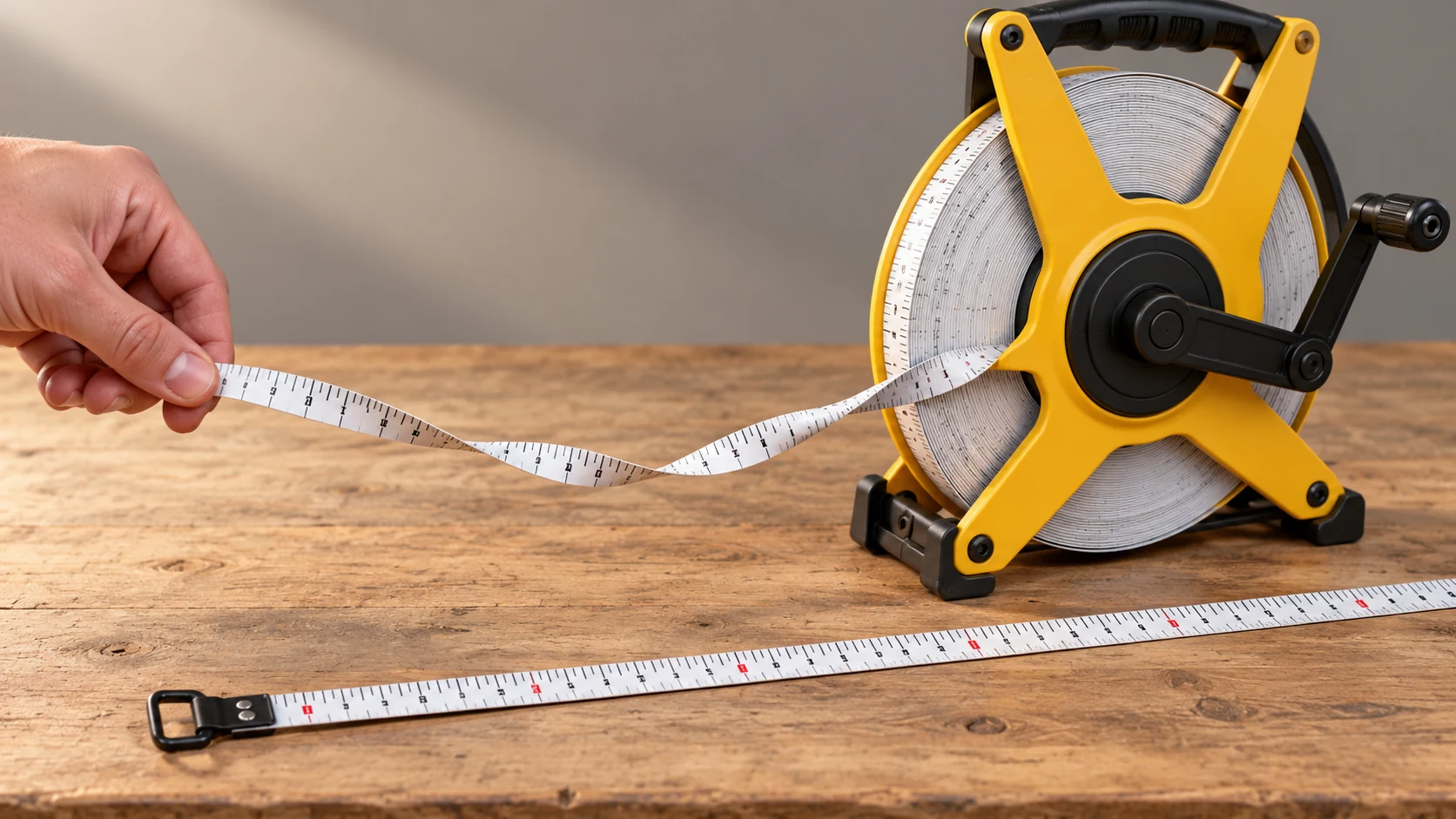
A long tape measure that will not wind smoothly can make a simple field measurement awkward. The handle may turn unevenly, the strip may climb one side of the reel, or the last length may refuse to settle. Before pulling harder, identify where the resistance starts. A visible twist in the strip calls for a different response from a reel that binds while the strip is straight. This guide is for a manually wound, open-reel long tape. It helps you decide what you can check from the outside and when to stop using the tool. It does not supply an internal repair procedure for a particular model.
Start with the point where winding changes
Set the reel down where you can control the loose strip and turn the handle slowly. Watch the strip as it approaches the reel. Does it arrive flat, or does one edge turn over? Does it wind evenly for a while and then catch at the same position? Does the crank resist even when the strip is slack? These observations locate the problem more reliably than a hard pull on the handle. Stop if the tape begins to kink, buckle, fray, or scrape against a damaged frame. A measurement tool with a damaged strip may also be hard to read, so continued winding is not the only concern.
Keep the strip under control while inspecting it. Long tapes can leave a large amount of loose material on the ground. Work in a clear area and avoid letting a second person crank while your hand is near the reel. If you cannot watch both the strip and the winding point safely, pause and get help. You need only enough exposed length to observe the fault. Pulling the whole tape out by default adds more strip to manage and can hide the location of a local snag.
Note the first position where the winding changes. A snag that appears only when a particular section reaches the reel suggests that the section or its path needs closer inspection. Resistance that begins immediately, before much strip moves, may point to the crank, reel, or a strip trapped near it. Neither pattern proves a specific internal defect. Use the observation to decide whether a visible, gentle correction is possible or whether the tool needs an owner-approved service route.
Check the strip before blaming the reel
Look along the exposed tape for a half twist, folded edge, or overlap. A long strip can approach the reel at an angle even when the free end appears straight. If it is merely twisted and undamaged, stop winding, release enough slack to let that section lie flat, and guide it back toward the reel without forcing the crank. Keep fingers away from the winding pinch point. If the strip remains curled, kinked, torn, or difficult to align, stop. Do not press a damaged section flat with the handle or assume that winding it tightly will restore its shape.
Look at the markings and edges as well. A crease across a numbered section can interfere with reading the measurement as well as storage. A frayed fiberglass edge or damaged metal strip deserves a stop-use decision even if the handle still turns. This guide cannot determine the tape's accuracy from appearance alone. If a measurement matters for a layout, check the tool under the manufacturer's instructions or use a sound alternative. Avoid publishing a precise measurement from a tape whose scale or reference end is no longer trustworthy.
The two native offers used here show why material and format matter to this check. The Hulugo surveyor tape measure listing describes a stainless steel measuring tape in 50 m and 100 m lengths and a compact reel with a carry handle. The two-piece 330 ft fiberglass tape measure listing describes open reels with feet-and-meter scales. Each page identifies a complete long measuring tape, but neither page gives a model-specific procedure for fixing a winding fault. Use the actual maker instructions for cleaning, drying, or servicing the tape you own.
Inspect the visible path into the reel
With the handle stopped, look at the opening or route where the strip enters the reel. A loose bit of grit or plant material may be visible on the strip or outer frame. You can remove loose surface debris without opening the tool, then try a slow turn to see whether the strip travels flat. Do not push a tool into a gap to reach hidden material. You could damage the scale, trap the strip, or put your hand in the winding path. If the obstruction is inaccessible from the outside, treat the condition as unresolved.
Look for a bent frame, a displaced guide, or a crank that touches another part as it turns. The goal is to observe, not to reshape the reel. If the frame appears damaged, stop winding before it marks or cuts the tape. A handle that catches with the strip loose is also a reason to stop rather than force a full rewind. The product pages describe a reel and handle, but they do not establish the internal parts or service methods of every unit sold under those listings.
If the tape is wet or dirty, separate the immediate winding question from care of the material. A wet strip can be harder to handle, and dirt can hide markings or an edge defect. Follow the instructions supplied with the exact tape for cleaning and drying. Do not apply a solvent, oil, or heat because a general article suggested it. Fiberglass and metal tape assemblies may use different coatings, markings, fasteners, and handles; the retail descriptions here do not approve one treatment for both. If you have no care instructions, avoid a treatment that could alter the scale or reel.
Try one controlled rewind, then decide
After clearing a visible twist or loose surface debris, make a short, slow rewind with the strip flat and under light control. Watch how the next section enters the reel. If winding becomes smooth and remains so through the affected section, note what you corrected. Then inspect the stored strip and the exposed end before relying on the tape for a new measurement. A successful short turn is useful evidence, but it does not prove that a damaged section elsewhere in the length has been repaired.
If the resistance returns at the same location, stop. Unwind only enough to see that location again, and compare it with the earlier observation. A crease, edge tear, or repeated misfeed deserves a different decision from a one-time loose twist. If the handle binds regardless of strip position, do not keep repeating the same forced test. Continued cranking could make the evidence harder to read and damage an otherwise usable section. Record the fault location, the condition of the strip, and the exact model or seller identity before contacting the maker or seller.
A tape that cannot be wound without force should be taken out of the current measuring job. Use another sound tool or postpone the measurement. If you need a replacement, verify length, unit markings, end fitting, reel format, and handling requirements from the actual offer and your worksite needs. A two-piece pack does not repair a failed single reel, and a longer nominal length is not automatically useful. The purchase question follows the failure diagnosis; it should not drive you to keep using a compromised tool.
Make the inspection repeatable
If the reel is used by a crew, leave a brief note before handing it over. State whether the tape caught while being drawn out, while being wound in, or at both times. Mention the approximate length exposed when it happened, but do not present that number as a calibrated fault location unless you checked the markings. Note any visible twist, crease, loose debris, or frame contact. A later user can reproduce a gentle external check from those details. Without them, each person may start at the handle and repeat the same forced winding attempt.
A short test is preferable to a long one because it keeps the suspect section in view. If the tape winds normally for the first few turns, do not race through the remaining length. Continue slowly enough to notice whether the strip changes angle or stacks against one side of the reel. Stop at the first repeat of the resistance. There is no benefit in winding a questionable section tightly into the center, where it becomes harder to inspect. If the tape must be left partly extended, keep it controlled and mark it out of service so no one treats it as a ready measuring tool.
Check the end fitting only from the outside. A loose or distorted end can affect where the strip travels as it approaches the reel and how the tape is used for a measurement. The listings identify measuring tapes but do not specify a field adjustment for their end fittings. Do not bend or replace a fitting based on this general guide. If the end or scale is visibly damaged, ask the maker about service or use a different tape. A smoothly turning handle would not resolve a damaged reference end.
Decide whether the tool is ready for another measurement
Rewinding and measurement quality are related but separate checks. The tape may store neatly after a twist is corrected while a section of printed scale remains hard to read. Before using it for a job, inspect the length you need, the starting reference, and the markings that will be read. Use the manufacturer's guidance for any accuracy check. If the job depends on a close dimension, do not infer accuracy from the fact that the reel turned freely. Choose another verified tool when the condition of the strip or end makes the reading uncertain.
Keep the comparison grounded in the actual tool. A stainless steel surveyor tape with a compact reel and a fiberglass open reel do not establish one universal cleaning or winding method. The listed lengths and construction help identify what is being examined; they do not prove that a specific brand has a brake, gear, tension spring, or replaceable blade. If your reel has a feature not described on its own product page, consult the supplied manual before using that feature to diagnose a fault. A general article should not supply a turning direction, lubricant, or disassembly step for an unverified mechanism.
For a future purchase, ask whether the tool's physical format fits the way it will be stored and carried as well as the measurement length. Confirm whether the quoted offer is a single reel or a pack, and check the units you read most often. Those are visible offer differences here: one listing is a surveyor reel offered in stated metric lengths, and the other is a two-piece open-reel pack described with feet-and-meter scales. Neither offer should be treated as a guaranteed cure for an unexplained winding problem. Diagnose and document the failed tool first, then choose a replacement on its own evidence.
Keep this decision separate from other tape guides
This is a winding and stop-use decision for a portable long reel. It differs from choosing who owns tapes for an event. The bulk measuring tape budget guide considers take-home supplies, reusable inventory, and actual workshop costs. That question does not tell you why a particular reel is binding. It also differs from attaching a fixed scale to a wall. The self adhesive measuring tape installation guide covers placement and repeatable readings from a stationary strip. An open reel has a handle, a moving strip, and a winding path to inspect.
When documenting the issue for a seller or maker, give the observations you can verify: the exact tape and length, whether the strip is straight when it binds, whether the handle turns with slack, and whether a visible section is creased or frayed. Photographs of the outer reel and the affected strip can help explain the condition if sharing them is practical. Avoid claiming a broken internal gear or a defective manufacturing batch from an external symptom. Those claims need evidence that an ordinary winding check does not provide.
The useful result is a clear limit on the next action. If a visible twist was released and the strip now feeds flat through a short controlled test, finish the rewind under the maker's handling directions and inspect the tape before use. If the strip or reel remains damaged, catches repeatedly, or requires force, stop using it and seek model-specific service or replacement. Keep the original observation with the tool so the next user does not mistake a partially wound tape for a resolved fault.