Writing & Documents
Step-free event route enquiry from entrance to room
Read the event directions, identify an unresolved route segment and prepare a focused question for the event organizer.
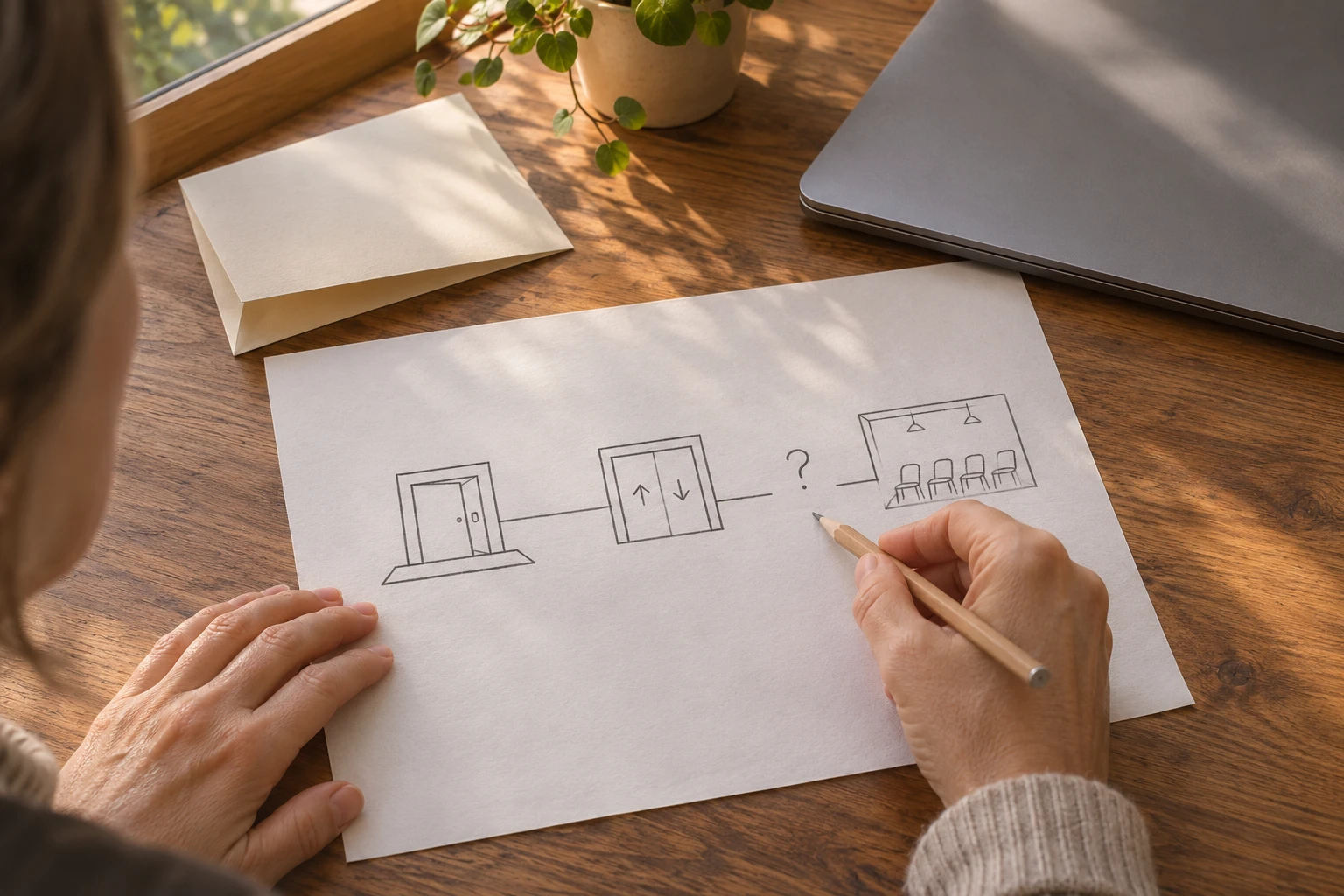
A Step-free event route enquiry can help you ask an organizer about the connection between the entrance described in an invitation and the room where an event will happen. Start with the journey you need explained. An entrance name, a room number and a mention of a lift may appear on different pages. Read them together, then identify the connection that remains unclear before preparing your question.
This tutorial uses a fictional evening talk at a library. Its imaginary invitation names a west entrance and an upstairs reading room, but leaves the route between them unexplained. The attendee wants to ask whether that entrance connects to the room through a step-free route during the talk. The example describes a writing exercise. Replace its invented details with the actual event information you have.
Identify the event and the question you need answered
Keep the event's current invitation or booking page beside your draft. Copy the event name, date and room exactly where they are stated. If an event series uses several buildings, check which location belongs to this occurrence. A familiar building photograph can belong to the series as a whole. Give the organizer enough context to recognize the particular session about which you are asking.
Write your starting point in ordinary language. You might need directions from a named drop-off area or from the entrance mentioned in the invitation. Choose the point that matters to your intended arrival. If the approach from a transport stop is also unclear, treat that as a separate part of the journey. Avoid silently assuming that directions beginning at the building door cover the route before it.
State the practical information you need in your own words. In the fictional example, the attendee needs a route from the west entrance to the upstairs reading room without using stairs. That gives the enquiry a clear purpose. It does not require the writer to describe every possible access arrangement at the venue. Add other questions when they matter to your own plans and the event's actual contact process.
Read the route as connected segments
On a spare sheet, put the arrival point, entrance and event room in order. Add a level change only if the published information establishes one. Write the source of each detail beside it in a rough note. The exercise should make the missing connection visible. A neat line on paper cannot establish that the real route exists or that any equipment will be operating when you arrive.
For the fictional talk, the rough note has three entries. The invitation says west entrance. The room description says upper reading room. A building page mentions a lift without relating it to that room. The unanswered part is the connection between those statements during the event. Keep that gap visible as a question. Drawing a continuous line through it would make the draft look more complete than its information allows.
Look at the dates and context of any directions you find. A page for a previous event may describe a different entrance or room. A general building map may leave out the arrangements for an evening session. Record which page you used and what it actually says. When two pages conflict, put that conflict into the enquiry instead of choosing the version that appears easiest to follow.
CU Boulder's Accessible In-Person Events guidance encourages organizers to share known accessibility information and directions that include accessible routes such as ramps and elevators. It also discusses communicating a last-minute venue change. Those are that university's planning recommendations. They provide context for asking about route information, while your actual organizer must explain the arrangements for the event you plan to attend.
Prepare a draft with the tools you already use
Use a sheet of paper, a note on your device or another writing method that works for you. Leave space beside the missing route segment for the answer. The point of this rough draft is to keep the location names and the question together while you edit. A stationery purchase is optional. This exercise contains no writing trial or recommendation based on measured pencil performance.
The native BAZIC Opal mechanical pencil listing describes a clear barrel, retractable tip, 0.7 mm lead and twelve extra leads. Its gallery shows OPAL 756 cards with separate lead containers marked 2B and 0.7 mm. The title gives 144-packs. The representative arrangement of several cards does not prove the total quantity delivered.
The native Big Horn 19898 pencil listing describes a carpenter-style mechanical pencil with a long marking nose and a sleeve incorporating a sharpener and pocket clip. The title names lead refills and 24 pieces, and the gallery shows a 24-piece display. Preserve those package details when reading the offer. No interchangeable refill fit or job-site performance is established here.
If you revise your paper draft, keep the unanswered part identifiable. Crossing out a mistaken room name should not also erase the question you still need answered. On a device, check that copied material belongs to the current event before adding it to your message. Keep the rough diagram simple enough that you can explain each mark. You are preparing words to send, so an elaborate floor plan is unnecessary.
Ask about the missing connection
Begin the message with the named event and the date. Follow with the starting point and destination that your question concerns. In the fictional example, those are the west entrance and the upper reading room. Using both names gives the organizer a specific route to explain. A broad question such as whether the building is accessible can leave you without the particular connection that prompted your enquiry.
Then describe the information you have already found in a short sentence. You could say that the invitation names the west entrance while the building page mentions a lift. Keep the wording close to what those pages actually establish. If you are unsure whether the lift serves the event room, ask that directly. Your draft should let the organizer see where their answer would complete the account.
A fictional draft might read, “Hello, I am asking about the evening talk in the upper reading room on Thursday. The invitation names the west entrance, and the building page mentions a lift. Could you describe the step-free route from that entrance to the talk room, including whether the lift will be available during this session? Please let me know where to find the current arrival directions.” Replace the event, time and location details before adapting it.
Read the question beside your rough route note. It should ask about the gap you identified. If you also need to know whom to contact on arrival, add that question plainly. Follow any request process stated for the event. This tutorial supplies no universal response deadline or disclosure requirement. Use the actual channel's instructions to decide what information to include and where to send it.
Read the answer against the route you asked about
When an organizer reply arrives, read it with the original question open. Check whether it identifies the same event and the same room. An answer that describes a different entrance may still be helpful, but you need to understand how the suggested route begins. Add the answer to your notes using the names the organizer supplied. Keep the original message available so you can refer to its wording.
In the fictional example, imagine the answer says to use the north entrance and take a lift to the reading room. The next question is how that entrance relates to the intended arrival point and whether the answer covers the event time. This imagined response is an editing example, with no claim about a real library. Ask a focused follow-up about any remaining connection instead of filling it from the drawing.
Separate a stated arrangement from an inference you made while reading. “The organizer named the north entrance” records an answer. “All entrances lead to the same lift” adds a conclusion that may need its own confirmation. Keep this distinction when you share directions with someone accompanying you. Passing along the actual wording makes it easier to notice which details remain unresolved before deciding what to do.
For a different venue message, the lost-property enquiry guide works through describing a remembered object and its last-certain location. This route exercise concerns connections the organizer can explain before an event. Refer to the relevant task when following up, and retain any actual enquiry reference supplied through the channel. A reply about a missing object would not answer your arrival question.
Keep the directions tied to the current event
If the event changes rooms or buildings, revisit the route question using the revised destination. Keep the earlier answer with its original context. A clear response about one reading room may leave a different room unexplained. State the change when contacting the organizer again so they can address the new arrangement. Record the answer you actually receive, including any condition or question they leave open.
The event entrance flower-stand guide considers how a decorative display occupies the doorway area during guest arrivals. That placement decision belongs to the event team. An attendee enquiry can ask where to go without taking responsibility for measuring clearances or redesigning the entrance. Keep the route description you receive separate from assumptions about how the room will be arranged.
Before using your notes, read the event name, arrival point, entrance and room together once more. Mark any connection for which you still need an answer. A Step-free event route enquiry is ready to send when it gives the organizer a specific journey and a clear information gap to address. Your attendance decision can then use the actual answer alongside your own requirements and the event's current information.
Review an optional stationery order separately
If preparing the message leads you to consider a stationery purchase on republeq.com, take a separate look at the exact offer. Read the pencil model, package quantity and positively included supplies before ordering. A single pictured pencil or a display carton can represent a larger offer. Compare the quantity with what you actually need for your own writing. This tutorial records no cart, checkout, payment or delivery. A cryptocurrency method, including USDT, is relevant only when the actual checkout offers it for your selected order. Read that checkout's asset and network instructions before proceeding. If the displayed details are unclear, use the merchant's actual support channel to ask about the order. Keep that conversation separate from the event enquiry so a purchase number cannot be mistaken for a venue reference. Review the displayed total, shipping information, taxes and applicable return terms while deciding whether to continue. Preserve any order confirmation and payment result you actually receive. An opened wallet or copied payment address does not establish a completed transaction. If the outcome remains uncertain, resolve it through the actual order process before attempting another payment. A payment confirmation concerns the stationery order and provides no evidence about the route to an event room. Save the event directions and the purchase receipt in contexts where you can recognize their different purposes later. You can finish the route question using writing tools you already have, and return to an optional order after the message is prepared. Record an abandoned checkout as abandoned, with no invented success or delivery date. The unanswered part of the event journey still needs the organizer's own information.