Home & Living
Shower filter cartridge compatibility for an exact housing match
Identify the exact shower filter housing and replacement part, compare the service components, and stop when the fit cannot be established.
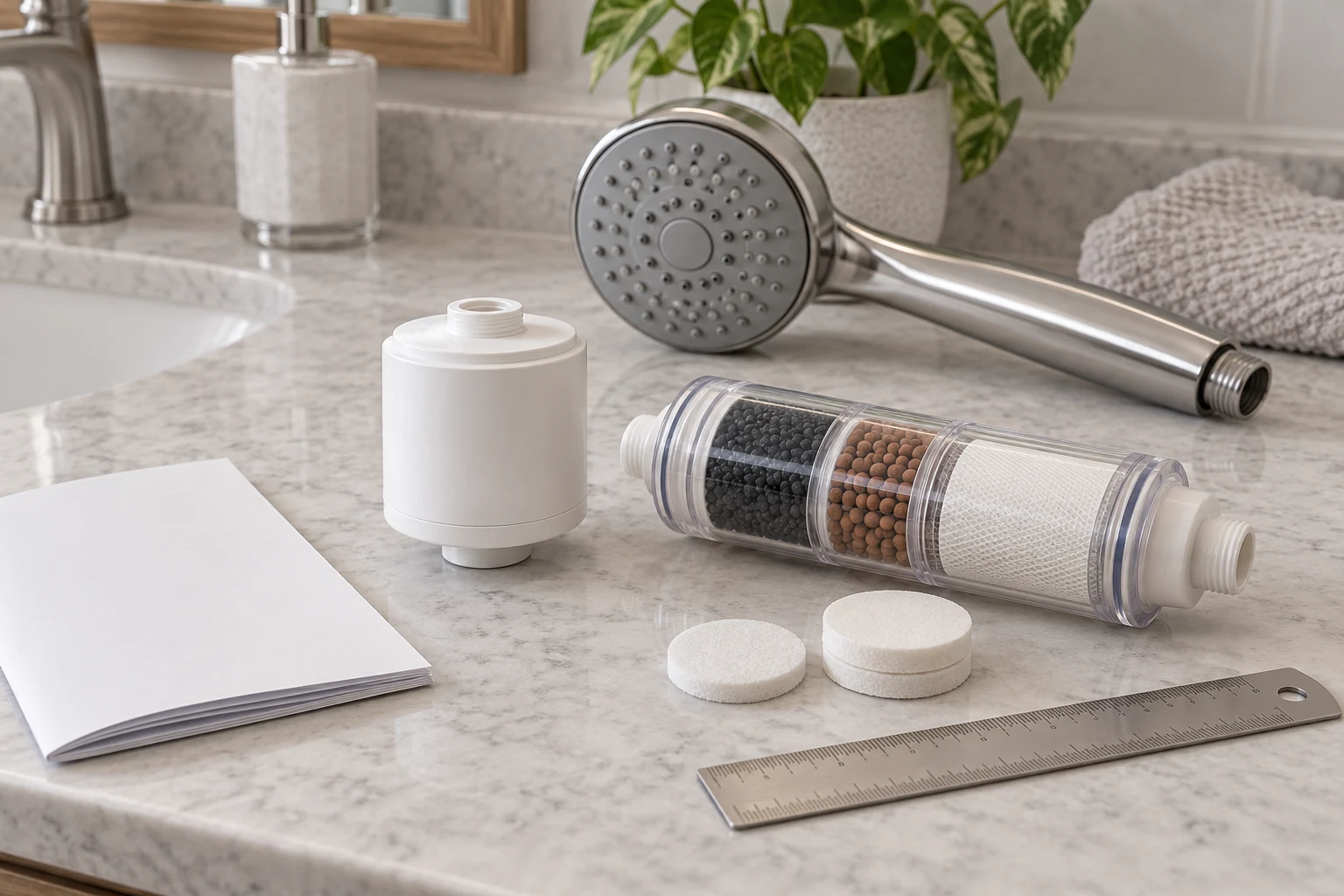
A shower filter cartridge match starts with the filter housing you actually own. A replacement can look cylindrical in a photo and still be the wrong length, connection or internal part for that shower assembly. Before buying, identify the shower head or filter model, the cartridge part number and the maker's replacement instructions. This guide is about that matching decision and a controlled owner-level swap. It does not promise a health result, water-pressure improvement or filtration performance from an item that merely resembles the old one.
Two native Product records show why the distinction matters. The two-filter shower-head replacement box is described as fitting a named INAVAMZ shower-head model. The separate L700-series shower-filter replacement set is described as a composite internal filter with two PP cotton prefilters. They are distinct physical replacement systems. The listings do not establish that one can fit the other housing, or that their treatment claims apply to every water supply.
Find the exact housing identity first
Look for a model number on the shower head, inline filter body, original box, order record or manual. Take a clear note of the characters, including any suffix. Do not rely on the shower head's general shape or finish; several products can use similar shells. If the filter is part of a combination shower head, identify that exact combination before selecting a refill. If a previous owner installed the assembly, ask for their order record or look up the manufacturer's support material using the unit's markings.
Write down the location of the replaceable part. Some systems put a small cartridge inside the handheld shower head; others have an inline canister with a different service path. The exact assembly controls how a cartridge is removed and sealed. Do not take apart a working pressurized connection just to compare with an online photograph. Read the owner instructions first and plan a time when the water can be turned off and the area can be dried. If the model remains uncertain, keep the purchase pending.
Once you have the housing model, look for the maker's replacement part reference and the current product's stated compatible models. Require a specific match, not a general phrase such as “for shower filters.” Check whether the offer includes the main cartridge, prefilters, seals or only one consumable. A multi-piece listing can be useful for one designed system and useless for another. Record what you expect to find in the package so you can inspect it before opening the shower assembly.
The L700-series listing separates a composite internal filter from two PP cotton prefilters. That description is a reason to follow its own sequence, not a template for every filter housing. If your assembly calls for a different number of layers, a different part shape or another service interval, use the instructions for your unit. The two-filter INAVAMZ-specific box points to a different named shower head. Similar words about water treatment do not bridge the physical compatibility gap.
Compare the cartridge without forcing a fit
If you have an old cartridge already removed according to the manual, compare its body, end shapes, sealing surfaces and any part marks with the replacement specification. A ruler can help describe size, but a close dimension is not proof of compatibility. Thread pitch, keyed tabs or a seal position may matter even when the outside diameter appears similar. Keep small gaskets in their original positions and do not substitute a loose household washer for an unidentified part. A replacement that needs force is not an acceptable fit test.
Inspect the new package before the water is off. Confirm the number of cartridges and prefilters, their labels and any instructions. If the contents differ from the current offer or your housing's required part, do not install the item just to see whether it works. Document the mismatch and use the seller's support path. A returned unopened incompatible cartridge is a smaller problem than a damaged housing or a leak. Do not combine pieces from two unrelated filter systems to make a set seem complete.
Read the exact replacement procedure, including any steps for relieving water pressure, orientation, flushing or checking leaks. Those steps differ by model. This article cannot safely substitute one generic installation sequence for an unknown housing. If the instructions are missing, request them from the maker or choose a qualified installer. Avoid using pliers on a plastic housing unless the maker expressly specifies a tool. A stuck part is a reason to stop rather than twist harder.
The handheld shower-head combo compatibility guide owns the larger assembly choice: how the head, hose and mounting arrangement fit together. This article owns the smaller service part inside a specific filter system. A shower head can attach successfully to the plumbing while still requiring a particular cartridge. Conversely, a correctly named cartridge cannot repair a mismatched hose connection or mount. Keep those two compatibility questions separate on the shopping list.
The shower-curtain accessory fit guide is another reminder that bathroom accessories use their own measurements and interfaces. Rings and hooks do not determine a filter cartridge's fit. It is linked for the general habit of matching a part to the actual host, not for plumbing instructions. Do not borrow a clearance or diameter from a curtain rod problem and apply it to a water-bearing component.
Use the maker's service sequence and observe the result
When the exact compatible part arrives, choose a time when a leak check is possible. Follow the housing maker's procedure for shutting off water, opening the intended owner-service compartment, replacing only the specified parts and resealing it. Keep the old part until the new assembly has been checked, unless the instructions say otherwise. Do not discard a special gasket because it seems expendable. If a part arrives damaged or the compartment cannot close normally, stop before restoring water pressure.
Restore water as directed and check the housing and nearby connections for leaks. Start with a short observation before returning the shower to ordinary use. A drip at the filter joint deserves immediate attention, even if the spray looks normal. Do not hide it with tape or tighten beyond the maker's procedure. If the joint remains wet, shut the water off and seek the correct seal or support. A physical fit is not confirmed merely because water comes through the shower head.
If the maker requires a flush after installing a cartridge, follow its instructions and record that it was done. Do not infer a fixed flush duration from another product. Water appearance immediately after service can be affected by a newly installed filter, the supply or work on nearby plumbing. If you see persistent unusual material, leaks or another concerning change, stop and ask the appropriate water or product professional. The source listings' broad reduction claims are not a substitute for testing local water or evaluating a health concern.
Keep the replacement date, exact part number and seller offer with the shower's manual. If the maker gives a service interval, use it as guidance while accounting for the unit's actual use and any observed issue, rather than silently adopting a period from another cartridge advertisement. A small label on the storage bag can prevent next season's spare from being confused with an unrelated filter. If multiple bathrooms have similar fixtures, mark which housing the spare belongs to.
Do not judge the new cartridge only by whether the spray feels strong. Water pressure and pattern depend on the shower head, supply and other components. A filter advertisement may claim little pressure change, but the current household result still needs observation, and a pressure symptom can have other causes. If flow changes sharply after a correct replacement, check the specified installation and contact the maker rather than removing internal media or drilling a passage. An altered cartridge is no longer the product described by its instructions.
Decide when the evidence is still incomplete
A purchase should wait if the housing has no readable identity, the maker's part reference cannot be found or the listing conflicts with the manual. Keep the exact photos and model notes, then ask the maker or seller a narrow question: “Does this part number fit this housing model?” That is easier to answer than “Will this filter fit my shower?” If support cannot establish the match, choose another verified route. Guessing from a broad product category turns uncertainty into a preventable failed installation.
Likewise, stop the swap if the housing is cracked, a seal is missing, the threads do not start by hand or the unit is installed in a way the owner instructions do not cover. Those are not ordinary compatibility checks to force through. Preserve the current condition and seek qualified help. A cartridge decision should never require changing plumbing connections beyond the authorized owner-service operation for the exact filter system.
After a successful replacement, store any unused cartridge in its original packaging under the conditions the maker specifies. Do not let a loose spare from one system migrate into another bathroom's supply bin. The next replacement will be easier if the housing model, part number, package contents and service result are together. That small record also helps distinguish a cartridge problem from a later head, hose or supply problem without repeating the whole search.
Keep the model evidence together after you buy, too. Save a photo of the housing label, the exact replacement listing and the package label in one folder. If the seller later changes the title of the offer, those records show which cartridge you actually selected. During the next service, check the same three identifiers again instead of assuming that a familiar product photo means the contents are identical. A household with two bathrooms may have one handheld filter and one inline unit, so label any stored spares by their intended housing. If a replacement arrives with different end fittings, a changed seal or an unfamiliar installation sheet, pause the work and ask the maker to confirm the revision for your exact model. This small recordkeeping step makes the next purchase faster while keeping an uncertain part away from a water-bearing joint.
The useful outcome is a replacement cartridge that is identified for the exact housing, installed by the right procedure and observed without a leak. The INAVAMZ-specific box and the L700-series set are examples of why “shower filter” is not a sufficient identity. Match the service part to its host first, then judge the household result honestly. If the match cannot be proved, leave the wrong cartridge unopened and move to a better-supported option.