Home & Living
Reuse votive candle holders across gatherings
Count the places that need a holder, test the same pieces in several settings, and store them carefully for another gathering.
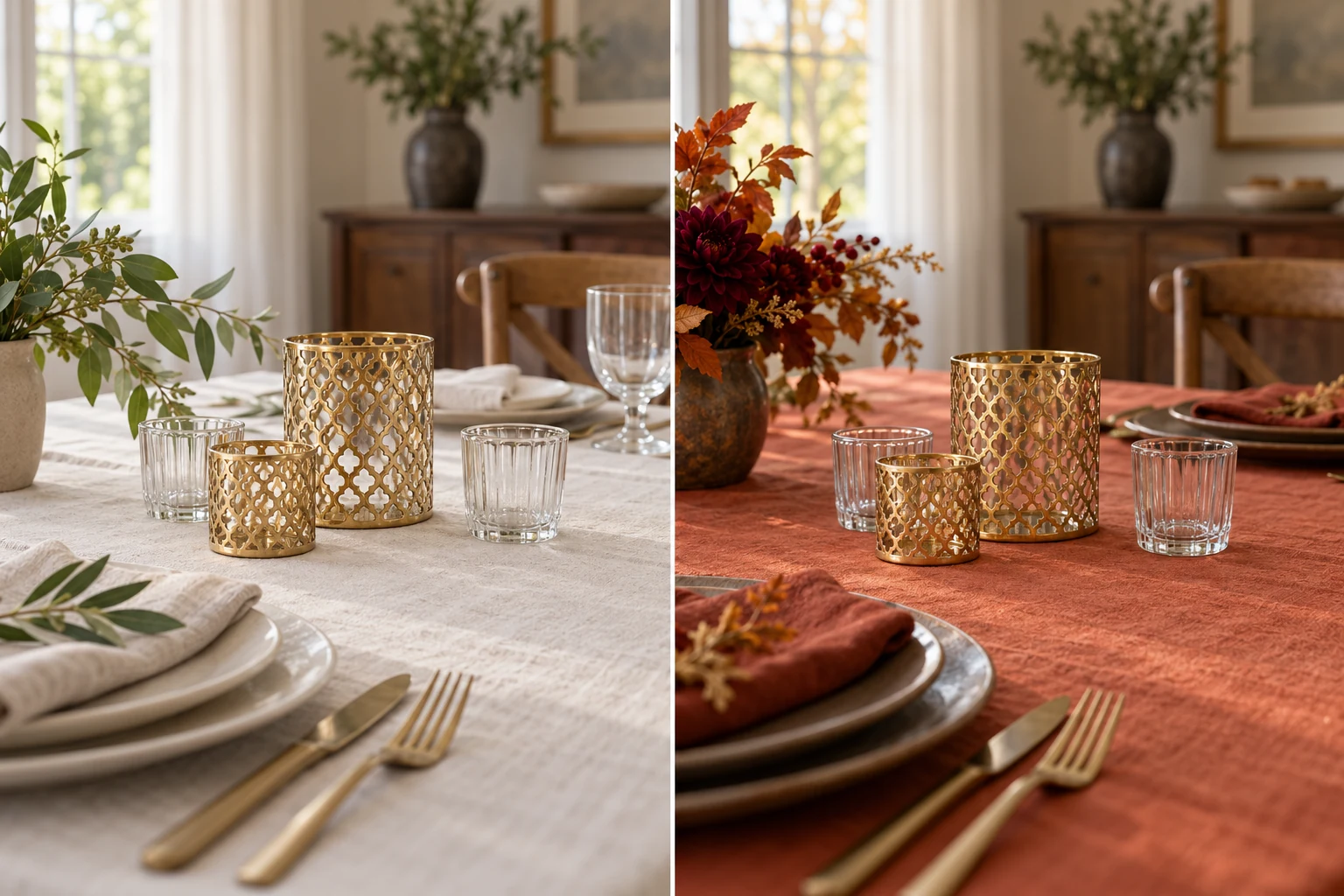
A box of candle holders can become a box of one-night decorations if every gathering gets its own color and shape. Before adding another set, count the places that actually need a holder and look at what is already on hand. Reuse votive candle holders across gatherings by changing the table setting around them rather than expecting the holders themselves to carry every theme. A clear glass set can recede into the background; a gold openwork set becomes a more noticeable accent. Neither look fits every table, and the two saved product pages do not establish that they take the same candle. Treat candle fit and safe use as separate checks for each holder.
Start with the number of places, not a package count
Sketch the next gathering's tables and shelves. Mark the places where a small holder would be visible and useful, then count those marks. Keep a separate count for pieces you already own. If six places need a holder and the cupboard contains eight sound ones, the plan may need no new holders at all. If a larger event is coming, consider whether the same group could be divided among several tables afterward. A bulk package is only useful if you have a plausible home for the unused pieces and enough room to store them without damage.
The Hidove votive holder set is listed as 24 pieces. Its gallery shows gold openwork holders with clear round accents. That is a conspicuous look on a bare table, so test one against your usual dishes and linens before deciding where the whole group should go. The product page describes wedding, party, and holiday uses, but it does not prove that every venue allows candles or that every candle size fits the holders. Confirm the actual holder dimensions and the event rules before making a placement plan.
The clear glass votive holder set is listed as 72 pieces. The image shows simple cylindrical glass cups; it is a representative view, not a count of every item in the carton. The listing states that candles are not included. A large number may suit a repeated room layout or several tables, but it can also leave many pieces unused. Compare the number on the page with your marked positions, then decide where the rest would be stored and whether a smaller existing collection would serve the same plan.
Choose a look that can move between settings
Put one holder on a trial place setting and change only the surrounding items. A plain runner, a colorful napkin, and a small plant can make the same clear cup feel different without a new holder. Try the gold openwork style in a similar test. Its decorative edge may already provide enough detail, while a patterned cloth behind it can make the table look crowded. This is a visual choice, not a claim that one product lasts longer or saves a fixed amount of money. The useful question is whether you would willingly put the same holder out again for the next occasion.
Check the view from a seated position as well as from above. A cluster that looks tidy in a flat photograph may block a conversation or leave little room for plates. Move the holders to the middle of the table, then remove any that do not add something visible. For a buffet, keep serving space clear before filling gaps with decoration. A holder that has no safe, useful place is not helping the setup, even if it came in a large set.
Use the same trial for the next occasion on your calendar. Put a different napkin or centerpiece beside the holder, then ask whether its color and height still make sense. The clear cups may blend in when the rest of the setting changes. The gold openwork pieces may become a deliberate accent, or they may draw more attention than you want. Save a picture of the layout that worked and one note about what felt crowded. Those records are more useful than a general promise that a holder matches every theme.
The candle holder centerpiece guide handles a different decision: whether a long centerpiece or movable stands fit a particular table footprint. Use that layout test if your table needs to leave room for shared dishes. Here the decision is whether a group of small holders can return for multiple occasions. Keep those two decisions separate; a reusable set still needs a sensible position on each table where it appears.
Check candle fit before making a repeat-use plan
Do not infer that a candle that sits in one illustrated holder is safe or suitable for another. The gold openwork product and the glass cups have different forms. Take one actual holder from each set and check its maker's candle size, material, and use directions. A holder's outside diameter is not the same as its usable opening. Check stability on the intended surface and allow the maker's required space around a flame. If the event venue restricts open flames, choose an approved lighting approach instead of treating a decorative holder as permission to use a candle.
For a rehearsal, place the holders without lighting anything. Walk the room along the route guests will use, and check that sleeves, tablecloths, paper decorations, and greenery will not brush against the planned positions. Keep holders away from heat-sensitive or flammable material according to the product and venue instructions. If a layout only works when a candle sits close to fabric or another decoration, change the layout. A photograph of a staged table is an appearance example, not a clearance rule for your room.
Make the test with the table at its real height and with the chairs in place. A holder that seems far from a napkin on an empty table may sit close to a sleeve when someone reaches for a serving plate. Check what happens when dishes arrive and when people stand up. If you cannot keep the holder stable and clear of ordinary movement, leave that position empty. The empty space may make the table easier to use, and it means one less piece to clean and pack afterward.
The autumn flameless candle shelf guide looks at an unlit display and access on a shelf. It can help when a venue or household prefers a flameless arrangement, but its candle examples do not establish fit inside either votive holder here. Measure and follow the separate products' instructions before combining them. A change in lighting method does not remove the need for a stable placement.
Plan the reset after the event
Repeat use depends on the work between gatherings. Before the event, decide who will collect the holders, where they will cool, and how the count will be checked. For a shared venue, label the storage container and make sure the holder collection does not get mixed with rented tableware. Count the pieces as they return rather than assuming the package count will still be there. If a piece is cracked, bent, unstable, or otherwise damaged, set it aside and follow the maker's care guidance; do not put it back into the next event's plan as though nothing happened.
Cleaning needs to follow the material and the actual product directions. A clear glass cup and an openwork decorative holder may call for different handling. Let any used holder cool completely. Do not scrape hard against a finish, apply heat, or put a component in a dishwasher merely because another candle holder tolerated it. If wax or residue makes a piece difficult to reuse, check the maker's method before cleaning it. A small amount of care can preserve the collection, while an untested shortcut can ruin the finish or leave the holder unsafe.
Store each piece so its edges are not pressed against another hard surface. The clear cups may need dividers or the original packing; the decorative gold pieces may need space that protects their openwork rims. Use whatever packing and care directions actually came with the products. Write the count and the location on the container. At the next gathering, you can compare that inventory with the placement sketch instead of buying from memory. This is a practical way to avoid duplicate purchases, though it does not prove a particular monetary saving.
Make the inventory easy for someone else to understand. A note such as “twelve clear cups on the dining table; four gold holders on the sideboard” is more useful than “candle things.” If you lend the collection, write down the number sent out and the date it should return. The note makes a later shortage visible before you plan the next room. It also helps you resist the urge to buy another full set when the missing pieces may simply be in a different cupboard.
Use a small trial before committing to a larger set
For a first event, lay out the holders you have and make a simple photograph from the entrance and from a seat. Remove any that disappear behind dishes or compete with the table's main object. If you are considering a new set, test one representative piece against the actual room, not only against a seller's image. Check its footprint, the finish, and how it looks when empty. A holder should still make sense when no candle is in it, because setup and cleanup both happen without a flame.
Keep the trial small enough to change easily. Move three holders among a table center, a sideboard, and a shelf while the room is being set up. Photograph each location from the normal walking route. If one spot gives the pieces a clear role without crowding food or people, mark it on the sketch. If none does, put the pieces back in storage rather than filling the room simply because they are available. A repeat-use plan should make the event easier to arrange, not create a requirement to display every piece in the carton.
Before committing to the larger count, think about the space between events. Measure the cupboard shelf or storage box you would use. Keep the proposed holder group together with dividers or packing suited to its material, and check whether the container can be moved without the pieces knocking against one another. If storage would be improvised each time, buying a larger set may create clutter despite a good-looking first event. The practical saving comes from using an appropriate collection repeatedly, not from acquiring more holders than the household can care for.
Write down the number used, the number left in storage, and any places where the holders were in the way. At the next gathering, change the surrounding cloth, flowers, or table position first. If that still gives the room a suitable look, the same collection has earned its space in storage. If the layout fails, the notes explain why and help you choose a more appropriate piece for a real gap. Reusing holders becomes easier when each new event starts with an inventory and a measured room plan instead of another package search.