Home & Living
arrange autumn flameless candles on a shelf
Test one indoor shelf layout before choosing a pumpkin-shaped accent or russet pillar, and keep everyday space and battery access clear.
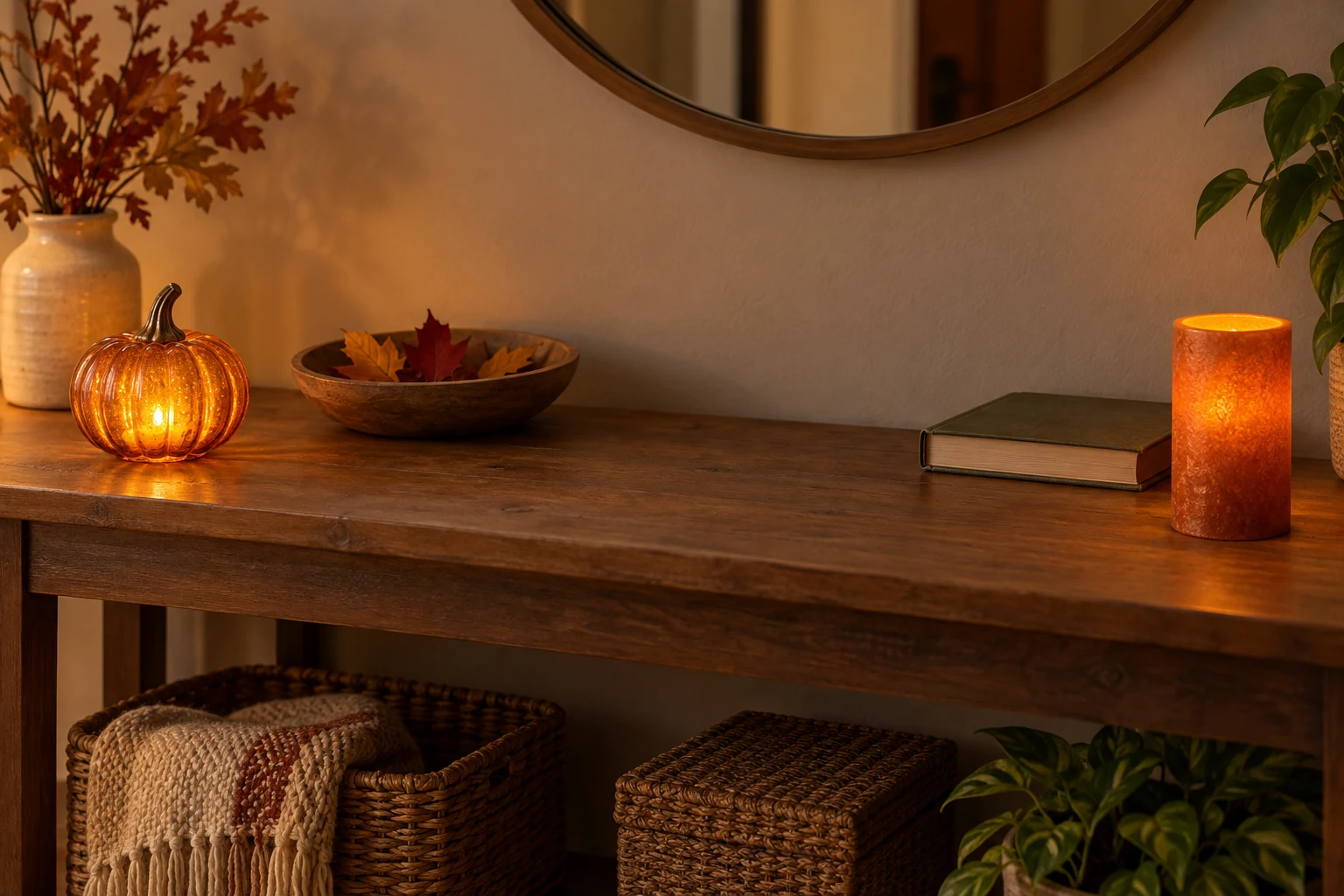
An autumn shelf can look crowded long before the season is over. A small light, a stack of books, a bowl, and a few branches all compete for the same visible space. If you want to arrange autumn flameless candles on a shelf, begin with the shelf rather than the shopping page. Decide where the display is seen from, how much clear surface remains for everyday use, and whether one light would already do the job. This guide focuses on an indoor shelf or mantel arrangement, not a window display or a candleholder centerpiece.
Give the shelf one seasonal role
Choose the reason for adding light. You may want a warm point of interest at the end of a hallway, a small fall accent near a reading chair, or a decorative corner that is visible from the dining room. Those are different viewing distances. A tiny accent that reads clearly up close can disappear across a room. A tall pillar can stand out from farther away but compete with framed pictures or a wall mirror. Make that viewing decision before selecting a shape.
Look at the shelf on an ordinary day. Note where keys, mail, books, or other objects actually land. Keep the portion needed for those habits open. If the shelf is narrow, test the display with a paper footprint or an object of similar size. Move through the room and look from the entry and seating positions. The best spot is not necessarily the geometric center; it is the place where the light is visible without turning the shelf into an obstacle course.
Decide whether the candle will be the only seasonal cue or part of a small group. One piece can be enough when its outline is distinctive. Several pieces can work when they have separate heights and a clear visual rhythm, but a second product is not required merely because a listing offers one. Use the space you already have, then add only what helps the intended view.
Compare a pumpkin accent with a straight pillar
The marmalade pumpkin flameless candle is described as an unscented paraffin-wax pumpkin-shaped accent with a flickering LED effect. Its listing says it uses two AA batteries, not included, and has a five-hour-on, nineteen-hour-off timer. The gallery photograph shows pumpkin-shaped lights on stands, but that styled scene does not establish how many units this exact offer includes or what stand comes in the box. Confirm the package contents before planning a multi-piece display.
The russet-orange flameless pillar is listed at three inches wide and six and a half inches high, with an unscented wax exterior and flickering LED light. Its description also specifies two AA batteries, not included, and a five-hour-on, nineteen-hour-off timer. Its gallery image labels the height and width on a single upright pillar. It is a different silhouette from the pumpkin accent, not evidence that the two products share a remote, base, or accessory system.
Both offers can supply a warm autumn color, but they solve different visual problems. A pumpkin shape makes the season obvious even when the light is off. A straight pillar supplies a simpler vertical line that can sit beside books or a framed object without adding another pumpkin motif. Choose by the outline your shelf needs. The listings do not establish which looks brighter in your room, so avoid ranking their light output from promotional photographs.
Measure the space you will actually use
Measure shelf depth and clear height, including the reach needed to switch the piece on, remove its battery compartment cover, or lift it without disturbing nearby objects. The pillar's listed three-inch width is a starting point for its own footprint, not a measure of any decorative tray or holder you might add. The pumpkin listing does not provide a reliable complete footprint in the text captured here. If that dimension matters, ask the seller or measure a comparable object before ordering.
Place the mock footprint away from the very front edge. A narrow ledge can turn a small decorative object into something easily bumped when a coat or bag passes. Check the shelf's own load and mounting instructions if it is floating or wall-mounted. The candle listing does not certify the shelf or a holder. Treat the arrangement as a combination of household objects that needs enough clearance, not as a single product with a guaranteed fit.
Use height deliberately. A pillar can create a vertical focal point; a pumpkin accent can read as a lower, wider seasonal form, although the exact offered pumpkin dimensions remain unverified here. Put a book or vase beside a trial object and view the grouping from the doorway. If the book title disappears or the candle is hidden behind foliage, move the objects before deciding to buy more. The purpose is a readable shelf, not an inventory of fall decorations.
Plan the timer around the room
A five-hour-on, nineteen-hour-off cycle means the light repeats from the time the timer is started, according to these two product descriptions. For a room used mainly in the evening, start the timer around the time people usually enter it. Then watch one ordinary day before deciding the start time is right. A timer is useful only when its active period matches the household's routine. It does not make a display maintenance-free.
Remote compatibility needs a separate check. The pumpkin listing describes compatible remotes as sold separately. The pillar description says it is compatible with remote controls but does not identify one included in the captured description. Do not count on one remote operating both products or assume either comes with a remote. If remote operation is important because the shelf is high or hard to reach, ask for the exact compatible remote and package contents before purchasing.
Both descriptions say two AA batteries are needed and are not included. Keep that requirement on the same note as the purchase, rather than discovering it when setting up for a gathering. A claimed runtime in a product description is not a promise for every battery brand or usage pattern. Check and replace batteries according to the product directions. If a display will be stored after the season, follow the manufacturer's instructions on battery removal and storage.
Make the arrangement easy to maintain
Leave room to pick up the object. A candle tucked behind a row of small ornaments can be awkward to switch off or service, and moving six items each time makes the display less likely to stay tidy. Put the item requiring battery access at the front or in an open gap. If the shelf is above shoulder height, consider whether the control can be reached safely from the floor. Do not rely on an unconfirmed remote to compensate for difficult access.
Keep the display away from water exposure and locations the product documentation does not support. The captured pillar offer presents indoor decorative use; the pumpkin is described for fall home decor. A flameless LED avoids an exposed burning wick, but its wax exterior and electronics still need the handling and placement described by the seller or manufacturer. Do not infer outdoor weather resistance from a seasonal marketing phrase or a styled product photograph.
Think about heat sources too. Wax-look or wax-bodied decorations should not be pressed against a hot appliance, a heating vent, or strong direct heat without explicit product instructions allowing it. A shelf over a radiator may be a poor location even if it is visually attractive. Read the item instructions when it arrives, and choose another shelf if the available surface conflicts with them. This is a placement decision, not a claim about a particular product's melting point.
Keep this display distinct from other holiday projects
A light shaped like a pumpkin is not the same project as cutting a real pumpkin. The Halloween pumpkin design guide helps plan a face before carving and organizing that activity. Here the decision is where an already-shaped LED accent belongs on an indoor shelf. If your household wants a carving afternoon, use that guide for the separate tools, surface, and design choices.
Likewise, a shelf arrangement is not a house-wide window pattern. The holiday window candle display guide maps rooms and repeating window lights. This article stays with one autumn shelf and the viewing distance, footprint, timer, and access decisions for it. A household can use both ideas, but a successful window plan does not tell you whether a pumpkin accent or an upright pillar belongs next to your everyday books.
Test one layout before buying more
Try three simple layouts with objects you already own. First, place a single mock candle with open space around it. Second, add one neutral object of a different height. Third, move the light to one side and leave the center clear for the shelf's everyday use. Take a quick photograph from the room's normal viewing point, not just a close-up. Compare how much of the display you can actually see and which arrangement leaves the useful shelf surface intact.
Ask another person in the household to use the room normally while the mock layout is in place. They may reach for a book, set down a bag, or open a cabinet door beside the shelf. Those actions reveal clearances that a still photograph misses. Shift the trial objects until the display can coexist with the routine. If the only workable location hides the light, a different decorative accent may serve the season better.
Make a small checklist for the product you prefer: exact offered quantity, dimensions needed for your shelf, battery type, timer, control method, and any holder or tray you plan to use. The captured descriptions support some of those details and leave others unresolved. Resolve missing package and size information with the seller rather than treating a styled scene as a packing list. If either candidate fails the shelf test, keep looking or use an object already at home.
When the item arrives, compare the actual shape, battery compartment, and contents with the listing before arranging the shelf. Start the timer at the intended hour and observe its first cycle. Check the view from the doorway again after dark; reflections and nearby lamps can change how the accent reads. If the light is hard to reach or blocks the shelf's usual purpose, move it. A seasonal display should be easy to live with for weeks, not just attractive for one photo.
To arrange autumn flameless candles on a shelf, choose a single visible role, measure the real surface, and make battery access part of the design. The pumpkin-shaped accent and russet pillar illustrate two silhouettes with similar listed timer patterns, but their photographs do not settle your room's fit or package contents. Let the shelf test decide whether you need one, the other, or neither.