Lighting
Holiday window candle display plan for real rooms
Plan a small battery-operated window-candle display around real sills, controls, batteries and household routines.
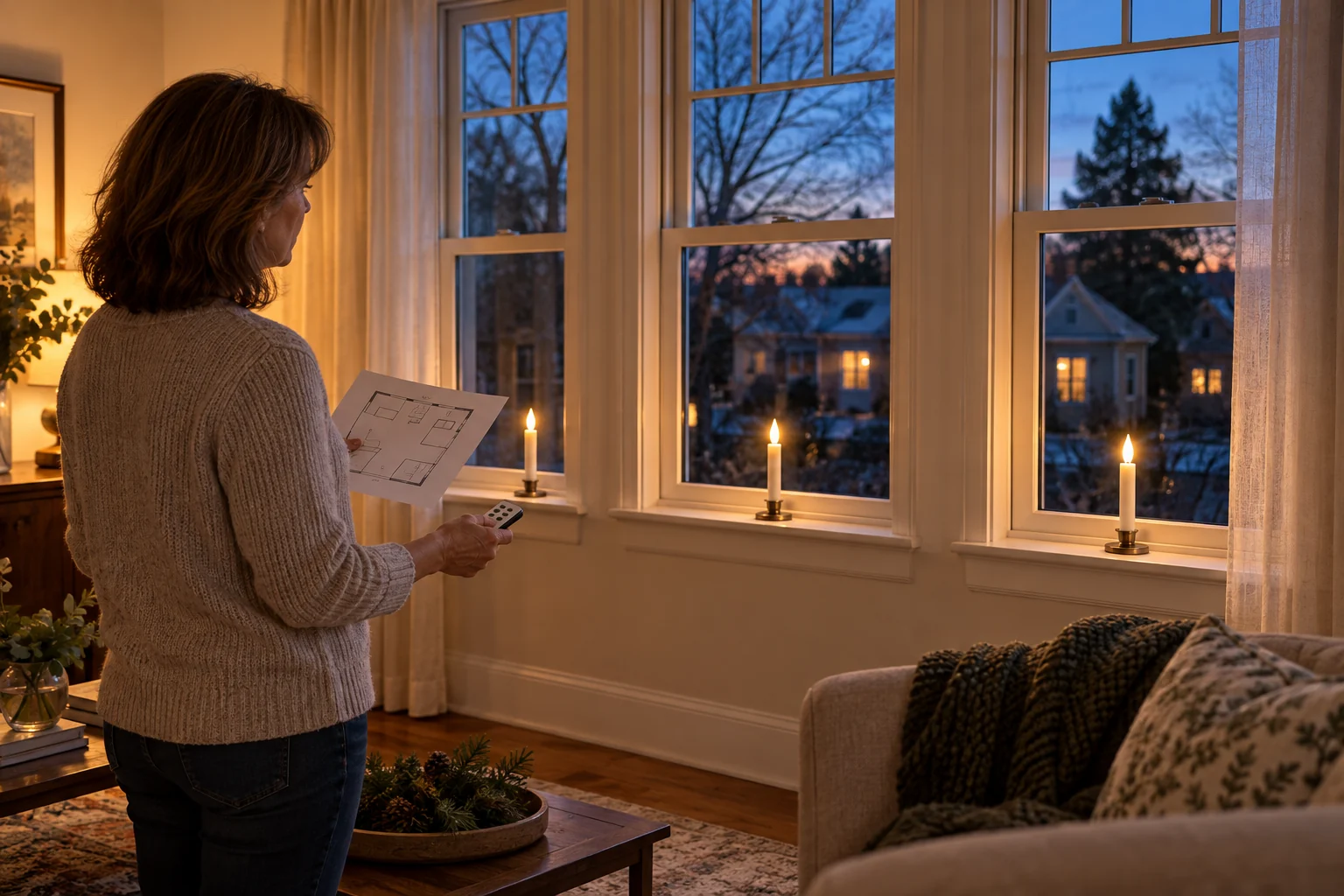
Battery-operated window candles can make a home feel welcoming during a holiday season, but a box of matching lights does not automatically make a workable display. One sill may be narrow, another may be opened every morning, and a third may sit behind curtains. A holiday window candle display plan starts with the actual windows and daily habits, then assigns candles, batteries, controls, and a simple schedule. The aim is a display the household can use and maintain without moving candles every time a window or shade is needed.
Map the windows before counting candles
Walk through the rooms in daylight and mark each window on a small sketch. Record the usable sill width and depth, whether the sash opens inward or needs hand access, and whether a curtain, blind, plant, or furniture piece occupies the same space. Look from the room and, where safely possible, from outside at the intended viewing angle. Do not place a candle on a narrow ledge just because it looks centered in a photograph. It needs a stable location under its product instructions and clear access for ordinary window use.
Choose a few visible windows first. A front-room cluster may make a stronger, easier-to-manage pattern than one candle in every available opening. If the household uses a window for ventilation, cleaning, or an emergency route, keep its normal function in the plan. Move a candle to another safe position instead of making the window harder to use. The display is seasonal; the room still needs to work on ordinary days.
Make a small placement note for each selected sill: proposed candle, base or holder, nearby curtain or blind, and who can reach it. Use the maker's placement directions and local household safety needs. “Flameless” means there is no burning wick; it does not certify that a loose candle is stable on any surface or that batteries may be left in a damaged unit. Keep the arrangement away from places where a pet, child, or moving shade can knock it over.
Check the actual set and its controls
The current ten-piece flameless candle listing describes battery-operated tapers, removable holders, remote control, and timer choices. Its public description names two AAA batteries per candle, but the delivered package and instructions should determine the exact battery type and whether batteries are included. Do not turn a seller's “long-lasting” phrase into a guaranteed season of operation. The practical question is how many complete, working units your chosen windows need.
A second window candle listing has conflicting pack language between its URL and current page title or description. Its text describes remote and timer functions, but the exact selected variant, remote count, holder style and battery requirements need confirmation. Do not use the URL's “2-pack” wording or the gallery image as a substitute for a verified package list. If a set is already owned, lay out the actual parts and write down what is present before assigning windows.
Test each delivered candle under its own instructions on a stable indoor surface before placing it on a sill. Match it with its holder and control if the set uses one. A working test answers a simple question: can this unit turn on and off as intended, and can the household reach it for battery changes? It does not prove a seller's battery-life claim or predict how a remote will perform through a wall. If a control fails, the public guide to window-candle remote first checks owns that troubleshooting path. This guide keeps the display plan moving with verified working units.
Assign a repeatable pattern across rooms
Place the first candle at one chosen window and step back. Is it visible where intended without blocking the latch, shade, or usual cleaning path? Repeat with the next window. If the bases have different shapes, note which unit belongs where. A balanced display need not be perfectly symmetrical when the windows differ. A slight shift within a safe usable sill may look more consistent from outside than placing every candle at the same measured distance from the glass.
Consider the room at night too. A candle visible outside may reflect strongly in the glass from inside. It may compete with a television or sit near a bedroom pillow where its flicker is unwelcome. Decide whether that room needs a steady mode, a shorter schedule, or no candle. Use only functions the delivered units actually provide. The product listing's mode menu is a claim about the listed variant, not a promise that every older candle in a mixed household set shares those controls.
If several people use the room, ask who will close shades, open windows, and replace batteries. A display requiring someone to move a candle twice a day will probably drift from its original plan. Mark a place for the base that leaves routine access intact. If the sill is unsuitable, choose another window or a nearby stable surface only if the maker permits it. Avoid improvised tape, glue, or wedges that may damage the finish or change how the holder supports the candle.
Choose one understandable lighting schedule
Pick the period when the display matters to the household, such as early evening to bedtime. Set each unit according to its actual instructions and observe one ordinary evening. If a timer repeats at a different time than expected, check that unit's manual and settings; do not assume all brands count time the same way. A paper note with the chosen room, mode, and approximate on/off period can prevent confusion when someone resets a candle after changing batteries.
A remote can simplify a group of windows, but it should not become a hidden dependency. Keep the control in a known place, and record which units it operates. If two sets use different remotes, label them or keep their controls with their room group. If the remote cannot reach a distant window from the usual position, do not make up a range from a product photograph. Use a reachable manual control if supported, or place that unit in another part of the plan.
Do not leave every candle on continuously just to avoid setting a timer. That may use batteries sooner and may put light in a room when nobody wants it. Nor should the plan claim a fixed runtime from a seller's promotional number. Actual battery condition, mode, schedule and device behavior affect how long a set lasts. Treat the first week as a practical observation period and adjust the schedule to what the household actually uses.
Prepare for the small maintenance jobs
Before installation, note the required battery type for each exact unit and obtain the number actually needed. The ten-piece listing's two-AAA statement is useful for that listed model, but a mixed set may differ. Follow polarity markings and battery-handling instructions. Do not mix new and used cells in a unit if its directions prohibit it, and stop using a candle with corrosion, heat, damage, or liquid in its compartment. The correct response to a fault is product guidance or replacement, not hiding a damaged unit behind a curtain.
Check the display during normal evening routines. Are all selected windows lit at the intended time? Has a holder shifted during cleaning? Does a curtain now brush against a candle? A brief look is enough. Do not climb or lean across furniture to fix a high or inaccessible unit in the dark. Move the display to windows that can be serviced safely. A seasonal decoration that needs awkward weekly access is better revised early than tolerated all winter.
Keep spare batteries, unused holders, and any second remote together in a labeled container outside the window area. This is current-season organization, not the after-season pack-away process. The public guide to after-holiday window-candle storage owns the later take-down and storage decision. For now, the household needs to know where a replacement battery or controller is when one candle goes dark on a busy evening.
Make the display easy to change
A guest may need the window open. A pet may discover the sill. The household may rearrange furniture. Write the plan so one candle can be removed or relocated without breaking the entire pattern. Use the original holder and keep its parts together. If moving a candle changes a timer start time or remote group, update the short room note. A flexible plan protects ordinary room use; it does not require preserving a perfect exterior pattern at all costs.
When a window is used for a holiday wreath, garland, or other decor, check the combined space rather than treating each decoration separately. A candle should not be squeezed behind fabric or beneath an object that makes its controls and battery compartment hard to reach. Also consider reflections: more decorative light does not always look better from outside. Step back at dusk and remove elements that clutter the view. That visual judgment belongs to the actual room, not to the seller gallery.
If the set arrived with an unclear count, missing holders, or a remote that does not match some units, resolve that before building the display around those pieces. Save the order details and package list. Do not redistribute an incomplete set and then blame a window when a base is missing. A smaller arrangement of complete, working candles is preferable to a larger one held together by guessed accessories.
If the display spans more than one floor, decide who checks each group and when. A candle in a room rarely entered after dusk can remain off until that room is used. A candle near a frequently opened window may need a different location. Keep the plan visible to the people who operate the rooms rather than assigning every light to one person who might be away. This makes the arrangement easier to adjust when guests or routines change.
Leave a usable note for the household
A one-page sketch is enough: windows used, candle or holder assigned, control location, battery type from the actual item, and chosen evening schedule. Add an exception where a window must stay clear. This makes it easier for someone else to turn off the display, change a battery, or remove a candle for cleaning. It also helps at the end of the season, when the pieces need to return to their set without a hunt across rooms.
A good holiday window candle display plan is modest and specific. It uses stable, reachable windows; confirms the actual parts and controls; picks a lighting period people want; and leaves normal windows usable. Start with a few tested candles, observe the real room at dusk, and expand only where the placement remains practical. The result is a seasonal routine the household can keep, not just a row of lights that looks tidy for one photograph.