Home Decor & Table Settings
candle holder centerpiece: one long piece or movable stands?
Compare a continuous branching candle holder with separate stands using a real table layout, while confirming the second listing’s conflicting package count.
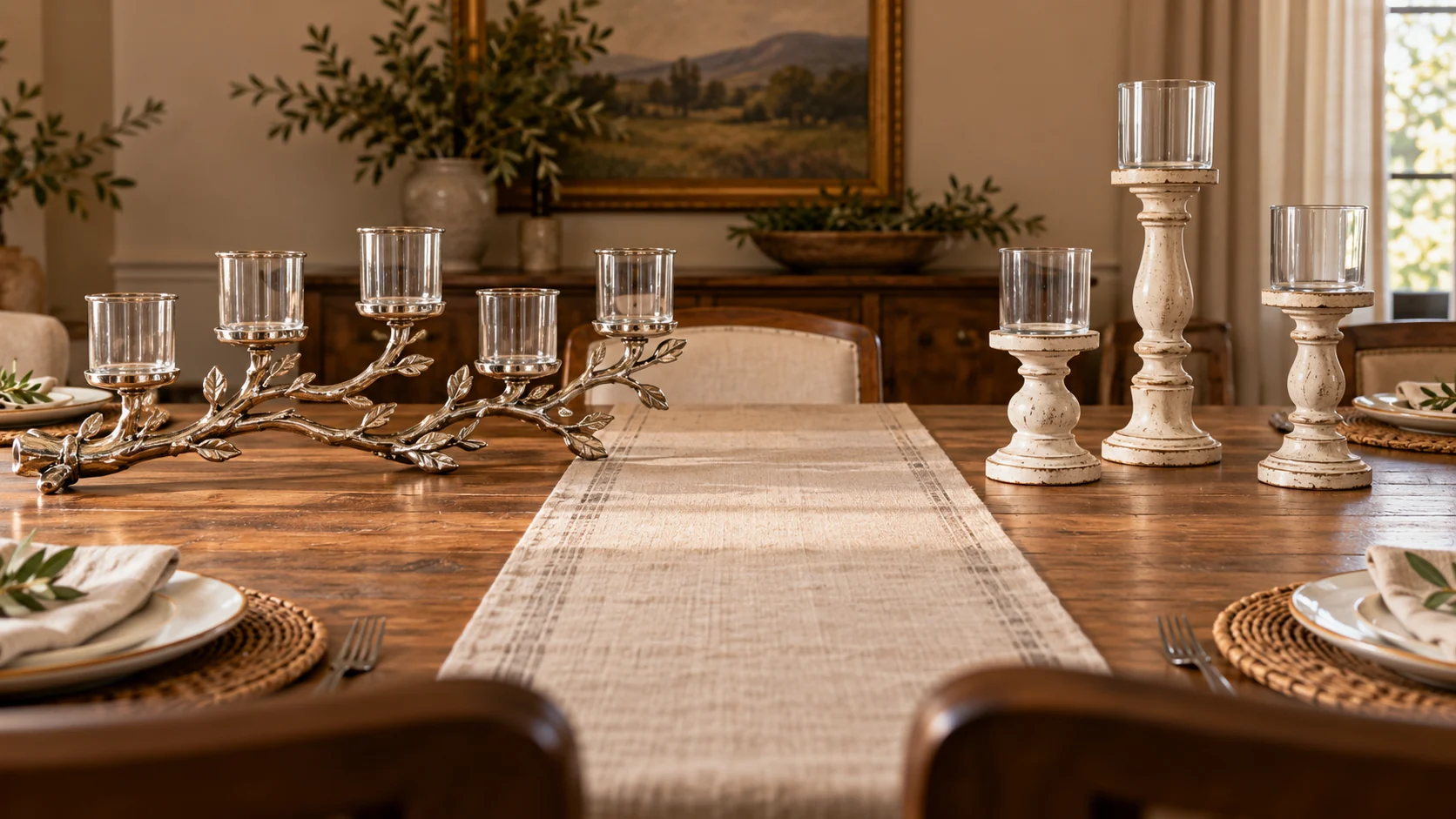
A candle holder centerpiece can make a dining table feel considered before anyone sits down. The harder part is choosing its footprint. A long branching piece asks for one continuous stretch of table. Separate stands can move around serving dishes and place settings. Both can look good in a room photograph; neither photograph tells you how much usable table remains during a meal.
Start with the table you actually use. Lay out the plates, glasses, shared dishes, and anything that stays in the middle. Then mark the space left for decoration. This simple rehearsal makes the decision more personal than a rule about how many objects a table should have. The relevant comparison is a Mercana Vine I branching holder, listed as a single metal-and-glass piece measuring 30 inches long, 12 inches wide, and 9 inches high, and a farmhouse-style wood pillar-holder listing with separate stands. Those are different ways to occupy the same tabletop, not substitutes with identical candle fittings or package counts.
Let the meal define the center
A table set for a quiet dinner has different demands from one with several bowls passed between guests. Put down the usual serving pieces before deciding where a decorative object belongs. If a platter needs to land in the middle, draw its outline on a sheet of paper or use an empty tray as a stand-in. Keep enough room around it for hands to reach in without pushing the display aside every time.
The Vine I listing gives a useful starting footprint: 30 by 12 inches. That is a product dimension, not a promise that every table of a particular size will suit it. Its curved branch shape may leave open patches within that rectangle, but the whole object still needs a place where it will not crowd glasses or plates. Treat the stated 9-inch height as another planning measurement. Sit in the chairs and look across the table with a cardboard shape at that height. Your actual view matters more than a styled image taken from above.
Separate stands offer a different kind of flexibility. They can occupy short stretches near either end of a runner, or leave a larger central gap for a serving dish. That does not mean they automatically consume less space: three bases and their spacing may spread farther than one compact piece. Put three small household objects on the table to see the effect before you buy. The product page calls the wooden offer a “set of 3” in its title, while part of its description refers to two holders. Confirm the actual included count with the seller rather than planning a three-part layout from that conflicting text.
Choose a visual rhythm you can live with
A continuous branch reads as one line. On a long table, that line can connect otherwise separate place settings and make the center feel intentional even when the cups are empty. The Vine I product page describes a distressed silver finish, metal-and-glass construction, and five candle positions. Those details support a silvery, branching look; they do not establish how its finish will look in your room's light. If the table already has a bold patterned runner or a dense floral arrangement, draw the outline on paper first. Too many competing shapes can make the middle feel busy.
Movable wooden stands create repeated points instead of one continuous shape. Repetition can be calm when the stands have breathing room; it can also feel crowded when every gap is filled with another object. Use the objects you already own to try several arrangements. One cluster toward the end of a long table may look better than evenly spaced stands. A smaller table might favor a single stand set off center. There is no obligation to use every piece in a package at once.
Think about the table without a holiday setting, too. A design that relies on a particular runner, flowers, or seasonal color may not feel right in everyday use. The silver branch can stand alone as a sculptural line; the antique-white stands can move to other surfaces. That is a styling possibility, not a guarantee that either item will suit every room. Photograph a mock layout in daylight and after dark with the room's ordinary lighting. The two views often reveal whether the objects feel balanced without relying on an online product photo.
Keep flowers, runners, and holders in separate plans
If flowers are part of the setting, count their containers separately from the candle holders. A proposed arrangement can look sparse on paper but turn crowded once the actual vases and bases are present. The related guide on holiday flower display quantities explains why display ideas and physical holder counts belong on different lines of a plan. Apply the same idea here: write down the number of vase bases, candle-holder bases, serving dishes, and place settings. Then check the actual tabletop footprint of each.
A runner changes the composition but does not create extra width. It can visually connect separate stands, while a branching holder may cover much of its pattern. Before buying a runner for the display, measure the table and decide how much cloth you want visible at each end. The guide to Christmas table runner length for a shared meal covers that separate length decision. This article owns the holder arrangement; the runner guide owns runner dimensions and overhang.
Try a full dry run with ordinary objects. Use books or folded cardboard for approximate base footprints, a vase for flowers, and the dishes you expect to serve. The mock-up need not resemble the finished room. Its job is to expose collisions: a serving bowl has nowhere to land, a stand blocks a guest's line of sight, or a branch reaches into the space needed for glasses. Move the placeholders until the meal works. Only then decide whether the decorative rhythm is worth keeping.
Include the people who use the table in that test. Someone seated at the end may see a branching outline differently from someone along the side. A host who carries serving dishes from the kitchen may need a clear landing place that a photograph never shows. Ask one person to sit while another moves an empty serving bowl through the normal route. If the arrangement asks people to lean over it or move it aside, shift the placeholders. This is a practical judgment about your own space; it does not require the seller to claim a universal table size.
Read listings as measurements, not complete styling instructions
The Mercana page supplies overall dimensions and says the piece arrives preassembled. It does not give enough in the captured description to treat every candle size, cup detail, or table placement as universally settled. The wooden listing describes pine wood with iron cups and mentions pillar candles, but its title and description disagree about the number of pieces. Neither listing proves the fit of candles you already own. Check current product specifications and the physical items before relying on any particular candle arrangement. This guide is about the empty holders as table objects, not flame use or a safety certification.
Do not let a photograph quietly expand the package. Styling pictures may show candles, greenery, or other decor that is not included. Make a short inventory: holder or holders, any supplied cups, and any extras explicitly confirmed by the seller. If the listing leaves a count or fitting uncertain, keep that line open. You can still decide whether a one-piece or modular layout better fits your table without pretending the missing detail is known.
Dimensions also need a real location. A 30-inch object may leave ample room on one table and dominate another with the same advertised length because the second table has wider place settings or more shared dishes. Paper footprints and a seated-eye view are cheap tests. They turn vague inspiration into a choice about the space people will actually use.
When you compare the two offers, write down what each source actually confirms. The branching holder has one stated overall size and five pictured glass cups. The farmhouse page presents a set of individual stands but contains that unresolved quantity conflict. A photograph can help you imagine texture and shape; it cannot settle missing dimensions or package contents. Keeping these observations separate prevents a pleasant room scene from becoming an unsupported specification. It also keeps the purchase decision reversible: if the count or fitting matters to your arrangement, ask for the exact current product detail before ordering, or choose a layout that does not depend on it.
Make the arrangement easy to change
If the table has to switch quickly between meals, homework, and games, the time it takes to clear the middle matters. A single long piece moves in one action, provided you have an appropriate place to set it down. Several smaller stands can move individually, letting you keep one and clear the rest. Neither pattern is universally more convenient. Consider where the objects will go when the table needs its full surface.
For a fixed decorative table, the question may be different: which arrangement still looks complete when it is not surrounded by a full dinner setting? Try the branch alone, then try two or three stand-ins for separate holders. Leave them in place for a day. Walk through the room and look from the doorway, the kitchen, and the chairs. A display that works only from one camera angle may not be the one you want to live with.
It also helps to decide what the arrangement is supposed to do emotionally. If you want the table to feel quieter, leave more open surface than you first planned and let one shape carry the scene. If you want a layered look, use a few repeated pieces with visible gaps rather than filling every inch. These are preferences, not rules or product performance claims. The aim is to make the dining table feel like part of your home while leaving it ready for the things you actually do there.
Choose the long holder when its measured footprint fits your normal meal and you want one clear visual line. Choose separate stands when moving the parts around real dishes is more valuable to you, after confirming the package count. If neither dry run leaves a comfortable serving area, use fewer objects or keep the center clear. A good candle holder centerpiece should support the table's purpose, not require everyone to work around it.