Cleaning & Vacuums
pressure washer surface cleaner compatibility: fit and control
A practical purchase screen for a pressure-washer surface-cleaner arrangement, from its connection and control chain to site access and supplied contents.
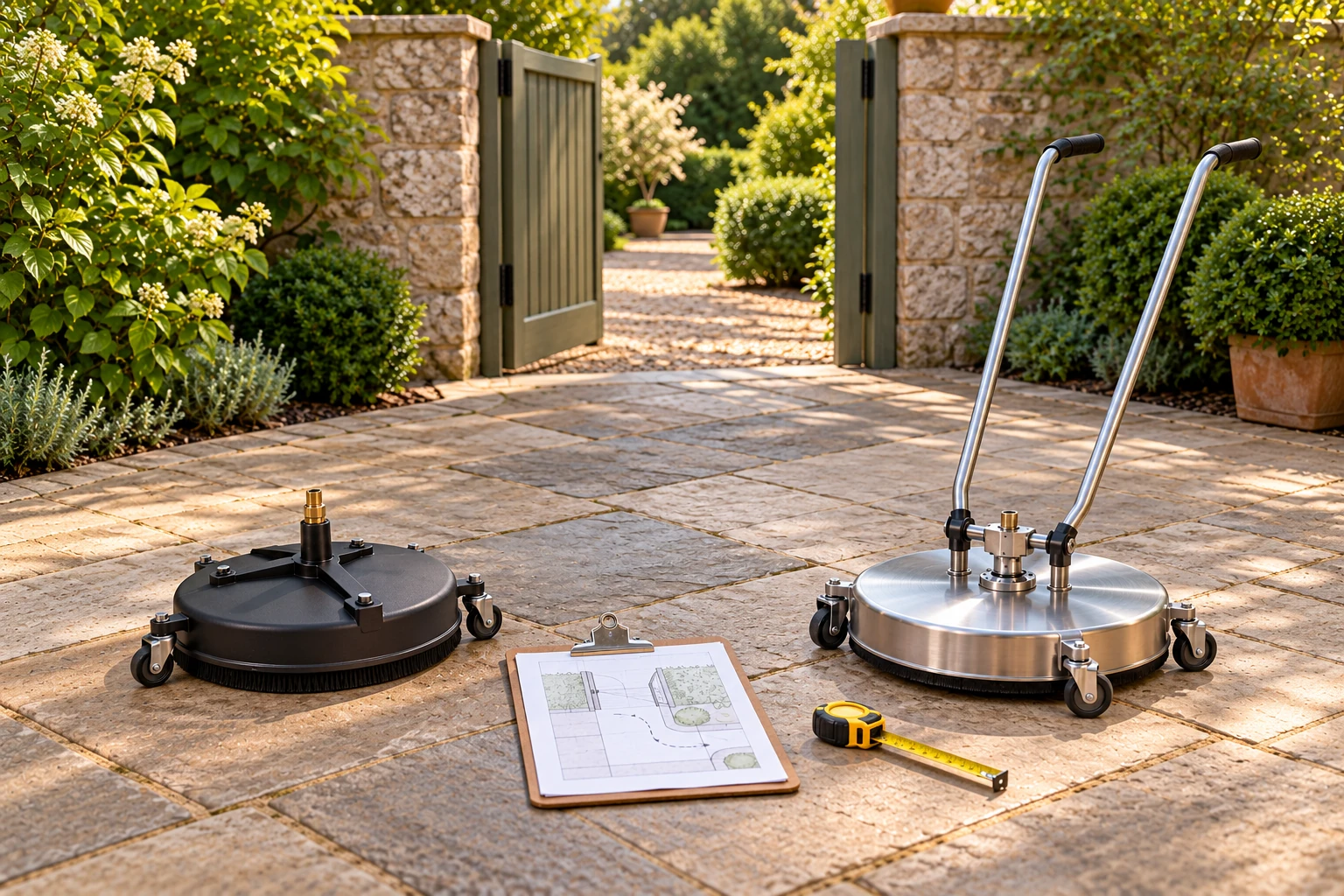
Check pressure washer surface cleaner compatibility as a complete attachment decision. The connection to the washer, the place where you control the water and the space needed to move the cleaner all matter. A head that appears to fit the end of a wand is a different proposal from a wheeled assembly with its own handles and trigger. Start by deciding what equipment will remain in the arrangement. Then establish the actual interfaces, supported operating conditions and physical access for that complete arrangement. This guide prepares that purchase decision; it does not supply a connection or live operating procedure.
Compare two attachment architectures
Forney 75171’s native account describes a 16-inch head with a 1/4-inch male quick-connect plug; its gallery establishes no supplied wand or gun. The matching manufacturer page specifies cold-water use and distinguishes ideal from maximum pressure labels. This guide selects neither label as operating approval.
The VEVOR SL15-FT90153 account shows a wheeled cleaner with two handles, a mounted trigger gun and a short connecting hose. Its nine images also show installation provisions. No washer power unit or long supply hose is established as supplied. The native inlet wording, “3/8-inch quick-connect female plug,” leaves the exact mating interface to confirm. Its stated cleaning width does not establish the complete outside envelope across the projecting wheels.
Draw the proposed equipment in the order you intend to connect it. Mark every component as already owned, included with the exact offer or still to be obtained. A drawing exposes a missing control component more clearly than a list of attractive features. For each junction, identify the part on both sides. Do not label a whole assembly simply “quick connect.” That shorthand hides which connection you are discussing and makes it easy to answer a question about the wrong end.
Keep the control location on that drawing. Mark where the operator’s hand would start and stop the water, then mark the equipment between that control and the cleaning head. This is a purchasing diagram, not permission to assemble the parts. It helps the supplier identify the actual proposal and prevents an answer about one component from becoming an assumed approval of the whole chain. Leave an unidentified junction open until applicable information resolves it.
Separate a physical mate from a supported system
A connection enquiry should name both actual parts, their documented interfaces and the intended configuration. Ask whether the proposed arrangement is supported, including the operating conditions relevant to every retained component. A reply identifying an adapter addresses only part of that enquiry. It does not establish the ratings or approved use of the other equipment. Retain an unresolved operating question beside a resolved connector question; there is no benefit in making the paperwork look complete before the equipment decision is complete.
The published garden hose adapter compatibility guide separates differently named ends and keeps unbound model references within their limits. Its garden-hose and pipe fittings supply no pressure-washer approval. Use the applicable documentation for the actual pressure equipment rather than transferring a familiar-looking watering connector into this proposal.
Likewise, the pressure washer PSI and GPM guide owns the distinction between pressure, flow and stated operating pairs. Those explanations do not certify an accessory. Here, the purchase question is whether the identified equipment satisfies the complete accessory requirements, with missing conditions still visible. Do not turn a shared connector size into the answer to that different question.
Ask for a written answer tied to the actual machine, retained components and offered accessory. If a supplier proposes a substitute, update the drawing before evaluating the answer. A useful substitute may change which pieces remain in the chain. Compare that revised arrangement on its own merits rather than keeping a favourable finding that belonged to the earlier proposal. Do not improvise an operating trial to settle missing documentation or use a collection of unverified adapters to make the diagram appear connected.
Measure the route into the work area
Start with access to the intended horizontal work area while everything is off and disconnected. Measure the clear entrance, any narrow passage and the space available at corners. Include ordinary obstacles such as a gate stop, drain cover, wall projection or stored furniture. Record the limiting opening rather than the largest nearby space. Note whether a gate can stay fully open during access without blocking the operator’s intended standing place. A broad driveway beyond a narrow gate is still reached through that gate, and an attractive open photograph of the work area can conceal the constraint that determines whether equipment gets there.
Request the complete external dimensions in the relevant transport and working configurations. Identify which measurement covers the housing, which covers projecting components and which covers the handles. Do not use a stated cleaning width as a substitute for those dimensions. If a seller supplies only one number, ask what endpoints it measures. The useful comparison is between your clear opening and the actual equipment envelope for passing through it, with any manufacturer restrictions on carrying, folding or changing configuration retained.
Consider a courtyard entered through a narrow gate. The buyer has measured the opening but has received only a nominal cleaning-width statement for a candidate. That proposal remains unscreened for entry. The missing answer is the complete transport width and the permitted transport configuration. There is no need to invent a clearance margin or report that a product fits. Ask for the relevant dimension first. If the answer concerns a folded arrangement, obtain the instructions that establish whether and how that arrangement is permitted.
Check a turn separately from a straight opening
A straight passage and a corner require different observations. Mark where the body would be when the handles need to change direction and where the operator would stand. Include the space for the hose route without assuming it can pass through a wall or underneath an obstacle. You can sketch these positions on paper before obtaining the equipment. A sketch can reveal a missing measurement; it cannot reproduce the handling or approved movement of an unidentified assembled cleaner.
Imagine a passage that opens immediately into a right-angle courtyard entrance. Even after an actual transport-width answer resolves the straight opening, the turn may remain unresolved. Ask for the dimensions and permitted movement needed to change direction there. If necessary, provide the supplier with a measured sketch showing the corner and obstructions. Keep the two findings separate: passage entry may be established while the turning arrangement still needs assessment. Do not call the entire route suitable on the strength of the first successful comparison.
Once exact external dimensions and permitted configurations are known, a simple full-size outline can help plan storage or an access route. Label it as a space-planning aid. It represents neither weight nor hose behaviour, and it must not be used to demonstrate live operation or safe control. Check that the outline represents the complete configuration you are assessing. Leaving off a projecting component to make the outline fit would erase the very constraint the exercise is intended to reveal.
Confirm that the intended surface is eligible
Identify the intended surface material, coating, finish and present condition before specifying a cleaning method. Ask which requirements apply to that actual surface, including any restrictions from its owner or material-care instructions. An equipment screen does not answer that separate question. A material name on a purchasing brief can cover several finishes and conditions. This article approves no treatment for an unknown finish and offers no promise that an accessory removes a particular stain without damage.
Include changes of level and surface on the site sketch. Identify thresholds, loose pieces, grates and any area where the intended task would require leaving the documented work surface. Ask which of those conditions the actual equipment instructions permit. Resolve a questionable area separately instead of averaging it into an otherwise open site. The result may be a smaller eligible work area or a need for another approved method, which changes the purchasing brief before you compare accessories.
Keep operator access in the decision
Look at the place where the operator would stand as well as the area occupied by the equipment. An otherwise clear rectangle can have an awkward approach when furniture or a wall blocks access to the intended control position. Ask for the model’s instructions on working posture, control access and permitted movement before relying on a product image. This guide makes no comfort, fatigue or safe-reach claim for an individual operator. A photograph cannot show whether a particular person can manage the actual configuration.
Separate routine working access from the access needed to move equipment into storage. A route may be suitable for putting an inactive item away without providing a usable working position in the same location. Conversely, a large work area may be reached only by a transport method the owner cannot use. Identify both requirements before purchase. Where lifting, changing a handle position or removing a part is proposed, obtain the applicable instructions and actual handling information instead of inferring permission from a joint or fastener visible in a gallery.
Resolve the offered package and future service
Installation pieces and separately functioning equipment need different inventory entries. Pins, fasteners or an unlabelled roll in an image do not identify a replacement fitting, a material or an approved use. The two native accounts above leave component-specific ratings and some supplied-item details unresolved. Do not fill those gaps from a similar package or an unrelated manufacturer variant. Ask the supplier to identify the actual offered contents and obtain the documentation that belongs with them.
For each part that might need later replacement, ask how its identity is retained. Useful documentation should let you distinguish a complete assembly from an individual service part. Ask where the applicable parts information and service instructions can be obtained before making serviceability a reason to buy. This is not a nozzle-removal, lubrication or repair procedure. An unidentified component should not acquire a specification because another item in a search result has a similar shape, nominal size or colour.
Keep a crypto enquiry with the actual order
Attach the proposal to the order you are considering. If you want to enquire about crypto payment at republeq.com, ask which methods are available for that actual order before following any transaction instructions. This article establishes neither a current crypto offer nor acceptance of USDT. It provides no wallet address, supported network or transfer procedure. A supplier’s answer about payment should identify the order it concerns. Keep that answer separate from the unresolved equipment questions so a transaction discussion does not appear to close a physical compatibility decision. If USDT is offered in the actual instructions, obtain the complete current requirements for the stated transaction. A token name alone leaves other necessary details unspecified. Do not reconstruct them from another purchase or a familiar screenshot. Where somebody else will pay, give that person the actual order reference and the seller’s complete response rather than a copied payment detail without its context. They should also know if the equipment proposal is still awaiting information. A change to the proposed purchase calls for checking which order the payment instructions concern. Retain the earlier correspondence as history without treating it as the instructions for a replacement order. After any transaction, keep the acknowledgement actually provided by the seller and record an unanswered enquiry as unanswered. Payment evidence establishes no component ratings, clearance, approved surface treatment or delivered contents. Those questions need their own applicable evidence. Keeping the records together helps the purchaser distinguish what was ordered, what was paid and what remains to be checked when the equipment arrives. It does not turn a planned arrangement into an approved operating setup.
Finish with a decision against the requirements you established at the start. Identify the evidence that closes each requirement and state what remains unresolved. Do not substitute an attractive feature for a missing answer about an essential condition. Where the proposal changes, reassess the affected requirement before ordering. Where information is still missing, direct the next enquiry to that gap. Retain the applicable instructions with the resulting purchase so the preparation work does not become an improvised installation method later.