Garden Care & Watering
Planter drainage hole: verify the vessel before choosing a saucer
Use native listing images and the item in hand to verify a pot’s bottom opening, dimensions, and need for a separate tray without guessing plant care.
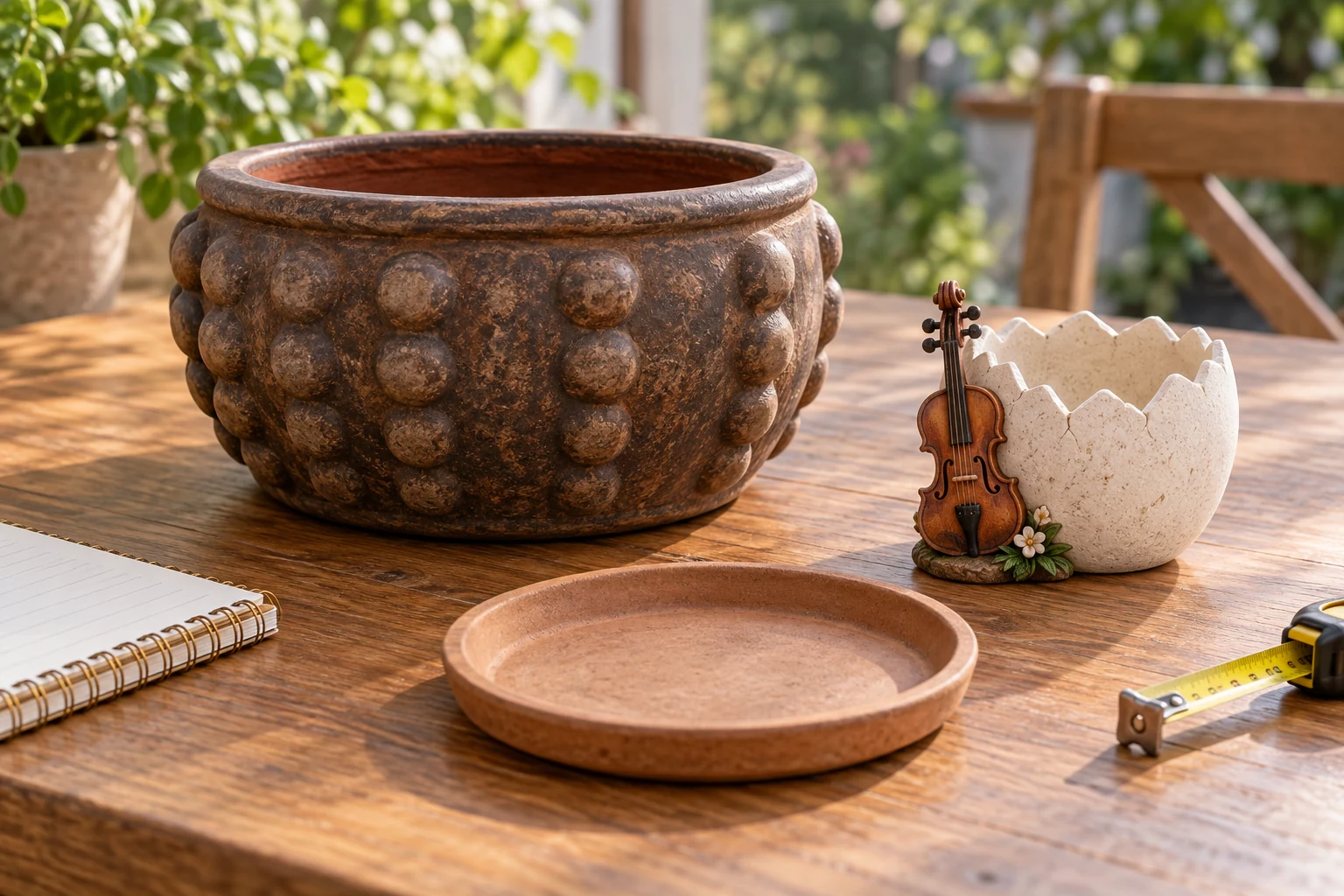
A planter drainage hole is a small detail with a large practical consequence: it changes what you need to check at the bottom of a vessel and what must sit beneath it. Product listings do not always show that detail clearly. This guide uses an aged ceramic planter whose saved page does not verify a bottom opening and a small violin-shaped resin pot whose gallery shows one. The point is to read the evidence in the exact listing, inspect the object you receive, and plan for the surface where it will stand. It does not prescribe watering or promise a result for any particular plant.
Separate the vessel from the plant-care decision
Begin with the physical object. Is it a container with an opening at the top? Is there a visible opening in its base? Does a separate tray come with it, or would one be needed? These questions can be answered from a clear listing or the item in hand. They do not tell you how often to water a plant, what soil to use, or whether a species will thrive. Treat those as separate care questions that need plant-specific evidence.
Look at the listing title, description, and every relevant image together. A title may call an item a planter while the photographs emphasize its shape and finish. Neither word nor styling photo proves that a hole is present. A close bottom view is stronger evidence, but even a small visible dot should be checked when the item arrives. If the listing leaves the underside unseen, write down that uncertainty rather than turning an assumption into a specification.
Decide where the vessel would stand before comparing sizes. A small object on a desk has different clearance and surface needs from a heavier pot on a floor. Measure the available footprint, note anything that must open or slide nearby, and leave room to lift the vessel when you inspect it. A shelf that just fits the stated outside width may leave no working space for a saucer or for a hand to reach the base.
Read the two native examples carefully
The aged beaded ceramic planter is described on its native page as a terracotta ceramic vessel with a textured, beaded surface and a roughly seven-and-a-half-inch outside size. The gallery shows the same squat, dark aged form and a size image. Several other gallery tiles are blank or nearly blank, and none establishes a bottom drainage opening. That means this article can discuss its shape and listed material, but cannot call it a draining pot. Check the exact vessel and its underside before deciding how to use it.
The violin-shaped resin succulent pot is a much smaller decorative vessel. Its native title says it has a drainage hole, and its gallery includes a bottom view showing a small opening. The same images show a violin figure beside the pot and state that plants are not included. Those are useful identity details. The image does not measure flow through the hole, establish a suitable plant, or show that a tray is supplied. Verify the actual opening and package contents when the item arrives.
Both examples are complete plant vessels, not a stand, a hanging bracket, or a bag of soil. Their difference is not simply decoration: one listing leaves the bottom uncertain, while the other shows a specific hole. Size and shape also make them different placement choices. Do not use the smaller pot's visible hole as evidence about the larger ceramic planter. Each exact product needs its own check, even when both appear in the same category.
Know what a visible hole can prove
A clear bottom image can establish that a hole exists in the pictured object. It may show where that hole sits relative to the base, but it does not prove its exact diameter unless the image includes a trustworthy measurement. A listing may show a removable plug, a raised foot, or an insert; read the accompanying description before treating any dark spot as an open path. If an underside image is low resolution, ask for clearer information or inspect the item in person.
When the pot arrives, set it on a dry, stable surface and look underneath before putting anything inside. Confirm whether the apparent opening goes through the base, whether packaging blocks it, and whether a separate insert or tray is present. Take a photograph for your own reference if the care or return instructions matter later. This is an inspection of the product, not a recommendation to modify it. Drilling, enlarging, or sealing a hole could change the object and has separate material and safety considerations.
If there is no opening, describe the object accurately as a vessel with no verified drainage path. That observation does not make it useless. Some people use a decorative outer container with another pot inside it, but whether that arrangement works depends on actual dimensions and the plant's care instructions. Measure the inner opening and the existing pot rather than assuming they nest. Leave enough space to remove the inner pot when needed.
Check the surface beneath the pot
A visible hole prompts a second physical question: what protects the shelf or table below? The listing for the small violin pot shows the vessel and its underside but does not establish that a matching saucer is in the box. A separate tray could be considered after measuring the base. If you already own one, check that it is stable, wide enough for the contact area, and convenient to remove. Do not infer that an attractive product photo includes every supporting item in the scene.
The plant saucer multipack guide addresses a different buying decision: how many usable trays are actually included in a set. That count matters only after you know the base size and whether you need a tray at all. Here, the first step is the planter itself. Measure the base that will touch a surface, then use the saucer guide if a multi-pack is being considered. A listing's piece count cannot answer whether one tray fits this exact pot.
Consider the whole resting place. Is it a wood shelf, a painted windowsill, or a washable counter? Is the surface level? Will the vessel be bumped by a door, a keyboard, or a person passing through? These are placement observations, not horticultural rules. The small resin pot might fit a narrow ledge where the larger ceramic vessel would crowd the edge; an image alone cannot establish that fit. Measure both the vessel footprint and the usable surface.
Move the empty vessel into position first if you have it. It should sit without rocking, and any tray should remain easy to lift. If the pot is too close to a wall or window frame, you may not be able to inspect its base later. Give yourself enough access for ordinary cleaning and repositioning. A pot that fits only when pushed tightly into a corner can create a maintenance inconvenience regardless of its decorative appeal.
Keep supports and hanging hardware separate
A plant vessel is not the same object as the hardware that holds it up. The ceramic planter page presents a stand-alone pot form; the violin pot is shown on tables and shelves. Neither page establishes a hanger, bracket, or rated wall support. Do not transfer dimensions or claims from a separate support product into either pot. If you plan to hang a vessel, check the exact support, mounting surface, and combined load through their own instructions before placing anything overhead.
The macrame plant hanger setup guide owns that hanging decision: fitting a pot to the hanger and verifying its support. This article keeps to the pot's bottom, size, and resting surface. A visible hole does not imply that a vessel is suitable for suspension, and a photograph of a pot near a window does not tell you what hardware was used. Keep the separate questions separate so a decorative image does not become a safety specification.
The same distinction applies to plant stands. A raised stand may change the height and reach of a pot, but it does not change whether the pot has a hole. Check the stand's own product identity and instructions if one enters the plan. Start with the vessel, then add only the support that the real location requires. This order makes it easier to spot which measurement is missing: pot base, tray interior, shelf depth, or hanger opening.
Use a short inspection sequence
Before ordering, save the exact product URL and write down the facts the listing actually supports. For the beaded ceramic example, that includes the aged ceramic form and stated outside size, while the drainage opening remains unverified. For the violin resin example, it includes the decorative violin form and a pictured bottom hole, while a supplied tray remains unverified. A two-column note is enough. Keep unanswered questions visible instead of filling them with what a similar product might have.
Next, measure the proposed spot and any existing tray or inner pot. Compare the numbers to the exact dimensions in the current listing, then check whether those are outside or inside measurements. A product may fit a shelf by its widest point yet leave no room for fingers to lift it. A nested pot may fit at the rim but stop at a narrower interior wall. If the listing does not say which dimension is being given, verify before relying on it.
After delivery, inspect the actual bottom, any insert, the package contents, and the surface fit before setting up the plant. Record a discrepancy between the listing and item rather than improvising a fix to make it match the plan. If the page's promised hole is absent or blocked, follow the seller's current resolution process. If an unverified hole is unexpectedly present in the ceramic vessel, update the plan using the real item, not the earlier uncertainty.
Choose by verified role, then by appearance
The aged ceramic planter may be a good visual choice when its beaded texture and size fit the room, but the saved listing leaves the bottom-opening question unanswered. The small violin resin pot has a shown hole and a distinctive sculptural form, but still needs a surface and package-content check. Neither product example proves suitability for a particular plant. Let plant-specific care information and the exact item's instructions guide that later decision.
The reusable rule is simple: a planter drainage hole is a feature to verify on the exact vessel, and every accessory has its own identity. Read the page, view the underside, measure the resting place, and inspect what arrives. The decorative shape can then be chosen with fewer guesses. If one fact is missing, name the missing fact and seek it directly rather than borrowing certainty from another photograph or another pot.