Tools & DIY
Plan a padlock replacement budget after a key goes missing
Separate obtaining another key from changing an access arrangement before comparing a key order, a service proposal and a complete lock purchase.
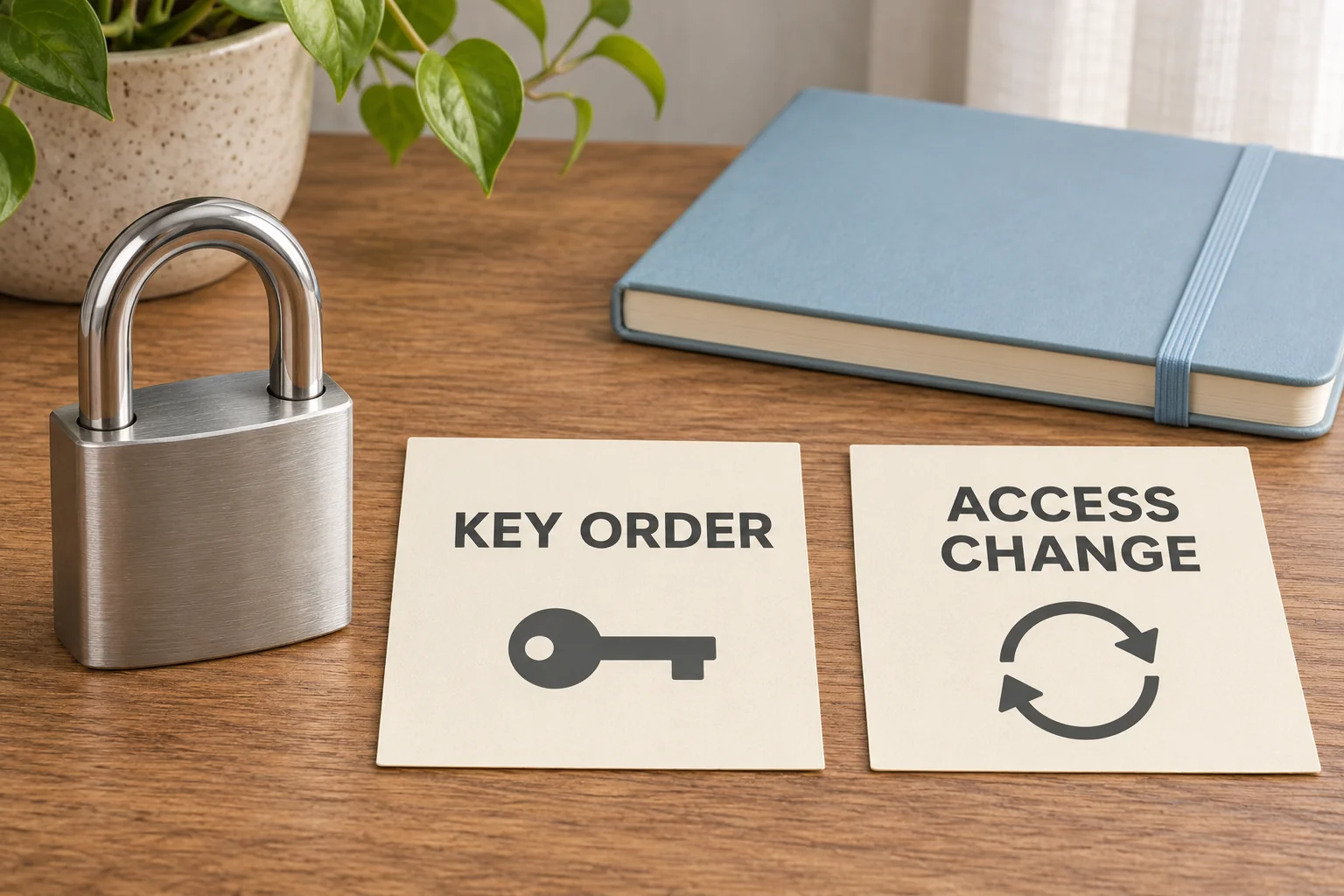
A padlock replacement budget should begin with the result the owner wants to pay for. Obtaining another usable key and changing an access arrangement are different proposals. A low quote for the first does not answer a request for the second. Before comparing a key order, a service visit and a complete new lock, decide which outcome belongs to the current purchase. Keep the comparison with locks and property you own or are authorized to manage.
Use this qualitative guide to compare proposed spending for an authorized decision. It supplies no lock-opening or key-making procedure. It provides no price, security rating, guaranteed saving or remote assessment of an installed lock. The fictional cases below illustrate how an owner can compare proposals without treating different services as equivalent. They supply no operating result or entitlement to a particular service. Ask the appropriate maker or qualified provider about the actual lock and authorized work.
Use the maker's distinction before comparing proposals
Master Lock's complete lost-key page identifies an existing key or key number as possible routes to replacement enquiries; it says replacement keys are not available for every model and are not supplied directly to customers. Its separate rekeyable-padlock page describes changing pins or replacing the cylinder so a new key operates the rekeyed lock. That account concerns rekeyable products, not every padlock. These are different service questions. Neither page establishes a quote, service availability or outcome for an unidentified unit.
Read two complete-lock offers as purchase examples
The Master Lock 6230KALHW600A account identifies a ProSeries keyed padlock and lists two keys. Its single stock frame shows a Master-marked lock without those keys or an authenticated factory model suffix. The ABUS 83/55 RK KA-100 account lists keys; its frame shows ABUS and 83/55 markings, with the lower body edge cropped. Neither image verifies delivered contents, a keying code or service compatibility.
These offers describe complete padlock purchases. They are not quotations for duplicating a key, attending a property or changing an existing lock's arrangement. Do not place a complete-lock offer and a service figure in the same comparison until you know what each proposal supplies. A product photograph can identify an offer you are considering while leaving the intended work unresolved. Verify the actual unit and applicable requirements with the provider before making a service commitment.
Case one: the owner wants another usable key
Imagine that Mae manages a household storage cupboard. She has a working key and wants an additional one for an authorized family member. She has made no decision to change the existing access arrangement. Her purchase request can stay narrow: she wants to know whether another key can be supplied for the identified lock, what information is required, and what the proposed order includes. This invented situation does not establish that a provider can fulfil the request.
Mae should compare answers to that request before considering a different project. A proposal for a whole new lock may be worth considering if the desired key cannot be obtained, but it is a different selection. She can ask why the alternative was proposed and what other decisions it would create. The alternative should not silently replace her original request merely because it is easier to put a complete product in a basket.
If Mae receives a price for a replacement key, she can ask whether the figure concerns the exact item she requested and whether any separate charge remains to be confirmed. She should use the provider's current proposal, not a rate remembered from another job. The question here is what she would pay for this request. No example amount or assumed provider fee is supplied by this article.
Case two: the owner has chosen to change access
Now imagine that Arun is authorized to manage a small club's equipment store. The club has decided that its existing access arrangement must change. A key has gone missing, but this example makes no assessment of who has it or what risk the club faces. The decision to change access is a stated input. Arun's spending comparison should address that decision instead of substituting Mae's request for an additional usable key.
Arun can ask a provider to identify what proposal would meet the authorized change for the actual equipment. A rekeying quote is one possible enquiry where an applicable service exists; a new complete lock may be another proposal. He needs the provider to identify the relevant lock and scope. The word rekeyable on an unrelated product page would not establish that the club's current lock accepts the proposed work.
A lower figure for a different job is not evidence that the club can obtain its chosen outcome for less. Arun can keep that proposal aside until the provider explains whether it addresses the same requirement. He does not need an arithmetic comparison to recognize a mismatch in scope. The first comparison is between what the club authorized and what the proposal says it will supply.
Define the boundary of a service proposal
Before approving work, ask which identified lock the proposal covers and which deliverables are included. Where relevant to the actual job, clarify attendance, assessment, parts, completed work and keys as separate proposal terms. These are questions to ask, not claims that every provider charges for each item. A short description that omits a term leaves it unconfirmed; it should not become either a free inclusion or an assumed additional fee in your budget.
If a proposal begins with a paid assessment, ask what that payment authorizes. Does it cover only an assessment, or does the written offer include further work? Obtain the provider's answer rather than assuming an assessment fee buys a completed change. If further work requires another decision, leave a clear point at which the owner can consider the proposed scope and total before authorizing it.
The same care applies when a provider says an assessment payment may count toward later work. Keep the actual condition with that statement. It might matter which work is approved or when approval occurs, but this guide supplies no provider's policy. Ask the provider to explain its own proposal in writing. A conditional credit should not enter your comparison as an unconditional reduction.
Compare complete alternatives for the same decision
Return to Arun's case. Suppose he receives a service proposal for the existing lock and an offer for a complete replacement. He can ask each supplier to clarify what the proposal would leave ready for the club's intended use. If another task remains outside an offer, keep that task visible. A product-only purchase and a proposal including work should not be labelled equivalent merely because both mention a padlock.
The club may also choose to keep an existing serviceable component if the applicable provider's proposal permits that route. This example supplies no inspection or recommendation to retain a particular part. It simply leaves room for a proposal that meets the authorized outcome without treating replacement of every component as an automatic requirement. Ask the provider which existing items its answer assumes and whether any relevant condition still needs assessment.
Once the proposals address the same outcome, compare their current complete terms. Record any essential unanswered item as a question rather than guessing a favorable answer to finish the comparison. You may prefer one route for a stated reason besides the payment, but describe that as a preference. Do not call it a proven financial saving when the complete comparable proposals have not been established.
Keep linked locks within the authorized scope
If your own access records show that several locks belong to the arrangement being reviewed, identify that scope before requesting a proposal. Do not let an enquiry about one named unit stand in for a decision about the whole arrangement. Ask the responsible person which equipment the proposed change must cover. This is a question about the owner's authorized requirement, not an instruction to alter every lock or a claim that all similar-looking locks share a key.
In a fictional variation, Arun initially describes only the equipment-store lock, then learns that the committee intended a wider review. He should return with the corrected scope before approving the first proposal. The earlier figure belongs to the earlier request. Expanding the requirement does not establish that the provider included the additional work or must hold the original terms. A revised request needs an answer that identifies the revised job.
Leave fit, maintenance and reset questions separate
The padlock shackle-shapes guide concerns hasp clearance and body form. The sticky padlock shackle guide concerns maker-specific care and service limits. Neither supplies a key-order quote or determines which access change an owner should authorize. Obtain the applicable fit or service answer if that separate question affects a proposed purchase.
Mae can finish her comparison with a narrow key enquiry still open; Arun can finish with a defined access-change proposal awaiting approval. Their budgets should preserve those different decisions. Neither needs to buy the first complete lock pictured, treat a missing answer as a free inclusion or claim that work has succeeded before it has occurred. Choose the proposal for the actual authorized need, with the remaining conditions visible before money is committed.
Keep a later goods payment separate from the service decision
If your decision leads to a complete padlock purchase through republeq.com, confirm the exact offer and supplied contents before arranging payment. The two retail accounts here concern goods, not a booking for the key or service enquiries described above. A payment preference cannot make those proposals equivalent. If the actual checkout offers cryptocurrency such as USDT, read the choices and instructions for the basket you intend to order. This article establishes no current supported asset, network, receiving address, exchange rate, fee or completion time. Obtain clarification through the merchant's current channel if an essential instruction remains unclear. Check that the selected product and quantity still match your intended purchase after any basket change. A reply about one offer should remain connected to that offer rather than being carried into a different selection automatically. Read the current delivery, cancellation and return terms for the proposed order, including any conditions important to your decision. If somebody else will pay, give them the confirmed selection and the current transaction instructions. Do not pass along an earlier payment request after changing the goods. Retain the actual order reference and payment response together if a transaction occurs. An uncertain payment outcome needs reconciliation through the authorized service before another payment is considered. The absence of a confirmation does not prove that nothing happened. After delivery, compare the received identity and stated contents with the confirmed order and obtain the instructions belonging to that unit. A receipt supplies no fit assessment, completed rekeying or determination that the owner's access requirement has been met. Keep any separately commissioned service attached to its own agreement and result. You can postpone a goods order while a product or transaction question remains unanswered, without describing an unresolved proposal as a completed purchase.
Conceptual authorized-owner budget comparison; no key copying, lock opening or completed service is depicted.