Home Security
Sticky padlock shackle after outdoor exposure
Compare manufacturer-specific care limits when an outdoor padlock becomes sticky, and take unresolved contamination or damage to the appropriate service provider.
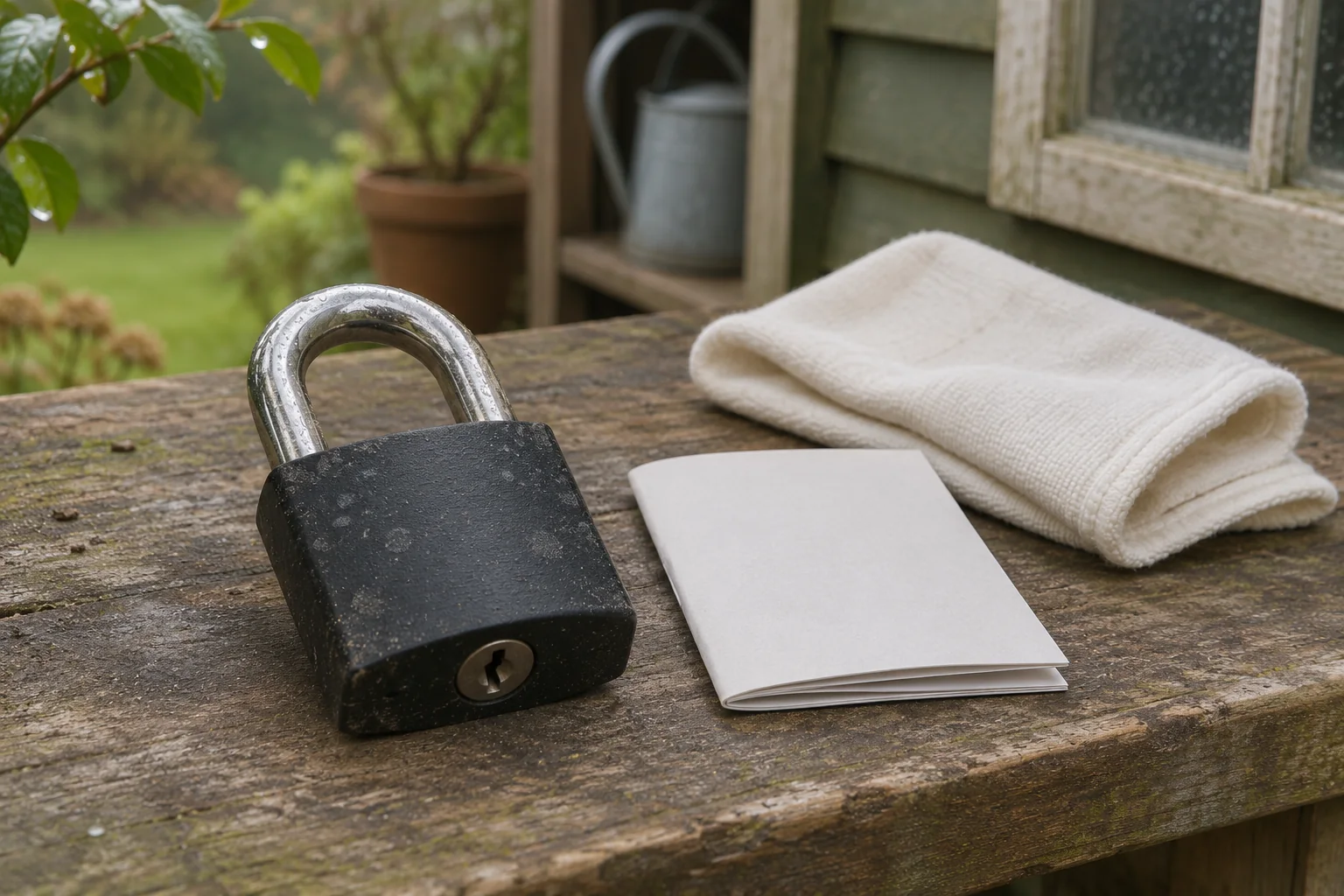
Start with the applicable Master Lock care directions
A Sticky padlock shackle after outdoor exposure can lead straight to the nearest spray can. First check the care directions for the lock you own. Master Lock explains that airborne dust, particles and chemicals can settle around a padlock's precision components and create friction. Its general care page recommends its PTFE lock lubricant for the keyway and shackle, with a light application, distribution through normal operation and removal of excess. It specifically excludes dry graphite and silicone. Those exclusions matter when another manufacturer's advice mentions a different product.
Use the Master Lock care page within that maker's context. The useful decision is whether you have the appropriate instructions and treatment available for your existing lock. A familiar bottle, an outdoor setting or a weather-related product name does not establish compatibility. Keep this general maintenance guidance separate from a diagnosis of the particular lock in your hand. It does not identify every cause of resistance or establish that the pictured catalog examples have been inspected or restored.
padlock lubricant compatibility
BURG-Wächter's UK care and warranty information illustrates why padlock lubricant compatibility needs a manufacturer-specific answer. Its lock-maintenance advice names powdered graphite or a light spray oil. Master Lock's graphite exclusion therefore cannot be turned into a claim that every lock manufacturer recommends the same treatment. Nor does BURG-Wächter's wording authorize graphite in another brand's cylinder. Identify which maker's advice you are reading before treating the names of products as interchangeable.
Read the boundaries of the page as carefully as the lubricant wording. It also discusses care for other products, including post boxes. Advice about maintaining a post-box finish does not become an instruction to put the same material inside a padlock. Its discussion of steel corrosion over time also leaves room for deterioration despite routine care. The page supports matching care to the product and consulting the applicable terms when service is needed. It cannot establish a current replacement entitlement for an unidentified lock. Carry the relevant product details into a service enquiry, while leaving the entitlement decision to the actual provider and applicable purchase terms.
Keep Yale cleaning directions within their own product context
Yale's bike-lock and padlock maintenance sheet addresses dust and grime before lubrication. It recommends a PTFE-based lubricant for its products and identifies several application areas, including the cylinder and insertion points such as shackle tips. It also mentions degreaser for heavily soiled products. Yale gives that cleaning option within its own instructions. It supplies no evidence that a household degreaser belongs in either catalog lock discussed below.
The sheet separates cleaning, a small application, normal movement to distribute it and wiping away remaining lubricant. Follow the complete applicable directions when maintaining a matching product. Extracting one ingredient from that sequence loses the surrounding conditions. A photograph of dirt around a shackle does not tell you what has already been applied inside the cylinder, or establish whether the instruction sheet covers that lock. When the product identification or previous treatment is uncertain, resolve that uncertainty with the maker or appropriate service provider before selecting a cleaner from another manufacturer's sheet. Yale's guidance offers a specific maintenance context, without proving that an unrelated sticky lock needs the same treatment.
Distinguish Anchor Lås shackle care from cylinder care
The Anchor Lås FAQ draws a distinction inside the lock itself. Its advice discusses grease for its padlock shackle holes and oil for its disc cylinders, while directing readers to the cylinder manufacturer's instructions for other cylinder types. Even within one maker's range, a direction for the shackle area is not automatically a direction for every cylinder. The component and cylinder design help determine which instruction applies.
The FAQ also cautions against products that dissolve existing grease, including de-icing products and 5-56 in the circumstances it describes. That makes previous treatment relevant to the care question. Adding another substance can change the lubricant already present. Keep the product's own care information available when explaining what has been used. Anchor's discussion of weather-protected versions and cold conditions belongs to those products and their construction. It does not establish that every covered padlock excludes moisture, or that a lock sold with a weather-related name uses the same seals. Use the FAQ to recognize the need for a matched instruction or service answer. Its product-specific details do not identify the internal construction of an unrelated lock.
Use Squire's service boundary when resistance persists
Squire's lock-maintenance article describes moisture exposure and particles as reasons for maintenance. It also explains that repeated graphite use can leave a buildup, and that adding a liquid lubricant afterwards can produce a clogging mixture. The practical question is what the lock has already received. A recommendation encountered today cannot erase that treatment history or establish that adding a different product will resolve the present symptom.
Squire tells readers not to force a key that will not turn. If cleaning and lubrication do not resolve the problem, it identifies possible cylinder trouble and a locksmith as the next source of help. That gives padlock service limits a concrete endpoint. Continued resistance is a reason to seek an appropriate assessment. It is not evidence that more force, more product or a repeated cleaning cycle will succeed. Squire's article also distinguishes possible key problems from cylinder problems. Those possibilities support asking for help with the actual lock and key. They do not remotely diagnose a bent key or failed cylinder from a reader's brief description.
Respect ABLOY's mechanical and electronic distinctions
ABLOY's end-user lubrication and defrost sheet covers mechanical and electromechanical products, with padlocks among its illustrations. Its mechanical-cylinder advice names specific oils and excludes oils containing graphite or biolubricants. Its PROTEC² CLIQ and PULSE directions distinguish mechanical parts from electronics and restrict the oils used. A statement about lock care can mislead when it loses the maker and technology attached to its instructions.
The same sheet explicitly excludes compressed air on a PULSE cylinder in its frozen-lock guidance. That exclusion belongs to a technology. Do not copy a compressed-air or thawing method from a neighboring paragraph into a universal outdoor-padlock procedure. The document identifies direct rain, high humidity, coastal proximity and dusty environments among conditions relevant to maintenance frequency. These are prompts to consult the applicable schedule for a matching product. They do not supply an interval for every shed, gate or storage lock. Keep unfamiliar electronic cylinders within their own instructions and service route, even when the external padlock shape looks familiar.
Read the two catalog examples within their evidence limits
The Master Lock Excell Weather Tough catalog account identifies UTTK21679_1, also written UTTK21679. Its sole gallery image shows two black-covered complete padlocks, Master marks, silver shackles bearing BORON CARBIDE lettering and four keys. That picture does not establish the delivered pack quantity or authenticate a particular manufacturer's M-series model. The listing and image do not provide a tested care history for those locks.
The ABUS 37RK/55mm GRANIT Plus catalog account identifies a complete padlock in its description. Its sole image shows a black GRANIT-marked lock with a coated U-shaped shackle, ABUS lettering and a country marking. These catalog and pictured details do not independently certify manufacturing origin, material, security rating or weather performance. Neither account establishes lubricant compatibility from appearance alone. Use the actual model's applicable care directions when evaluating an existing lock. The different pictured bodies are examples of why a broad padlock category cannot settle a component-specific maintenance question. Their catalog identities support a comparison of the supplied objects without establishing their internal cylinder construction.
padlock service limits
Two other guides answer neighboring questions. Padlock shackle shapes: reading open and circular bodies addresses body geometry and the space a shackle needs at a hasp. That is relevant when choosing a physical fit. It does not establish which cleaner or lubricant an existing cylinder accepts. A problem involving clearance needs its own fit assessment, without turning a dimension comparison into a care diagnosis. That guide compares open U-shaped and circular bodies. Its geometry discussion cannot establish how contamination, an earlier lubricant or a particular cylinder affects movement in a lock that is already installed.
Padlock combination reset: check the starting state covers prerequisites for a reset and uncertainty about the resulting code. Its reset question differs from contamination or resistance after exposure. Keeping those questions separate helps preserve padlock service limits. A care discussion cannot supply missing reset authority, accessories or knowledge of a combination. This article therefore supplies no reset sequence or opening method. Return to the guide that matches the actual reader decision, and use manufacturer-specific care or service information for the environmental-maintenance issue discussed here. A reset result also leaves the care question unresolved.
If a later purchase becomes appropriate
If an assessment eventually points to a replacement or another suitable product, treat the purchase as a separate decision from today's maintenance question. First identify the exact item and the information you still need about its intended use. A catalog photograph can help you recognize a form, but it does not settle a service diagnosis or guarantee that a replacement will solve the reason an earlier lock became difficult to use. Keep the applicable product instructions available while deciding what information to request. If you later consider a crypto payment, including USDT, on republeq.com, verify the payment methods actually offered for that particular transaction at that time. This paragraph does not report that either linked item currently accepts that method. Read the complete checkout terms before authorizing anything, including the named asset, network, amount, fees, delivery destination and any relevant order conditions. Check that the item identity and quantity shown in the order match your intended purchase. If a detail remains unclear, resolve it through the available transaction support route before proceeding. Do not infer checkout availability from a mention of crypto in an article or from an earlier order. Keep a record of the terms you actually accepted and the transaction reference supplied by the checkout, if a purchase takes place. A payment record establishes only what that record says. It does not certify a lock's performance, establish that a previous maintenance attempt was appropriate, or turn an unresolved service question into a confirmed repair. The maintenance decision can remain open while you seek a matched answer from the appropriate provider. You can also decide to make no purchase. The conditional payment discussion here supplies no product endorsement, current inventory promise, price comparison, expected saving or assurance of a successful payment. It leaves the eventual buying and payment choices dependent on the actual product evidence and terms available when you make them.