Home & Living
Plan narrow end table outlet placement beside a seat
Use the outlet, seat and walking route to decide whether a powered narrow table belongs there or a plain table makes more sense.
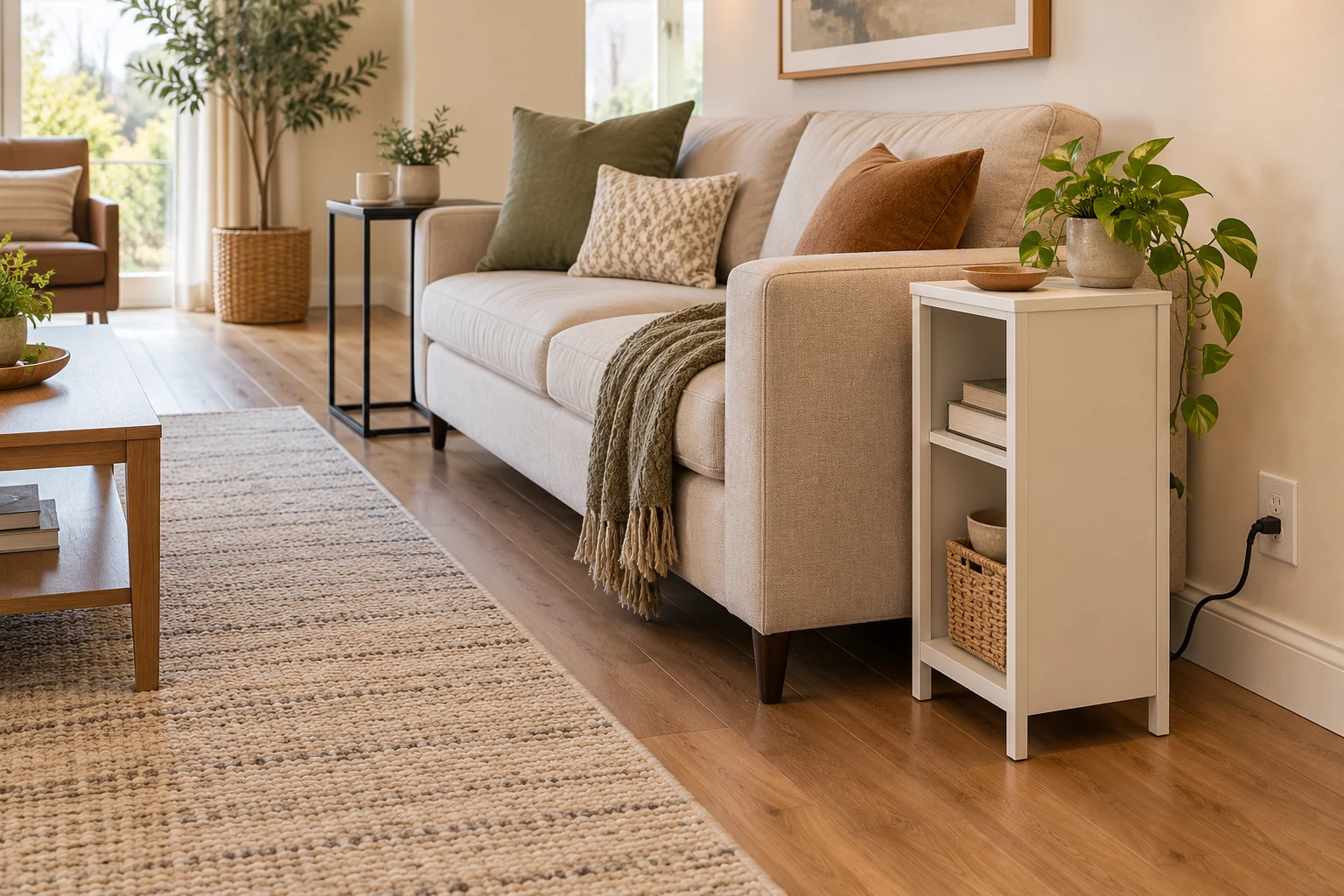
A narrow table can look easy to place until a charging cord has to reach the wall. Before choosing one, sit where you normally would and note where the outlet is, which side you reach toward, and where people walk past. Those observations decide whether a powered table is useful in that spot. A plain table may serve the same seat better if its position does not depend on a cord.
Start with the seat and the outlet
Pick the seat first. Put a book or another everyday item where you expect the table to be and reach for it while seated. Then stand up and walk the usual route around the furniture. A position that works for your hand can still put a table leg where your feet travel. Try the position with a box or a piece of paper on the floor before ordering a table.
Mark the outlet you would actually use. Look at the wall behind the proposed table and at any furniture between the table and that outlet. If you want charging beside the seat, think through where a device would rest while connected and how its cable would reach the tabletop. The product photo cannot tell you how that arrangement will work in your room.
For this decision, keep two sketches: one for the table by the seat and one for the route people take past it. You need not draw a full room plan. A few notes about the outlet, the table's proposed edge, and the walking path make the conflict visible. If moving the table toward the outlet pushes it into the route, that is a reason to reconsider the location before comparing finishes.
A narrow table is often considered for a gap that already feels crowded. Look at how the gap is used at different times of day. Someone may pass while another person is seated; a drawer or shelf may also need to remain accessible. Put temporary markers on the floor where the table would stand, then walk the same route carrying the things you normally carry. That exercise tells you more about the placement than a styled product image can. Move the markers if the first position does not work, and keep the position that still allows ordinary movement.
Write down the questions the room test cannot answer. The distance to the outlet is one. The length of a product's power cord is another, and the captured powered-table description does not supply it. A floor plan cannot establish electrical ratings or port positions either. Those points belong on a short list for the seller or the delivered instructions. Do not turn an unknown listing detail into an assumed feature just because the proposed spot looks convenient.
See what a powered table would add
The exact white narrow side table listing describes a USB port and power outlet. It calls the item a living-room side table and mentions room for books and remotes. Its single gallery image shows a white open-shelf table beside a wall outlet, with a cord running behind the table. The listing does not give a dependable numeric footprint in the captured product description. The image also does not establish the ports' location, cord length, or electrical ratings.
Those gaps matter to placement. A charging feature helps only if the table can stand where you want it and reach an appropriate outlet according to the delivered instructions. Before choosing this exact item, ask for its full dimensions and electrical specifications or check them on the delivered product and manual. Do not size the space from the gallery image. Check how the plug would get from the table to the outlet in your proposed layout without sending a cord through the normal walking route.
If the table would need to move into the walkway solely to reach power, the charging feature may be working against the room. You can test another position or decide that charging belongs elsewhere. This is a placement decision, so the useful question is where the powered table and its cord would live during everyday use.
Think through what happens after a device is plugged in. It may rest on the tabletop, a shelf, or another nearby surface, depending on the real product and the item you use. The extra charging cable should not be an afterthought: picture the device in its normal resting place and the person getting up from the seat. If the cable crosses the place where hands, feet, or bags regularly move, shift the proposed arrangement. The photographed table does not document every cable and device combination.
The white table's open shelves may appeal if you already know what belongs there, but the listing's broad description should not become a storage promise. Take stock of the few items you expect to leave beside the seat. A slim surface can fill quickly when it becomes the default place for mail, cups, and chargers. If the tabletop would be crowded before you add a device, consider whether you really need a different surface or a different location for some of those items.
Compare a plain narrow table
The Kate and Laurel Catriona listing describes a narrow rectangular side table measuring 19 by 11 by 24 inches. It has a mirrored top and a metal base, and the seller lists three assembly steps. The two gallery images show the table beside a sofa and a bed. They help identify the shape and open base, though neither picture proves it will fit a particular gap or support a particular load.
This table has no charging feature stated in the captured listing. That makes its placement a separate question from power access: would the 19-by-11-inch top and its base occupy the intended spot while leaving the walking route usable? Measure the actual floor space and consider where the feet and curved lower frame would stand. Also check whether the 24-inch listed height suits what you plan to reach from the seat. The stated dimensions belong to this exact listing; verify the delivered variant before relying on them.
A plain table is reasonable when the surface is the useful part and you do not need charging at that seat. It does not solve a separate charging need by itself. If you already charge a device elsewhere, that may be a simpler room arrangement than placing a powered table in an awkward position.
For the plain table, work with the dimensions as three separate checks rather than reading them as a promise of fit. The 19-by-11-inch top may occupy the narrow patch you identified, while the 24-inch height affects where a hand reaches from the seat. Then check the actual base shape against the floor markers. A photograph can make the space around a sofa look generous, and the same table may sit differently next to your furniture. Keep your own measurements next to the listing dimensions when you compare them.
Also decide what you would place on the mirrored top. Its appearance is visible in the gallery, but routine care and durability should come from the seller's instructions, not an assumption based on the finish. If the finish or assembly matters to your choice, inspect those details before ordering. The narrow profile alone should not decide the purchase when the table will be touched and moved through everyday use.
Try both positions in the actual room
Use the two listings as examples of different roles, then test the roles in the room. For the powered option, note where the table would stand, which outlet it would use, and whether the cord could follow the intended route under the product's instructions. For the plain option, use the stated Catriona footprint as a starting point and mark its floor position. Leave enough room for the way people actually pass the seat; the needed space depends on that route.
Spend a day noticing what lands beside the seat. If you mostly need a place for a book or glasses, a small unpowered surface may be enough. If a device regularly needs power there, the powered table earns a closer look, provided its exact dimensions and electrical details can be confirmed. The decision can also be to keep the current furniture and charge elsewhere. There is no reason to buy a new table before its job and location are clear.
Return to the floor markers after that day. Perhaps the table belongs on the opposite side of the seat, or perhaps the outlet you first noticed is behind furniture that should stay where it is. Move the markers and repeat the walking check. This costs less effort than trying to make a table work after delivery. If two people use the seat area differently, have each of them reach for the proposed tabletop and walk past it. A placement that suits one person's reach can crowd another person's route.
Keep the powered and plain roles distinct while you compare. The powered listing raises questions about an outlet and cable path that the plain listing does not. The plain table offers stated dimensions, but that does not tell you whether it supports your particular objects or whether its finish suits your care routine. Neither listing supplies the missing facts for the other. Make a small comparison note with verified dimensions, unresolved details, and the position you tested in the room.
Keep this choice separate from a full coffee-table layout. The published coffee-table layout guide walks through recording a coffee table's footprint, height, and drawer access. Here the central constraint is whether a narrow sofa-side table belongs next to the outlet without disrupting the walking route.
The published guest nightstand setup guide addresses a different bedside job: giving a visitor a clear landing surface and checking the room from the bed. If your proposed table is mainly for a guest room, that article can help with the arrival setup. The present choice stays with the everyday seat, power access, and path around a narrow side table.
Make the final check with the exact item
Before ordering, compare the proposed spot with the exact table's measurements. For the white powered listing, the captured description leaves the numeric footprint, port position, cable length, and ratings unresolved. Get those details from the seller or product instructions. For the Catriona, the listing supplies 19-by-11-by-24-inch dimensions, but the delivered model still needs to match the listing you used. Check the return and assembly information if either could change the choice.
If a seller supplies new measurements or instructions, update your notes and place the floor markers again before buying. An answer about one product variant should be tied to that exact variant. A changed color, finish, or configuration may change details relevant to your space. Save the listing or seller response you used so you can compare it with the box and manual later.
After delivery, place the table in the marked location and walk the normal route again. If the table, its base, or a cord intrudes on that route, move it or use a different arrangement. Keep the measurements and instructions with the purchase record so you can compare them with the space if the table needs to move later.