Furniture & Home Organization
guest nightstand setup for an overnight visit
Prepare a usable bedside surface for an overnight guest, explain available drawer space and reset the room after the visit.
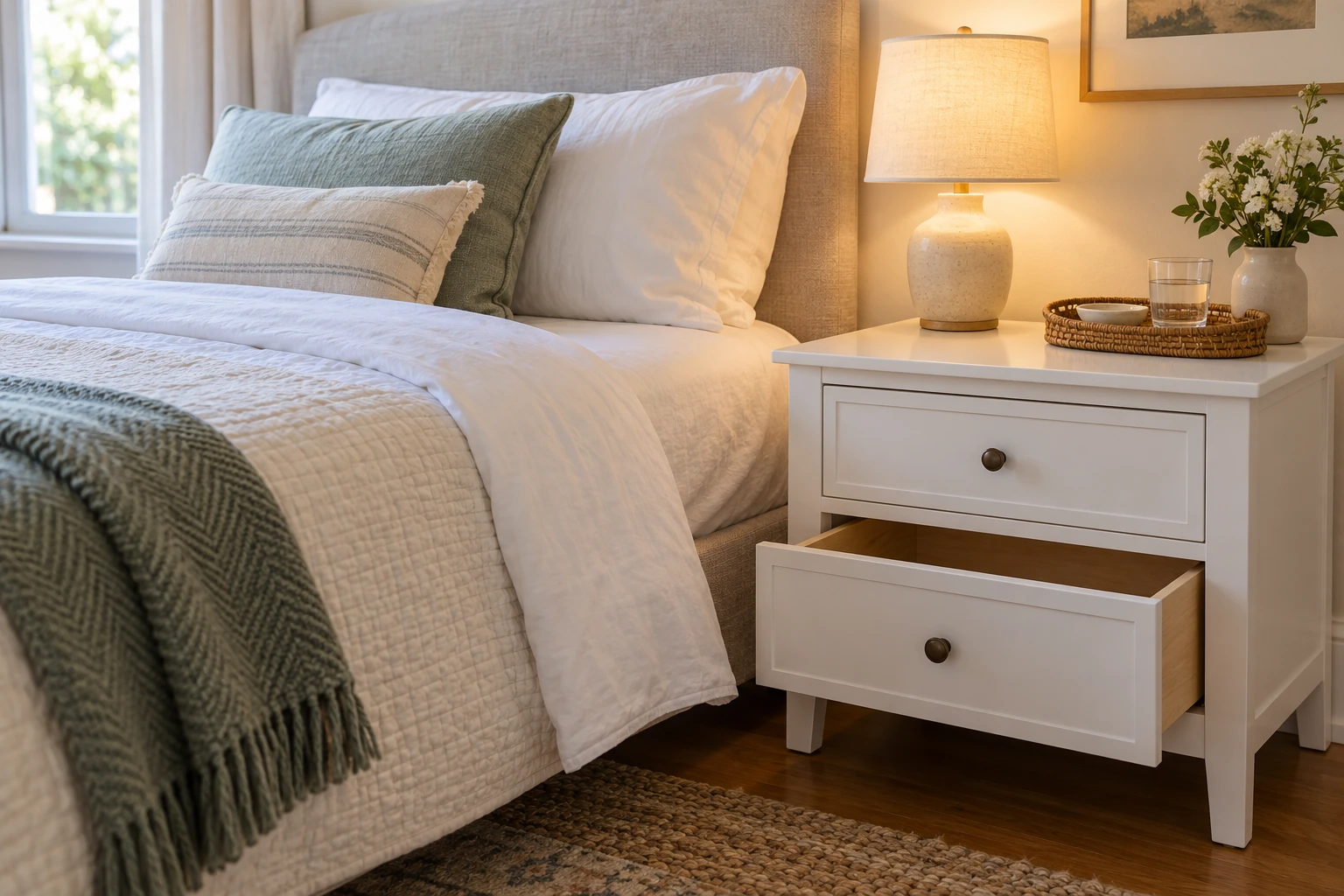
An overnight guest rarely needs an elaborate bedside display. They need a surface they can understand when they enter the room, a place for the small things they use at night, and enough free space to set down their own items. A guest nightstand setup works best when the host has already removed personal clutter and checked the actual reach from the bed. A lamp, a modest tray, and a mostly empty drawer can be more useful than a packed arrangement of decorations. The nightstand should feel available to the person staying there.
Walk into the room as the guest would. Where will a bag go? Which side of the bed will they use? Can they set down glasses or a phone without moving a vase? Check the route from the door to the bed and the space needed to open a drawer. If a suitcase blocks that drawer, the storage space is theoretical. Make sure a guest can reach the nightstand after the door is closed and their bag has been set down. A useful setup begins with the whole room, then narrows to what belongs beside the pillow. It is a short hosting handoff, not a permanent redesign of the bedroom.
Leave a clear landing surface
Clear the top before adding anything. Remove old receipts, chargers that are not for the guest, half-read books, and objects that belong elsewhere. Then leave enough open area for the guest’s own phone, glasses, or a small personal item. The host cannot know every habit in advance. A clear patch gives the visitor a choice without asking them to disturb your things. If the top is narrow, one small tray can gather the few items you supply while preserving the rest of the surface.
A tray can hold a key, spare tissues, or another small item, but it should not occupy the whole top. Check that the tray sits flat and can be moved easily. If you provide water, place it where an accidental bump is less likely to affect papers or electrical items; a separate stable surface may be better in a tight room. Do not infer a universal safe arrangement from a styled product photograph. Test the nightstand as it is actually positioned beside the bed.
Keep the host-provided items modest. A lamp that the guest can turn on and off is useful if the existing room setup supports it. Explain any unusual switch rather than leaving the guest to search in the dark. Check cords and outlets against the fixture’s instructions; avoid improvised cable runs across a walking path. If the room already has adequate bedside lighting, an extra lamp may crowd the surface. The point is usable light and available space, not a mandatory object list.
Make the drawer optional
Open the drawer and look inside before the guest arrives. A drawer full of household odds and ends is not guest storage, even if the top looks tidy. Remove your private papers and loose objects, or clearly designate the drawer as unavailable. If you offer it, leave enough room for the guest to place a small item and retrieve it easily. A drawer is most helpful when the visitor does not have to guess whether opening it is allowed.
The white side table with a drawer is one example of a bedside surface with a named storage space. The listing shows a piece intended to pair a top with an enclosed drawer; it does not establish what every guest will want to put there. Compare the actual drawer opening, reachable height, and room position with the belongings a visitor may use. A drawer that hits the bed frame or suitcase when opened will not serve its intended role.
The white two-drawer nightstand offers a different division of enclosed space. Two drawers do not automatically make a better guest setup. One could be empty while the other holds host supplies, but the visitor should not need to infer which is theirs. If both are offered, leave them clear and make that permission obvious. Compare the real footprint and drawer access in your room; product names and photographs cannot tell you how a particular suitcase will sit beside the bed.
If the nightstand has no drawer, do not force a storage workaround onto its top. A small open shelf, nearby chair, or other available furniture may give the guest a place for a bag. Keep the path to the bed clear. The bedside top can remain a simple landing surface. If a drawer is included, check that it slides freely and stays shut without a hard push. Repair or avoid a sticking drawer before inviting someone to use it. A guest should not have to troubleshoot furniture after arriving tired.
Connect arrival to the room
The bedside setup starts after the guest has dealt with coats, shoes, and bags. If the entryway is crowded, a clear route to the room matters more than another decorative bedside object. The guest bed bedding guide covers the separate decision about what belongs on the bed. In the bedroom, let the visitor know where the nightstand surface and available drawer are. A short sentence such as “The lower drawer is empty for you” is enough. The guest can then unpack without asking what may be touched.
Consider where a suitcase will be opened. If it needs to stand beside the nightstand, test the drawer with the suitcase there. If the suitcase rests on a bench, check that the visitor can still reach the lamp from bed. A room photograph taken before luggage arrives can hide this conflict. Move the nightstand only if the change keeps the walking route clear and the furniture stable. The visitor should be able to reach their small nighttime items without stepping around an open bag.
A quiet shared-bedroom reading routine involves its own light placement and evening habits. The shared-bedroom reading light guide addresses that regular-occupant decision. A guest nightstand has a different job: make the surface available to someone whose book, glasses, and phone you do not know. One optional book is fine if there is still clear space, but do not fill the drawer with your reading collection just because the furniture has storage.
Think about a guest who arrives late. They may not want a tour of every room feature. Keep the bedside controls simple and explain only what is not obvious: a lamp switch in an unusual place, a drawer that is reserved for them, or where extra bedding is stored. Do not put important instructions in tiny printed text that must be read after lights are out. A brief spoken handoff while the guest is standing in the room is practical and leaves them free to arrange their own items.
Check the room from the bed
Sit on the side of the bed the visitor will use. Can you reach the top without leaning awkwardly? Can you turn on the lamp? Is the drawer handle accessible without hitting bedding or another piece of furniture? These simple tests reveal more than a dimension on a product listing. A nightstand can fit beside a bed while its useful surfaces remain blocked. Move only what you can safely move, and keep the furniture stable. The host’s check should reveal obstacles before the guest has to work around them.
Look at the level of the top relative to the mattress. A very low or high surface can be less convenient for glasses or a phone. There is no single perfect height for every bed and every visitor, so use the real room and a common reach as the test. If the nightstand is not comfortable, a nearby alternative surface may be more helpful than buying an item based on a generic “bedside” label. A good guest setup is the combination of furniture, room position, and free space.
Keep fragile decor away from the area the guest will use most. A visitor should be able to set down a phone without worrying about knocking over a stack of small ornaments. If you want the room to feel welcoming, use the bed, lighting, and clean surfaces to do most of the work. Personal decorations can stay elsewhere. The nightstand is working furniture during the stay. You can restore decorative pieces after the visitor leaves if they are part of the room’s usual arrangement.
If you provide a clock, charger, or other device, check it in the room before the visit and provide any necessary instructions. Do not assume a connector fits the guest’s phone or that a plug is within reach. It is fine to leave a clear space instead and let the guest use their own equipment. Avoid loose cords on the floor. The useful decision is whether the item helps this guest without using up the space they need for their own belongings.
Reset after the visit
When the guest leaves, check the top and drawers for forgotten items before returning your own things. If you find something, set it aside intact so it can be returned. Empty the tray, clean the surface as the furniture finish allows, and put the room back in its ordinary arrangement. This is also a moment to notice whether the drawer was used, whether the lamp was reachable, and whether the guest moved furniture to make space. Those observations can improve the next visit without turning the room into a rigid template.
Leave a small note for yourself if the arrangement worked especially well: which drawer was offered, where luggage fit, and whether the clear top was large enough. The note is for preparation, not a demand that every guest use the room the same way. Another visitor may need more room for medication, glasses, or a book. Keep the nightstand flexible. The strongest part of the setup is the space you leave available, because it lets the guest use the room without negotiating around the host’s belongings.
A guest nightstand setup can be prepared in a few deliberate steps: clear the top, make the drawer status obvious, test reach from the bed, and check the room with luggage in place. A one-drawer side table and a two-drawer nightstand offer different storage layouts, but either can work when the guest knows what is available. The host’s role is to make the room easy to enter and use. The visitor supplies the personal items that belong on the bedside surface.