Cost & Savings Articles
A guest-bed bedding budget that starts with what you already own
Build a guest-bed bedding budget around suitable linens already owned, missing components and spare-linen timing. Compare complete purchase proposals.
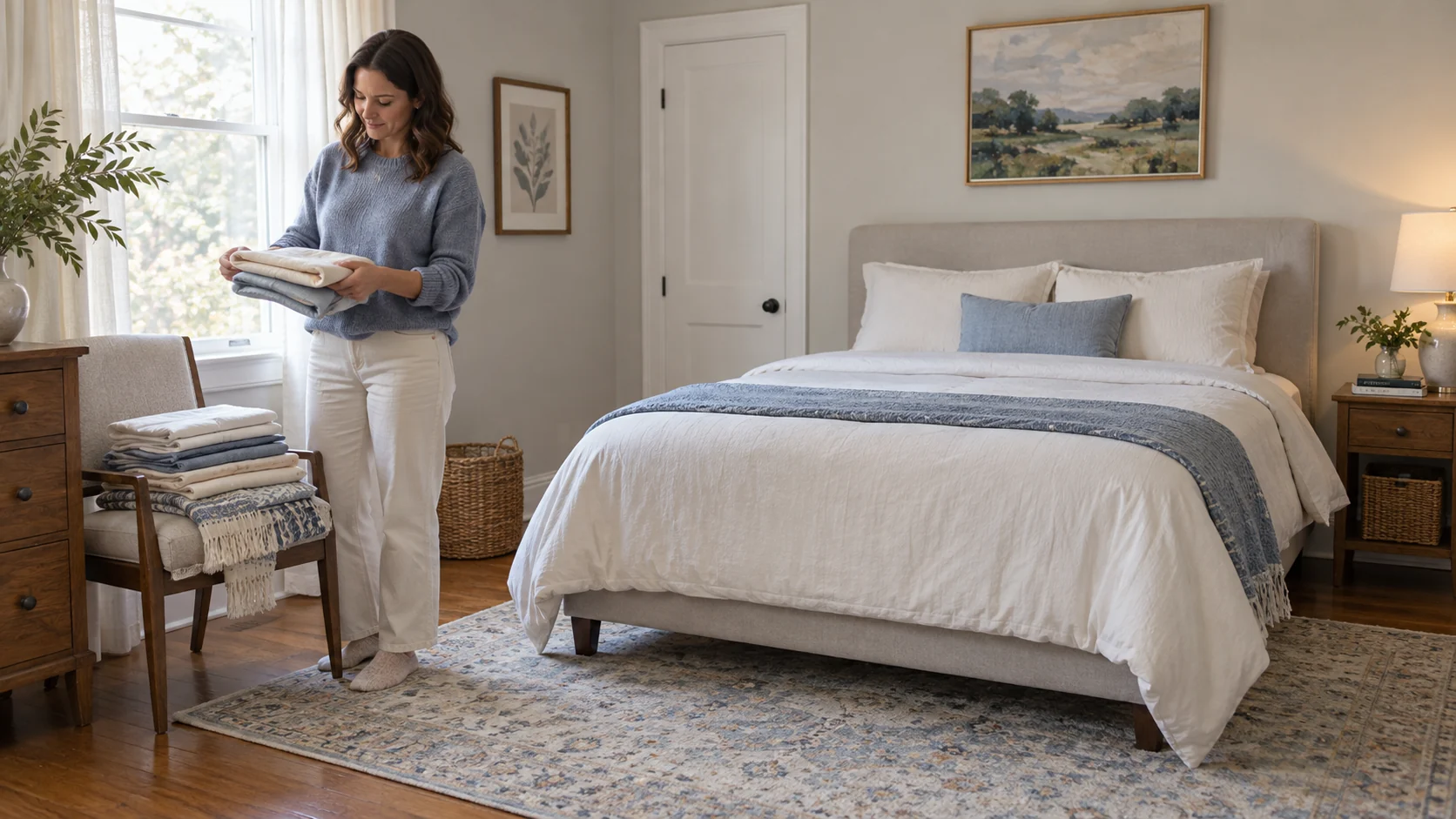
A guest-bed bedding budget starts with the bed you plan to offer and the useful linens already in the house. A new set can contain pieces you need alongside pieces you already have. Before choosing a bundle, decide what would make that particular bed ready for the visit. You can then compare purchases against the missing pieces instead of treating the longest contents list as the most economical answer.
Choose one bed and one expected visit for the first plan. A spare room used occasionally, a bed needed on consecutive weekends and a room serving several different visitors can create different supply needs. Describe your own arrangement without assuming that every guest bed needs the same number of sets. The two offers below illustrate a sheet-only package and a broader bedding account whose size and quantity wording require clarification.
Budgeting for the bedding pieces you need
Begin budgeting for the bedding pieces you need by looking at the bed and the linens intended for it. Identify the mattress and the pillows you actually have. Then bring together the sheets, pillow coverings and other bedding you would otherwise use for this visit. Decide which pieces you are willing to reuse, taking account of their condition, suitability and your guest’s known preferences. Use your own assessment of the pieces you have; a catalog does not inspect them.
Separate a missing component from a preference for a new look. If you have a suitable covering but want different colors, that is a different purchase from replacing a missing fitted sheet. Both can belong in a budget if you choose, but they need not be bought together. You can postpone the color change while buying a missing piece needed for the visit.
Check the size information for the mattress and the pieces you propose to reuse. A familiar label on a cupboard shelf may belong to another bed. A fitted sheet also raises a depth question distinct from the sleeping surface’s width and length. No product description here demonstrates a fit on your mattress. Resolve that relationship before assigning a new item to the remaining supply need.
Give each proposed purchase a job
Describe the job of each missing piece in ordinary terms. You might need a fitted sheet for the mattress and pillowcases for pillows already present. Someone else may need both sheets and a covering because the room has never been equipped. These are possible situations, not a prescribed inventory. Describe what the purchase adds to this bed for the planned visit.
Keep a suitable existing component in the plan when considering a larger package. A new bundle’s inclusion of an insert does not make the insert already in the house disappear. Conversely, owning a cover does not establish that you have an insert that suits it. Compare the actual components rather than letting a broad word such as bedding stand for a complete arrangement.
Sharing a purchase decision can also prevent duplicate orders. If one person supplies pillowcases and another orders a set, agree on what each will contribute before checkout. Name the bed and the pieces, without assuming that a relative’s offer of “spare sheets” means every component you still need. The budget should describe the contributions that have actually been agreed.
What the CGK four-piece sheet account supplies
The CGK Linens queen four-piece sheet set, under the actual brand CGK Unlimited, lists one flat sheet, one fitted sheet and two pillowcases. The selected title identifies Light Grey and calls the material 100 percent cotton sateen with a 1,000-thread-count claim. Its fitted-sheet description says mattresses up to 16 inches deep. Keep that attributed fit statement separate from an actual trial on your bed.
For a bed whose missing items match those sheet and pillowcase roles, the enumerated contents give a concrete package to consider. No duvet cover or comforter insert appears in that list. If you already have suitable ones, the sheet set can be considered alongside them. If they are missing, the four-piece label does not make the rest of the bedding complete.
The description makes softness, cooling, moisture-wicking and certification statements. Those claims are not a measured comfort or laundering comparison in this guide. A thread-count figure does not establish that the package saves money for your household, and its title’s comparison with Egyptian cotton supplies no matched test here. Budget for the components and material requirements you have chosen, with personal comfort preferences kept as preferences.
Why the Bare Home package cannot yet fill a size-specific gap
The Bare Home bedding offer has an actual current product name identifying model 840105776703, Beige, Teens’ Bedding and Twin XL. Its description calls the title a six-piece Twin XL duvet and sheet set in Sandwash Fog with a white insert, then also calls it a queen bedding set. The older address contains queen and eight-piece wording. Those references do not establish one confirmed size for the selected order.
The description enumerates a duvet cover, two pillow shams, a fitted sheet, a flat sheet, two pillowcases and an all-season alternative-down comforter insert. That list amounts to eight named components, alongside the separate six-piece wording. Keep the enumeration and the quantity conflict visible. Do not turn either number into an assumed parcel inventory or choose the queen label because it happens to match the bed you want to prepare.
Resolve that size and contents conflict before comparing totals. A package can mention many of the missing components and still leave their applicable size unresolved. Obtain a clear size and contents answer for this exact offer before counting it as a solution. The broad Teens’ Bedding category does not answer those questions. Its microfiber, hypoallergenic-filling and certification language also provides no basis for a health or comfort guarantee here.
Compare a complete proposal with a complete proposal
Once fit and contents are established, assemble a proposed purchase that covers the actual missing pieces. One option might combine a sheet set with a covering already owned. Another might use a broader confirmed package while leaving duplicated pieces unused for this visit. Compare what each proposal would contribute, not only the number printed beside the word pieces.
Use current delivered quotes for the exact selections, including any applicable purchase conditions. This guide supplies no current price or numerical saving for either offer. If two proposals meet the same need, their actual totals can help you decide between them. If one proposal leaves a needed component missing, include a suitable separately quoted item before treating the totals as comparable.
Leave unwanted extras out of the value you assign to the purchase. A second set of shams may be welcome in one household and remain unused in another. Likewise, an extra insert may have a real future role, but that role should be your choice. Avoid inventing a future guest or another bed solely to make every item in a package seem necessary.
Planning spare linens around laundry time
For planning spare linens around laundry time, consider the interval between visits and the laundry arrangement you actually use. If a new guest arrives before the used linens can be ready, another suitable set may have a specific job. If there is ample time and the arrangement works for you, a spare may remain an optional convenience. The catalog supplies no universal number of sets per bed.
Allow for the whole laundry sequence and for someone to be available to handle it. Do not assume that a short washing claim means the bed’s linens will be washed, dried and available by the next arrival. A borrowed set, an existing spare or a changed visit arrangement may be part of your own plan. Each option needs a real agreement rather than a guessed supply.
The LG all-in-one and WashTower laundry guide distinguishes a one-drum wash-to-dry sequence from separate washer and dryer drums that allow overlapping loads after a transfer. Its actual household-workflow discussion helps frame spare-linen timing. Neither the listed cycle claims nor drum capacities establish a turnaround time for these bedding items or permission to launder them in a particular load.
The garment-care planning guide separates the Veeboto washer’s washing and dewatering roles from drying and Rowenta finishing decisions. That distinction is useful when the budget assumes linens will be ready again: water removal alone is not a completed drying plan. The guide’s garment examples do not supply care instructions for these bedding sets. Use the applicable bedding and equipment information for the pieces you choose.
Two possible budgets for one existing bed
In a hypothetical first household, the bed has suitable pillows and a suitable covering, but its sheet and pillowcase supply is missing. A confirmed sheet package that matches the mattress and pillows could fill that gap. Buying a broader package would add components beyond the stated need. The household can compare the actual delivered total for the needed package with the complete alternative and decide whether it wants any extras.
In a second hypothetical household, sheets are available but the intended covering is absent. A sheet-only set would duplicate known supplies while leaving the stated need open. A broader package might be relevant once its size and contents are confirmed, or another suitable purchase might address only the missing component. The household’s existing supply changes which missing pieces the purchase must provide.
Checkout should follow the component decision
If you are considering bedding through republeq.com and would prefer crypto such as USDT, first settle what the selected purchase contributes to the actual bed. Read the payment methods offered for that order at checkout and any applicable conditions before choosing an available method you understand. A guide mentioning USDT does not establish acceptance for a particular purchase. If the option is absent, leave it out of the plan. Keep the CGK sheet contents distinct from any covering or insert you already own. For the Bare Home offer, resolve the Twin XL and queen wording and the difference between the six-piece label and the enumerated components before counting it toward a size-specific need. Payment preference cannot resolve those questions or establish a fit. Confirm the actual condition, package contents and return terms for the chosen order, especially when the bedding will be needed for a dated visit. Keep a delivery estimate separate from a promise that the guest room will be ready. An available existing arrangement may let you postpone a purchase while the unanswered points are clarified. If another household member is contributing linens, confirm that arrangement before ordering a duplicate item. A purchase confirmation belongs with the order records, while the guest-bed plan should show which pieces will actually be available. Paying with USDT or another offered method adds no comfort, cooling or health evidence to the product description. Return to the practical comparison: the suitable pieces already present, the confirmed items still needed and the current total for supplying them. That comparison can guide the purchase even when you decide to wait rather than buy a larger package now.
Before the visit, check that the agreed pieces are available for the intended bed. If an order changed, revisit the components affected by that change. Keep the purchase focused on the actual gap, and let any decorative additions or spare sets remain explicit choices within your guest-bed bedding budget.
Conceptual editorial cover for a guest-bed bedding budget, showing a whole generic bed and folded existing linens; no exact model, measured size, material test or retail package is depicted.