Garden Care & Watering
Manual core aerator plugs not ejecting: clear the cause
Inspect hollow-tine openings, the discharge route, soil response and head alignment on one small lawn patch before extending the job.
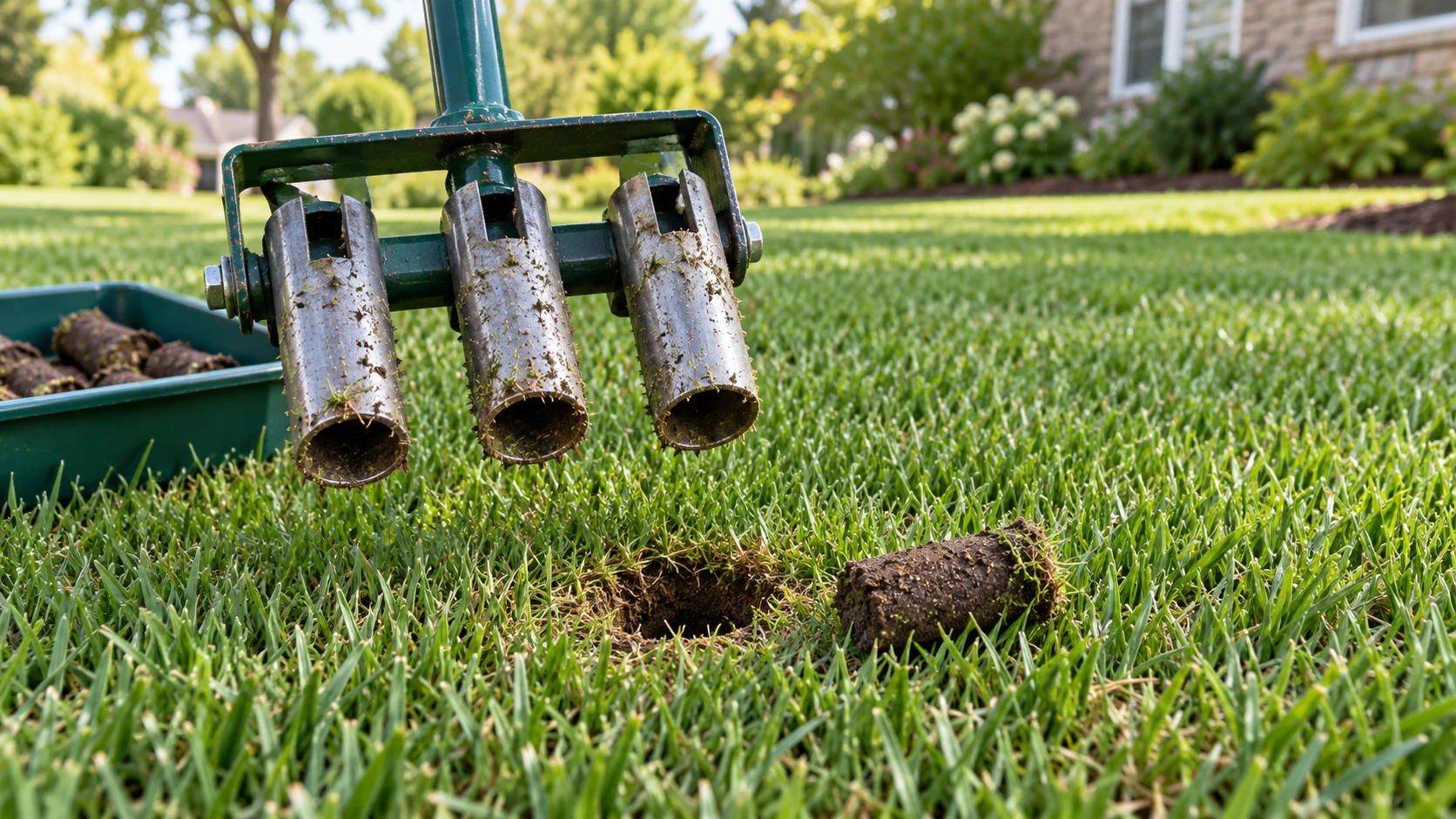
Manual core aerator plugs not ejecting can mean several different things at the lawn surface. A hollow tine may be packed with material, the soil may enter as a smear instead of a separable core, or the tool may never have reached a stable working position. Look at the tines and the mark left in one small test patch before making another pass. A row of holes alone does not tell you whether intact plugs moved through the tubes.
Two manual tools give a useful physical comparison. The unbranded four-tine lawn aerator is described with four hollow tines and a T-shaped handle. The HYKE three-tine manual aerator is described with a core tray and a cleaning stick. HYKE's gallery labels three coring tines and shows open tube ends. Those pages establish the advertised configurations and visible shapes; they do not show how either particular unit will behave in your soil.
Check what actually happened on one push
Choose an exposed, small part of the lawn where you can see the tool's path and are permitted to disturb the ground. Identify any irrigation, buried cable, edging, tree root, or other known obstacle before placing the tines. Inspect the tool for loose parts or bent tube openings while it is out of the soil. If the condition of a tine is uncertain, stop and use the maker's directions rather than forcing a damaged edge into the ground.
On a single controlled push, note three separate observations: how far the tine appears to enter, whether a soil piece comes out as the tool is raised, and whether anything exits through the tine or into a tray on a later push. A plugged tube may leave a surface mark without releasing an intact core. A shallow push may collect little material at all. Keep the two observations apart, because a missing plug on the ground can mean the tray caught it on a model that has one.
For the HYKE tool, look at the tray described on its current product page before deciding that no cores emerged. The listing says the built-in tray collects them. The unbranded four-tine listing describes hollow tines but does not describe the same tray. Check the actual model in hand rather than transferring a discharge path from one offer to the other. If a plug falls apart as the tool is lifted, collect a small sample from that one mark and describe what you saw; do not call it a clean ejected core.
A nearby lawn project may tempt a broader pass. The published lawn-roller setup guide owns the separate decision about setting up and moving a roller for a manageable yard day. A roller's surface contact says nothing about whether hollow aerator tines are clear. Keep the troubleshooting patch small until the cause of failed ejection is visible, then decide independently whether either tool belongs in the larger job.
Inspect the hollow opening before changing soil conditions
With the tool stationary and fully out of the ground, view each tine from a safe angle. Is its mouth open, partly bridged by soil, or filled to the rim? Compare all tines on the same head. One blocked tube beside two open tubes points to a local obstruction or damage rather than a uniform soil response. If every tube is packed, record that too. A photo of the mouths before cleaning can help distinguish what changed after the next test.
Never clear a sharp tine by putting a finger into it. Follow the maker's cleaning instructions and keep the tool stable while using any supplied implement. HYKE's product description specifically mentions a cleaning stick for clogged tines. Verify that the stick and its instructions are present in the delivered configuration, then use them only as directed. The unbranded listing does not promise that same accessory, so do not imply its buyer has one. If a blockage resists the prescribed method, set the tool aside rather than improvising with force.
After a permitted cleaning, inspect the opening again without another lawn pass. Note whether the tube is visibly clear and whether its lip remains round and unobstructed. A clear mouth is a useful starting condition for the next small push, but it does not prove the full tube is free of material or that every soil condition will produce a plug. If the opening is distorted or a joint has shifted, a new test would answer little about soil. Resolve the tool's condition first.
The four-tine page calls the tines stainless steel and the frame heavy-duty steel. Those are the seller's material and durability claims, not measured resistance to bending or an instruction to strike stones. The HYKE page says extra-thick steel and shows a core tray. Neither description supplies a universal cleaning pressure or repair method. Use the exact maker's care guidance for the unit received and avoid treating broad sales language as a workshop specification.
Read the soil sample instead of guessing from the surface
Once the tubes are visibly ready, make one small test where the ground is clear of known hazards. Look at the material that enters a tine, if any. Does it hold together briefly, crumble before it reaches the mouth, or smear and adhere inside? These are observations about that patch and moment. They help separate a tube that never filled from one that filled but failed to discharge. They do not diagnose the whole lawn or establish an ideal moisture level.
If material smears along the rim and stays on the metal, changing the tool may not explain the result. Pause and compare a second permitted patch under visibly different surface conditions only after recording the first. Avoid adding water just to make a plug appear; water can alter traction and soil response, and the current product pages do not supply a watering procedure for this test. Likewise, a very dry, crumbling sample may fail to remain a distinct cylinder even if the tine entered. Name what you can observe and defer any broader lawn-treatment decision to local guidance.
Check depth carefully. The unbranded page lists 2.6-inch tines and a head width, but that dimension does not prove a full-depth core formed on your push. A mark around the tube's outside, surface debris, and the position of the head may help you estimate entry in the small test. Do not lean harder merely to reach a number from a listing. If resistance changes abruptly, stop and inspect for an obstacle. If the head cannot sit as intended, investigate the setup or site rather than repeating the same forceful motion.
A plug on the lawn can also break after leaving the tool. Keep the first observation close to the tine mouth or tray instead of judging only from scattered pieces later. The distinction matters when comparing models: a tray may hold fragments that would otherwise land near the hole. Put a recovered sample aside briefly so you can inspect the next push without confusing old material with new ejection. Do not infer compaction relief, water movement, or root response from the appearance of one plug.
Check alignment and the exact tool configuration
Set the tool on firm, level ground while it is empty. Compare the visible tine tips and check that the handle and head are attached as supplied. The unbranded listing describes a 39-inch-tall tool with a wide T-shaped grip; HYKE's title identifies a 43-inch manual tool. Those lengths are listing descriptions, not proof that an assembled sample is straight or comfortable for every operator. A crooked or loose head can change which tine meets the surface first. Follow the assembly directions for the actual unit before another trial.
During a controlled push, keep the head positioned as its maker directs. Watch whether one tine enters while another merely scrapes. A partial group of openings is a different result from several clean holes with trapped cores. If the ground slopes, the head and handle may meet it unevenly. Move to a safe, representative level patch if available and compare the marks. Do not twist a buried tine to chase a plug; that motion may damage a joint or catch an unseen obstruction.
Check the discharge route of the exact model. HYKE's current listing says its tray collects soil cores and includes the cleaning stick; the gallery helps identify three hollow tines despite another image using the word “spikes.” The four-tine page does not describe those same parts. Before buying, examine the live gallery and included-items description. Before troubleshooting a delivered unit, inspect what actually arrived. A missing or altered part is a seller or maker question, not evidence that all manual core aerators use the same design.
If the visible product does not match its listing, save the model identifier, receipt, and clear photos of the part in question. Ask the seller for the exact configuration or the maker's instructions before using an uncertain assembly. Do not substitute a spike aerator's behavior for a hollow coring tool merely because both are sold for lawns. A solid spike makes a different opening and cannot be expected to pass a cylinder of soil through a hollow channel it does not have.
Decide what the small test supports
Use a short record for each test: patch location, visible soil condition, number of tines that entered, material at each opening, material in any tray, and any cleaning done between pushes. Keep the order intact. If plugs appear after a visible obstruction is cleared, you have evidence that cleaning mattered on that sample. If results differ by patch with the same clear tool, the ground condition or an unseen obstacle remains a candidate. If no tine enters cleanly anywhere safe, setup or tool condition deserves attention before more lawn work.
The published garden-rake guide addresses a later surface-tool choice: leaf-gathering tines versus soil-working teeth. It does not diagnose a hollow aerator tube. If cores are left on the lawn after a successful test, decide separately whether to leave them, collect them, or follow local lawn-care advice. Do not use a rake to mask the evidence before you have inspected where and how the cores emerged.
When the obstruction, soil response, and alignment remain unresolved, stop the wider job and consult the tool's instructions or a locally qualified lawn professional. A small, reversible test is enough to tell you what to ask: Which tine is blocked? Does the tray receive anything? Does one patch crumble while another smears? Bring observations and the model identifier. That is more useful than asking whether a product advertised for “lawn restoration” should always eject plugs.
For a purchase decision, compare the physical work you need with the documented configuration. The four-tine offer advertises hollow tines and a T-shaped handle; HYKE advertises three tines, a tray, and a cleaning stick. Confirm current included parts, dimensions, care instructions, and return terms on each live page. Then choose based on a manageable test patch and your ability to inspect and maintain the tool. No listing can promise a clean plug from every soil or make an uncertain buried obstruction safe to push through.