Educational & Explainer Articles
Garden rakes: leaf gathering and soil levelling
Understand leaf-gathering tines, rigid soil-rake teeth, material labels and care, with actual Fiskars and Kent & Stowe offers and gardening guidance.
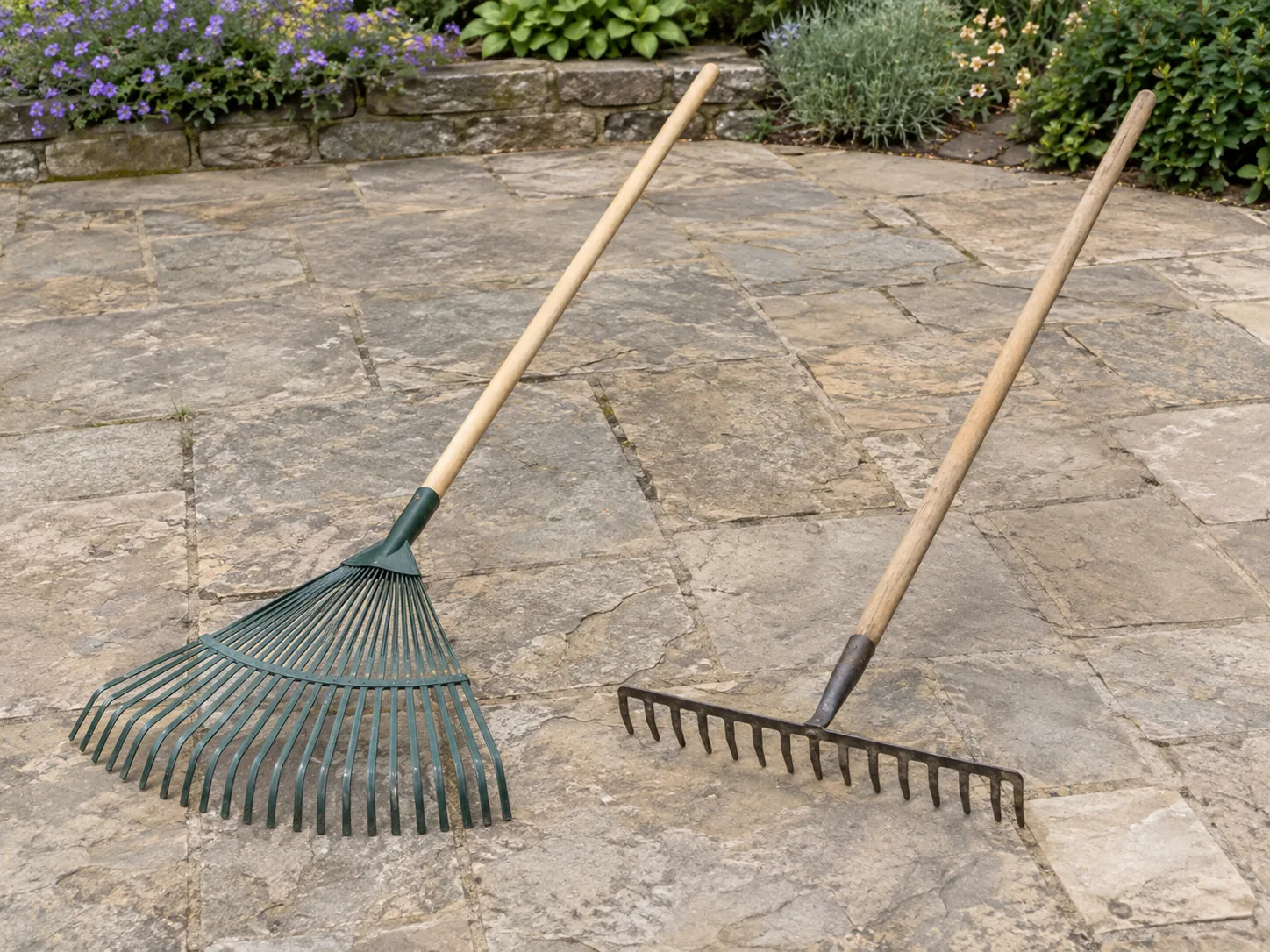
Garden rakes can do quite different jobs even when they share a long handle and a toothed head. Gathering loose leaves calls for a different kind of work from levelling the surface of a cultivated bed. Look at the material you want to move and the condition you want to leave behind. Those two questions help identify a useful tool than its colour or the broad Garden Tools category.
The actual Fiskars leaf-rake offer and Kent & Stowe R504KS soil-rake offer illustrate that distinction. One describes a broad head with curved tines for collecting leaves. The other describes a stainless steel tool for cultivating and levelling surface soil. This explanation concerns those functions and the parts named in the descriptions. It reports no handling trial, strength test or comparison of the finished garden work.
Leaf rake tines gather loose material
For leaf rake tines, begin with the material on top of the ground. Fallen leaves are loose objects you want to gather, rather than the soil surface you want to level. The selected Fiskars 24-inch leaf rake offer describes curved tines that grab leaves and a broad head intended to move quantities of them. Its anti-clogging wording is the offer's design claim, without a test result supplied here.
A wide gathering head gives you a useful question about the work area: are you collecting from an open patch or working among objects that limit access? A broad lawn and a narrow space between established plants do not present the same outline. Identify the place where the head needs to work before choosing a width. You can make that distinction without predicting how quickly a particular person will finish the job.
The selected description gives a 24-inch head width and a 67-inch overall length. Keep those measurements attached to their different directions. Width concerns the head across the working area; overall length concerns the complete tool. Neither figure is a count of tines or an assessment of how the rake feels in your hands. Think about the head's access to the intended area separately from the place the full-length tool will occupy.
Soil rake teeth work on the surface being prepared
For soil rake teeth, the target is the soil surface itself. The selected Kent & Stowe R504KS soil rake is described for cultivating surface soil and levelling it for final preparation. Its native account names stainless steel and a tapered ash wood handle with smoothed rivets. Those details belong to this offered tool, rather than supplying dimensions for another model in the maker's range.
Levelling means addressing the surface you intend to leave, not simply pulling every visible object into a pile. Kent & Stowe's current soil-rake page describes distributing soil after digging, removing debris and breaking up clumps. The job therefore has a different endpoint from clearing fallen leaves off an existing lawn. Decide whether you are gathering material away or preparing the remaining surface when choosing the relevant tool.
RHS's soil-preparation teaching resource makes the division of work clear. It uses a fork to loosen the soil before a rake levels the surface and addresses remaining lumps. The rake appears as part of preparation rather than as the only tool doing every stage. This helps explain why a soil-rake description should not be read as a substitute for digging, loosening or every other task the bed may require.
Teeth and tines name parts rather than a complete purpose
Descriptions use both teeth and tines for the projections on a rake head. Read the surrounding description to learn what they are intended to do. A number beside that word identifies a count, while rigid, curved or another construction term describes a different property. Combining those details is more informative than treating the largest number as a universal sign of the best tool.
Kent & Stowe's current manufacturer pages give a concrete example. Its current long-handled soil rake names fourteen rigid tines; its Garden Life lawn-and-leaf rake names sixteen stainless steel tines for gathering leaves and debris. These are separately identified current maker examples. Their counts do not turn the lawn tool into a soil-levelling tool, and the counts are not supplied specifications for the retail Fiskars or R504KS offers discussed above.
A tool's intended work also matters more than a familiar shape seen from a distance. A rake in a garden photograph might be gathering debris, finishing a bed or serving another task. Identify the tool's stated function instead of selecting it only because the handle and head look recognisable. You want the information that describes what the actual head is designed to work on.
Metal and wood tell you about construction
Stainless steel alone does not identify a soil rake. The two current Kent & Stowe examples both name stainless steel and ash wood while describing different purposes. Read the material name alongside the head form and intended job. This is useful when a shop groups several tools together under Stainless Steel: that heading describes part of their construction without selecting the task for you.
The reverse comparison is useful as well: a shared task can appear with different material combinations. Kent & Stowe's leaf-rake comparison table includes stainless steel with ash wood, fibreglass with plastic, and fibreglass with glass-filled nylon. The table groups those examples around clearing. When browsing, identify the task first, then read the construction account for the exact option. That gives the material label a role in comparing the objects, rather than letting it stand in for the job description.
Keep the head and handle materials distinguishable too. The R504KS description names an ash handle; it does not describe the entire tool as a single piece of wood. A construction record can name the metal working part, the handle and the connection details actually given. That makes later care questions more specific than an instruction to treat everything like a metal object or everything like a wooden one.
The Fiskars retail account does not identify the head or handle material here. Its brand and dimensions are insufficient to supply those missing construction details from a different Fiskars model. Use its actual curved-tine and leaf-gathering description for the function it states, then obtain the relevant material and care information for the delivered item. The neighbouring Kent & Stowe offer cannot supply it.
Leaf gathering and scarifying are different jobs
Gathering loose leaves is distinct from scarifying a lawn. RHS describes scarifying as removing thatch, including old grass clippings, moss and other debris at the soil surface, and discusses a spring-tined rake for that task. Its guidance concerns the condition of the lawn and the particular maintenance being undertaken. A leaf-rake name does not automatically identify the tool or complete instructions for that different operation.
Aerating is another separate term in RHS's lawn guidance. It concerns making openings into the ground, using a garden fork or an appropriate aerator; a hollow-tined tool can remove plugs of soil. That is a different action from gathering material over the surface or levelling a prepared bed. Learning the job names can therefore help you understand a garden plan before choosing equipment. This explanation supplies no spacing, depth or treatment recipe for aeration, and neither selected retail rake is identified here as an aerator.
Use those job names accurately when asking for a tool recommendation. Say whether you want to collect fallen leaves, address thatch or prepare bare surface soil. Each description gives the responder something concrete to match. A request simply to tidy the garden can leave several different activities hidden in one phrase, with no clear answer about the intended tool.
The same distinction helps if you already own a rake. Begin with its actual identity and the job its information covers. You may discover that it already serves the next task you have in mind, or that the new task requires a different tool. Keep that assessment attached to the actual work, rather than replacing something merely because another product has a larger head or a longer guarantee headline.
Rust resistance still belongs with care
The selected Kent & Stowe description claims resistance to rust and soil adhesion. Its current manufacturer care advice still calls for removing soil and debris, drying tools completely and storing them in a dry environment. Those statements fit together: a material claim does not remove the care described for the tool. Plan somewhere to clean and dry the object as well as somewhere to put it away.
Wood and metal can require different handling under the applicable instructions. Kent & Stowe warns against soaking wooden handles and leaving tools wet, describing possible handle swelling and deterioration. This article gives no oil-treatment or chemical-cleaning recipe. Retain the instructions for your actual item so the care method covers its materials and finish, including any part of the connection that the short retail description leaves unspecified.
For the longer Fiskars offer, include its complete length in the storage question. Check the intended space using that measurement and the tool's applicable storage guidance. A wide head and a long handle remain physical objects after the leaves have been gathered. Choosing the tool also means finding a practical place for the whole thing between uses.
A guarantee is a separate promise to inspect
The Fiskars offer names a lifetime warranty, while the Kent & Stowe R504KS account names a fifteen-year guarantee. These are stated warranty descriptions. They are not measured working lives or evidence that one rake finishes more work than the other. Obtain the terms applicable to the exact item and purchase, retaining its model and order information if warranty coverage affects your choice.
Connect the tool to the rest of the garden task
The autumn leaf collection guide considers where gathered material will go and which container the destination accepts. That is the next kind of question after choosing a tool for gathering leaves. The rake moves material; a bag's capacity and a collection programme's requirements address different parts of the work. Keep each answer with the object or service it describes.
If the intended work supports spring planting, the seed-starting and outdoor planting-window guide connects the chosen crops with their eventual outdoor conditions. That planting decision can help identify when a bed will be needed. It does not make a rake's head width into a sowing interval or supply a soil-preparation method for every crop.
Finish the choice with a description of the intended result: loose leaves gathered, surface soil prepared or another identified maintenance task. Match that result to the actual tool's purpose, then consider its construction, dimensions and care. The selected offers answer different garden jobs, so their useful features become clearer when the job comes first.