Seasonal & Holiday Content
Autumn leaf collection: choose bags after the destination
Plan autumn leaf gathering around a confirmed destination, local container requirements and the actual AJM and Highcool bag offers.
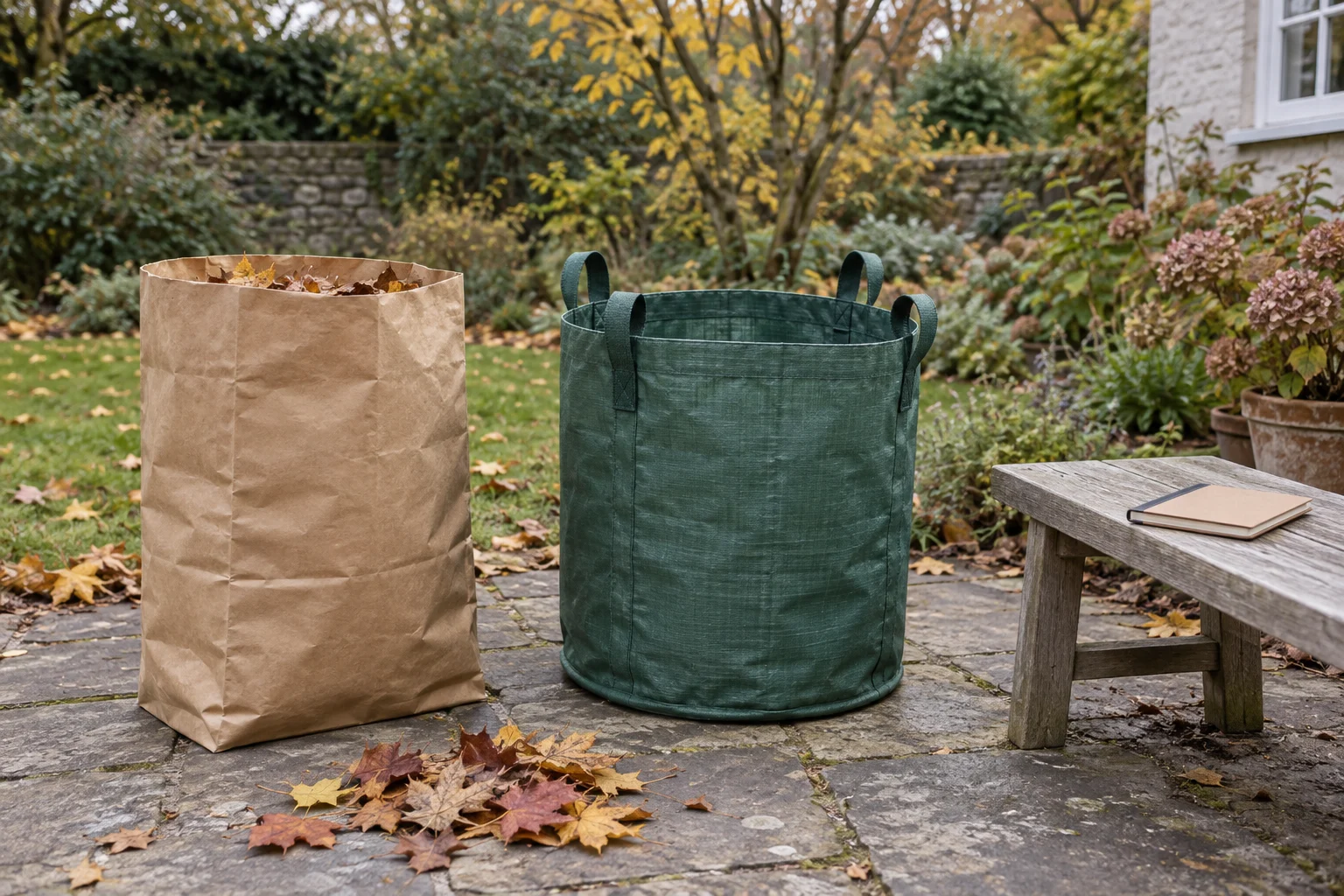
Plan autumn leaf collection around where the leaves will go. A bag can help gather material without being the container a collection service accepts. Establish the intended destination, its current requirements and the work area before deciding which bag offer belongs in your seasonal plan.
The actual offers here are AJM kraft lawn-and-leaf bags and Highcool standable garden-waste bags. Their native descriptions identify different quantities, capacities and handling features. Those facts can inform a purchase, but they do not supply a local pickup schedule, a load rating or permission to include every material found outdoors.
Begin with the destination for collected leaves
Decide whether you are considering an existing home composting system, a municipal or community collection option, or another authorized destination. Keep that choice attached to the actual material you intend to collect. If the destination is still unknown, treat finding it as part of preparation rather than filling containers and hoping the contents will be accepted.
EPA's Composting At Home page describes using food scraps with dry leaves and woody yard material at home. It also identifies municipal or community composting programs as a possible option where home space is unavailable. That is a description of possible routes, not confirmation that a particular service operates at your address.
The same agency guidance distinguishes appropriate backyard-compost ingredients from materials it advises avoiding, including pet waste, herbicide-treated plants and grass, and diseased or pest-infested plants. Keep unfamiliar or mixed material unresolved until you have applicable information. This guide gives no compost-building recipe or treatment method for a questionable load.
Yard waste bag requirements belong to the actual program
For yard waste bag requirements, obtain the current instructions from the service or site you intend to use. Identify what material is accepted, how it must be presented and any quantity, container, closure or weight requirements. A product's lawn-and-leaf description cannot answer those location-specific questions.
Keep a dated reference to the instructions with your collection plan. Record the actual service area and the particular program involved, especially where ordinary waste, yard material and drop-off services have separate rules. Information for a neighboring municipality may be useful navigation while remaining the wrong authority for your address.
If the instructions leave a material or container unclear, ask about the specific combination. Name the bag and what you want to put in it. Do not reduce a qualified response to a general statement that all paper bags or all reusable containers are accepted everywhere.
Read the AJM carton quantity carefully
The AJM Bio-Save offer identifies AJMRBR30105BO brown kraft lawn-and-leaf bags with a 30-gallon capacity. The description states two-ply construction with wet strength, dimensions of 16 inches wide by 12 inches long, and 50 bags per carton. Keep the carton quantity with the offer; the URL also includes 1PK.
The stated dimensions do not include a third measurement here. Do not invent one to calculate a precise container shape. The Bio-Save name also does not establish compostability, a certification or acceptance by your intended service. Retain the actual part reference when asking the supplier or program a question.
Consider whether the offered carton is the quantity you want to purchase. A plan involving fewer bags does not make the rest free or guarantee a later use for them. Compare the offered quantity with the containers you expect to prepare for the next collection.
Keep Highcool's collection role distinct from its destination
The Highcool yard-bag offer describes four standable 106-gallon bags, each with four handles. It names leaves, grass, branches and other garden debris, and says the bags fold for storage. Those are the offered features; this article reports no loading, carrying or durability test.
A large stated volume does not establish a permitted carrying weight. Nor does a list of possible garden contents establish that a local collector accepts those contents or the bag itself. Keep the gathering container and the required destination container as separate fields until the actual program information connects them.
If the bags are wanted for temporary gathering rather than final presentation, include the remaining transfer step in your plan. That step still needs an appropriate destination and its applicable requirements. Buying a collection aid does not, by itself, complete the route from the yard to the receiving site.
Define the part of the property you will address
Walk through the intended work area before preparing containers. Identify which areas are yours to maintain, what access must remain available and where the collected material will be placed temporarily. Keep neighboring or shared-property boundaries clear instead of assuming that every visible pile belongs in your plan.
The before-snow clearing guide begins with the actual area and route a household intends to address. That planning distinction is useful here too. Its snow-shovel features and winter-clearing discussion supply no leaf-bag capacity, lifting method or disposal approval.
If several people share the outdoor space, agree on the area for this session. One person may need access to a gate or storage area while another is collecting leaves. A clear plan can leave that route available without requiring everyone to infer the day's arrangement from bags appearing in different places.
Use weather information for the decision it supports
Check current weather information when choosing a work period and preparing for a scheduled collection. Consider how an interruption would affect where the material and containers are left. This article provides no forecast and no guarantee that an outdoor session or pickup will proceed as originally planned.
The weather-station readings guide distinguishes measurements, totals and forecasts. A reading from a particular sensor should stay with its location and measurement. It does not independently announce the future weather at your property or confirm whether a service will operate.
For an uncertain pickup, check the service's own current notice rather than deriving its schedule from the weather. Choose the next action: confirm the program notice, change the work period or retain the material appropriately while awaiting the applicable instructions. A bag purchase cannot settle that scheduling question.
Make a seasonal leaf collection plan that can stop
A seasonal leaf collection plan can cover one defined area and the next verified destination step. It does not have to promise that every leaf will be addressed in one day. Choose a portion that fits the actual time and assistance available without turning the bag's maximum stated volume into a target to reach.
Decide where the session will end before you begin. You may finish the selected area, reach the agreed stopping time or need to pause for another activity. Keep the required presentation and temporary-storage instructions available so an unfinished session does not depend on a guessed arrangement.
Use the actual bag and equipment instructions for handling, storage and use. This guide supplies no lifting technique, powered-tool method, maximum safe load or substitute instructions for an unfamiliar container. If the available information does not answer a handling question, resolve it before treating the feature description as a method.
Separate ordinary leaves from an unknown mixture
Look at what is actually in the area you intend to collect. A seasonal pile can contain packaging, other people's discarded objects or material whose origin is unclear. Keep unknown items out of an assumed leaf-only stream while obtaining the appropriate local guidance for them.
Do not use either bag's garden wording as a universal instruction for sharp, hazardous or contaminated objects. The two descriptions provide no such approval. A question about an unfamiliar object needs information appropriate to that object and the destination, rather than a larger bag or a different interpretation of the capacity label.
Where you already know that material has special requirements, retain that identification through collection. Mixing it with ordinary leaves would not make the original question disappear. Keep a separate note of the unresolved destination instead of representing the whole pile as ready for a program that has not accepted it.
Check the actual presentation before collection day
Review the current service instructions against what you have prepared. Confirm the relevant day or receiving hours, the presentation location and any specified restrictions. Use the actual notice for each item; this article establishes no universal curbside placement, closure method, advance set-out period or vehicle-loading rule.
If someone else will complete the destination step, leave the applicable instructions and product identity with them. State what is already confirmed and which question remains open. A helper should not have to infer that every filled container is accepted simply because it has been placed near the route.
After the collection or drop-off, check what actually happened. Record an uncollected item and the service's explanation where one is supplied. An unanswered collection problem stays unresolved while you obtain the relevant information; do not silently change the bag or contents and describe the earlier presentation as accepted.
Collected leaves are an ingredient rather than finished compost
EPA defines composting as a managed, oxygen-requiring biological process in which microorganisms break down organic materials. Its account identifies carbon, nitrogen, water and oxygen as parts of that process. Dry leaves are among its carbon-rich materials, commonly called browns. A bag of newly gathered leaves is therefore material you may be planning to use, rather than evidence that finished compost has already been produced.
Keep that distinction when discussing the next step with another household member. Ask whether the plan is to retain leaves for an established composting system or deliver material to an accepting program. The word compost on a note should not leave someone guessing whether you mean an ingredient, a managed process or a finished soil amendment.
EPA's page includes separate instructions for backyard and worm composting. Neither selected bag description identifies the offer as a complete system for either process. If home composting is your intended route, use applicable instructions for that system. Bag volume alone supplies no decomposition timetable, temperature, ingredient balance or assurance that an unattended container will produce a particular result.
Keep useful information for the next leaf fall
Retain the actual program reference, bag part number and notes about the quantity you used. These records can help you begin the next session with fewer missing details. They do not preserve a service rule forever, so check the current version again when the next season arrives.
Count any unused supplies before ordering again. Keep the product identification with them, and follow the actual storage information for the item. The Highcool description's folding feature does not prescribe a cleaning or drying method; AJM's wet-strength wording does not establish unlimited outdoor storage. Ask for missing instructions where they affect how you intend to keep the remaining supply.
Plan autumn leaf collection by connecting the material, the gathering step and the confirmed destination. The AJM and Highcool descriptions supply different purchasing facts. Use those facts within the plan while keeping local acceptance, actual handling requirements and the next collection opportunity attached to their own sources.