Seasonal & Holiday Content
Spring seed-starting plan: time crops for outdoor planting
Plan spring sowing around local crop windows, indoor space and hardening off, with actual HomeGrown seed-pack and Burpee SuperSeed tray information.
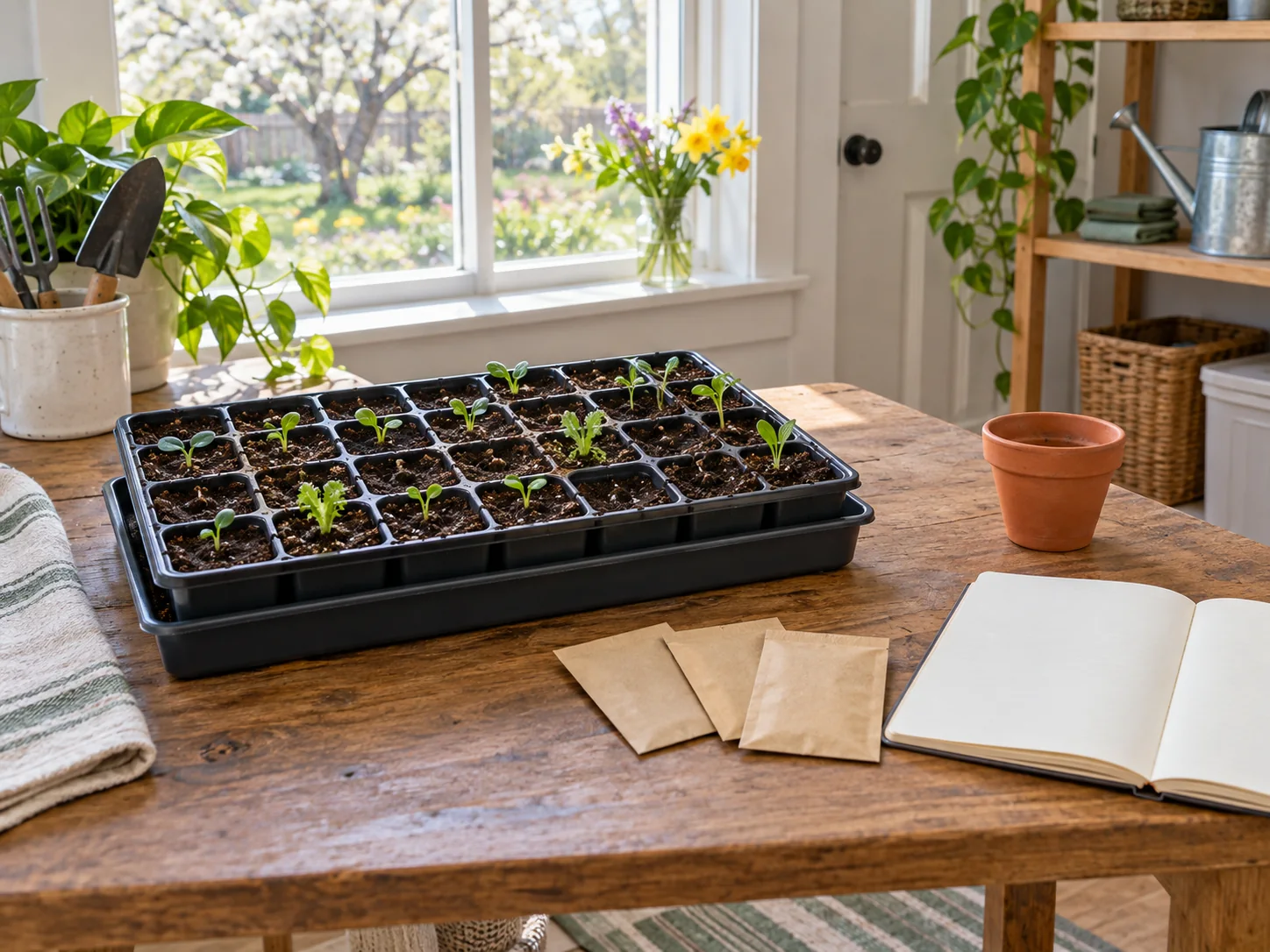
A spring seed-starting plan begins with the plants you can eventually put outside. A large seed assortment is tempting on a cold afternoon, but choose crops that belong in your garden, establish which need an indoor start and find when their outdoor conditions will be suitable. Work backward from those decisions before filling a tray. Otherwise, the indoor growing area can fill with seedlings whose next home is still undecided.
The HomeGrown assortment and Burpee trays below illustrate two different parts of that preparation: selecting seed and providing starting containers. This is a seasonal planning guide, without a trial of either product or a forecast for your garden. The calendar example is deliberately hypothetical. Use the actual packets, crop guidance and local conditions to make your own dates.
Choose a manageable part of the assortment
The selected HomeGrown 55-variety vegetable seed pack lists 28,000-plus seeds in individual packets, a resealable mylar pouch and a digital growing guide. Its native account describes heirloom, non-hybrid, open-pollinated seed. It does not list the individual varieties. No vegetable mentioned in this article is therefore presented as confirmed contents of that assortment.
Choose your first crops from the actual packets you receive or already own. Consider what you want to eat and the outdoor planting space you can provide. You may want a few plants of one vegetable rather than a sample of everything. Leave the rest unsown while you establish a growing routine. The number of varieties in a package is a choice of possibilities, rather than an instruction to begin all of them together.
For each selected packet, establish whether it should be sown directly outdoors or raised as a transplant. University of Maryland Extension's planting calendar distinguishes these methods and notes that some crops do not transplant well. An indoor-start crop can use a tray; a direct-sowing crop keeps its own outdoor requirements. Put direct-sown selections on their own outdoor schedule.
Work from local vegetable planting windows
Local vegetable planting windows depend on crop and place. Maryland Extension's calendar is expressly for central Maryland, based on particular frost assumptions, with adjustments for other parts of the state. It also distinguishes cool-season and warm-season vegetables. The date printed in a regional calendar needs that regional context when you use it.
Find relevant guidance for the place where your plants will grow. Keep the spring planting window beside the particular crop and method, rather than copying a general “plant in spring” note onto every packet. A cool-season transplant and a heat-loving vegetable can have different destinations on the calendar even when their seeds are opened on the same afternoon.
A typical last-frost date is planning information, not a promise about a particular night. Maryland Extension cautions against planting warm-season vegetables too early in cold soil. Keep current weather and the actual planting conditions in the decision as the season approaches. Starting indoors allows preparation before outdoor planting; it does not remove the outdoor requirements that eventually have to be met.
Counting backward from transplanting
For counting backward from transplanting, use the seed packet's directions and applicable crop guidance. University of Minnesota Extension's indoor-starting guide gives different indoor periods for different plants. Its Minnesota schedule, for example, lists tomatoes at five to six weeks indoors and peppers earlier. Those entries illustrate why one sowing date cannot serve every crop; they are not a universal timetable for another region.
Here is one calendar calculation, using an invented planning date. Suppose suitable local and crop guidance leads a gardener to plan a May 15 transplanting date, and the applicable packet calls for sowing six weeks beforehand. Six weeks before May 15 is April 3. If the intended planting date changes, reconsider the sowing plan against that change. May 15 here is an arithmetic starting point, without a location or frost prediction attached.
Add the transition outdoors to the same calendar. It belongs within the preparation for transplanting, rather than becoming a forgotten job after the planned planting day arrives. Mark the period when you will need to move seedlings out and back in, and check that someone can actually do it. A timetable requiring daily attention during a week away from home needs to be revised before seeds are sown.
Count growing space, not just empty cells
The selected Burpee SuperSeed tray offer names a two-pack of 36-cell trays, model 96512. Its native description lists flexible silicone cells, molded drainage slots and a watering tray with channels for excess water. Burpee's own 96512 product page describes the 36-cell design and side handles for lifting and pouring off excess water. The retail two-pack and the manufacturer's single-kit offer have different package counts.
Decide how many seedlings you can accommodate after they grow. Empty cells are only the starting space. Maryland Extension warns against leaving seedlings in a flat too long and discusses moving them into larger individual containers. If that becomes necessary, those larger containers need room too. Reserve space for that possibility instead of treating the initial tray's footprint as the whole indoor requirement.
Draw a simple allocation before sowing: which selected crop goes in which part of the tray, how many plants you hope to keep and where larger containers could stand later. An intended plant count is a planning choice, without a germination guarantee. If the available space only supports a small batch, reduce the batch while the remaining seed is still in its packet.
The windowsill herb-space planning guide examines light and container placement before choosing decorative pots. For seed starting, use guidance specifically about seedlings and their lighting. A bright-looking shelf that suits a room arrangement has not automatically become a suitable indoor propagation area. Establish the required setup before assigning it a full tray.
Give each sowing a route through the season
Keep the selected packet's sowing depth and other instructions with the crop. Do not use one convenient depth for the entire assortment. Minnesota Extension notes that species have different requirements, including some seeds needing light for germination. The assortment's broad vegetable label does not replace those individual instructions.
Prepare identification while the packets and containers are still together. Burpee's manufacturer page names alphanumeric rows and a Plant-o-Gram diagram for its tray. Use the identification system actually supplied with your item, or a clear equivalent you can maintain. The missing plant-label guide explains how difficult recovering a name becomes when the original container connection is lost.
Keep a sowing date alongside the crop identity so you can return to the applicable instructions later. If another batch is sown on a different day, distinguish it at that point. This is preparation for ordinary care, rather than an attempt to diagnose a seedling by age alone. The dates help you consult the right guidance and understand your own planting sequence.
Plan for care while the weather catches up
After germination, Maryland Extension recommends strong grow-light illumination and warns that window light is seldom sufficient for sturdy seedlings. Its care guidance also emphasizes moist growing medium without waterlogging and describes both surface watering and water uptake from a shallow pan. Follow the applicable growing setup and crop directions; the presence of a watering tray does not set an automatic watering interval.
Make care practical for your household. Identify who will inspect the seedlings and where excess water can be handled without damaging the room. If the tray has to move for meals or other daily use, include that movement in your arrangement. A place that is available only while the seeds are being sown may be inconvenient once living plants need continuing attention.
When outdoor planting is delayed, review the plants and available indoor space together. Seedlings may need continued care or larger containers while the destination remains unsuitable. Do not move them into inappropriate conditions simply to recover an empty shelf. Ask your local extension service for crop-specific help if the delay leaves you unsure how to manage the plants you have.
Reserve time for hardening off
Maryland Extension recommends beginning hardening off one to two weeks before setting transplants in the garden. Start with a shaded, protected outdoor position on warm days and bring plants inside at night, increasing sunlight gradually. It cautions against exposing tender seedlings to windy days or temperatures below 45°F. This is gradual adjustment, rather than taking an indoor tray straight into an exposed garden bed.
Choose a place you can check and retrieve the tray from. Consider the actual route between the indoor growing area and that protected outdoor position. Review the forecast before leaving plants out. The goal is to prepare the plants for the conditions they will face, while keeping unsuitable weather from turning the transition into a setback.
Keep a seed order separate from the planting date
A seed-starting order has its own timetable alongside the growing calendar. If you want to purchase the HomeGrown assortment or Burpee trays through republeq.com using cryptocurrency such as USDT, first establish the actual package you intend to receive. The selected seed offer describes individual packets within an assortment, whereas the tray offer describes a two-pack. Keep those contents with the corresponding product when building the basket. A growing plan based on a different package could leave you missing materials even if the payment succeeds. At checkout, read the methods offered for that particular basket and select only a method whose instructions you understand. Mentioning USDT here does not establish its availability for a later order. If the checkout leaves an asset, network or other required payment detail unclear, obtain clarification through the actual checkout support before authorizing a transfer. No transfer address, network choice or wallet procedure is supplied by this gardening article. Review delivery information and applicable return conditions before relying on an arrival date for a planned sowing session. Keep enough flexibility in the garden plan to respond to the goods and conditions actually available. The seed assortment's digital guide is a listed inclusion, without a promise here about access arrangements or instructions for every crop you intend to grow. Retain the order confirmation and payment confirmation together so an enquiry can identify the same transaction. If an item changes before checkout, revisit its contents and the offered payment instructions. Payment records document a purchase; weather and crop requirements still determine what can happen in the garden.
Finish with a small set of selected crops, an appropriate outdoor window for each and a workable indoor arrangement for those needing a head start. Leave unscheduled packets for another decision. Your spring seed-starting plan gives the plants you choose a place to grow through the season, including the transition outside.