Problem-Solving Articles
Missing plant label: recover the name from your records
Check dated notes and tray photographs when a plant label goes missing. Keep uncertain names visible and choose blank tags using their actual listed details.
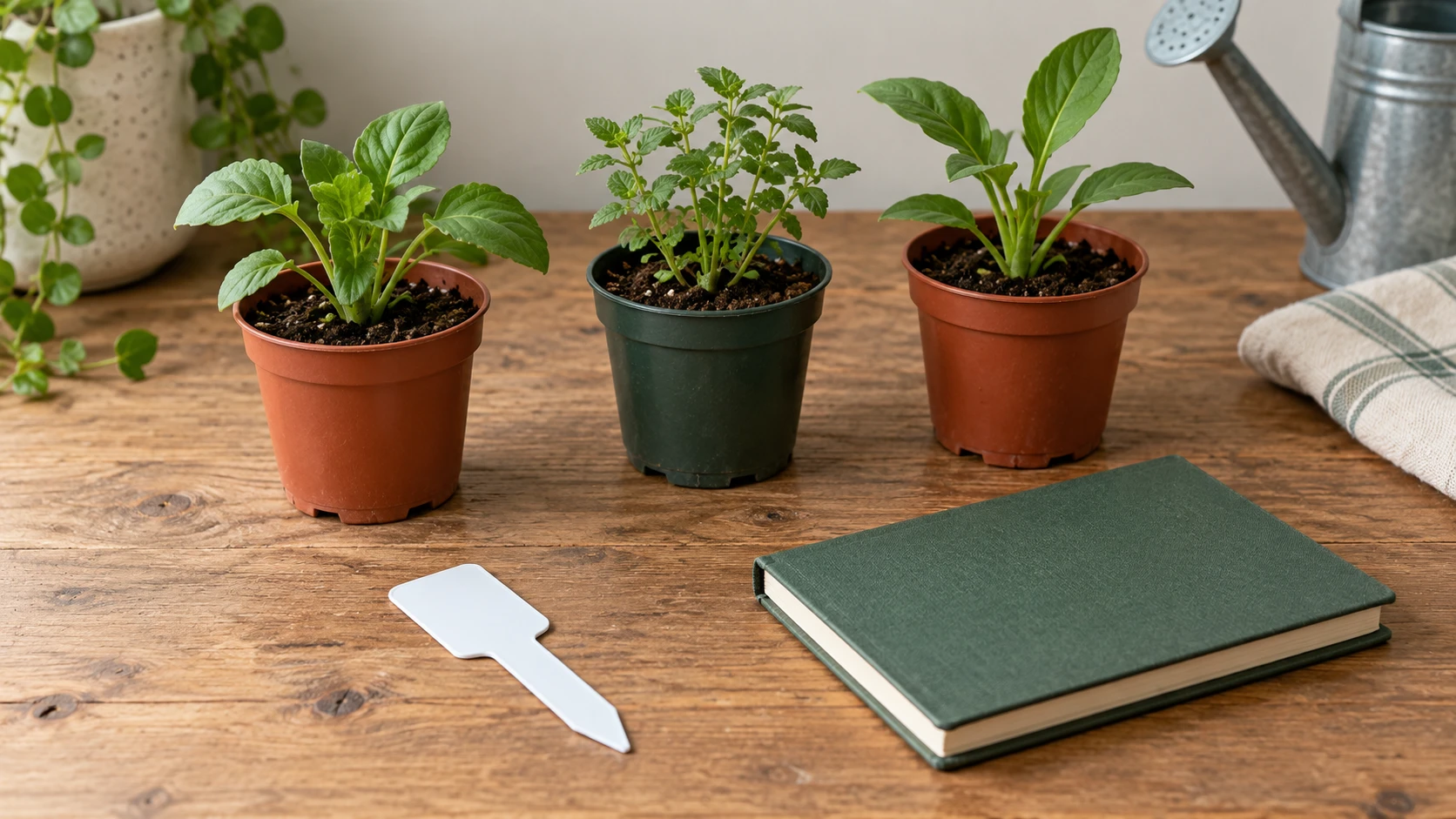
A missing plant label leaves two separate jobs: keeping the container identifiable now and recovering its earlier name if the records support one. A new blank tag can help with the first job. It cannot supply the name that disappeared. Begin with what you can document about the container, tray or planting batch, using the notes and images you already have, and leave the plant name unresolved when the connection is uncertain.
This guide offers a personal record-checking workflow for a home seed-starting area. It supplies no identification from leaf shape, no growing instructions and no assurance that an unnamed plant is edible. The aim is to keep a gap in the records visible while you investigate it, then make any replacement label agree with the information you actually recovered.
Give the unresolved container its own reference
Start with a temporary reference that does not pretend to name the plant. Unknown A is enough for a single uncertain container if that reference is unique in your records. If several are involved, assign separate references and record which actual container each belongs to. Use the same reference in your note and any photograph so you can discuss one item without quietly changing its identity.
Describe the present location as an observation. A note might say left side of the upper tray, photographed on the date you are making the note. That establishes where you observed it then. It does not establish where the container stood when seeds were sown or whether a neighbouring label has always belonged beside it.
Keep the old tag if one remains partly readable, and transcribe only the characters you can actually distinguish into your note. Separate an observation such as the visible letters from a proposed interpretation. Filling an unclear word from memory can conceal the very uncertainty you are trying to resolve. A photograph can preserve the remaining marks for comparison with an earlier record.
Recovering a plant name from records starts with the connection
For recovering a plant name from records, look for material created when the container was labelled or planted. That may include a dated tray photograph, a sowing note or a record connecting a seed packet with a particular tray position. The useful evidence joins a name to this item. A packet showing something you own does not, by itself, prove what was planted in the unnamed container.
Read the entire relevant note before copying a name. It might distinguish two varieties, record a second sowing or mention that a tray was rearranged. Keep those distinctions with the container references. An entry for an earlier batch cannot complete a later batch simply because the containers look similar.
If someone else did the labelling, ask what their record actually means. A remembered statement that all the plants on a shelf were the same may be less specific than a dated position list. Attribute a recollection to the person who supplied it rather than turning it into a contemporaneous written record. If their answer remains uncertain, retain that uncertainty.
A purchase receipt can identify a seed product bought, while a sowing record can identify what was assigned to a container. Those are different connections. The same household may buy more than one packet and leave some unopened. Keep the receipt as purchase information until another record establishes which packet supplied the particular planting.
Check whether a photograph still maps to the current tray
A clear earlier photograph can show labels and container positions, but it needs an orientation you can establish. Identify what makes its left and right correspond to the present arrangement. A cropped image containing only similar pots may not provide that connection. Do not fill the gap with a guess about which way the photographer was facing.
Check for a record of changes after the photograph. Containers may have been separated, moved into another tray or given to someone else. If you cannot establish that the position relationship survived, keep the photograph as evidence of the earlier arrangement. It should not silently become a map of the present one.
The year-end photo-caption guide encourages keeping contributors' words attributed and leaving uncertain details uncertain. For a planting record, a caption can similarly distinguish the person who remembers a move from a dated image that shows it. That article concerns sharing personal photographs and supplies no botanical identification method.
Retain the original image with any explanatory note you add. A new caption saying possible tray match should remain a proposed connection. If a later record establishes a different arrangement, you can revise the note without losing what the photograph actually showed. The purpose is a traceable account of the match, rather than a tidy-looking name unsupported by the image.
Keep conflicting accounts visible
If a notebook and a photograph appear to disagree, compare what each actually records. One might show the planned tray layout while the other shows the arrangement after sowing. Check their dates and descriptions before choosing either as the current answer. Record the disagreement if those details do not settle it. Copying the more legible name would improve the handwriting while leaving the identity question unanswered. Ask the person who made the entries whether another record explains the change.
One invented record check shows where to stop
Imagine a gardener with two unnamed containers, temporarily recorded as Unknown A and Unknown B. A dated notebook entry assigns variety Cedar to tray position one and variety River to position two. These names are fictional placeholders, not actual plant varieties or growing recommendations. An accompanying photograph shows those two labels in the tray on the recorded date.
Suppose the gardener also has a later note saying the containers were removed from the tray and placed together on another shelf, without a record of their individual destinations. The first record establishes the old positions. The later note establishes a move while leaving the current connection unresolved. Copying Cedar onto whichever container happens to stand on the left now would add a relationship that neither record supplies.
The gardener can preserve both historical names in the investigation note and keep the two current references as unknown. If another dated image later supplies a clear connection, the record can be reconsidered. This example shows a stopping point for the paperwork. It supplies no technique for telling plants apart and no reason to assign a name because leaving the field blank feels inconvenient.
Choosing a replacement plant label preserves the answer you have
choosing a replacement plant label comes after deciding what the record supports. University of Minnesota Extension's indoor seed-starting guidance recommends identifying each container or tray with a tag and using a permanent marker. That is a reason to plan identification when sowing. It does not establish that any selected tag and writing combination will remain readable indefinitely.
The GreenThumb T021GT plant label listing identifies plastic, an eight-inch label, 30-Pk. wording and Quantity 12. Its very short native description repeats those details. It does not explain the relationship between the pack wording and the quantity field. Obtain the aggregate supplied tag count before ordering for a specific number of containers.
Keep the model T021GT with that question so an answer concerns this offer. The text supplies no tag width, writing-area dimensions, compatible writing instrument or demonstrated outdoor marking duration. An eight-inch overall length cannot settle how much text the usable portion will accommodate. Confirm those details when they affect your intended label.
The LINE42 white plastic plant labels identify a total of 10,000 tags measuring four by 0.8 inches. Their description names a pointed edge and describes the tags as flexible, waterproof and UV resistant. Those are retail product statements. They do not demonstrate how a particular written name will survive the conditions in your growing area.
The LINE42 dimensions describe the supplied tags, without separately measuring a usable writing panel here. Its description does not identify a marker supplied with the package. Nor does it give a tested duration for the writing, a particular ink specification or a result for a previously marked tag. Ask about the actual writing requirements before treating the retail material claims as a complete marking system.
Keep names and batch references readable in the record
Choose the information needed to distinguish the actual containers. A plant name, a variety and a batch reference can carry different meanings. If the recovered record supplies only one of them, do not fill the remaining fields from a similar packet. A short reference can point to a longer note that preserves the complete information and its source.
Avoid inventing abbreviations halfway through the investigation. If two different names could share the same short form, retain a fuller name or use a distinct reference explained in your note. The physical tag and the notebook should refer to the same item. Explain an abbreviation in the record so it has one clear meaning.
The guide to tape-measure numbers explains why a number needs its feature and unit. The same reading habit helps when comparing these tag listings: eight inches describes a stated label length, while 10,000 describes a supplied count for a different offer. Neither number supplies a plant name or proves that the desired wording will fit the writing area.
Before adopting a final name in the record, read it against the evidence one more time. Check the variety spelling and the container reference together. If the match remains provisional, keep that status visible. A replacement tag should not appear more certain than the note explaining how its wording was recovered.
Keep the record current when the arrangement changes
When you intentionally change a container's recorded location, update the connection at that time in the system you use. A location-only photograph becomes less useful after the arrangement changes without a note. A reference that remains clearly associated with the container gives you a separate way to identify it in a later image or entry.
Decide where the current record lives so a second person can find it. A notebook and a phone can both contain useful observations, but unexplained copies can disagree. Identify which entry records the latest supported conclusion and keep its earlier evidence available. This is a personal documentation choice, without a claim that one particular application or storage service is required.
If a new uncertainty appears later, add the question to the record. Do not overwrite an established observation simply to make every field agree. You may be able to identify the batch while leaving an individual variety unresolved. Preserve that partial result instead of claiming that either the whole investigation succeeded or nothing useful was learned.
Keep the tag order separate from the missing plant name
A tag purchase through republeq can provide blank identification materials while the plant record remains unresolved. If you intend to use crypto, including USDT, begin by checking the selected offer and the quantity you actually want to order. GreenThumb's T021GT wording needs an answer about the relationship between its pack and quantity fields. LINE42 supplies a stated total for its own listing; that number cannot answer the GreenThumb question. Retain any supplier clarification with the product reference before proceeding to payment. Inspect the methods currently offered for the resulting basket. The native product records name cryptocurrency as an accepted category, without identifying every supported asset, network or payment arrangement for a future checkout. Read the instructions actually presented for the method you select, and clarify missing details before authorizing a transfer. No wallet address or network choice is supplied by this guide. A preference for USDT does not complete an instruction that the checkout has left unclear. Keep the delivery and return information for the actual tag package available alongside the confirmed contents. A planned labelling session establishes no arrival date, and ordering more tags supplies no assurance about a writing instrument or the duration of its marks. Retain the order confirmation and the confirmation provided by the payment route so a later enquiry refers to the same item and transaction. Any eventual product change needs its own check of the supplied contents and offered payment methods. The record investigation can continue independently: a purchase cannot recover a missing plant identity or make a provisional name certain.
Keep an unresolved plant under its temporary reference until the records establish a reliable connection. When they do, preserve that connection with the replacement wording. Keep the evidence with the replacement wording so you can revisit the match if another record appears.