Seasonal & Holiday Content
A year-end photo-caption afternoon before the winter gathering
Invite friends or family to a year-end photo-caption afternoon: select existing prints, share memories and prepare a small page for the winter gathering.
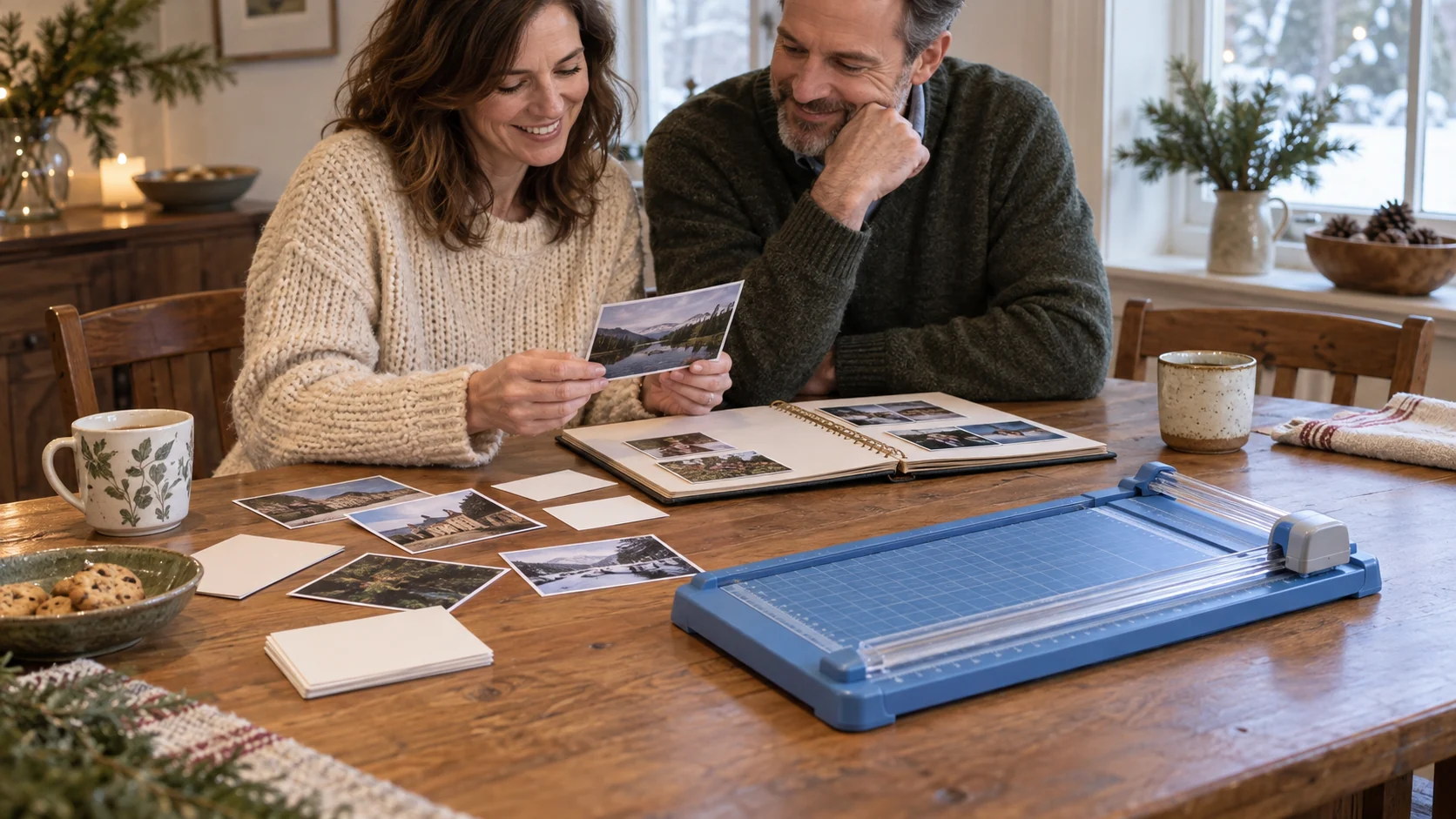
A year-end photo-caption afternoon starts with the pictures people already have: a summer visit, a meal that took longer than expected, the ordinary weekend someone keeps mentioning. Before a holiday gathering, invite a few relatives or friends to choose a small selection from the year and give each picture a few words. Invite people for an afternoon at home. Someone who prefers listening can help remember who was present or what happened just outside the frame.
The finished piece might be a single album spread to bring to dinner or a few loose pages to share over a winter visit. Decide that together before selecting every photograph. A page with six pictures and room for handwriting asks for different choices from a box of prints passed around the table. A paper trimmer is an optional finishing purchase for suitable paper materials; the conversation and captions can happen with the prints left exactly as they are.
Choosing photographs for a year-end gathering
Ask each person for a picture they would like to talk about. A small contribution keeps the invitation easy to accept and leaves room for different kinds of year. One guest may choose a holiday photograph; another may bring a picture of a repaired bicycle or a garden before it filled out. There is no need to turn everyone’s contribution into an account of their biggest achievement. An ordinary scene often gives another person something specific to remember.
Put the prints where everyone can see them, with time to change the selection. Ask what people would like the page to say about the year. If several show the same trip, give the person who took each picture a chance to explain its appeal before reducing the selection. You might keep two photographs from one trip: the departure because someone remembers the anticipation, then a later scene because another person remembers the weather changing.
For choosing photographs for a year-end gathering, consider who will see the page. A visit with close friends can accommodate an inside joke that would need explanation at a larger family dinner. Ask the people represented whether they are comfortable with the selected pictures and words being shared with that audience. Leave room to change a caption or withdraw a photograph without making it a group debate. A page can remain unfinished until the person concerned has had time to decide.
Making room for handwritten memories
Begin the words on separate pieces of paper so nobody has to produce a polished caption immediately. Invite a factual detail, a short recollection, or a sentence about why the picture was chosen. Someone might supply the name of a place while another remembers a conversation from the journey home. These contributions can sit beside one another. If two people remember an event differently, their own accounts can remain attributed to them instead of being pressed into one agreed story.
Leave enough space for the handwriting people actually use. A caption that looks short on a phone can become several lines in someone’s larger script. Let the writer place their proposed words beside the photograph before choosing the page arrangement. A long recollection can have a separate page rather than being squeezed around the edges of a picture. That choice also gives a guest who enjoys writing a useful role without asking everyone else to contribute an equal amount.
When making room for handwritten memories, include details the photograph cannot show. The name of a dessert may be visible on a menu in the image, while the reason everyone was laughing is not. Ask what the future reader would otherwise miss. Avoid correcting someone’s natural phrasing merely to make the page sound uniform. Different phrasing helps the reader hear who supplied a memory when several people contributed to the page.
The Canon QX20 and HP Sprocket Panorama scrapbook guide places Canon’s stated card-sized and square stickers beside different caption and album arrangements. That is useful if the year’s existing prints have left someone wanting a different format for a later page: decide where the words will sit before ordering more pictures. The HP finished print dimension remains unspecified there. Neither printer’s paper format establishes which material either trimmer can cut.
Give the afternoon a modest finish
Agree on a point at which the shared part ends, such as choosing the pictures and approving their captions. The host can leave arranging them for another time if people have other plans. If one person wants to make an elaborate album while others want to sit and talk, separate that larger project from the invitation. Guests should know whether they are helping choose one spread or committing to a whole book. Tell guests when you expect to bring the page back so they know where their contribution will go.
Imagine a page about an autumn weekend. One friend chooses a landscape; another chooses a picture of the kitchen where everyone waited for dinner. The landscape gets a place name and the month, while the kitchen picture gets a sentence from the person who remembers the late meal. A third guest adds a recollection on a loose card. This is a possible arrangement, not a required template or a claim about how many pictures a particular album holds.
Seasonal timing can affect what you leave open. If another visit is coming before the end of the year, reserve a place for its contribution rather than treating the first afternoon as the final account. If someone cannot attend, ask whether they would like to send words for a selected picture. Read those words back to them before adding their name. At the later gathering, the page can start a conversation without requiring the absent person to have attended the making session.
What the Dahle listing actually names
The Dahle 554 blue paper trimmer is named as model 554 with a 28-inch cutting length in the current title and description. Its address still contains different model and length wording, so confirm the actual 554 offer and its stated length before ordering. The description gives a 20-sheet maximum, a self-sharpening ground steel blade in a protective housing, a dual-barrel guide bar, an automatic clamp and a metal base. The description does not provide a trial using your intended caption material.
For a small selection of photo captions, a stated long cutting length does not establish a need for a large machine. First decide whether the proposed page includes any paper pieces that require trimming at all. The description lists the size as 37.13 by 15.13 by 3.38 without a unit label in that sentence. Obtain the units and the actual placement requirements before deciding where the trimmer would live. Its sheet-count maximum does not identify every suitable photo paper, coating or card material.
Read the WESTCOTT size and capacity statements separately
The WESTCOTT 15106 wood paper trimmer is described as a 12-inch TrimAir titanium wood guillotine model with a natural wood base. The description says it cuts 30 sheets of 20-pound paper at a time, while its opening size field says “15 Sheets 22 x 14.” Those statements need clarification for the exact offer. Do not convert either into a capacity for your own photo stock or use the field as a dependable measurement of the base.
The same description supplies dimensions of 12.25 long by 19.5 wide by 4.5 high in inches. It names a Titanium Bonded blade, a safety guard and an ergonomic handle with antimicrobial protection. The blade is described as designed to stay sharp longer, without a duration supplied here. The guard and handle wording do not provide an operating procedure or demonstrate suitability for this group. Confirm the intended materials and current instructions for the exact model before including any finishing work in the plan.
Discuss the equipment purchase separately from the choice of memories. If the only intended result is a few full-size prints with loose handwritten captions, leaving them untrimmed may already satisfy the plan. If suitable paper finishing is part of a larger project, investigate that purchase separately and keep the group’s picture selection moving. No guest needs to wait for a tool decision before writing down a memory.
The Canon CP1500 and Kodak small-print guide explains how a four-by-six photograph and a two-by-three photograph serve different physical display purposes despite sharing a two-to-three outline. For the gathering page, that means a group picture intended to pass around deserves its own space, while a little picture may sit beside a longer recollection. Keep those print-size decisions separate from any decision to trim a caption card.
Keep a purchase separate from the gathering invitation
If you are considering a paper trimmer through republeq.com and prefer to pay with crypto such as USDT, establish the exact offer before making the afternoon depend on a purchase. A product page and a guide do not establish that a particular payment method is available. Look at the options actually presented for that order at checkout, including any relevant payment conditions, and use an available method you understand. If USDT is absent, leave it out of the plan; mentioning it here does not make it an accepted option. For the Dahle offer, resolve the model and cutting-length wording between the title, description and address. For the WESTCOTT offer, ask about the conflicting sheet-count wording and confirm the paper specification to which any capacity applies. Neither payment preference settles whether your intended caption material is suitable. Check the actual package, delivery information and return terms before choosing an order for a dated gathering. A delivery estimate should remain separate from the invitation so a delayed parcel does not leave guests waiting to start. People can bring existing prints and contribute words while the purchase remains undecided. Consider who will keep the equipment afterward and whether that person wants it for later paper projects; a shared afternoon alone does not establish an ongoing need. Keep any checkout confirmation with the purchase records, then return to the selected photographs and the words people approved. The resulting page depends on their contributions and the chosen arrangement. It does not require a crypto transaction, a new trimmer or a particular spending decision to become something the group can share.
Bring back the page, with the voices intact
Before the later gathering, let contributors see the arrangement that uses their words. A caption may have moved beside another photograph, or a longer recollection may now sit on a separate page. Ask whether the pairing still makes sense to them. Keep a person’s name with their contribution when they want it identified. If a detail remains uncertain, leave it uncertain or omit it; an approximate date can remain approximate.
When the page comes out at the winter visit, give people time to look without presenting every caption yourself. Someone may notice a small detail and add a fresh recollection. Ask whether they want that included later, then let the conversation continue. An open place for the next visit or an extra loose caption can make the page usable at another gathering. Return borrowed prints to the people who brought them according to the arrangements you made with each contributor.
Conceptual editorial image of a year-end photo-caption afternoon, with an unused generic paper trimmer and an open album; no exact retail model is depicted.