Home Decor & Table Settings
Check magnetic picture frame placement before choosing a surface
A practical guide to deciding where a photograph display belongs, reading the exact offer and resolving unanswered placement questions before ordering.
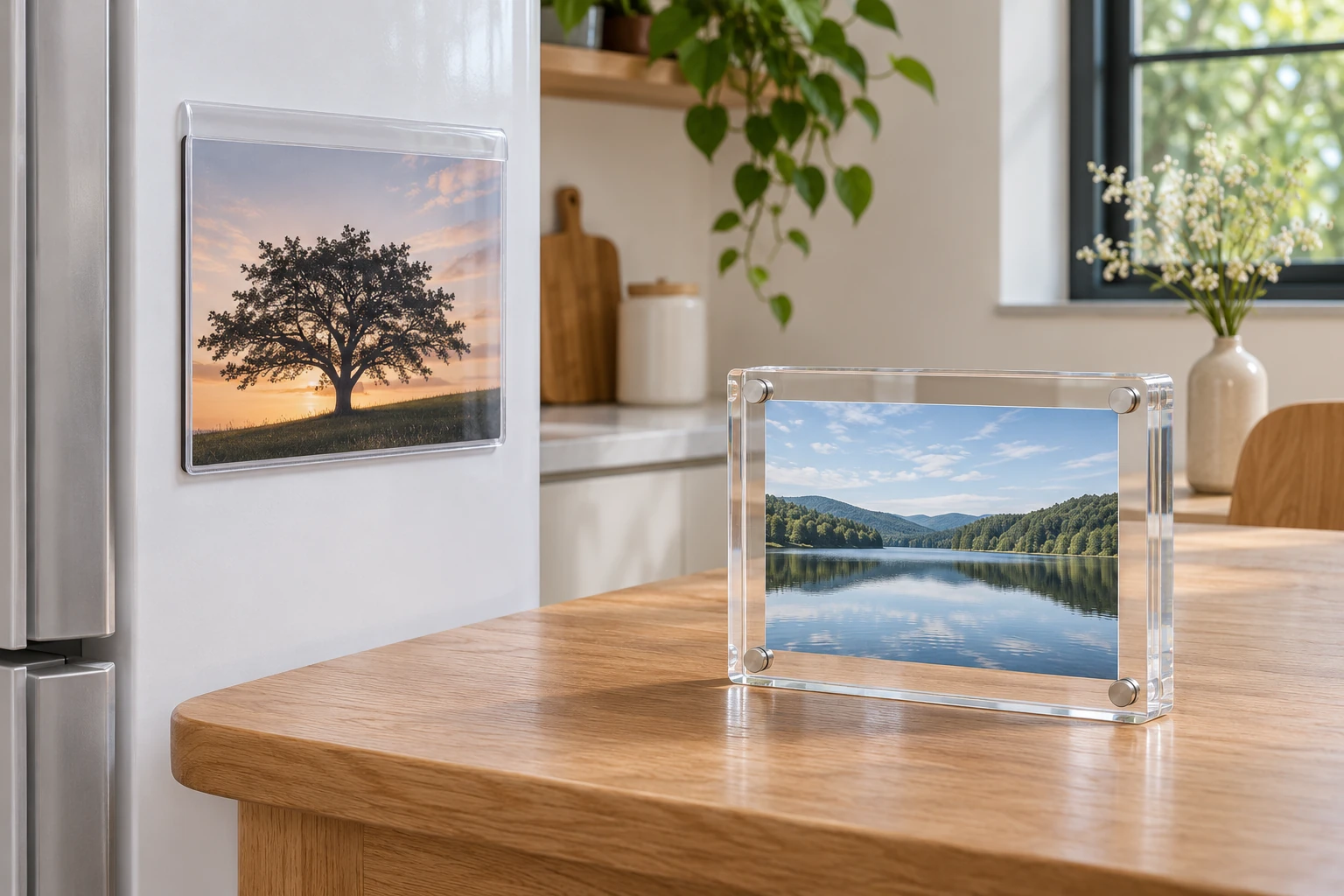
Before choosing a place for a magnetic frame, identify what its magnets hold. This magnetic picture frame placement check separates panel closure from attachment to a supporting surface. The two current offers illustrate that distinction.
The Neil Enterprises fold-over frame listing names a rear magnet and explicitly describes fridge display. It names a 4-by-6-inch photo format and fifty-frame pack. Its originals show a thin clear sleeve and broad dark rear patch. That describes the stated role, without establishing compatibility with every refrigerator finish or a measured holding strength.
The clear acrylic twin-panel frame title describes self-standing, double-sided display. Selected metadata names Clear and 8 by 10; the gallery also illustrates other sizes. Thick rectangular panels and small corner magnetic points illustrate frame panel closure. The account does not establish that this block is intended to hang on a refrigerator.
A magnetic back attachment and a panel closure describe different connections. Keep the stated role with its exact offer; shared magnetic wording does not transfer that role to another frame.
Describe the result you expected
Start with the location you had in mind. Perhaps you wanted a photograph on the kitchen door, or perhaps you wanted it upright beside a desk lamp. Write that expectation in ordinary words before comparing another product. “I want to see this picture while making breakfast” leaves room for several suitable display methods. “I need this exact frame on this exact surface” gives you a narrower question to resolve.
Separate an expectation formed from the product name from an instruction supplied for the exact item. A remembered search phrase is easy to mistake for a specification after several similar tabs have been opened. Return to the saved offer and identify the words that led you to expect the chosen placement. If you cannot find them, keep the expectation provisional rather than describing a missing feature as an established defect.
If you already own the frame, keep it supported while finding the instructions and order record. You do not need to balance it on an edge or suspend it to describe the problem. A clear account of the intended location and the exact product is more useful than another unsuccessful attempt. This article supplies no pull test, opening procedure, surface preparation, or method for converting one kind of frame into another.
Find a statement about the complete frame
Read a feature in its sentence, including the object it refers to. Ask whether the seller is describing a connection within the frame or a way of supporting the complete object. An adjective attached to one component leaves the rest of the arrangement unanswered. Where the wording is abbreviated, record that gap. You can ask a precise question about the complete frame without deciding in advance how an unseen part must work.
Use the exact selected offer as the reference. A gallery can show several sizes or display arrangements, and a search result can shorten a long title. Preserve the selected size and item identity when asking for clarification. If the answer describes another model, ask whether it applies to yours. Similar photographs and familiar packaging do not establish that two offers supply the same assembly or instructions.
Make a short note with the intended location, the relevant statement, and the remaining question. There is no need for a scoring system. If the information clearly describes a different use from the one you need, say so. If it leaves the use uncertain, ask about it. Keeping those outcomes distinct prevents an unanswered question from turning into a confident purchase recommendation.
Keep the surface question specific
A statement about a general display location does not describe every surface found there. Identify the actual place by its ordinary name and, when available, the maker's description. Avoid guessing its composition from a photograph or its appearance. If suitability depends on information you do not have, keep that question open until the frame maker or the relevant product instructions address the particular arrangement.
Do not substitute a stronger adjective for missing compatibility information. Words such as secure or sturdy can be seller descriptions without supplying an applicable test result. They also do not tell you how the proposed placement should be used around moving doors, nearby objects, or an exposed edge. Ask for the instructions relevant to your situation. If those instructions leave the intended use unresolved, choose another supported location or defer the purchase.
Keep a valuable or irreplaceable photograph out of an improvised trial. The decision here can be made from the item identity, its stated use, and an appropriate answer to the remaining question. You do not need to risk the picture to prove that the original plan is incomplete. Avoid adding loose magnets, glue, tape, or a makeshift support as a way of turning an uncertain use into an apparently successful demonstration.
A mistaken placement can change the plan
Consider an invented example. Mara wants a holiday photograph beside a note on her kitchen door. She has saved an attractive frame and assumed the name described the placement she wanted. When she rereads the exact offer, she cannot find a statement supporting that plan. Her first useful action is to preserve the question with the item identity, rather than ordering another copy because the first photograph in the gallery looked promising.
Mara also has a clear space on her study desk. She could decide that seeing the picture there would serve her original purpose, provided the exact frame's instructions support that use. Alternatively, the kitchen location may matter enough that she should choose a different, explicitly suitable offer. These are changes to her display plan. Neither requires declaring an untested frame defective or making a claim about the material of the kitchen door.
Suppose an answer later arrives but refers to a different size or model. Mara retains it with that limitation and asks about the item she actually selected. She does not combine the answer with another listing to construct a specification neither source supplied. The example is a decision exercise, not a reported product trial. No frame was tested, no surface was certified, and no physical result is implied by her revised plan.
There is also a useful answer if Mara changes her mind about the photograph. She might decide that it belongs in an album and leave the proposed display empty. Her original aim was to enjoy a particular image, so buying a frame is one possible outcome of the inquiry. She can close the shopping question deliberately without pretending that the missing product information was ever supplied.
Check the picture separately
After the placement question is settled, the photograph still has to work in the chosen display. The guide to a frame hiding part of a picture separates an image already cropped on the print from detail covered by a mat or visible opening. That is a different inquiry. An answer about where the complete frame belongs does not establish how much of your photograph will remain visible.
A frame that already stands on furniture can also present a separate support problem. The tabletop frame leaning guide examines the lower edge, deployed easel and contact with the supporting surface. Its easel procedure belongs to frames with that support arrangement. It should not be borrowed as a repair procedure for a different assembly merely because both objects display photographs.
Keep the questions in the order they arose. First establish the display role required for the location. Then check the photograph's presentation and any support instructions applicable to the chosen frame. If another issue appears, name it separately. A photograph with an awkward crop, an unsuitable location and a damaged component would present different questions even if all three were noticed on the same afternoon.
Ask for the answer you need before ordering
Give the seller the exact item identity and describe the proposed placement without adding a diagnosis. Ask which statement or instruction supports that use. If the answer is a general assurance, follow up on the missing point rather than converting the assurance into a technical specification. Save the applicable answer with the order information so you can distinguish what was confirmed from what you originally hoped the frame would do.
Check the contents of the selected offer as well. Sample photographs and nearby room decorations illustrate a display; they should not silently enter your parts list. If a required component is not clearly supplied, resolve that before ordering it separately. Changing to another size, package or assembly can change the original question. Review the actual revised offer rather than carrying an earlier answer across by habit.
If the reply arrives after you have chosen another offer, read it in the context of the earlier inquiry. An answer can be accurate for the original item and irrelevant to the replacement. Keep enough of the question with the reply to tell which use was discussed. When the proposed location changes too, state the new location explicitly rather than assuming the previous exchange settled it.
If you are considering a frame through Republeq.com and would prefer a crypto payment such as USDT, settle the intended display arrangement before choosing how to pay. Check which payment methods are actually offered for the particular order and read the conditions attached to the method you select. A guide mentioning cryptocurrency does not establish that USDT is available for every transaction. If it is unavailable, leave it out of the purchase plan or defer the order. Keep the exact frame identity, selected option and applicable answer about its intended use with your order notes. The payment record belongs with the transaction; it cannot supply a missing product specification. Before confirming a purchase, review the current package contents, delivery information, return terms and any unanswered question that matters to your intended display. Do not treat a seller's general reassurance as a result from a test you have not seen. If you change to another offer, check whether an earlier answer still applies to that item. Keep any change of payment method separate from a change of product or placement. Neither a completed payment nor an attractive checkout photograph establishes that the item can perform an unstated use. If the remaining question determines whether the purchase makes sense, wait for an applicable answer rather than paying to discover it afterward. Preserve the confirmation for the order actually made, and keep any unresolved product question visible in your own notes. A change in currency provides no new evidence about the physical display you have planned. The same display decision remains necessary when another available payment method is used.
Choose a supported display plan
Finish the magnetic picture frame placement check with an answer about the exact frame and the place you want it. Where the stated use supports the plan and the relevant conditions are clear, follow the supplied instructions. Where it describes another arrangement, revise the location or choose an appropriate offer. Where the answer remains uncertain, keep that uncertainty in the decision. A complete display plan gives the photograph a suitable place without inventing a feature to get it there.
Identify what the magnet holds before choosing the display location.