Kitchen & Appliances
loose leaf tea at a desk: contain leaves from cup to bottle
A practical fix for loose leaves and wet strainers when tea moves between a desk mug and a travel bottle.
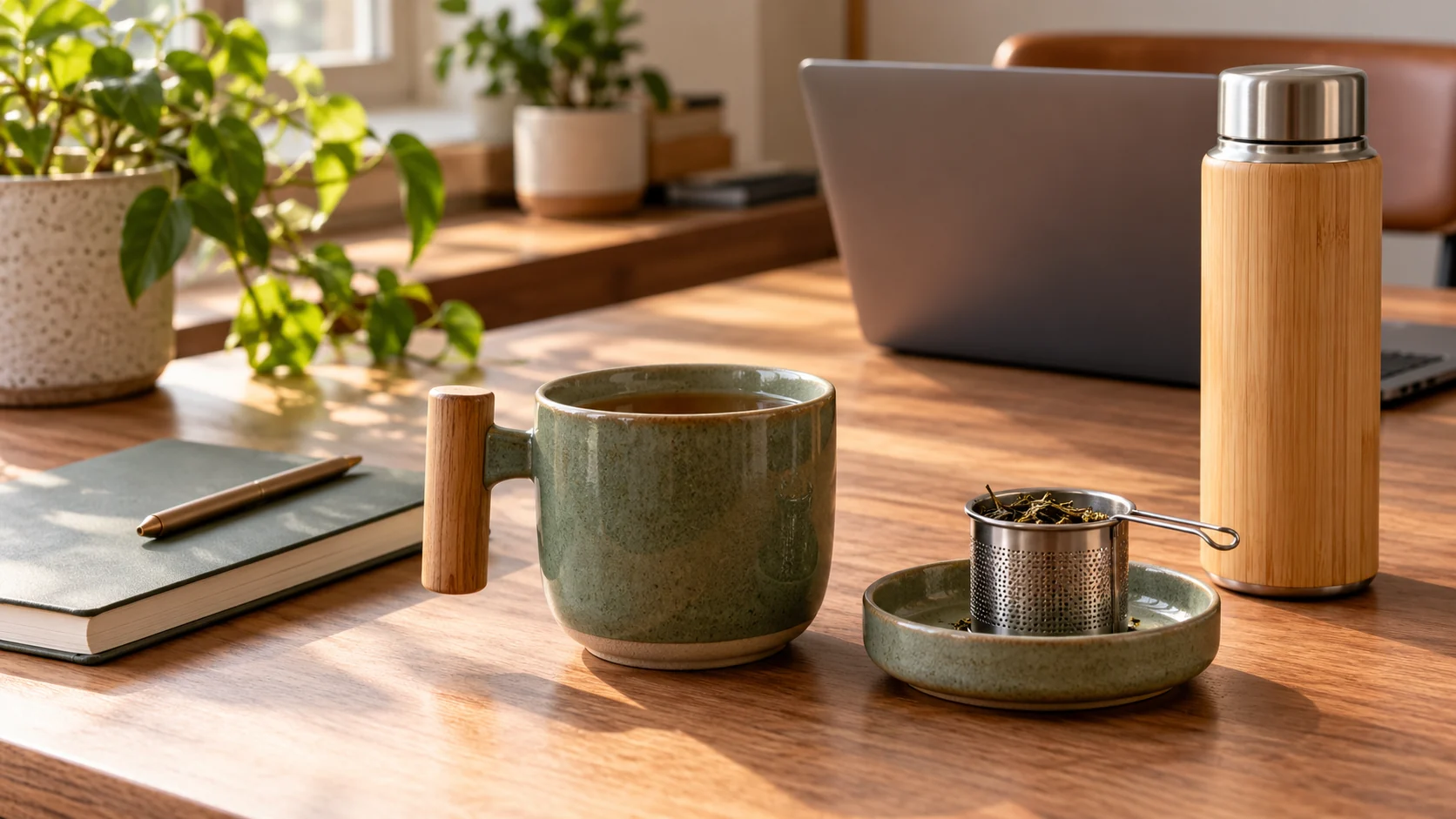
Loose leaf tea at a desk can leave a surprisingly awkward mess. The cup is easy to place beside a keyboard; the wet leaves and strainer need somewhere to go when the drink is ready. If the infuser stays in the drink, the flavor may keep changing while you work. If it comes out, it can drip across papers or leave a damp ring beside the computer. A small plan for the infuser solves more of this problem than buying a larger cup.
Two current product listings show different ways to hold the leaves. The HYTHU ceramic tea mug has a removable fine strainer, a lid and a coaster in its native listing. Its gallery shows the green and black mug, the wood handle, and the separate infuser. The UPFLICK bamboo tea bottle set lists two stainless steel bottles with removable tea strainers and bamboo outer sleeves. The gallery shows both bottles and the infuser parts. Choose based on where you prepare and drink tea.
Give the wet infuser a landing place
Start with the part that usually causes the mess: the strainer after steeping. Put a stable, washable dish or the product's supplied resting piece near the cup before you add leaves. Keep it outside the path between your hands and the keyboard. This is easier than carrying a dripping basket across the desk after the tea has already brewed. The landing place should be broad enough for the actual infuser, and it should stay level when you lift the basket out.
The HYTHU listing describes a lid that can double as a place for the infuser after steeping, while its gallery also shows a separate coaster under the mug. Confirm which part came with your delivered set and which surface the maker intends for the wet basket. A lid used as a rest must be set down on its stable side. If it rocks or tips on your desk, choose a separate dish. Do not rely on a product photo to decide which side can safely touch a hot, wet strainer.
For a travel bottle, the location of the strainer matters after you open the cap. The UPFLICK gallery shows a removable steel infuser assembly. Before filling a bottle, practice removing and replacing that part while it is empty and cool. Notice where your fingers can grip it and whether it has a place to sit. A bottle may travel well when closed, but its loose parts still need a small tray or sink area during preparation. A towel under the bottle is not a substitute for checking the cap and threads.
Keep the leaf container close to the preparation area rather than balancing it near a laptop. Measure the portion over a counter or tray, then close the container. This reduces the chance that dry leaves scatter into keys while you refill. If you are using a shared desk, mark the small dish or move it with the mug when you leave. A wet strainer left on a communal work surface is easy to knock over and difficult for someone else to identify.
Choose the vessel around the actual workday
A desk mug is useful when you can stop for a drink and have a reliable place to set it. Look at the mug's footprint, handle position and height beside your screen. The HYTHU mug has a wood handle and a separate coaster visible in its gallery. Set the handle where a passing hand will not catch it, and keep the coaster on a flat part of the desk. A tall stack of papers is a poor resting place even if the mug itself looks stable in a product photo.
A bottle changes the sequence. You can prepare it away from the desk, close it, and carry it to another room. The UPFLICK listing describes a pair of bottles in two sizes, each with a removable infuser. The larger bottle is not automatically the better choice. Check whether the size fits the bag pocket or desk space you actually use, and whether you can reach and clean the infuser opening comfortably. The product pictures show the shape; the delivered bottle and your own workspace decide the fit.
If you expect to drink at one desk all afternoon, the mug's open rim makes it easy to see what is happening with the leaves and to stop steeping by removing the basket. If you move often, a closed bottle may reduce the number of open-cup trips, but the cap must be fitted according to the exact product instructions. Never assume a closed lid makes it safe to put a full bottle beside electronics. Check it over a sink before the first trip, then carry it upright until you know how your specific bottle behaves.
Do not choose by an advertised temperature duration alone. A native listing can describe insulation, while the temperature you experience depends on starting temperature, fill level, time, and how often you open the vessel. The insulated tumbler temperature guide deals with temperature claims and food safety separately. Here the decision is how to contain tea leaves and manage the wet infuser at your desk. Use the product's own care and temperature instructions for your actual drink.
Make one repeatable preparation path
Prepare the hot water where the kettle or other water source is intended to be used, away from cords and papers. The crowded counter tea corner guide focuses on placing an electric kettle when counter space is tight. Once the water is ready, bring the vessel and its infuser to a clear preparation surface. This article begins at the strainer: keep loose leaves in the part meant to hold them, then move the prepared drink to the desk after the spill-prone steps are done.
Check that the infuser is seated as its maker describes before adding water. A fine basket can still release some small particles, especially if loose leaves collect along the rim or a lid traps them in the wrong place. Brush dry leaves into the basket over a tray, not over a keyboard. If you use a scoop, put it back in a dry place. The quantity and steeping time belong to the tea's instructions and your preference; neither mug nor bottle listing establishes one amount for every leaf.
With a mug, put the infuser in place, add water within the product's stated limits, and keep the vessel on a level surface while it steeps. Leave enough space to grip the basket without reaching into the drink. When you lift it, pause over the mug so drops fall back inside. Move it directly to the prepared rest. The HYTHU gallery shows a deep infuser and a lid, but the exact resting arrangement should follow the delivered parts and maker instructions. Avoid testing a new arrangement next to an open laptop.
With a bottle, use the removable infuser only in the configuration the product supplies. The UPFLICK gallery shows a steel strainer and bottle opening, but a picture does not establish whether leaves should remain in the basket during travel or be removed after steeping. Follow the manufacturer's directions for that model. If the directions are unclear, prepare the drink where the bottle can stay upright and handle the strainer over a sink before carrying it. Do not improvise an attachment that might loosen inside the vessel.
Before moving the drink to the desk, wipe the exterior where it was filled. Check the cap or lid visually and give it a gentle handling test over a safe surface. Look for drips at the threads, the mug rim, and the bottom of the infuser rest. A single clean test is more informative than a claim that a vessel is generally spillproof. If anything leaks or the strainer does not seat, leave the vessel at the preparation area and use the seller's or maker's support information for the exact item.
Keep the desk clear while you drink
Place the drink where reaching for it does not cross a mouse cable, notebook, or keyboard. The best spot is one you can use without twisting your wrist around a screen stand. Leave room for the wet infuser dish as a separate object. If the desk is small, consider removing the strainer and storing it at the kitchen sink before you bring the finished tea back. Carrying a dry, closed bottle and a loose wet basket together defeats the point of containing leaves.
Use a coaster or tray for the vessel, especially when the desk surface marks easily. The HYTHU set includes a coaster in its native description; examine the delivered coaster before relying on it. The UPFLICK bottles have bamboo outer sleeves in their gallery, but a sleeve does not prove that every surface will stay dry. Condensation, drips from filling, and a wet cap can still reach the desk. Wipe the vessel before setting it near documents, and move it if a damp ring appears.
Do not leave loose leaves floating around an open mug merely because the fine infuser looks small. The strainer is there to keep the main leaf portion together while the tea brews. If a few particles escape, decide whether that bothers you before switching products or tea. Different leaves break into different sized pieces, and the native pages do not measure filtration performance. A finer advertised mesh is not a guarantee that every particle will stay out of the drink.
For an interruption, put the mug down before answering a call or moving a chair. A bottle should be closed and checked before it goes into a bag, then kept away from items that cannot tolerate a spill. If the drink is hot, grip the vessel as directed and avoid putting the infuser where another person might touch it without noticing. A desk tea routine works best when each wet piece has one predictable place. You should not have to scan the workspace for a dripping part after every refill.
Clean the parts that touched leaves
At the end of a session, remove used leaves according to local disposal practice and the product's instructions. Empty the infuser over a bin or sink strainer, then look closely at the mesh and rim. Leaves lodged under a lip can turn a quick rinse into residue left for the next drink. Take apart only the components the maker says are removable. The HYTHU and UPFLICK listings both show separate infuser parts; that visual evidence does not authorize pulling apart sealed handles, lids, or insulation layers.
Use the care method specified for the delivered product. A ceramic mug, wood handle, steel strainer, bamboo sleeve and insulated bottle may require different treatment even when sold together. Do not assume that a dishwasher-safe claim for one component covers the full assembly. If a listing does not clearly identify the part, ask the manufacturer or wash it by the more cautious method in the supplied instructions. Dry the mesh and the hidden areas around the cap before storage so the next brew begins with clean parts.
Check the seals and threaded areas as you reassemble a travel bottle. A lid that felt normal before cleaning may sit differently if a gasket is misplaced. If you cannot find a seal or the cap no longer closes as described, leave the bottle out of a bag and resolve the part question with the maker. The product gallery helps identify the general bottle design; it cannot verify the condition of the item in your hands after repeated use.
Store the infuser with its own vessel once it is dry. If two similar baskets share a drawer, a small label on the storage container can prevent parts from being swapped. Keep the preparation dish near the tea supply so it is ready for the next cup. The short routine is to contain leaves before filling, set the wet basket down deliberately, and clean the contact parts afterward. That turns loose leaf tea at a desk into a repeatable habit without relying on a promise that any one cup will manage the mess for you.