Home & Living
Live Christmas tree water access: keep a clear path to the stand
Set a clear approach to a live tree stand reservoir before arranging the skirt, gifts and lights, so the seasonal check stays practical.
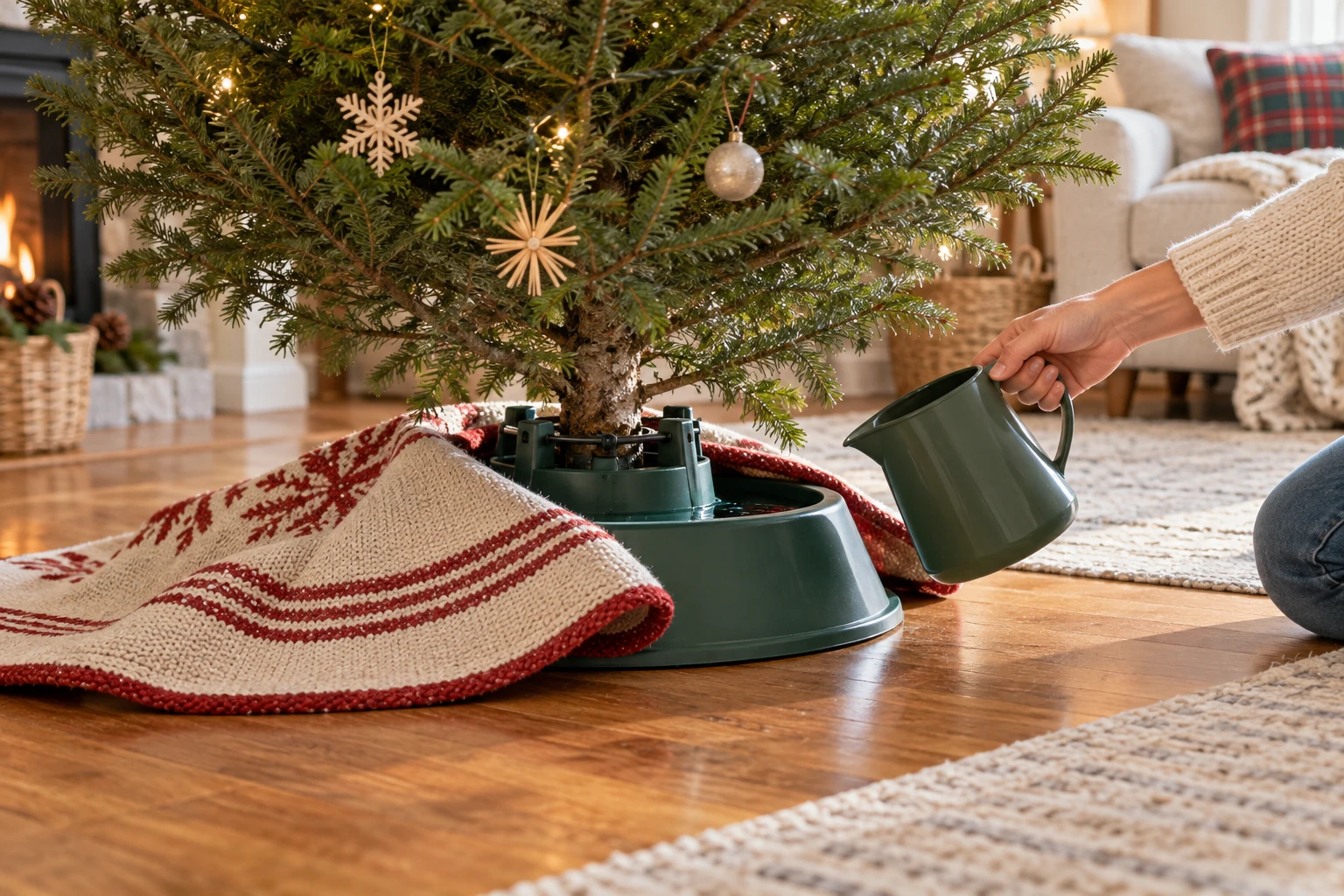
A live Christmas tree can turn one small task into a daily obstacle course: reaching the water reservoir without moving gifts, pulling a skirt out of place, or bumping the stand. The seasonal fix begins before the decorations go on. Give the stand a reachable side, leave a clear route for a watering vessel, and decide where a spill would land. Those choices are about the room and the actual stand. A product title alone cannot tell you that your hand will fit beneath your particular branches.
This guide is about organizing safe, practical access to a stand's water opening during the holiday season. It does not prescribe a watering volume or frequency, certify a stand's capacity, or replace the tree grower's and stand maker's instructions. Keep electrical decorations and cords away from water, follow their applicable safety instructions, and stop if reaching the reservoir would require disturbing an unstable tree. If the setup itself is uncertain, resolve the stand and tree fit before treating water access as a routine chore.
Plan the reachable side before decorating
Look at the final location as someone who will return with a watering vessel, not as someone taking a first photo. Which side of the tree can you approach without squeezing between furniture? Where will you set the vessel while you check the opening? If a wall, sofa, or gift pile blocks the only reachable side, rotate the plan while the tree is still easy to move under the manufacturer's instructions. Do not count on crawling beneath branches after the setup is complete.
Sketch a rough circle for the tree's floor area and mark the stand's reservoir opening. Draw one path from the room entry to that opening. The path needs enough room for an adult hand and the actual vessel you plan to use. You do not need an exact building plan; you need to find the first obstruction. A skirt that drapes over the opening, a box placed against the base, and a cord crossing the approach are three different obstacles. Name each one so you can address it directly.
Check that the stand is intended for the actual tree before final placement. Our Christmas tree stand planning guide owns that earlier selection decision: tree size and stand fit cannot be assumed from last year's tree. This article begins after a suitable stand is selected. A clear watering path cannot compensate for an unsupported tree or an unstable installation.
Do a dry run with an empty vessel. Hold it as you would during the real task, approach the opening, and see where your hand and the vessel would travel. If the vessel touches branches or requires you to tilt it awkwardly, change the approach or choose a more suitable vessel before adding water. This is a layout trial, not a claim that the final setup has been stress-tested. It gives you a chance to notice a blocked path without creating a spill.
Repeat the approach once with the skirt in place and once with the lights arranged but disconnected. The path can change as decorations are added. Note the side that works, then keep that side available for the rest of the season. If a different household member will handle the next check, ask that person to try the empty-vessel route as well. A plan that depends on one person's reach or on remembering a concealed opening is less reliable than a clearly visible, shared route.
Read the stand listing as a starting point
Two Republeq listings show why the exact stand matters. One live-tree stand listing for a tree up to eight feet names a water reservoir, five securing eye bolts, a center spike, and a two-gallon designation in its title. Those are seller listing claims, not measurements of your assembled stand or instructions to pour two gallons at once. Verify the actual instructions, fit and fill method for the item received.
A second green live-tree stand listing for trees up to six feet describes three securing eye bolts, a steel center spike, and water access. The page's category label does not by itself describe the item's physical role; the native product identity does. Neither listing proves that a chosen skirt will leave its fill opening accessible. Before buying or arranging the room, compare the stand's actual opening position with the branch and skirt layout you intend to use.
Do not turn a listed height into permission to use any tree below that number without checking trunk fit, installation instructions, and the actual stand. Likewise, a reservoir capacity on a page is not a schedule for checking water. The useful product questions are concrete: where is the opening, how is it reached after assembly, and what does the maker say about setup and safe use? If a page does not answer one of those questions, keep it open rather than inventing a detail.
Let the tree skirt serve the setup
A skirt can hide the stand and soften the display, but it should not make routine access a puzzle. Put it in place temporarily before arranging gifts. Lift or fold the portion near the reservoir as it would move during a check. If it drags a cord, catches on a stand fastener, or requires shifting the tree, revise the skirt placement. The choice may be as simple as leaving a clean fold that opens from the reachable side.
Our Christmas tree skirt size guide for small rooms addresses the earlier floor-fit decision. A skirt can have an attractive drop in a photo while covering more of the approach path than the room allows. For water access, the key question is whether the opening remains reachable after the skirt is placed in its actual position, not whether the skirt's nominal diameter sounds suitable.
Keep decorations and gifts out of the approach until the dry run is complete. A present can be moved temporarily, but building a daily task around moving a fragile display is error-prone. Give the water check a small clear corridor. You can still arrange gifts elsewhere around the tree; they do not need to occupy the one side that permits access. Marking that side on a room sketch can help other household members avoid rebuilding the obstruction later.
Consider the surface beneath the stand. If a spill would reach a floor finish, carpet, power strip, or nearby furniture, plan a catch and cleanup method consistent with the stand and room materials. Do not place an improvised tray beneath a stand if it changes how the stand sits or conflicts with its instructions. The primary safeguard is a stable installation and a controlled approach, not a hidden layer that could tilt the base.
Use a short, repeatable water check
Once the stand and tree are installed according to their instructions, keep the check simple. Move the skirt's access fold, look at the reservoir opening, and follow the stand or tree supplier's directions for checking and adding water. Use a vessel that can be controlled in that space. Close the path again only after checking for drips and confirming nothing has shifted. This is a handling sequence, not a universal watering schedule or volume recommendation.
If you cannot see the water level safely, do not guess from the look of the branches. The opening may be shaded or hidden from that angle. Use the maker's specified method or change the room layout to allow a clear view. Do not loosen securing bolts, rotate the tree, or climb beneath it simply to reach the reservoir. A difficult check is a sign that access was not resolved in the setup, not a reason to improvise around a heavy object.
Choose a consistent time for the household to look at the setup, but keep the actual water decisions tied to the supplier's instructions and observed reservoir state. A reminder on a phone can prompt a check; it cannot tell you what is inside the stand. If more than one person shares the task, leave a short note about which skirt fold opens and where the vessel belongs. That avoids two people making different assumptions about the same hidden opening.
Before adding water, check the immediate area for plugs, cords and powered decorations. Keep them outside the water path and follow their own instructions. If a spill occurs near electrical equipment, stop the task and follow appropriate safety guidance rather than reaching into a wet area. A calm access route reduces the chance that routine care becomes a rushed maneuver among cords and gifts.
When access no longer works
Rooms change during the season. A new gift stack, a shifted chair or a rearranged cord can close the original path. When that happens, move the obstacle if doing so is safe. Do not keep pouring from farther away and hope the stream finds the reservoir. An inaccurate pour can land on a skirt, floor or powered decoration. Restore the original clear route before continuing.
If the tree itself has shifted or the stand seems loose, stop routine care and treat stability as the priority. The first article linked above explains why stand suitability is a separate decision. Do not try to solve an unstable setup by pressing on branches while filling, adding weight to one side, or relying on the skirt to conceal movement. Follow the stand maker's instructions and obtain suitable help for a heavy or uncertain installation.
If the skirt catches every time, it may be the wrong arrangement for this room even if it fits the floor. Try a different fold or placement that preserves the stand's access and the skirt's intended use. If the only way to reach the opening is to remove a large number of gifts or tug on lighting, the display plan should change. Water access is part of the living-tree setup, not an afterthought that has to fit around every decoration.
Leave a clear path for the rest of the season
After a successful check, reset the skirt fold and return the vessel to the same nearby storage spot. Keep the approach side free as the room fills with holiday activity. The benefit is modest but real: the next person can reach the reservoir without re-solving the floor plan. If you change the tree, stand or room next year, make a new dry run. Last year's opening location and tree size do not carry over automatically.
A live-tree water-access plan is complete when the selected stand is secure under its own instructions, the reservoir can be reached without disturbing the tree, and the route stays clear of gifts and electrical equipment. The two product pages can help frame questions about stand design; the actual assembled item and room decide whether the routine works. Keep the access path simple enough that the next check feels ordinary.