Home & Living
Christmas tree skirt size for small rooms guide: measure floor space and stand fit
Compare outer diameter, stand opening and daily access before choosing a tree skirt for a compact room.
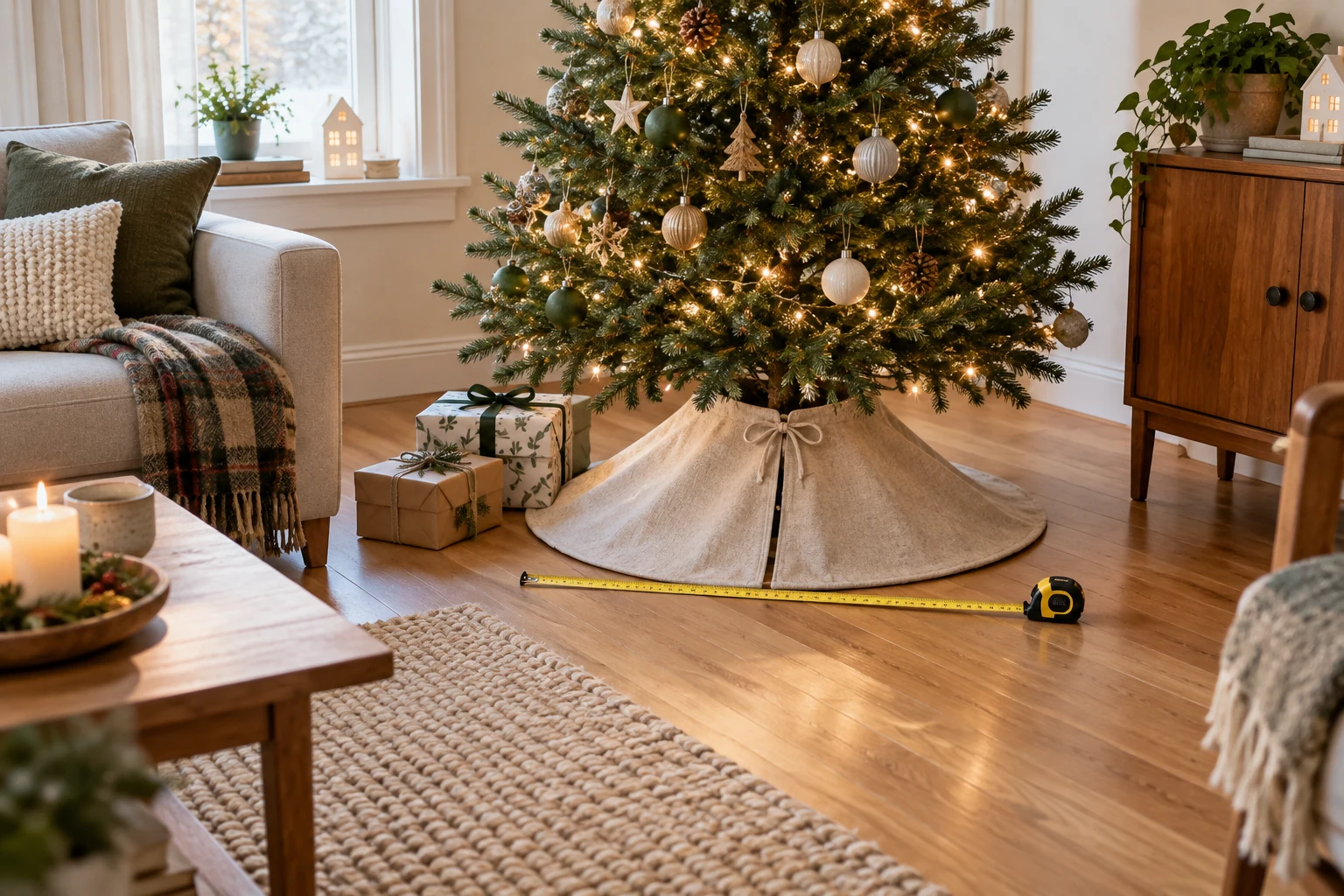
A tree skirt can make a holiday tree look settled, but its outer edge also takes real floor space. In a small room, the skirt may reach a walking route, a chair leg or the place where someone opens a cabinet. This Christmas tree skirt size for small rooms guide starts with the stand and the room rather than the tree's advertised height. Measure the usable floor circle, keep the stand accessible, and choose a skirt that looks intentional without becoming a trip edge.
Set the tree in its final safe position before comparing skirt diameters. A photograph of an empty corner can hide the amount of floor the branches and stand occupy. Mark where the nearest furniture ends and where people normally walk. Include the space needed to water a real tree or reach a plug safely. The skirt is decorative; it must not cover a power connection, obstruct ventilation or make the tree less stable. Follow the tree and light manufacturers' safety directions first.
The tree photo-planning guide addresses the visual setup before adding a skirt. The ornament storage fit guide compares actual object and storage dimensions. Here the distinct job is to decide how far a skirt may spread across a lived-in floor and whether its center opening suits the stand. A skirt that photographs well from one angle can still be too large for the walking path.
Measure the floor circle first
With the tree in place, measure from the trunk or stand center toward the nearest obstacle in several directions. The shortest distance is the practical limit on skirt radius if you want a round skirt to lie flat. Double that shortest radius to estimate the maximum outer diameter, then allow extra clearance for the route people actually use. This is a planning calculation, not a product guarantee: the edge can curl, gifts can protrude and a sofa may shift slightly. Use tape or a string to mark the proposed circle.
Walk around that circle as if the room were in normal holiday use. Open the cabinet door, pull out the chair, move a pet bed and carry a box past the tree. If any action catches the marker, reduce the skirt footprint or adjust the tree location. A skirt tucked halfway under a sofa can bunch and make its diameter meaningless. It should lie as intended by the maker, with no loose edge in a busy crossing. Do not trade an emergency path for a fuller decorative ring.
Check the tree stand itself. Measure the stand's widest feet and the height of any raised water reservoir or support. The skirt needs to cover the area you want concealed without pressing into a part that must remain accessible. A live-tree reservoir may need regular filling; opening and closing a skirt around it should be practical. An artificial-tree base may have a power cord or transformer nearby. Arrange those according to their instructions, keeping cords out of fabric folds and foot traffic.
Understand outer diameter and center opening
The outer diameter tells you the nominal span of a skirt laid flat. A fifty-inch skirt has a nominal radius of twenty-five inches; a forty-eight-inch skirt has a nominal radius of twenty-four inches. The one-inch difference in radius can matter near a chair leg, but fabric thickness, seams and drape also change the actual edge. Mark both circles on the floor before relying on a picture. A decorative photo often shows the skirt partly under branches or presents, making its full footprint hard to see.
The checked-cloth tree-skirt listing states a fifty-inch outer size and describes a reusable fabric piece that folds for storage. Its first gallery image shows a dark plaid circular skirt with a dark border. The listing says it suits trees of many sizes, but that broad seller claim does not establish fit around a particular stand or in your room. Confirm the current center-opening and closure details before buying if those details control whether the skirt can wrap around your setup.
The snowflake burlap-style tree-skirt listing states a forty-eight-inch outer diameter, a four-inch inner opening and tie fastenings. Its gallery shows a pale skirt spread around a tree with a light border and snowflake pattern. The four-inch measurement is a stated opening size, not proof that the skirt will clear every water reservoir, trunk sleeve or stand shape. Measure the actual center assembly and note how the ties need to pass behind it.
Two skirts with similar outer diameters can behave differently around a stand. One may have a wider slit, more flexible fabric or a closure that is easier to reach after decorating. Look for the maker's current full dimensions and fastening instructions. If the center opening is too small, do not cut a finished product unless its maker explicitly permits alteration. Cutting can weaken a seam or change how the fabric lies. A better match may have the center shape your stand already needs.
Leave access for care and lights
For a live tree, plan how you will reach the water reservoir without stepping on the skirt or pulling it against a lit strand. A narrow space behind the trunk can be awkward once gifts collect around it. Test the route before decorating fully. If a skirt must be folded back each day, choose a closure and fabric that can be moved without dislodging the stand. Follow tree-care guidance for watering and keep fabric away from any heat source.
For an artificial tree, inspect where its cord exits the base and how the maker routes the plug or controller. The skirt should not pinch the cord, conceal a damaged connector or force a tight bend. Do not place light transformers, power strips or extension connections under fabric. Keep all electrical components in the locations specified by their instructions, away from water and foot traffic. The skirt can hide a stand visually without being used to hide an unsafe connection.
Think about pets and young children. Some may paw at ties, pull a decorative edge or sit on soft fabric. That behavior does not make every skirt unsuitable, but it changes the placement decision. Avoid loose embellishments that could detach where they are accessible, and keep fragile ornaments out of the lower branches. If someone repeatedly pulls the skirt, choose a safer undecorated floor around the tree. The stand's stability matters more than maintaining a perfect ring of fabric.
Plan gifts without losing the walking path
Presents often change the footprint more than the skirt itself. Place the largest planned gift box on the marked circle to see whether it pushes into a route. Do not stack boxes against a live-tree reservoir, light connections or a heat source. Leave enough room to remove a gift without tugging the skirt or shaking the tree. A small room may look better with only a few gifts by the tree and the rest held elsewhere until needed.
Try a simple edge rule: nothing extends beyond the floor boundary you already checked. If the skirt reaches the route, use a smaller skirt or a different tree position rather than relying on gifts to hold its edge down. Boxes should not be used as weights to conceal a curled or slipping fabric edge. If the tree is near a door, test that door with the skirt and gift arrangement in place. A door that opens freely in November may catch the display once holiday items arrive.
Use color and pattern after fit is settled. Dark plaid can make a stand recede; a light snowflake pattern can brighten a corner. These are style choices, not dimensional solutions. The first listing's dark border and the second listing's pale textured appearance are visible in their gallery images, but lighting and product variants can differ. Check the selected variant and current photographs before matching another decoration. The room's safe circulation remains the deciding constraint.
Make a paper-template decision
If you cannot picture a diameter from a product page, make a temporary floor outline with painter's tape or paper strips where permitted by the floor finish. Mark the tree center, the proposed twenty-four- or twenty-five-inch radius and the nearest chair or doorway. Then set a small gift box at the outer edge and walk the route. This quick mockup exposes the real clearance. Remove tape promptly and follow the floor manufacturer's guidance to avoid residue or finish damage.
Record four measurements: tree stand width, center opening needed, shortest free radius on the floor and outer diameter you can accept. Add how the skirt closes and whether you need daily reservoir access. Compare those facts with the exact product variant, not with a generic “fits all trees” line. If a needed center dimension is unavailable, ask for it rather than assuming a photo proves the fit. A skirt is a seasonal accessory, yet returning a poor fit after decorating is needless work.
After placing the chosen skirt, check it from more than the photo angle. Kneel to see whether fabric folds under the stand, walk past it with a laundry basket, and pull furniture through its normal range. Recheck after gifts have been added. The skirt should stay clear of cords and heat, allow stand access and lie flat enough that no edge surprises a passerby. A good display works on an ordinary crowded evening, not only during the first setup.
When the season ends, let any damp fabric dry according to its care directions before folding it. Shake or clean loose needles from a live-tree setup and store the skirt without sharp ornaments pressing into it. The checked-cloth listing describes foldable storage; the snowflake skirt's layered fabric and ties may need a little more care to avoid crushing details. Follow each maker's cleaning instructions rather than assuming every fabric can be washed the same way.
Save the room measurements with the skirt after packing it away. A note on the storage bag can record the diameter that cleared the chair and the center opening that fit this year's stand. If the tree or furniture arrangement changes next year, redo the floor outline instead of treating an old fit as permanent. Check the fabric for frayed ties, loose trim or a curled edge before reuse. Repair or replace a damaged skirt under its care guidance so the display does not create a new snag point. This small record makes seasonal setup faster without turning a decorative choice into guesswork.
The useful answer to Christmas tree skirt size for small rooms guide is a measured floor boundary and a center opening that fits the stand, not a fixed rule based on tree height. The fifty- and forty-eight-inch examples show why even close nominal sizes deserve a floor check. Leave room to walk, water or reach the tree safely, and decorate only the area that the room can comfortably spare.