Seasonal & Holiday Content
Christmas tree stand planning for a changed holiday tree
Compare Christmas tree stand planning statements for two Tree Nest offers: a taller advertised tree limit can accompany a narrower listed trunk range.
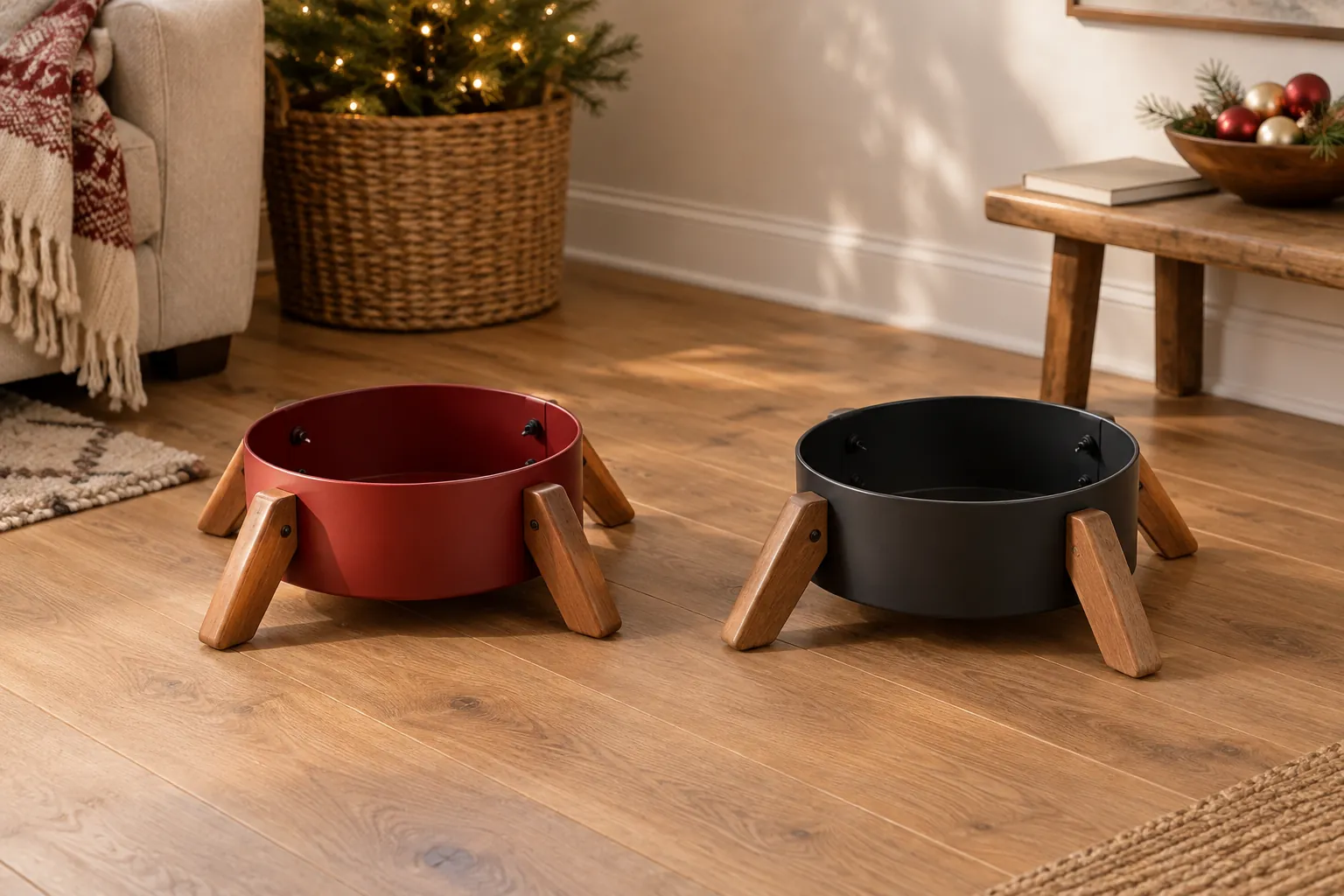
Christmas tree stand planning needs checking when the tree you intend to buy changes from one holiday season to the next. A stand offer with a taller advertised tree limit can still list a narrower trunk-diameter range. Keep those two quantities separate while comparing the actual offers. The figures here are attributed retail statements, not an independent test of fit, support or stability.
This seasonal comparison concerns two Tree Nest offers for real trees. It helps you organize a changed holiday plan before selecting equipment. It supplies no assembly, tightening, watering, installation or tree-support procedure. An applicable answer for the actual tree and stand remains necessary before putting either into use.
Read the Tree Nest real-tree stand offers separately
The red Tree Nest real-tree stand offer advertises trees up to eight feet tall. Its description gives a trunk-diameter statement of 2.4 to 5.9 inches. The separate black Tree Nest Timber Large offer advertises ten feet and lists 2.4 to 5.5 inches for diameter.
Keep the Tree Nest real-tree stand offers attached to their own descriptions. The higher advertised tree-height figure belongs to the offer with the smaller listed upper diameter figure in this pair. That relationship is visible in the retail accounts. It does not establish why the products differ or identify an engineering relationship between their capacities.
A shared brand name cannot settle the comparison by itself. Nor should a familiar color or a similar-looking product photograph supply an absent model identity. Use the actual offer you are considering, and distinguish its retail description from specifications for another named Tree Nest product. This article does not identify the generic red offer as a particular maker product number.
Keep holiday tree height and trunk diameter distinct
The phrase holiday tree height and trunk diameter names two different lengths. One advertised statement cannot silently replace the other. A taller tree allowance does not logically enlarge every other number beside it, and the two offers here illustrate that point. Read each stated quantity before deciding what information your seasonal plan still needs.
Consider the decision as two separate questions on paper. Does the intended tree fall within the offer's stated height description? What does that same offer say about the trunk? This is a way to read an advertisement, rather than a method for measuring a real tree or verifying a support arrangement.
Retain the units with each number. A note that says only “eight” or “five point nine” leaves the reader to recover the missing context. The first number might refer to advertised tree height, while the second concerns a different dimension. Writing the quantity and unit together keeps a simple comparison from becoming an accidental substitution.
Consider a changed plan before choosing a larger label
Imagine that last year's tree was chosen for a small gathering and this year's plan calls for a more prominent tree. The phrase larger stand may sound like a complete answer to that change. Before adopting it, name what is actually different about the intended tree. A change in height, a change in trunk dimensions and a change in the room are separate parts of the plan.
The useful seasonal task is to revisit assumptions before the new tree becomes a fixed part of the occasion. Someone may remember only that last year's purchase worked for last year's tree. That memory concerns a particular arrangement. It is not an assessment of an unidentified replacement tree, even if the household hopes to repeat the same holiday scene.
A plan can also become smaller. A person moving to a different room might prefer a less prominent tree this year, while another might change from a shared celebration to a quieter household display. Begin with the intended occasion and actual equipment requirements. There is no need to treat the largest advertised height as the automatic goal of the comparison.
Use a fictional comparison to expose the missing assumption
Consider an imaginary tree described as nine feet tall with a trunk diameter of 5.7 inches. Those invented dimensions are for a paper comparison only. Against the first offer, its height exceeds the advertised figure. Against the second, its diameter exceeds the listed upper figure. Choosing the taller label alone would have hidden the second issue.
That exercise does not test either stand or describe a tree that has been approved for use. Its purpose is to show why a shopper needs both statements in view. Neither offer's advertised figures cover both dimensions of that invented example. An actual selection needs applicable information about the real pair, beyond this comparison of retail wording.
Now imagine a different tree described as seven feet tall with a 5.7-inch trunk. Its two invented dimensions fall within the first offer's stated figures, while the diameter still exceeds the second offer's listed upper figure. This remains an advertisement-screening example. It supplies no finding about the fit or stability of any physical tree and stand.
The examples also show why a single label can be misleading when passed between people. “This one handles a taller tree” is an incomplete recommendation for someone whose question concerns a broader trunk. State which requirement the recommendation answers. A precise partial answer is more useful than a broad description that loses the reason for the comparison.
A comparison is not a vote between requirements
In a paper exercise, do not count how many statements appear favorable and choose the offer with the higher score. A requirement is not a vote. If one listed dimension falls outside the proposed offer's statement, another dimension being comfortably inside its statement does not erase the issue. Keep the unresolved point attached to the proposed pair until an applicable answer addresses it.
The two fictional trees above differ only in height, which makes the consequence easier to follow. Their invented trunk diameter stays the same. That lets you see which part of the paper comparison changed without suggesting that an actual tree can be altered to satisfy a label. The exercise is about reading two independent statements, not adapting equipment or a tree.
Make room decisions part of the holiday conversation
A household may discuss a tree in terms of how it will look in a room, while the equipment question concerns an actual tree and support. Keep both interests visible. An imagined room scene can guide personal preference, but a pleasant drawing does not establish equipment compatibility. Do not use a visual concept as a substitute for the applicable product information.
For example, one person might picture the tree beside an existing piece of furniture, while another has been thinking about a different room entirely. Resolve that difference before treating the group's preferred tree size as agreed. The conversation can remain about the intended scene; this guide does not supply room-clearance figures or a placement recommendation.
If the plan changes again, bring that change back into the equipment enquiry. Avoid leaving an old tree description attached to a new recommendation. A supplier's answer about one proposed tree should remain attached to that proposal, rather than acquiring a broader meaning when the conversation moves to a different size or type.
Check which holiday item you are actually bringing out
When considering equipment already owned, identify the actual item before comparing it with either offer here. An old photograph, a recollection of its color or an unlabeled box may help locate it, but those clues do not by themselves establish its specification. This article provides no parts inventory or inspection procedure for a saved stand.
If you cannot establish the saved item's identity, keep that uncertainty visible. Do not give it the limits of a similar-looking offer merely to finish the seasonal plan. Seek the applicable information for the actual item. A different product's retail description cannot become its instructions through resemblance or a shared brand.
The Christmas storage-bag guide asks whether an offer actually identifies a tree container or uses a festive print. It addresses storage equipment, not these stands. The connection is the need to establish which holiday item you have before assigning it a purpose that its account has not established.
A household changing from an artificial display to a real tree has another identity question to settle. Imagine that the previous artificial tree came with its own base. That fictional past purchase does not establish an application for the base with the new real tree. The two selected offers here explicitly concern real trees; their descriptions do not certify the suitability of an unidentified older base.
Keep the seasonal tradition separate from that equipment question. Repeating a favorite theme, ornament collection or room scene can still leave the underlying tree and support entirely different. Familiar decorations may make the occasion feel continuous while the actual equipment enquiry needs fresh information. Recognizing that difference helps people enjoy the tradition without assigning specifications to an item from memory.
Share the requirement instead of a shorthand recommendation
When another person is helping with the seasonal choice, send the actual offer and the tree information relevant to the question. A message that says “get the bigger one” asks the recipient to guess which dimension matters. The person may understandably choose the larger height label while missing the diameter question that prompted the discussion.
A clearer enquiry names the proposed item and asks the specific unresolved question. If you receive an answer about another offer, reopen that offer's own account rather than carrying the first description into it. This keeps the discussion useful without claiming that a short exchange replaces the product information needed for actual use.
For a shared purchase, establish who is choosing the tree and who is choosing the stand. Those decisions can easily be made by different people working from different imagined plans. Connecting the two conversations early avoids treating an equipment selection as final while the tree itself remains an open choice.
Keep this decision at the right scale within the season
The Christmas dinner place-card guide concerns a different part of preparing for a gathering. Its seating project supplies no tree-support information. It offers a useful reminder that holiday preparations have separate questions: resolving one does not make every other decision about the occasion complete.
You can keep the tree discussion similarly focused. Decide which information would change the equipment choice, obtain an applicable answer and return to the rest of the celebration. An extensive holiday planning document is unnecessary if a short, accurate exchange establishes the proposed tree, the actual item and the requirement that needs attention.
Christmas tree stand planning is most useful before an assumption becomes a purchase. In this pair, the higher advertised height and larger listed trunk allowance belong to different offers. Preserve that distinction, treat the figures as retail statements, and obtain the applicable information for the actual tree and stand before use.
Christmas tree stand planning concept with generic inactive empty holders; the cover does not demonstrate an exact retail model, tree fit, assembly or stability.