Seasonal & Holiday Content
Christmas storage bags: festive print or a tree container?
Read Christmas storage bags by their stated contents: Ambesonne floral toy organization and Viflosae tree storage raise different questions.
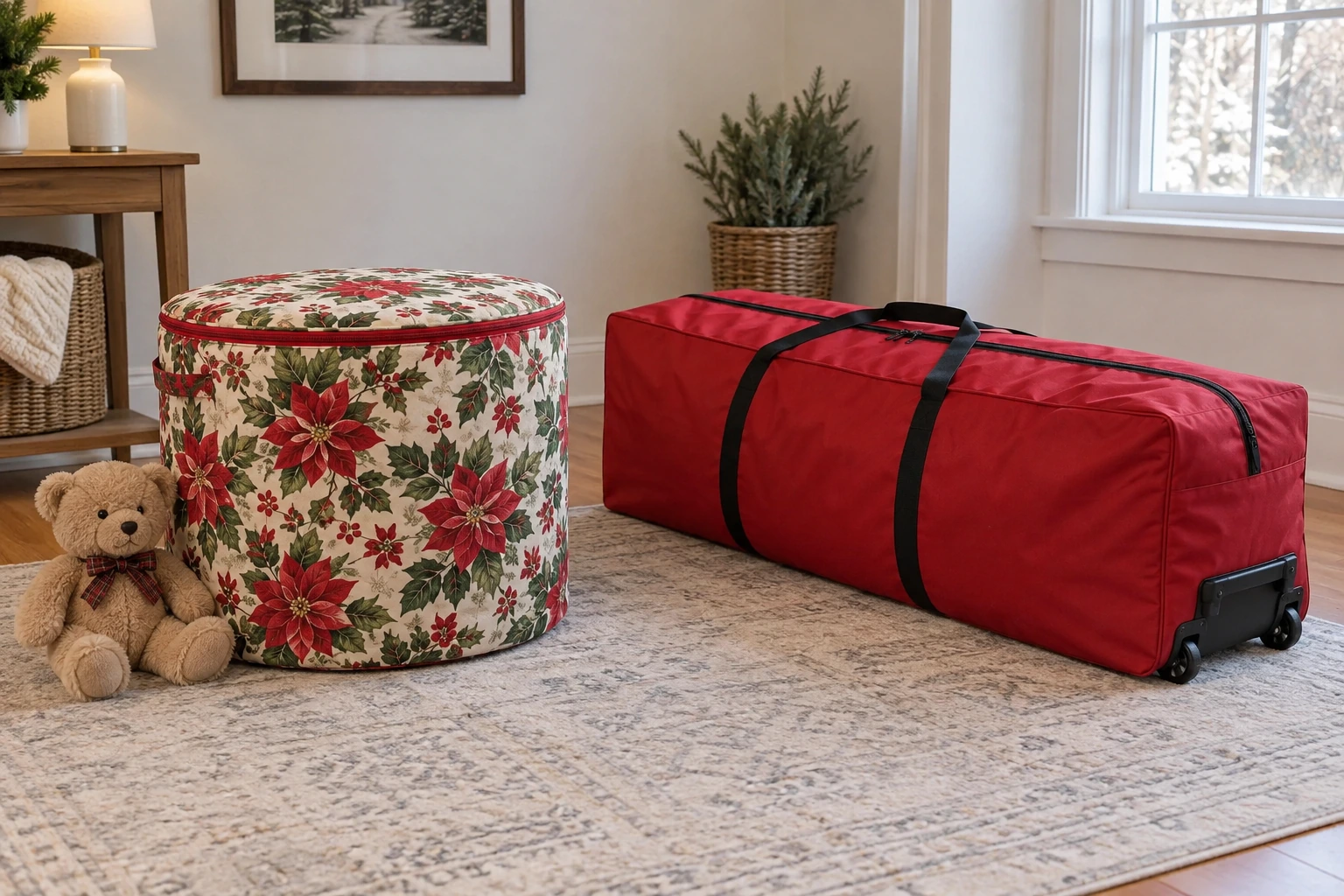
Christmas storage bags can turn up in a search for quite different household purchases. Christmas may describe a printed pattern, or it may identify the object a bag is intended to hold. That difference matters when a festive toy organizer appears beside a container described for storing an artificial tree. The seasonal word alone leaves the shopping task unfinished.
Two republeq offers make the distinction unusually clear. Ambesonne identifies a floral stuffed-animal organizer under Kids' Furniture. Viflosae describes a rolling Christmas-tree storage bag. Both belong in a broad seasonal search, but their descriptions lead to different questions about the things you own. Begin with those belongings, then read what each offer actually says about them.
Christmas print on a toy organizer describes its appearance
The Ambesonne ctb_37144_l toy bag chair is identified as Green, with SKU sku-442354400. Its description calls it a washable stuffed-animal organizer measuring thirty inches wide by twenty-three inches high. The traditional floral design includes poinsettia, holly and mistletoe in white, red and green. These details identify the particular offer, including its stated purpose.
Here, Christmas print on a toy organizer explains the seasonal appearance. Someone looking for an organizer for stuffed animals might be interested in that pattern. A person seeking a container for an artificial tree still needs a description addressing the tree. The shared word bag does not establish that the Ambesonne item serves both purposes.
The native name includes chair, and the category is Kids' Furniture. Keep those identity details when asking about the item. The captured account does not supply a seating load, filling procedure or suitability assessment for a particular user. This guide concerns reading the offer; practical filling, seating and handling decisions require applicable information for the actual product.
A bag intended for Christmas tree storage names another object
The Viflosae rolling Christmas-tree storage bag names the tree as its intended contents. Its description gives dimensions of fifty-nine inches long, 19.6 inches wide and 24.8 inches high. It also describes three rubber rear wheels, two interior adjustable straps with quick-release buckles and a two-way zipper opening. Those features belong to this tree-storage account.
With a bag intended for Christmas tree storage, the seasonal connection concerns what goes inside. A buyer can use that description to identify the relevant enquiry: whether this actual bag is suitable for their particular tree and required storage arrangement. The listing does not identify your tree's make, model or packed form, so it has not settled that question.
The material account uses both canvas and 600D Oxford polyester wording. Its protection sentence contains missing language. Retain that uncertainty if the construction or protection claim affects your purchase. A broken sentence cannot establish a particular moisture, dust or long-term preservation guarantee, and an answer concerning a different bag would leave this offer unresolved.
Write the belongings into the search
A search phrase can begin broadly and become more specific as you read. If the household need is somewhere to organize stuffed animals, retain those words in the enquiry. If the need concerns an artificial tree after the holidays, name that object instead. This keeps the purpose visible when results contain several overlapping seasonal terms.
Adding the stored object also helps someone else understand what you are asking. A message saying that you need a Christmas bag could mean a patterned organizer, tree storage or even something outside these two offers. A message naming the actual belongings gives the recipient a concrete starting point before they suggest a product.
The appearance can remain part of the request. You might want a floral toy organizer because you enjoy seeing poinsettias in the room. Keep that preference alongside the stuffed-animal purpose. Separating the two parts of the request makes it easier to notice an offer that matches the appearance while leaving the intended contents unexplained.
Follow two different seasonal enquiries
Consider a hypothetical household with two unfinished shopping notes after December. One note concerns stuffed animals in a bedroom. The other concerns an artificial tree. Someone has written Christmas storage bag beside both. At this stage, the phrase records a broad idea, while the belongings explain why two separate enquiries are needed.
For the bedroom note, the Ambesonne description supplies the relevant stuffed-animal purpose and a floral appearance to consider. The next enquiry can identify ctb_37144_l and ask about any missing requirement that determines suitability. There is no need to make the tree bag part of that enquiry merely because it appeared in the same search.
For the tree note, the Viflosae account supplies the named storage purpose and its stated dimensions. The household would still need the applicable information about its own tree. These notes can stay separate even if both purchases are discussed during the same afternoon. A shared season does not merge the belongings or their requirements.
Keep each measurement with its object
Ambesonne gives a width and a height. Those two figures do not provide an interior volume or an unlisted depth. Write the thirty-inch width and twenty-three-inch height as the description gives them. If a missing measurement determines your choice, ask for it explicitly instead of completing a three-dimensional shape from the product name.
Viflosae gives a length, width and height for its bag. Those figures describe the offer, not a measured tree or a verified packing arrangement. A buyer comparing information about a particular tree needs to keep both objects identifiable. The bag's largest number cannot by itself establish how that tree would be stored.
The proposed storage location introduces another object to measure. A cupboard opening or other intended space has its own dimensions. Keep that location question distinct from the contents question: a bag that appears relevant to a tree still needs an assessment for the place where you hope to keep it. No fit has been tested here.
Read features within the stated purpose
Wheels and straps appear in Viflosae's tree-storage description. They are useful details to retain when requesting information about that bag. They do not supply a load rating or a handling sequence. Likewise, the two-way zipper description identifies a listed feature without establishing the required packing arrangement for an unidentified tree.
Ambesonne's chair wording belongs to its toy-organizer identity. It supplies no rolling transport arrangement, and Viflosae's wheels do not give the tree bag a seating function. Comparing the listings should leave those features attached to their own products. Borrowing a detail from the neighboring result would create an offer neither description actually makes.
A follow-up question is more useful when it points to the detail you need answered. Ask about the exact Ambesonne item if the chair wording raises a practical question. Ask about the exact Viflosae bag if a construction detail matters to the tree enquiry. Include the item reference so the answer can address the right record.
Decide what the seasonal appearance means at home
Someone already seeking a stuffed-animal organizer may like the Ambesonne print for its poinsettias, holly and mistletoe. Another person may prefer a different appearance. The description gives a pattern to consider; it cannot decide what the people sharing a room will enjoy. Discuss that actual pattern while keeping the intended contents in the conversation.
A festive print does not impose a household calendar. You might want it visible only around Christmas, or enjoy the floral design at another time. Those are preferences about your room. Neither choice changes the organizer's stated stuffed-animal purpose. If the item would have a different proposed location later, assess that location on its own terms.
Viflosae describes its bright red colour as easy to identify among holiday storage. That is the seller's claim, without an observed result in your space. You can still ask whether the red appearance would help you recognize the item within your own arrangement. Keep the colour description separate from an assurance that someone will always find it.
Choose decorations before assigning their container
The choosing Christmas ornaments guide concerns which inactive decorations someone would enjoy seeing again. Its SKYSONIC and Hotbar examples are ornaments. That selection task can help identify belongings you want to bring out, but its product accounts give no approval to put those ornaments into either storage item discussed here.
After choosing decorations, retain their actual identities for any storage enquiry. Calling several things Christmas decorations can conceal differences between the objects involved. The Viflosae description names a tree; the Ambesonne description names stuffed animals. Neither account becomes a complete storage plan for an ornament collection simply because the collection is seasonal.
The same distinction matters when one household member chooses the decorations and another researches a container. Share the list of actual objects instead of only the occasion they belong to. This gives the next person information they can use to ask about suitability, while leaving display choices and product-specific care requirements with the relevant belongings.
Keep the room routine separate from the offer
The evening living-room basket reset guide distinguishes belongings staying in a room from things with a destination elsewhere. Its REGALWOVEN and OMERAI baskets belong to that routine. The destination question is useful here too, while their product information remains separate from the Ambesonne and Viflosae descriptions.
A room name can record where you hope to keep something without establishing what the product is intended to hold. A cupboard destination does not give a toy organizer a general decoration-storage purpose. Record both parts of your own enquiry: the belongings concerned and the proposed location. A missing answer in one part remains a question to resolve.
Retain an exact reference for the next question
For Ambesonne, keep ctb_37144_l, SKU sku-442354400 and the stated thirty-by-twenty-three-inch measurements with the stuffed-animal description. For Viflosae, keep the full offer, all three dimensions and the unresolved material wording together. These references help distinguish an answer about the selected item from advice about something with a similar seasonal title.
Include the product link when sending that question. Someone receiving only a photograph of a floral bag may recognize the pattern while missing the exact item reference. A note beside the link can identify the sentence you need clarified. For example, the Viflosae enquiry could quote its material wording and ask which construction applies to the selected offer.
Retain the answer with that same reference. If the reply introduces another product, ask which item the information describes before bringing it into your decision. This is particularly useful when several results share Christmas imagery: a familiar flower or red fabric can make two offers look related while their descriptions name different contents.
When browsing Christmas storage bags, read the noun naming the contents alongside the seasonal word. The Ambesonne offer describes a floral appearance on a stuffed-animal organizer. Viflosae names a Christmas tree as the storage object. Keep the actual belongings in the next enquiry, and ask about the missing detail that determines whether that particular offer suits them.